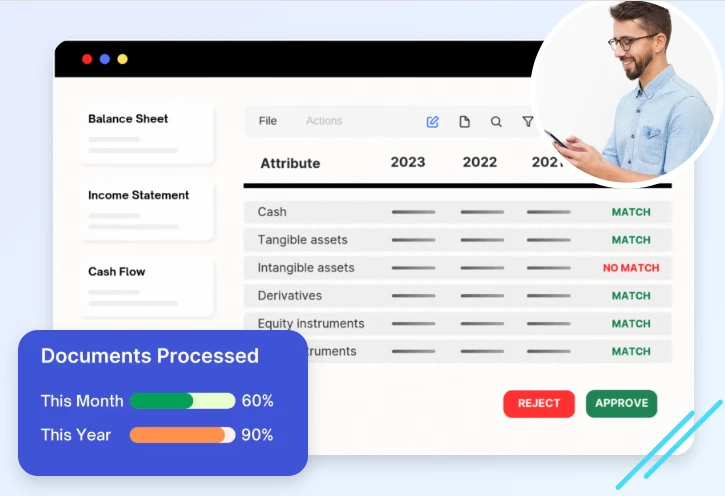

Most credit teams spend hours entering numbers into spreadsheets, reviewing statements, and fixing mismatched line items. Manual spreading has long been the backbone of credit analysis, but it also drains time and energy that could be used for actual evaluation. As lending portfolios grow and data sources expand, many financial institutions are looking for ways to work smarter.
That’s why this guide explores how financial spreading software changes the way credit teams handle statement analysis, from how the process works to what benefits and features truly make a difference.
Understanding the Shift from Manual to Automated Spreading
Before exploring tools, it helps to understand how this shift actually plays out and what problems automation solves.
Manual Financial Spreading
In traditional credit departments, analysts receive financial statements in various formats like PDFs, scanned copies, Excel sheets, or handwritten notes. Each document must be reviewed carefully, and every figure must be entered manually into a standardized spreadsheet. Once done, you still need to cross-check for typos, balance errors, or misclassified entries.
While this process gives you control over every number, it’s also time-consuming. When statement volumes grow, so does the potential for mistakes. A simple oversight like misplacing a decimal or mapping an item to the wrong account, can alter ratios and misrepresent a borrower’s actual condition. The result is delayed analysis, longer credit cycles, and added stress on analysts already managing tight timelines.
What Automation Brings to the Table
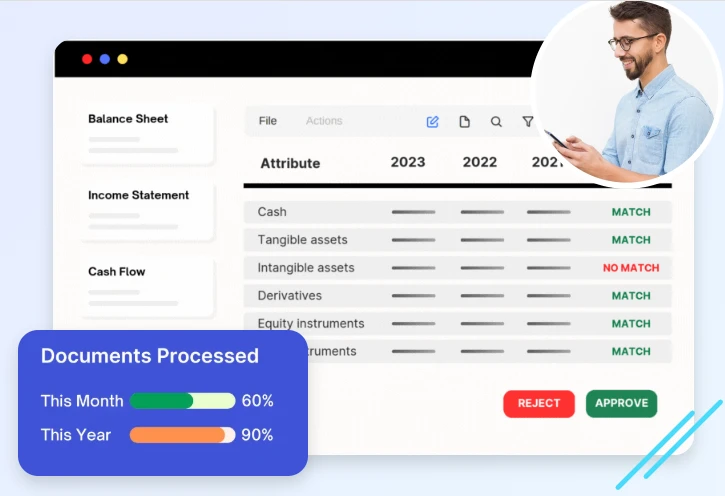
Automation simplifies this chain of tasks. Instead of entering data line by line, automated systems extract information from financial spreading software documents using optical character recognition and intelligent mapping. Once uploaded, the software identifies key fields such as assets, liabilities, and income items, and organizes them into structured templates.
The biggest change is consistency. Each statement follows the same logic, format, and ratio calculations. You can process multiple statements simultaneously, freeing your team to spend more time interpreting results rather than keying in data. In short, automation doesn’t remove the analyst’s judgment but strengthens it by providing clean, reliable data faster.
Key Features to Look for in Financial Spreading Software
Choosing a spreading platform isn’t about picking the flashiest interface; it’s about finding a tool that fits your process and scales with your needs. Here are some core capabilities that make a difference.
- Data extraction and mapping: The ability to capture data from different document types, PDFs, scanned copies, or Excel sheets and map them accurately to your internal chart of accounts.
- Template management: Flexible templates for different industries or accounting standards make spreading more accurate and faster.
- Audit and transparency tools: Every entry should be traceable to its source. An audit trail helps verify numbers during internal reviews or external audits.
- Integration with existing systems: A good tool should sync smoothly with your loan origination, credit scoring, or risk management systems.
- Scalability and multi-entity support: As your lending volume grows, the software should handle multiple entities, currencies, and reporting formats without strain.
- Collaboration and workflow options: Features like version control, review assignments, and user notes help teams work together efficiently, especially across locations.
When comparing vendors, think about long-term usability. You need software that grows with your institution, not one you’ll outgrow in a year.
Benefits You’ll Experience After Implementation
Once you implement an automated spreading solution, the improvement is easy to see. You’ll notice faster turnarounds, fewer errors, and a better grasp of overall portfolio health.
Speed and Capacity Gains
Manual spreading can take hours per borrower. Automation reduces that to minutes in some cases. The time saved means analysts can focus on deal quality rather than data entry. It also means more statements can be processed in less time, giving your team the capacity to handle growth without immediate hiring pressure.
Improved Accuracy and Consistency
By standardizing templates and mapping logic, automation minimizes the risk of input errors. Every borrower’s statement follows the same accounting structure, which allows fair comparison across industries and regions. This consistency builds trust in the numbers and cuts down review rounds.
Enhanced Analytical Insight
When your data is accurate and structured, insights come more easily. Instead of spending hours cleaning spreadsheets, you can analyze trends such as revenue growth, debt ratios, profit margins, and identify patterns early. This helps you catch risks like declining liquidity or rising leverage before they escalate. Reliable data leads to sharper judgment and better credit calls.
Scalability and Flexibility
Automated spreading grows with your business. As you handle new industries or more complex borrowers, you don’t need to rework templates each time. Multi-currency and cross-border support make it easier to assess diverse portfolios without extra effort. In short, your credit operations stay efficient even as your workload increases.
Conclusion
The move from spreadsheets to an automated approach signals a smarter way to manage credit analysis. With financial spreading software, you gain consistency, speed, and better insight — all while reducing repetitive work.
As automation advances, expect features like predictive ratios and real-time alerts to become standard. The sooner you modernize your spreading process, the better prepared your team will be for the next wave of data-driven lending. Efficiency today builds the foundation for sharper, more confident credit decisions tomorrow.



























Sign in to leave a comment.