if manufacturing were a movie, ERP would be the slightly nerdy but utterly essential sidekick. It doesn’t get the limelight (no slow-motion explosions or intense monologues), but when your inventory, logistics, and orders run smoother than your morning espresso machine—it’s ERP doing its magic behind the scenes.
Now, enter the twist: B2C vs. B2B. Both wear the same ERP cape, but the way they fly? Drastically different. And manufacturers stuck in the middle often find themselves whispering into their ERP dashboards, “Can’t we all just get along?”
Welcome to the tale of two ERP worlds, where unified solutions aren’t just a wish—they’re the future of manufacturing success.
Same Factory, Two Fronts: Understanding B2C and B2B in Manufacturing
Let’s set the stage.
Imagine you're a manufacturer of eco-friendly water bottles (because, of course, you're saving the world and staying hydrated). On one side, you’re shipping pallets to big-box retailers—hello, B2B. On the other, you’re packing individual orders from your slick Shopify store—yep, B2C.
Same product. Different buyers. Entirely different ERP needs.
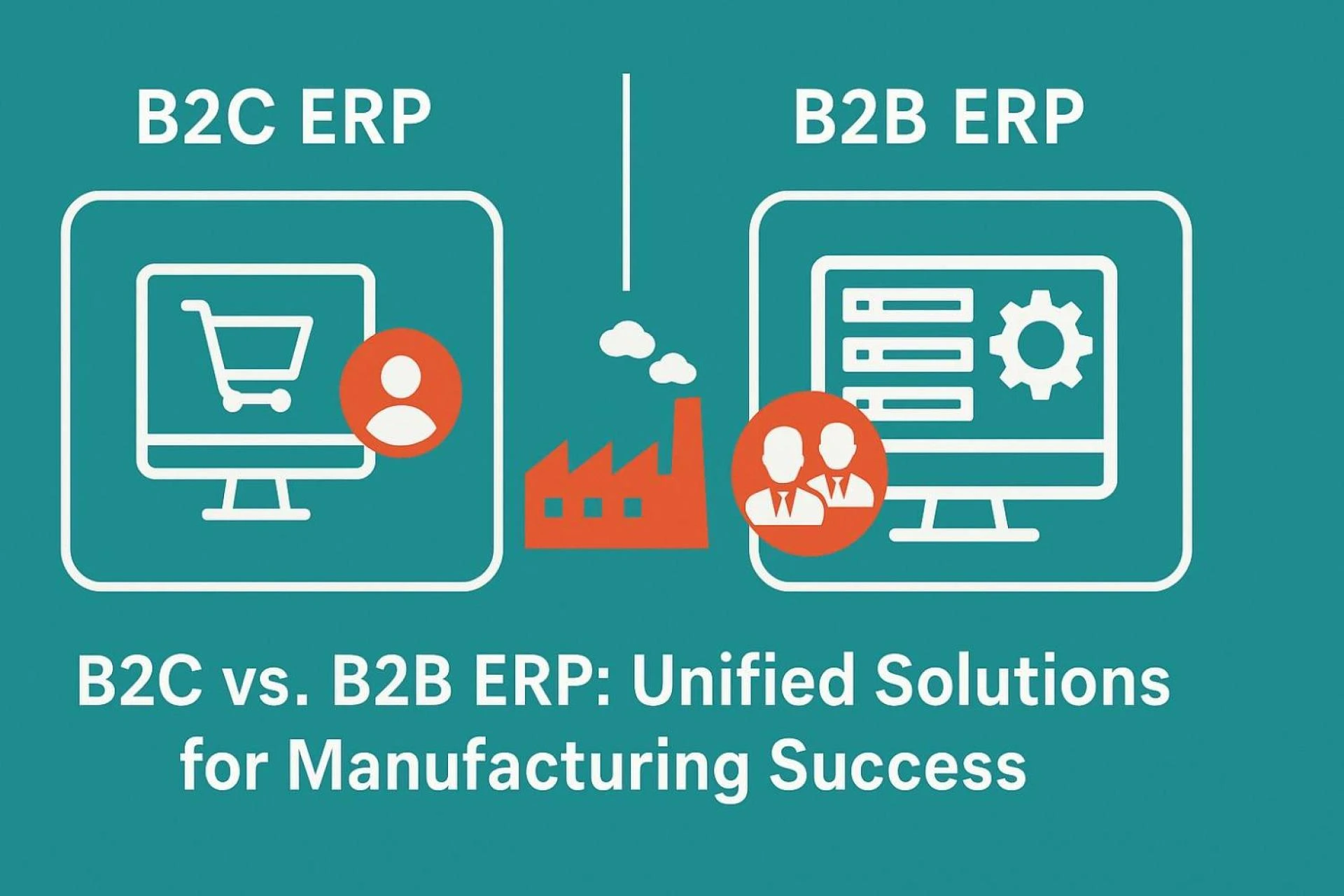
While B2B ERP demands bulk order processing, custom pricing tiers, and robust partner portals, B2C ERP lives and breathes inventory synchronization, real-time shipping integrations, and, heaven forbid—returns management.
And that’s precisely where most manufacturers get ERP whiplash. They need a unified system that doesn’t force them to choose between serving a business customer or a last-minute birthday shopper.
The ERP Software Development Company’s Perspective (Yes, That’s Us)
As an ERP Software Development Company, we’ve seen it all—from manufacturers manually syncing spreadsheets at 2 AM to those relying on three different platforms just to ship a single bottle (our therapist knows).
But here’s the good news: custom ERP solutions have evolved. You no longer have to choose between optimizing for B2B or B2C. The real magic happens when your ERP system knows how to juggle both—like a circus performer, but with fewer tightropes and more APIs.
One of our clients, a furniture manufacturer, struggled with this exact issue. Their wholesale division was booming, but their direct-to-consumer orders caused chaos every weekend. Cue late-night support calls and enough order errors to make a grown manager cry. We implemented a unified ERP solution—tailored workflows, role-based dashboards, and yes, one single inventory system. Within months? 30% reduction in manual errors, and the customer service team stopped sending passive-aggressive emails. Win-win.
Core Features That Make or Break Unified ERP Solutions
A truly unified ERP platform should feel like a Swiss Army knife, not a patchwork quilt stitched together with duct tape and hope. Here’s what makes the difference:
1. Multi-Channel Order Management
Sync orders from wholesale platforms, direct-to-consumer websites, and even that one legacy channel you keep “just in case.” (You know the one.)
2. Inventory Visibility Across Channels
If you’ve ever oversold an item that doesn’t exist—welcome to the club. Real-time inventory updates across all channels prevent that awkward “we're sorry” email.
3. Customer-Specific Workflows
B2B customers want quotes, net terms, and bulk shipping. B2C folks? Flashy confirmations and instant tracking. Your ERP should do both—without throwing a tantrum.
4. Smart Analytics and Forecasting
One dashboard. All your data. Actionable insights that don’t require a PhD in data science (or two espressos just to make sense of it).
Why Off-the-Shelf ERP Doesn’t Cut It Anymore
We get it—plug-and-play sounds tempting. Until it becomes plug-and-pray.
Most off-the-shelf ERP systems are either B2B-focused or B2C-centric. Trying to shoehorn both models into a generic platform? That’s how ERP horror stories begin.
Instead, partnering with a custom ERP software development company (yes, like us—but we’re humble about it) gives you flexibility, scalability, and something every manufacturer craves: peace of mind.
Anecdote Break: The Day a Barcode Saved a Company
A few years back, one of our clients (we’ll call him “Mr. Widgets”) insisted that barcode scanning was overkill. “We don’t need it,” he said confidently. That confidence lasted until Black Friday, when 600 orders came in—and his team packed 37 mismatched boxes.
Fast-forward: barcode integration added. Result? Not a single mis-pack the following quarter. Mr. Widgets still calls us every now and then to say, “Okay, you were right.” We cherish those calls.
Final Thoughts: Unified ERP Is Not a Luxury—It’s Survival
In the ever-evolving manufacturing world, having split ERP systems for B2B and B2C is like driving with one foot on the gas and one on the brake. Sure, you’ll move—but it won’t be pretty.
A custom, unified ERP solution built by an expert ERP Software Development Company like Kanhasoft doesn’t just save time. It scales with you, adapts to every buyer, and turns operational chaos into calm control. With Kanhasoft’s tailored ERP systems, manufacturers get a single source of truth—bringing sales, inventory, and fulfillment together under one smart, streamlined roof.
So whether you're shipping 10,000 units to a reseller or one quirky gift box to a Gen-Z influencer—your ERP system should handle both like a pro.
And if you’re ever unsure where to start—well, you know where to find us (spoiler: right here, building ERP software that actually works).
FAQs: B2C vs. B2B ERP in Manufacturing
1. What is the main difference between B2C and B2B ERP systems?
B2B ERP systems focus on bulk orders, tiered pricing, and partner integrations. B2C ERP systems prioritize real-time inventory, shipping logistics, and customer engagement.
2. Can one ERP system handle both B2B and B2C?
Absolutely. With the right customization, a unified ERP platform can manage both models efficiently—streamlining operations and boosting ROI.
3. Why is custom ERP better for manufacturers?
Off-the-shelf solutions often lack the flexibility required for hybrid models. A custom ERP built by an ERP Software Development Company ensures the software fits your processes—not the other way around.
4. Is unified ERP more expensive?
Upfront, perhaps. But over time, it saves money by reducing errors, streamlining workflows, and eliminating the need for multiple disconnected systems.
5. What should manufacturers look for in an ERP Software Development Company?
Experience with manufacturing workflows, proven case studies, customization capabilities, and—ideally—a sense of humor (trust us, it helps).
6. How long does it take to implement a unified ERP?
Depends on complexity. A typical mid-sized manufacturing ERP can take 3–6 months, including planning, development, testing, and training.

























Sign in to leave a comment.