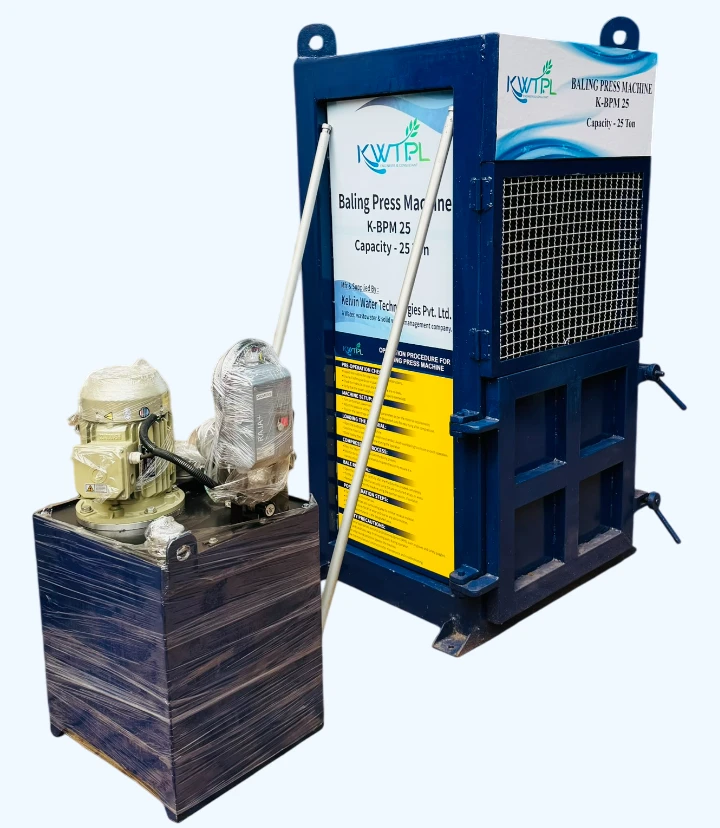

In a world that generates millions of tons of waste every day—from industrial byproducts to commercial packaging and agricultural residues—the demand for efficient waste management solutions has never been higher. Amid this pressing need, the Baling Press Machine stands as an unsung hero, quietly transforming chaos into order by compacting loose waste into neat, manageable bales.
Although simple in concept, the baling machine is a powerhouse of industrial productivity. Its relevance stretches across industries—retail, manufacturing, logistics, recycling, agriculture, and more—wherever there is bulk material that needs reducing, organizing, or recycling.
Purpose of a Baling Press Machine
At its essence, a baling press machine compresses bulk waste or raw material into tightly packed blocks known as bales. This makes transportation, storage, and recycling significantly easier and more cost-effective.
Think of it like this: without balers, waste like cardboard, plastic, metal scraps, or cotton would occupy enormous volumes. A baler applies uniform force—often via hydraulic power—to squeeze that material into compact forms, reducing volume by up to 90% in many cases.
Anatomy of a Baler: What Makes It Work?
Though designs vary across models and industries, most baling press machines share key structural elements:
- Chamber: The compartment where waste is loaded.
- Hydraulic System: Generates the compressive force, typically the muscle behind the machine.
- Ram or Press Plate: Moves vertically or horizontally to compress the material.
- Binding Mechanism: Often uses steel wire, plastic straps, or twine to secure the bale.
- Control Unit: Offers manual or automated control over the compression cycle.
Types of Baling Press Machine
1. Vertical Balers
These are space-saving, cost-efficient machines commonly used in retail stores, warehouses, and small-scale recycling units. Operators load the material from the front, and the ram compresses it downward. Best suited for materials like cardboard, soft plastics, and light metal cans.
2. Horizontal Balers
Designed for higher volumes, these machines operate continuously and are often integrated into conveyor-fed systems. They are ideal for industrial settings and large recycling facilities. Depending on the model, horizontal balers can be manual-tie, semi-automatic, or fully automatic.
3. Double and Triple Action Balers
These are robust machines used primarily in the metal recycling industry. The “multi-action” feature refers to the compressing motion from different sides—vertical, horizontal, and axial—resulting in denser, more compact bales of scrap metal.
4. Textile and Agricultural Balers
These models are tailored to specific materials like clothing, fiber, cotton, jute, straw, or hay. They help streamline bulk packaging in textile mills and farms.
5. Automatic and Smart Balers
With the rise of Industry 4.0, balers have become smarter. Some now feature automation, IoT connectivity, bale density sensors, and remote diagnostics—making them efficient, low-touch, and highly productive.
Applications Across Industries
The versatility of baling press machines makes them a valuable asset across various sectors:
- Retail & E-commerce: To manage packaging waste—mainly cardboard and plastic wraps.
- Food & Beverage: For baling aluminium cans, PET bottles, and carton packaging.
- Textile Industry: For bundling fabric scraps, used clothing, or raw cotton.
- Agriculture: To compress and store straw, hay, and crop residues.
- Metal Processing: To handle aluminium, copper, and ferrous scrap.
- Municipal Waste Management: Helps reduce the volume of solid waste in urban centres.
Environmental & Economic Impact
Perhaps the most understated benefit of baling press machines lies in their contribution to sustainability. Here's how:
- Reduces Carbon Footprint: Compact bales reduce the number of trips required for waste transport, directly lowering fuel consumption.
- Promotes Recycling: Properly baled materials are easier to sort, process, and recycle, closing the loop in the material lifecycle.
- Minimizes Landfill Use: By significantly reducing waste volume, balers help conserve landfill space.
- Revenue Generation: Many materials, once baled, can be sold to recyclers—turning waste into profit.
- Operational Efficiency: Companies save time, labour, and storage costs when using balers.
Maintenance & Safety Considerations
Like any industrial machinery, regular maintenance ensures longevity and performance. Operators should conduct daily checks on hydraulic systems, inspect for oil leaks, and clean moving parts to prevent wear.
From a safety perspective, modern balers come equipped with emergency stop features, auto-cutoff switches, interlocking doors, and overload indicators. Operator training is also crucial to avoid injuries during loading, tying, or bale ejection.
Innovations Shaping the Future
As the world continues to prioritize sustainability, innovation in baling technology is accelerating. Here’s what the future may hold:
- AI and Predictive Maintenance: Baling machines that detect issues before failure occurs.
- Energy-Efficient Systems: New hydraulic designs that consume less power.
- Modular Balers: Systems that grow with the business, allowing add-ons and upgrades.
- Remote Monitoring: Managers can now track bale counts, machine run-time, and diagnostics from anywhere.
Final Thoughts
The baling press machine may not be the flashiest piece of equipment in a factory or warehouse, but it plays a vital role in efficient operations and sustainable waste management. It converts disorder into order, clutter into value, and waste into opportunity.
In a future increasingly driven by environmental consciousness and operational efficiency, baling press machines are more than just tools—they are enablers of a smarter, cleaner, and more productive world.


























Sign in to leave a comment.