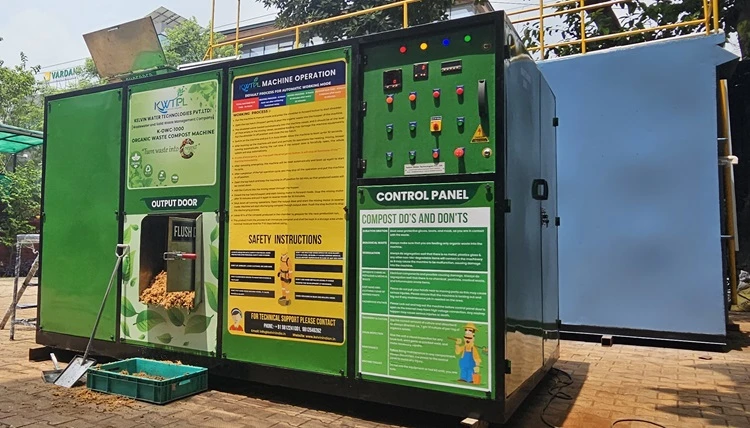

A food waste composter is a device or system that processes organic kitchen waste, such as vegetable peels, fruit scraps, eggshells, and leftover food, into compost. Compost is a natural soil conditioner that improves soil fertility and helps plants grow healthier. Composters work by accelerating the decomposition of organic matter through microbial activity, breaking down waste into nutrient-rich humus.
How does Food Waste Composter Works?
The composting process involves several biological and chemical reactions that break down food waste into compost. The basic steps include:
- Collection of Waste – Organic waste from kitchens, restaurants, and food processing units is gathered and added to the composter.
- Decomposition – Microorganisms such as bacteria and fungi break down organic matter in the presence of oxygen (aerobic composting) or without oxygen (anaerobic composting).
- Moisture and Aeration Control – Proper moisture and oxygen levels are maintained to facilitate efficient decomposition.
- Temperature Regulation – Heat generated during microbial activity speeds up the breakdown of waste.
- Final Compost Formation – After a few weeks or months, the food waste is transformed into nutrient-rich compost that can be used as an organic fertilizer.
Types of Food Waste Composter
Food waste composters come in various types, each designed for specific needs and settings:
1. Home Composters
- Suitable for household use.
- Can be small bins, tumblers, or worm composting systems.
- Ideal for composting vegetable and fruit scraps, eggshells, and coffee grounds.
2. Commercial Composters
- Used by restaurants, hotels, schools, and businesses.
- Larger capacity to handle high volumes of food waste.
- Often feature automated systems for faster decomposition.
3. Industrial Composters
- Designed for large-scale food processing industries and municipalities.
- Utilize advanced microbial technology to process tons of waste daily.
- Convert food waste into compost in a short time with minimal manual effort.
4. In-Vessel Composters
- Fully enclosed systems that accelerate composting through controlled conditions.
- Reduce odours and pest problems.
- Suitable for urban areas where space and environmental concerns are high.
5. Bokashi Composters
- A unique anaerobic composting system using beneficial microbes.
- Works well for all types of food waste, including dairy and meat.
- Produces a fermented mixture that can be buried in soil to decompose further.
Benefits of Using Food Waste Composter
1. Reduction in Landfill Waste
Food waste constitutes a significant portion of municipal solid waste. Composting reduces the volume of organic waste sent to landfills, decreasing methane emissions and landfill overflow.
2. Environmental Sustainability
Composting food waste minimizes pollution, conserves natural resources, and supports ecological balance. It reduces dependence on chemical fertilizers and enhances soil biodiversity.
3. Cost Savings on Waste Disposal
Businesses and households can lower waste disposal costs by composting food scraps instead of paying for landfill or incineration services.
4. Improved Soil Health and Agriculture
Compost enriches the soil with essential nutrients, improving its structure, water retention, and microbial activity. This leads to higher crop yields and healthier plant growth.
5. Reduction of Greenhouse Gas Emissions
When food waste decomposes in landfills, it produces methane, a potent greenhouse gas. Composting significantly reduces methane emissions, contributing to climate change mitigation.
6. Generation of Natural Fertilizer
Compost acts as an organic fertilizer that enhances plant growth without harmful chemicals, promoting sustainable agriculture and gardening.
KWTPL: Leading Manufacturer of Food Waste Composter
Kelvin Water Technologies is a pioneering manufacturer of food waste composter, providing innovative and efficient solutions for sustainable waste management. Their advanced composting systems cater to households, commercial establishments, and industrial sectors, offering high-performance, eco-friendly machines that accelerate the composting process. With a commitment to environmental sustainability and cutting-edge technology, KWTPL designs composters that effectively convert organic waste into valuable compost, reducing landfill dependency and promoting green initiatives. Their reliable and customizable composting solutions have positioned them as a trusted name in the waste management industry.
Future Trends in Food Waste Composting
Advancements in composting technology and increased awareness about waste management are driving innovations in food waste composting. Some key trends include:
1. Smart Composting Systems
AI-powered composting machines can monitor temperature, moisture, and microbial activity in real-time, optimizing the decomposition process.
2. Decentralized Composting Solutions
More communities and businesses are adopting on-site composting instead of relying on centralized waste management facilities. This reduces transportation costs and carbon footprints.
3. Use of Specialized Microorganisms
Scientists are developing microbial solutions that accelerate the breakdown of food waste, making composting faster and more efficient.
4. Integration with Urban Agriculture
Rooftop gardens and urban farms are utilizing compost to enrich soil and grow fresh produce, promoting a circular economy in food production.
5. Composting as a Circular Economy Model
Governments and businesses are recognizing composting as part of the circular economy, where food waste is repurposed into valuable resources rather than discarded.
Conclusion
Food waste composters are a crucial solution for addressing global food waste challenges. They not only reduce landfill waste and greenhouse gas emissions but also create valuable compost that enriches soil and supports sustainable agriculture. While challenges such as odour control, waste segregation, and space constraints exist, ongoing technological advancements are making composting more efficient and accessible. By adopting food waste composting practices at household, commercial, and industrial levels, we can significantly reduce environmental impact and move towards a more sustainable future. Composting is not just a waste management solution—it is a step towards a healthier planet.


























Sign in to leave a comment.