Introduction — Why safety boots matter (and why brand choice counts)
In industries such as construction, mining, food processing, manufacturing or logistics, the safety boot you wear affects not only comfort but can prevent serious injuries — from crushing impacts, slips, punctures, chemical spills, and more. With many brands vying for the title of “best safety boot,” it helps to compare what each offer.
Bata Industrials, Magnum and Bison represent three different philosophies in safety/work footwear. While Bata is oriented toward broad industrial use (from food-processing gumboots to warehouse and heavy-duty boots), Magnum tends toward tactical, uniform and “all-conditions” boots, and Bison seeks to combine comfort, grip, and versatility — often with a slightly different fit philosophy (wide fit, ergonomic sole).
Below is a detailed comparison: safety & protection, materials & build, comfort & ergonomics, fit & foot shape considerations, specialty uses (wet, chemical, food, high heat, etc.), and who each brand is best for.
Safety & Protection: toe caps, midsoles/penetration, slip/heat/chemical resistance
Bata Industrials
- Bata offers boots certified to Australian standards (e.g. models with steel toe caps and anti-penetration midsoles).
- Their range includes gumboots and safety boots for wet or chemically intensive environments — e.g. their PU or PVC gumboots, which resist oils, fats, chemicals and provide slip-resistant soles.
- Some models provide additional protections: for example, anti-static footwear in their “Naturals” line — useful where electrical charge buildup is a hazard.
- They also design boots for heat resistance: certain outsoles withstand elevated temperatures (e.g. in industrial settings) and rubber/PVC gumboots provide chemical resistance for food or chemical-processing industries.
Verdict: Bata gives a wide spread of protective boot types — from conventional steel-toe work boots to highly specialised gumboots/safety footwear for wet, chemical or hygiene-sensitive industries. Great for versatility and meeting a broad range of site requirements.
Magnum
- Magnum emphasizes reinforced toe and heel, offering steel or composite toe caps (depending on model), to protect against impact and compression.
- Their boots usually have slip-resistant outsoles with strong traction, which helps when working on slippery or uneven surfaces.
- Many Magnum boots offer waterproofing (via membranes or water-repellent uppers), and moisture-wickling linings — valuable for outdoor work, wet conditions or variable climates.
- They often include composite midsoles or puncture-resistant components (or claim puncture resistance and electrical-hazard protection for certain models), making them suitable for many hazardous workplaces.
Verdict: Magnum is strong on balanced protection — impact, slip, water, even electrical or puncture hazards — which makes it a good “all-rounder” for tough, unpredictable or multi-hazard work sites (construction, outdoor, industrial, emergency services, etc.).
Bison
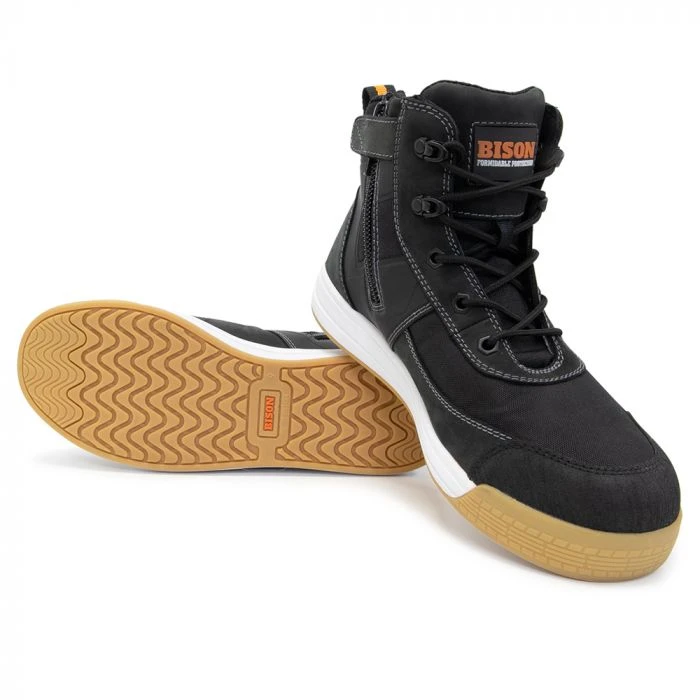
- Bison safety boots are built with slip-resistant, high-grip nitrile rubber outsoles with multi-directional tread patterns, designed for traction on wet or dry surfaces.
- Their boots include steel toe caps for impact protection and meet applicable safety standards (e.g. AS 2210.3:2019, EN ISO 20345:2011) for protective footwear.
- Bison also provides an anti-penetration insole (IMFLEX) and a lighter EVA midsole for flexibility and impact absorption.
- Their outsoles are rated to resist heat up to ~300 °C, chemicals, oil, acid, organic fats — broadening applicability in industrial, manufacturing, oil/chemical, or hot-work environments.
Verdict: Bison provides robust protection with a focus on slip-resistance, chemical/heat resistance and impact protection — which makes them particularly suited for industrial plants, manufacturing, oil & gas, and heavy-duty trade work.
Materials & build quality — uppers, soles, mid-soles, special treatments
- Bata Industrials uses a variety of materials depending on the boot’s intended purpose. Their leather safety boots and PVC/PU or rubber gumboots cover different use-cases (wet floors, chemical exposure, greasy or acid-prone environments). Their “Naturals” line (with anti-static protection and breathability) shows attention to comfort as well as safety.
- Magnum combines rugged leather or synthetic uppers with waterproof membranes (on certain models) and breath-able linings, to balance durability, weather resistance and comfort. Their midsoles often use modern cushioning (e.g. moulded PU insoles, RECOIL comfort midsoles), which helps with long shifts or variable terrain.
- Bison places emphasis on outsole quality (nitrile rubber), heat/chemical resistance, and ergonomic sole design — e.g. a rocker-bottom sole for forward motion, four-layer heel support to reduce ankle roll, breathable/self-venting footbeds for moisture management, shock-absorbing EVA midsoles, etc.
Verdict: Build-wise, Bison and Magnum both lean toward durable, modern safety-boot engineering: tough outsoles, chemical/heat resistance, ergonomic soles, cushioning and waterproofing. Bata remains versatile — from basic gumboots to full leather boots — but excels when you need specialised boots for food, chemical, wet or hygiene-sensitive industries.
Comfort, ergonomics & foot support — long shifts, fatigue, foot health
- Magnum stresses comfort: padded collars/tongues, cushioning insoles, shock-absorbing midsoles, moisture-wicking linings. Their lightweight composite-toe models reduce weight while maintaining protection, which helps with mobility and reduces fatigue when on your feet all day.
- Bison designs for comfort especially when foot shape or width is a concern. Their “wide-fit sole” sizing aims to minimise trip hazards from too-long boots, and to remove “rub zones” that cause blisters or pressure points. Their self-venting footbed system helps with moisture and heat — good for sweaty, hot, or humid work environments. The rocker-bottom sole and ergonomic heel support reduce fatigue and support forward motion during walking or site work.
- Bata Industrials offers comfort through a variety of sole and insole options — their dual-density PU soles, cushioned midsoles, anti-static/odour-control linings (in some collections), and specialised gumboots that are lighter and easier to wear for many hours.
Verdict: If comfort and fit — especially for wide feet or long shifts — are priorities, Bison and Magnum stand out. Bata remains a solid option, especially if your work environment demands a specific boot type (gumboot, chemical-safe, anti-static, etc.).
Fit, foot shape & sizing — who’s the boot for?
- Bison explicitly markets “wide-fit” boots, with lasts/shapes that suit broader feet and avoid overstretching or excessive length. This helps reduce foot fatigue, avoid rubbing/trip hazards, and ensures better toe-cap protection (since toes aren’t sliding forward in oversize boots).
- Magnum tends to cater to a broad audience — but its focus on “tactical/ergonomic/versatile” means there are many variants (leather, composite toe, waterproof, etc.), giving users flexibility. Their boots often suit folks in uniformed services, security, law-enforcement, and similar roles — so the fit tends toward a balance between snug, supportive, and mobility-friendly.
- Bata Industrials offers a wide range of boot types — from gumboots to leather work boots to anti-static footwear — but depending on the model, “fit” may be more standard or less specialised. For some boots, this may mean less “tailored” fit than Bison’s wide-fit design.
Verdict: If you have wide feet — or want a boot that fits more “naturally” without stretching — Bison is a strong candidate. Magnum offers flexibility for many kinds of users and roles. Bata is more about variety across boot types than a one-size-fits-all fit philosophy.
Specialty use-cases: wet floors, chemical/oil/heat-exposed work, food processing, static, electrical hazards
- Bata Industrials shines in specialised use-cases: their gumboots and food-industry boots are designed for oil/chemical/fat/blood/acid resistance; some boots offer anti-static protection or chemical-resistant outsoles; some are also oil/fuel/chemical resistant or slip-resistant for slippery, greasy, or wet industrial floors. Their footwear range covers from food-processing facilities to heavy-duty industrial/mine sites.
- Magnum with waterproof membranes, water-repellent/leather uppers, composite or steel toes, and slip-resistant soles makes them well-suited for outdoor, construction, emergency services, or multi-hazard environments where water, mud, uneven ground, punctures, or electrical hazards might appear.
- Bison offers boots with nitrile rubber outsoles rated to 300 °C, which suggests suitability where heat is a factor — perhaps industrial or workshop settings with hot surfaces or occasional heat exposure. Their outsoles are also resistant to oils, acids, fats and chemicals, and their boots are marketed for environments where grip on slippery surfaces (wet, oily, chemical-exposed) is critical.
Verdict: For specialised industrial environments — food, chemical, wet floor, static-sensitive, hot or oily surfaces — Bata (gumboots/food-industry boots) and Bison (heat/chemical-resistant outsole boots) are particularly appealing. Magnum remains a strong all-rounder for mixed or unpredictable environments.
Durability, lifespan & value for money
- Bison appears engineered for long-term heavy use: nitrile rubber outsoles, abrasion/chemical/heat-resistant materials, anti-penetration insoles, and ergonomic sole design to reduce wear on joints. These features suggest a boot built for industrial environments with exposure to harsh chemicals, oils, hot surfaces or slick floors.
- Magnum also markets durability: with composite or steel toes, waterproof membranes, water/dirt/oil-repellent uppers, and rugged outsole tread — and aims at professional sectors (construction, rescue, industrial) where boots undergo a lot of stress. Their cushioning and lightweight materials may reduce fatigue but may sacrifice some of the heavy-duty “chunkiness” of traditional steel-toe boots. That trade-off might affect long-term wear in extremely harsh conditions.
- Bata Industrials offers a broad value proposition: because they produce a wide range (from simple gumboots to full safety boots), there are cost-effective options (gumboots, lighter safety boots) as well as more robust ones. Their safety-boot line includes features like multi-purpose soles, protective toe caps, and certified compliance — often at competitive pricing (especially for gumboots or mid-range safety boots).
Verdict: For rugged industrial settings requiring heavy-duty protection, Bison seems especially durable; Magnum offers good durability if the job involves varied conditions and need for mobility; Bata offers the broadest range of price-to-protection choices, good for employers or workers needing versatility across multiple job types.
Who is each brand best suited for?
- Choose Bata Industrials if your work involves varied conditions — especially where hygiene, chemicals, oils, liquids, or static build-up are factors; or if you need gumboots, food-industry boots or lightweight safety boots for light-to-medium industrial / warehouse / processing work.
- Choose Magnum if you’re in construction, maintenance, security, emergency services, or other environments where you need a balance of protection, flexibility, waterproofing and comfort — especially when moving between indoor and outdoor sites, wet or dry, slippery or rough surfaces.
- Choose Bison if you work in heavy-duty industrial settings, oil/gas/chemical plants, workshops, manufacturing, or any workplace where slip resistance, chemical/heat/oil resistance, strong grip, wide-fit comfort and durable soles are essential.
Additionally — if you have broader feet, require wide-fit boots, or value stable ergonomics and reduced fatigue for long shifts, Bison is very appealing. If mobility and lighter weight matter (for example in security, patrol, site-inspection, emergency response), Magnum may have the edge. And if your workplace demands specific protective features (anti-static, chemical resistance, gumboots, easy-clean footwear), Bata Industrial Boots range shines.
Potential drawbacks / What to check before buying
- With Magnum, because of their relatively lighter-weight and more “mobile” design, very heavy industrial work (constant contact with sharp/hot surfaces, very abrasive floors, heavy materials) may wear boots faster compared to more heavy-duty traditional safety boots.
- Bison’s wide-fit, rocker-sole, and cushioning approach — while great for comfort — may feel less “rigid” or “structured” than classic heavy-duty boots; in extremely rugged terrain or where maximum ankle/heel rigidity is needed, they might feel a little less firm than hardened work boots.
- Bata Industrials — while very versatile — may require more careful selection: you need to pick the right boot for the job (gumboot vs leather boot vs safety toe), and ensuring you get a model with the correct safety certifications (toe cap, anti-penetration, slip/chemical/heat resistance) is essential.
Also, with any brand: fit is critical. Boots that are too big or too tight can cause fatigue, pressure points, or even safety issues (toe slip, poor traction, blisters, ankle instability).
Final thoughts — Safety + fit + conditions = the right boot for the job
No single brand is “best” in all contexts. The value of Bata, Magnum and Bison lies in their different strengths. The right choice depends largely on what you do, where you work, how long you stand or walk, and what hazards you routinely face.
- If your work environment involves chemicals, oils, wet floors, acids or hygiene-standards (food-processing, chemical plant, meatworks, agriculture), Bata Industrials (or Bison/In-line gumboots) tends to offer more specialised protection.
- If your work involves mobility, frequent movement between different terrains or conditions, varied tasks (construction, maintenance, security, site inspections, emergency response) — Magnum offers a balanced, flexible boot with good protection and comfort.
- If your work environment involves heavy-duty industrial tasks, heavy materials, heat or chemical exposure, slippery or oily floors, long shifts, and you value grip and comfort for a broad foot — Bison is a strong all-rounder with robust outsoles, wide fit and good shock/impact/heat/chemical resistance.
Ultimately: before buying — review your workplace’s PPE requirements and hazard profile, think about comfort & fit (especially if you stand or walk many hours), and choose the boot that matches both safety compliance and daily demands.


























Sign in to leave a comment.