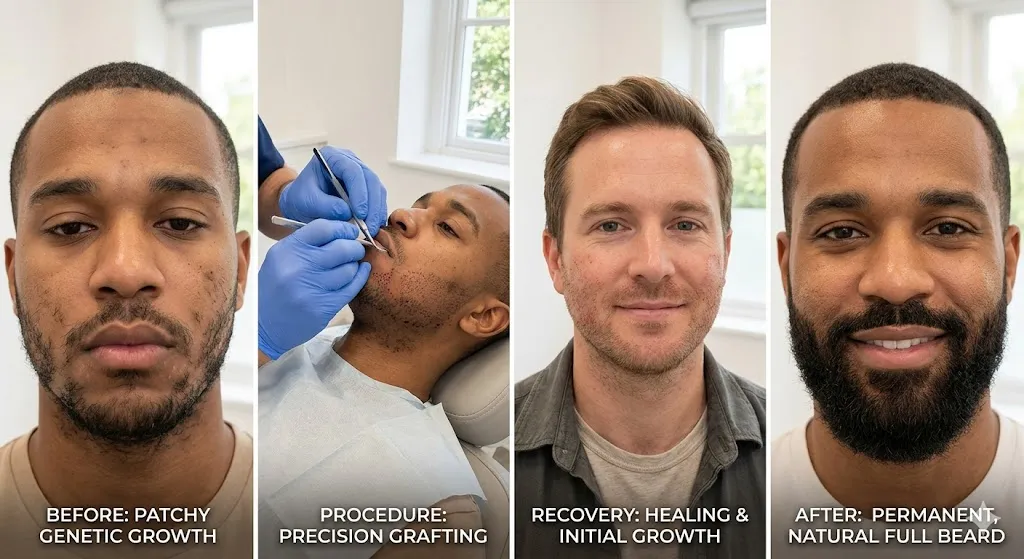

For many men, a beard is more than just facial hair. It is a defining feature that contributes to personal style, confidence, and overall appearance. A thick, well-shaped beard can help create stronger facial definition and provide a more mature look. Unfortunately, not every man is able to grow the beard he wants naturally. Patchy growth, thin areas, uneven density, and facial scars can make achieving a full beard difficult, regardless of age or grooming efforts.
Over the years, countless products have been marketed as solutions for beard growth. From oils and serums to supplements and specialized grooming kits, men spend significant amounts of time and money trying to improve beard density. While some products may help improve the appearance of existing facial hair, they cannot create new hair follicles where little or no growth exists. This is one reason why beard transplantation has become an increasingly popular option.
A beard hair transplant offers a long-term solution for men who want fuller facial hair. Rather than masking the problem temporarily, the procedure works by transplanting healthy hair follicles into areas where beard growth is sparse or absent. Once the follicles establish themselves, they continue to grow naturally, creating a permanent improvement in beard density and coverage.
One of the most common reasons men pursue beard restoration is genetics. Facial hair growth patterns are largely inherited, meaning some men naturally develop thick beards while others experience patchy or inconsistent growth. Even with excellent grooming habits and healthy lifestyles, genetic limitations can make it difficult to achieve the desired beard appearance. A beard transplant can help overcome these challenges by strategically adding density where it is needed most.
Another common concern involves facial scars. Scarring from acne, injuries, burns, or previous surgeries can interrupt natural beard growth. These areas often remain hairless even when surrounding facial hair grows normally. Beard transplantation can frequently restore coverage to scarred regions, helping create a more uniform and balanced appearance.
The process begins with a thorough consultation. During this appointment, the specialist evaluates the patient's facial hair pattern, discusses aesthetic goals, and determines whether the individual is a suitable candidate for treatment. Every patient has unique preferences, so the beard design is customized to match facial features and desired outcomes.
One of the advantages of modern beard transplantation is the ability to create highly personalized results. Some men want only minor improvements in specific patchy areas, while others seek a complete beard transformation. Whether the goal involves enhancing the cheeks, jawline, sideburns, mustache, or goatee, the procedure can be tailored accordingly.
Healthy hair follicles are typically harvested from the back or sides of the scalp. These donor areas are selected because the follicles are generally strong and resistant to hair loss. Each follicle is carefully extracted and prepared before being implanted into the beard region.
Precision is essential throughout the procedure. Facial hair grows at specific angles and directions depending on the area of the face. To achieve natural-looking results, every follicle must be placed carefully to replicate existing beard growth patterns. This attention to detail helps ensure that the final appearance looks authentic rather than artificial.
Many patients appreciate that the transplanted follicles are their own natural hair. Because the follicles come directly from the patient, the new growth blends seamlessly with existing facial hair. Once established, the transplanted hairs can be shaved, trimmed, and styled just like the rest of the beard.
Recovery is generally manageable for most patients. Mild redness, swelling, and temporary scabbing may occur after the procedure, but these effects typically improve as healing progresses. Following all aftercare instructions provided by the specialist is important for supporting proper healing and maximizing follicle survival.
One aspect of beard transplantation that often surprises first-time patients is the temporary shedding phase. Shortly after treatment, many transplanted hairs fall out as part of the natural growth cycle. While this may seem concerning, it is completely normal. The follicles remain healthy beneath the skin and eventually begin producing new hair growth.
Over the following months, patients gradually notice increased density and improved beard coverage. The growth process occurs naturally, allowing the results to develop progressively rather than appearing suddenly. This gradual transformation often contributes to a more natural overall appearance.
A significant advantage of beard transplantation is its permanent nature. Unlike temporary solutions that require ongoing maintenance and recurring purchases, transplanted follicles continue producing hair for years. This makes the procedure an attractive option for men seeking a lasting improvement in facial hair density.
The confidence benefits can also be substantial. Many men report feeling more comfortable with their appearance after achieving the beard they have always wanted. A fuller beard can enhance facial contours, improve symmetry, and contribute to a stronger overall aesthetic. For individuals who have struggled with patchy facial hair for years, these improvements can have a meaningful impact on self-esteem.
When evaluating whether the procedure is worthwhile, it is important to choose a qualified specialist. Beard restoration requires both technical expertise and artistic skill. Proper follicle placement, density planning, and beard design all play crucial roles in achieving successful results. Selecting an experienced provider can significantly influence the quality of the outcome.
Patients should also maintain realistic expectations. While beard transplantation can create impressive improvements, the goal is to enhance natural features rather than create an unrealistic appearance. A skilled specialist works to design results that complement the patient's facial structure and personal preferences.
The growing popularity of beard transplantation reflects a broader interest in natural-looking cosmetic procedures. Men increasingly seek solutions that provide lasting improvements without appearing obvious or artificial. Beard restoration fits this trend perfectly by using the body's own hair follicles to create authentic growth.
For men dealing with patchy facial hair, uneven density, or beard-related scars, beard transplantation offers a proven path toward a fuller and more defined appearance. With careful planning, realistic expectations, and treatment from an experienced professional, patients can enjoy natural-looking results that continue to improve over time.
A beard can be an important part of personal identity and self-expression. By restoring density and creating more consistent facial hair growth, beard transplantation helps many men achieve the appearance they have wanted for years while providing long-term confidence and satisfaction.

























Sign in to leave a comment.