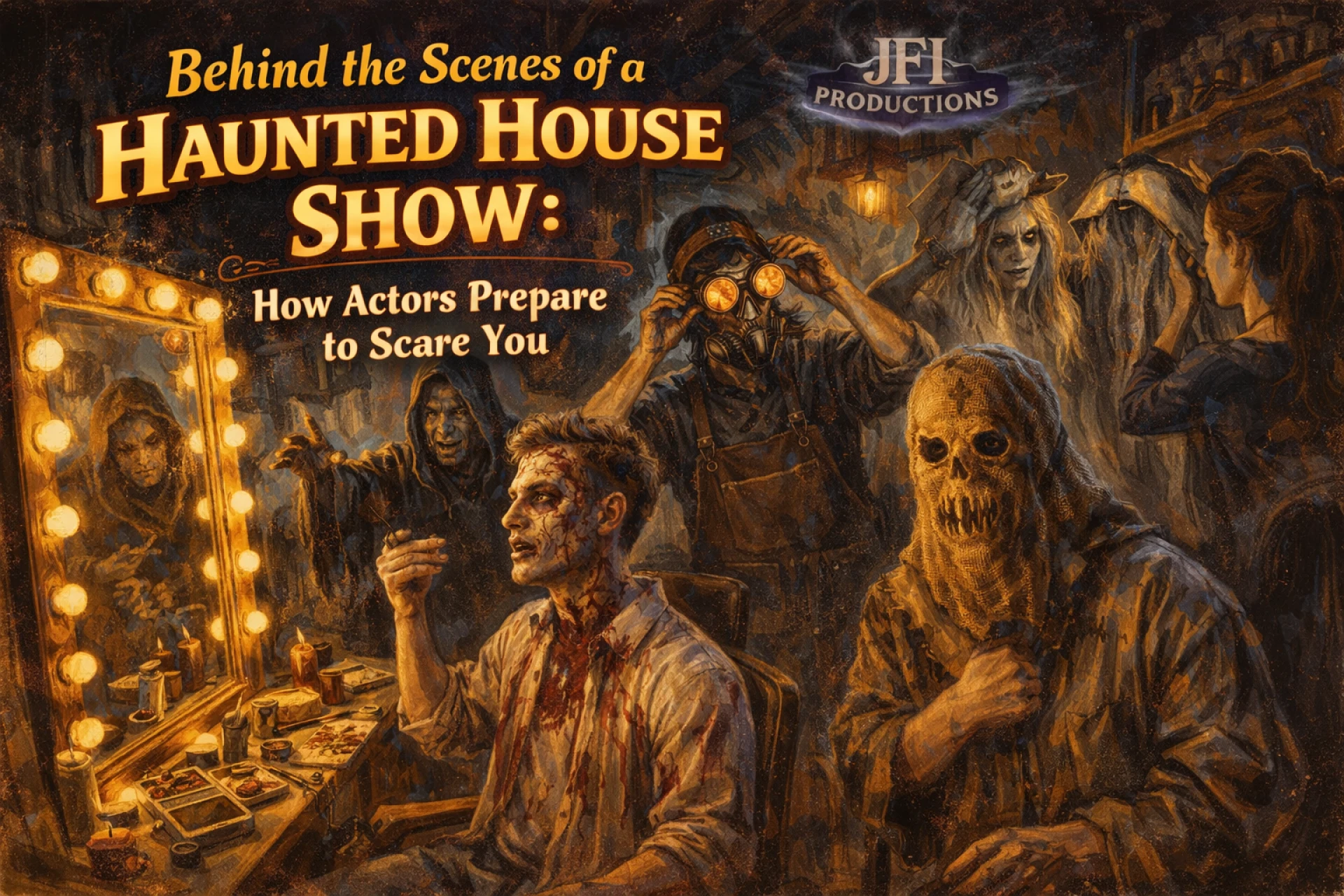

When you step into a haunted house show, your heart starts racing long before the first scare even happens. The eerie lights, unsettling sounds, and sinister characters lurking in the shadows create an unforgettable experience. But behind every scream, jump scare, and chilling moment is a dedicated team of actors who train tirelessly to frighten guests in a safe, controlled, and incredibly entertaining way.
Haunted house shows may feel chaotic, but behind the scenes is a world of precision, preparation, and performance. Let’s pull back the curtain and reveal how actors prepare to scare you.
1. The Hidden World Behind Every Scare
Most people only see the final product: actors jumping out of dark corners or creatures crawling toward you. But before any of that happens, months of planning, rehearsing, and character development take place. The actors are the heart of every haunted attraction; they bring the sets, stories, and special effects to life. Without them, a haunted house would be nothing more than a spooky walk-through.
Understanding how these performers work adds a whole new layer of appreciation to the experience.
2. The Casting Process: Finding the Perfect Scare Performer
Talent Requirements
Haunted house actors aren’t simply “people who like Halloween.” They are performers with stamina, creativity, and a strong understanding of human behavior. They need to:
- Move quickly in dark, tight spaces
- Maintain energy for hours
- Act, improvise, and stay in character
- Read guest reactions instantly
Auditions & Workshops
During auditions, actors demonstrate different scare styles—creepy walks, sudden lunges, eerie voices, and character reactions. Workshops help directors evaluate flexibility and personality while teaching the basics of scare performance.
Personality Matching
Not everyone is suited for every role. Directors match actors to characters based on traits:
- Some excel at subtle, creepy movements
- Others are perfect for loud jump scares
- Some shine in comedic or interactive roles
This ensures every scare fits the right performer.
3. Actor Training: The Psychology of Fear
To scare effectively, actors must understand how the human mind responds to fear.
Understanding Fear Triggers
Actors learn the psychology behind:
- Silence before a scare
- Sudden movement
- Eye contact
- Unpredictability
These elements allow them to create tension, suspense, and shock.
Body Language Control
An actor’s body is their greatest tool. Slow, unnatural movements create unease. Rapid bursts of motion create shock. Even posture, head angles, and hand gestures can trigger fear responses.
Timing & Rhythm
The best scares rely on timing. Actors practice:
- Waiting for the right moment
- Using distractions
- Pacing their scares
Knowing when not to scare is just as important as delivering the scare itself.
4. Character Development: Becoming the Monster
Costume & Makeup Transformation
Many actors spend over an hour getting transformed. Makeup artists apply prosthetics, scars, fake blood, or full-body paint. Costumes must be realistic yet safe for movement.
Voice Training
A character’s voice can be just as frightening as their appearance. Actors develop:
- Growls
- Whispers
- Screeches
- Inhuman vocal effects
These add depth and authenticity.
Backstory & Acting Style
Even if guests never hear it, actors often create detailed backstories. Knowing the character’s “why” helps them deliver a consistent and believable performance.
5. Safety Training: Scaring Without Harm
Safety is the backbone of every haunted house show.
Physical Safety Protocols
Actors are trained to:
- Keep a safe distance
- Avoid direct contact
- Move carefully in low light
- Navigate small, uneven spaces
Emergency Situations
If a guest panics, collapses, or gets aggressive, actors follow strict protocols. They may break character to help or signal for assistance.
Communication Signals
Backstage teams use discreet hand motions, code words, and sound cues to indicate:
- Guest distress
- Technical issues
- Unsafe behavior
- Timing adjustments
These signals keep everyone safe.
6. Rehearsals: Bringing the Show to Life
Walkthroughs
Actors rehearse scene-by-scene in full lighting and then again in show lighting. This helps them memorize positions, timing, and scared delivery.
Testing Sound & Special Effects
Sound effects, fog machines, animatronics, and lighting must all sync perfectly with actor cues.
Team Interaction
Many scares involve multiple actors working together. This coordination is practiced extensively to create seamless and powerful moments.
7. Show Time: Maintaining Energy and Fear Factor
Pre-Show Rituals
Actors warm up with:
- Stretching
- Voice exercises
- Hydration
- Mental focus routines
Some even practice breathing techniques to stay energized for hours.
Staying in Character
Performers stay committed from the moment they enter the scene until the show ends. They must maintain energy, timing, and emotional intensity.
Handling Different Visitors
Actors encounter all types of guests:
- Nervous guests who freeze
- Loud screamers
- People who laugh
- Rule-breakers or hostile visitors
They are trained to respond appropriately while keeping the scare effective.
8. After the Show: When the Masks Come Off
The work isn’t done when the night ends.
Cool-Down & Recovery
Actors remove makeup, stretch their muscles, and rest their voices. This prevents injury and exhaustion.
Debriefing Sessions
Teams review:
- What worked
- What didn’t
- Guest reactions
- Any safety issues
Maintenance & Reset
Costumes are cleaned, props repaired, and sets reset for the next performance.
9. Why Actors Love Scaring People
Despite the intense work, most actors love the craft. They enjoy:
- Performing
- Creating emotional reactions
- Working with a close-knit team
- Watching guests genuinely enjoy the attraction
Scaring people becomes a unique and rewarding form of entertainment artistry.
FAQs
1. How do haunted house actors train?
They train through workshops, rehearsals, physical warm-ups, and learning fear psychology.
2. Do actors ever touch guests?
No. Most haunted houses have strict no-contact rules for safety.
3. How long does it take for an actor to get ready?
Anywhere from 20 minutes to over 2 hours, depending on the makeup and costume.
4. What happens if someone panics inside?
Actors alert staff using coded signals so the person can be escorted out safely.
5. Why do actors enjoy working in haunted houses?
They love performing, improvising, and creating memorable experiences for guests.


















Sign in to leave a comment.