
Meaning
The global digital signage software market is characterized by its segmentation, which is based on key factors such as service, type, and application. This strategic division allows for a more detailed and nuanced analysis of the market, providing valuable insights for businesses and stakeholders. By segmenting the market, it becomes possible to identify niche pockets of growth and innovation within specific service categories, types of digital signage software, and application domains. This segmentation also aids in the formulation of targeted strategies for market entry, expansion, and competition. It helps businesses pinpoint their core application areas where their offerings can shine and provide unique value. Additionally, recognizing the differences in target markets within each segment is crucial for tailoring marketing efforts, product development, and customer engagement to suit the specific needs and preferences of diverse customer groups. In essence, this segmentation approach is instrumental in navigating the complex global digital signage software market and making well-informed decisions to drive growth and success.
Definition
Digital signage, often known as dynamic signage, is a type of electronic display that promotes broadcast data, as well as other materials like television programming and advertisements. LCD and LED are just two of the technologies used by digital signage. Private organisations and public locations, including eateries, shops, and office settings, can use these dynamic signs.
How Does Digital Signage Software Work?
Digital signage software is a critical component in managing and displaying content on digital signage screens or displays. It serves as the control center for scheduling, delivering, and updating content on screens in various settings such as retail stores, airports, hotels, corporate offices, and public spaces. Here's how digital signage software typically works:
Content Creation and Management: Users begin by creating content using various media elements like images, videos, text, and animations. This content can be designed and customized to fit the specific needs of the digital signage application, whether it's for advertising, information dissemination, or entertainment. Content is organized into playlists or schedules for seamless playback.Content Upload: The created content is then uploaded to the digital signage software platform. This can be done through a web-based interface or software application, making it accessible from anywhere with an internet connection.Display Hardware: The digital signage software is connected to the display hardware, which can range from single screens to an extensive network of displays across different locations. These displays are equipped with media players or digital signage players that are compatible with the software.Synchronization and Scheduling: Users can schedule when and where the content should be displayed. Digital signage software allows for precise control over the timing and duration of content playback. This can include scheduling content to change based on time of day or specific dates.Content Playback: The software sends the content to the designated displays in real-time or according to the predefined schedule. Media players connected to the displays receive and render the content for the audience to see.Remote Management: One of the key advantages of digital signage software is its remote management capability. Users can monitor and manage the content, displays, and player devices from a centralized dashboard. This includes the ability to update content, troubleshoot issues, and receive real-time analytics and performance data.Interactivity (Optional): Some digital signage software solutions support interactivity, allowing users to engage with the content using touchscreens, motion sensors, or other input methods. Interactive elements can be integrated into the content to provide a more engaging and personalized experience.
For more information visit
https://www.databridgemarketresearch.com/reports/global-digital-signage-software-market
Growth rate in digital signage software market
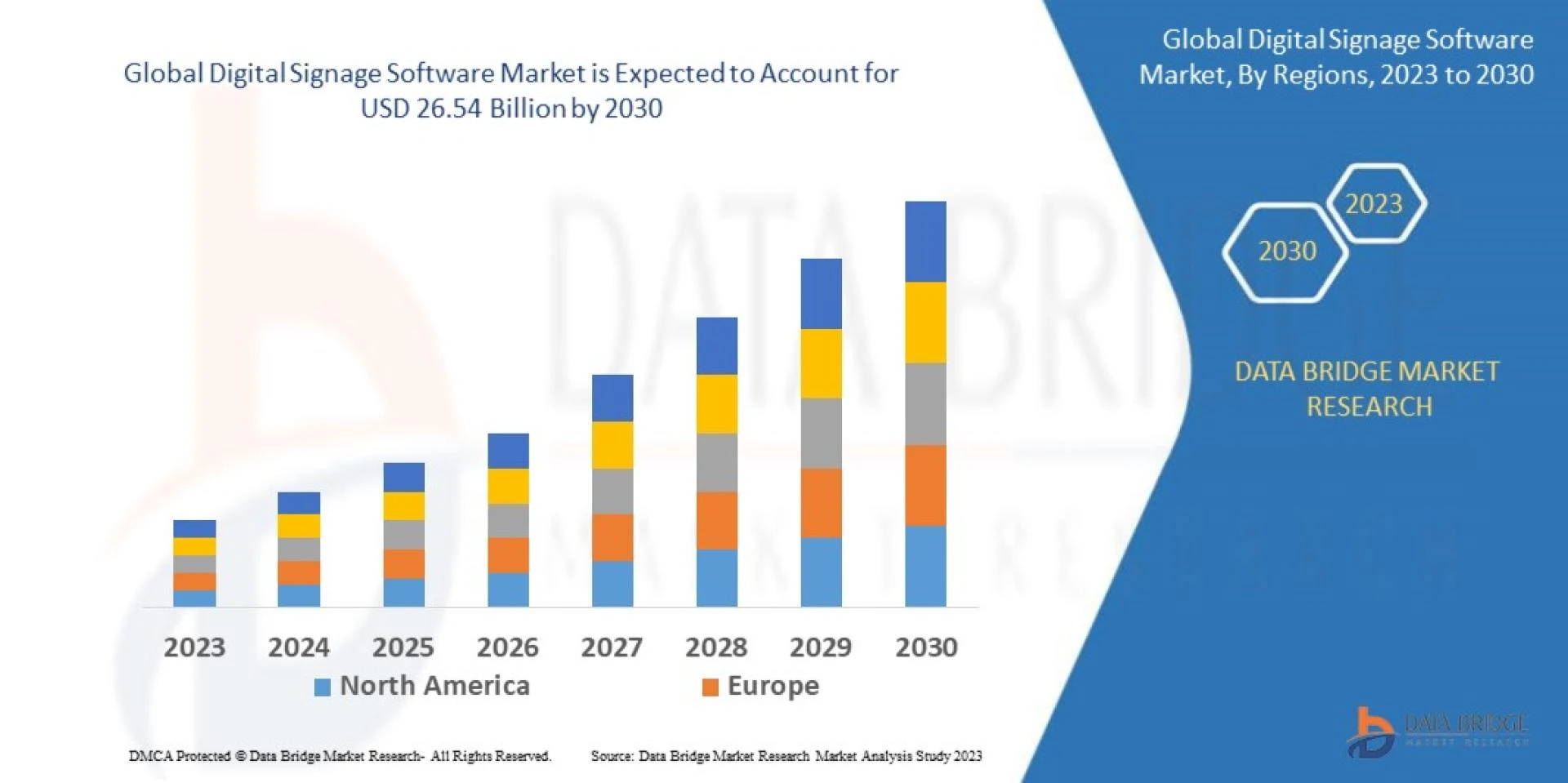
Data Bridge Market Research's comprehensive analysis reveals a robust and dynamic landscape for the global digital signage software market. In 2022, the market exhibited a significant valuation of USD 8.88 billion, and it is poised for substantial growth, projected to reach a staggering USD 26.54 billion by the year 2030. This remarkable trajectory is underpinned by a compelling compound annual growth rate (CAGR) of 15.84% over the forecast period spanning from 2023 to 2030.Among the diverse application segments within the market, "Retail" emerges as the dominant and largest contributor. This prominence can be attributed to the surging demand for digitized advertisements and dynamic content displays within the retail sector. Retailers increasingly rely on digital signage software to captivate consumers, promote products, and enhance their marketing and promotional efforts.In addition to providing valuable insights into key market metrics such as market value, growth rate, segmentation, geographical coverage, and major industry players, Data Bridge Market Research's reports encompass a depth of expert analysis, shedding light on the intricacies of the digital signage software market. They also include pricing analysis, offering insights into competitive pricing strategies, and consider the regulatory framework, ensuring that businesses and stakeholders have a comprehensive understanding of the market dynamics.
About Data Bridge Market Research
Data Bridge Market Research is a renowned and reputable market research and consulting firm known for its comprehensive and data-driven approach to market analysis. The company specializes in providing valuable market insights, industry research, and strategic consulting services to businesses, organizations, and stakeholders across various sectors and industries.


























Sign in to leave a comment.