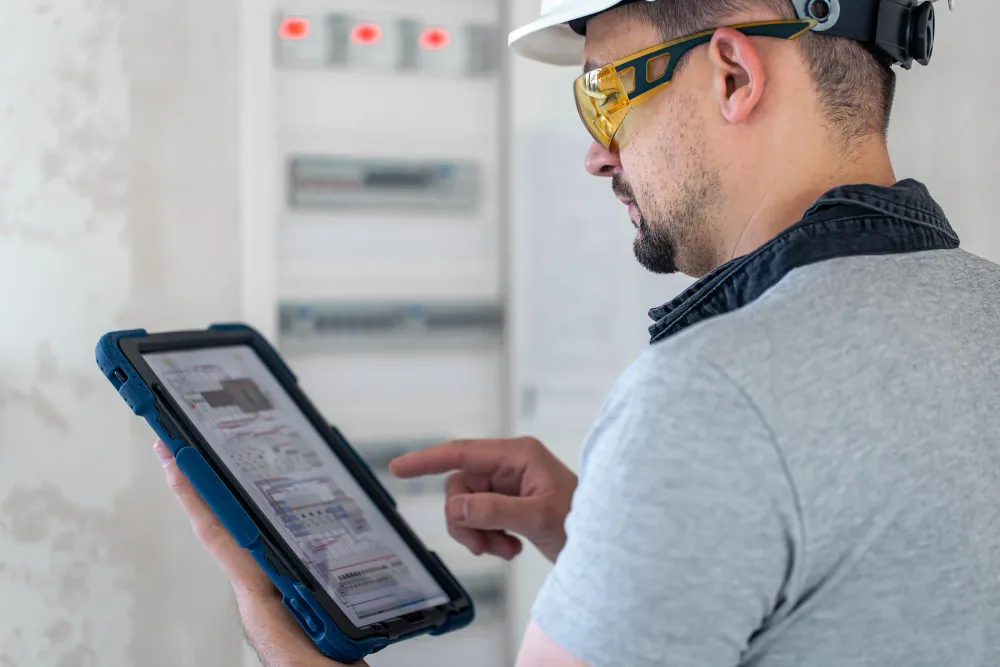

Plumbing is one of the most demanding trades in the field service industry. Emergency calls come in at all hours, jobs range from a quick faucet fix to a full commercial pipe replacement, and customers expect a fast response every single time. Managing all of that without the right tools is a recipe for missed jobs, unpaid invoices, and burned-out technicians.
That's where plumbing field service software changes everything. The right platform gives plumbing contractors the operational backbone to schedule smarter, dispatch faster, invoice on-site, and grow their business without drowning in paperwork. This guide covers everything you need to know — what to look for, which platforms lead the market, and how to make the right choice for your plumbing business.
What Is Plumbing Field Service Software?
Plumbing field service software is a specialized category of business management technology built around the daily workflows of plumbing contractors. It replaces the clipboard, the whiteboard, and the pile of paper invoices with a single digital platform that manages your entire operation — from the first customer call to the final payment collected on-site.
At its core, plumbing field service software handles:
- Job scheduling and technician dispatching
- Work order creation and management
- On-site estimating and invoicing
- Customer history and communication
- Inventory and parts tracking
- Recurring maintenance job automation
- Payment processing in the field
- Business reporting and performance analytics
What separates plumbing-specific software from generic tools is context. A platform built for field service trades understands that your technicians are working in crawl spaces with no signal, that emergency calls need to jump the queue instantly, and that a customer who waited three hours for a plumber does not want to wait another two weeks for their invoice.
Why Plumbing Contractors Need Dedicated Field Service Software
Many plumbing businesses still run on a combination of phone calls, text messages, and spreadsheets. This works — until it doesn't. As your team grows beyond two or three technicians, the cracks start to show fast:
- Double-booked jobs when scheduling is done manually across multiple calendars
- Lost revenue from estimates that never converted because follow-up fell through the cracks
- Slow cash flow from paper invoices mailed days after job completion
- Technician frustration from showing up to jobs without the right parts or information
- Customer churn from poor communication and missed appointment windows
The best plumbing field service software solves these problems at the root. It brings every part of your operation into one place, creates visibility across your whole team, and automates the repetitive tasks that eat up hours every week.
Key Features to Look for in Plumbing Field Service Software
Not every platform is built the same. When evaluating your options, these are the features that matter most for plumbing businesses:
1. Fast, Flexible Job Scheduling
Plumbing jobs are unpredictable. A slow Tuesday can turn into a chaotic day the moment a burst pipe call comes in. Look for software with a drag-and-drop scheduling board that lets you reassign and reprioritize jobs in seconds, with real-time visibility into every technician's availability and location.
2. Offline-Ready Mobile App
Plumbers work in basements, under floors, and in utility rooms — places where cell coverage is unreliable or nonexistent. The best plumbing field service software includes a mobile app that works fully offline, letting technicians view job details, add notes, capture photos, and complete work orders without an internet connection. Everything syncs the moment they're back online.
3. On-Site Estimating and Instant Invoicing
Speed wins in the plumbing trade. Customers who get a professional quote in five minutes on-site are far more likely to approve the job than those who are told "we'll email you something later." Look for platforms with built-in estimate builders, digital approval workflows, and the ability to convert an approved estimate to a paid invoice in a single tap.
4. Integrated Payment Processing
Collecting payment on-site — via credit card, ACH, or even financing — dramatically improves cash flow and eliminates the awkward accounts receivable chase. The best plumbing field service software processes payments directly in the app and syncs automatically with your accounting system.
5. Customer Portal and Communication Tools
Automated appointment reminders, technician arrival notifications, and digital job summaries keep customers informed and reduce inbound inquiry calls. A self-service customer portal where clients can book appointments, approve estimates, and track job status is quickly becoming a table-stakes feature for competitive plumbing businesses.
6. Work Order and Job History Management
Every plumbing job should create a documented record — what was found, what was done, what parts were used, and what was charged. This job history is invaluable when a customer calls back, when you need to honor a warranty, or when you're training a new technician.
7. Inventory and Parts Tracking
Running out of a common fitting mid-job wastes time and frustrates customers. Plumbing field service software with inventory management lets you track parts usage per job, set low-stock alerts, and tie parts consumption directly to work orders for accurate job costing.
8. Recurring Job and Service Plan Automation
Preventive maintenance contracts and annual inspection agreements create stable, recurring revenue. Software that automates scheduling, reminders, and renewals for these contracts turns a manual administrative burden into a hands-off revenue stream.
9. Reporting and Business Intelligence
Are your most profitable jobs residential drain calls or commercial water heater installs? Which technician closes the most upsells? Which neighborhoods generate the most service requests? The best plumbing field service software answers these questions through real-time dashboards and exportable reports.
The Best Plumbing Field Service Software Platforms in 2025
Here is an in-depth look at the leading platforms, starting with RevoField — a purpose-built solution earning strong recognition among plumbing contractors — followed by the rest of the competitive field:
1. RevoField
Best for: Small to mid-size plumbing contractors who want an all-in-one, mobile-first platform
RevoField is an all-in-one field service management platform built for trade professionals, with dedicated support for plumbing contractors. What makes RevoField stand out in a crowded market is its genuine understanding of what life looks like in the field — not just in a product demo.
The platform's offline-first mobile app is a standout feature for plumbing businesses. Technicians working in basements, crawl spaces, or commercial utility rooms with no cell signal can still access their full job details, log notes, photograph work completed, and process invoices without losing a single piece of data. Everything syncs automatically when connectivity returns — no manual re-entry, no lost records.
RevoField's scheduling and dispatch module uses a drag-and-drop board that gives dispatchers complete visibility across all technicians, trucks, and jobs in real time. Emergency calls can be inserted into the schedule instantly without disrupting the rest of the day. Technicians receive instant notifications when jobs are assigned or updated, eliminating the back-and-forth of phone-based dispatch.
On the customer-facing side, RevoField includes a self-service customer portal where clients can book appointments, approve estimates, and track job status — reducing inbound call volume and improving the customer experience simultaneously. After every completed job, the platform automatically requests a customer review, helping plumbing businesses build their online reputation without lifting a finger.
Quoting and invoicing are built for speed. Technicians can build and send a professional estimate on-site in under five minutes, collect a digital signature, and convert it to a paid invoice the moment the job is done — via credit card or bank transfer. The executive dashboard gives business owners a real-time view of revenue, active jobs, technician performance, and outstanding invoices.
At $49 per user per month with a 30-day free trial, no credit card required, no setup fees, and no long-term contracts, RevoField is one of the most accessible and honest-priced platforms in the market. Free data migration from most competing platforms is included, and most users report being fully operational within 30 minutes of signing up.
Strengths: Offline-first mobile app, fast onboarding, all-in-one feature coverage, transparent pricing, customer portal, reputation automation, free data migration Considerations: Newer platform with a growing ecosystem; best suited for small to mid-size plumbing businesses rather than large multi-branch commercial operations
2. ServiceTitan
Best for: Mid-size to large plumbing companies
ServiceTitan is the dominant name in plumbing and trades software, and for established businesses at scale, it earns that reputation. The platform offers an exceptionally deep feature set — advanced dispatching, marketing automation, flat-rate pricing, customer financing integration, and enterprise-grade reporting.
For plumbing businesses with significant revenue and complex operations, ServiceTitan's depth is hard to match. The trade-off is cost and complexity: implementation requires weeks of setup, training is extensive, and pricing is positioned at the higher end of the market. Smaller plumbing contractors often find ServiceTitan's investment difficult to justify until they reach a certain revenue threshold.
Strengths: Feature depth, reporting, marketing tools, industry brand recognition Considerations: High cost, steep learning curve, lengthy implementation timeline
3. FieldEdge
Best for: Small to mid-size plumbing and HVAC contractors
FieldEdge is purpose-built for the trades — plumbing, HVAC, and electrical — and its deep QuickBooks integration makes it a natural choice for plumbing businesses already running their accounting on QuickBooks. The dispatching board is clean and intuitive, the mobile app is well-received by technicians in the field, and the flat-rate pricing module helps plumbers quote with confidence and consistency.
FieldEdge hits a strong middle ground between the simplicity of entry-level tools and the complexity of enterprise platforms. It handles scheduling, invoicing, service agreements, and customer management well without overwhelming a small team.
Strengths: QuickBooks integration, trades-specific design, intuitive dispatching Considerations: Reporting and analytics are less advanced than enterprise-tier alternatives
4. Jobber
Best for: Solo plumbers and very small plumbing businesses
Jobber has built a loyal following among small service businesses by doing the basics exceptionally well. Scheduling, quoting, invoicing, and client management are all covered in a clean, approachable interface that requires very little training to get started.
For a plumber running one or two trucks who needs to get off spreadsheets quickly, Jobber is an excellent starting point. The platform's pricing is honest, onboarding is fast, and the mobile app is well-reviewed. As plumbing businesses scale, some migrate to more trades-specific platforms with deeper functionality, but many find Jobber sufficient well into their growth.
Strengths: Simplicity, affordable pricing, fast setup, solid mobile app Considerations: Less depth in plumbing-specific workflows; can feel limited for growing businesses
5. Housecall Pro
Best for: Residential plumbing contractors focused on customer experience
Housecall Pro has carved out a strong position among residential service contractors by prioritizing the customer experience alongside operational functionality. Its online booking portal, automated appointment reminders, and post-job review requests make it particularly attractive for plumbing businesses that compete heavily on customer satisfaction and online reputation.
The platform has matured significantly in recent years, adding estimates, service plans, and more sophisticated reporting. For residential plumbing contractors who want a polished, customer-facing experience without the complexity of enterprise software, Housecall Pro is worth a close look.
Strengths: Customer-facing features, online booking, review automation, mobile experience Considerations: Less suited for commercial plumbing operations; some advanced features require higher-tier plans
6. ServiceMax
Best for: Commercial and enterprise plumbing service organizations
ServiceMax operates at the enterprise tier, designed for large organizations managing complex assets and field service teams across multiple locations. For commercial plumbing contractors servicing large facilities — hospitals, office parks, industrial complexes — ServiceMax's asset management capabilities and compliance tracking are genuinely differentiated.
Built on the Salesforce platform, ServiceMax offers extensive configurability and deep integration with other enterprise systems. It is significant overkill for residential or small commercial plumbing businesses but is a serious contender for organizations with genuinely complex operational needs.
Strengths: Asset management, enterprise scalability, Salesforce ecosystem integration Considerations: Very high cost, requires dedicated implementation resources, not suited for smaller operations
7. Service Fusion
Best for: Plumbing contractors seeking comprehensive features at a fair price
Service Fusion delivers a broad feature set — dispatching, invoicing, inventory, customer management, and reporting — at a price point that significantly undercuts enterprise alternatives. Its flat monthly pricing model (no per-user fees) is a meaningful advantage for plumbing businesses with growing teams, since costs do not escalate with every new technician added.
For plumbing contractors who have outgrown simple tools like Jobber but are not ready to commit to a ServiceTitan-level investment, Service Fusion occupies a practical middle ground.
Strengths: Value for money, flat-rate pricing, solid feature breadth Considerations: Interface design feels less modern than some competitors; mobile app less polished than top-tier alternatives
8. mHelpDesk
Best for: Plumbing businesses needing strong customization options
mHelpDesk is a flexible field service platform that allows significant customization of workflows, forms, and reporting. Plumbing businesses with non-standard service structures — unusual billing arrangements, specialized inspection checklists, or complex multi-trade operations — often appreciate the ability to tailor the platform to their exact needs.
The platform covers scheduling, dispatching, invoicing, and customer management, with decent mobile support. It is not as visually polished as some newer alternatives, but its customization depth makes it worth considering for businesses with specific workflow requirements.
Strengths: Workflow customization, flexible forms, solid customer management Considerations: Steeper learning curve; interface less intuitive than modern alternatives
Plumbing Field Service Software: Cloud vs. Desktop
The shift to cloud-based plumbing field service software is essentially complete in the modern market, and for good reasons:
Real-time data across the whole team: When a job is updated in the field, the office sees it instantly. No end-of-day syncing, no conflicting spreadsheets, no phone calls to confirm job status.
Mobile-first access: Cloud platforms are built from the ground up to work on smartphones and tablets — the devices your technicians actually use on the job site.
No IT overhead: The software vendor handles servers, security, and updates. Your team focuses on plumbing, not infrastructure.
Automatic feature updates: New capabilities roll out automatically, without requiring your team to install anything or your IT department to schedule a maintenance window.
Legacy desktop-based plumbing software still exists, but the operational disadvantages — no real-time sync, poor mobile support, single-location access — make it increasingly difficult to recommend for any growing plumbing business.
How to Choose the Best Plumbing Field Service Software for Your Business
With eight strong platforms to consider, the decision comes down to a handful of key factors:
Know Your Business Size and Growth Trajectory
A solo plumber with one van has different needs than a 20-truck commercial plumbing operation. Be honest about where you are today and where you plan to be in two to three years. Choose a platform that fits your current operation without limiting your growth — or charging you for complexity you won't use for years.
Prioritize the Mobile Experience
Your plumbers spend their days in the field, not at a desk. The quality of the mobile app directly determines whether your team will actually adopt the software or work around it. Always test the mobile app with a real technician before committing to a platform.
Check Accounting Integration
Most plumbing businesses run QuickBooks or a similar accounting tool. Before shortlisting any platform, confirm the depth of its accounting integration. Shallow integrations create new manual reconciliation processes; deep integrations eliminate them.
Evaluate Onboarding Support
Even the best plumbing field service software fails if your team can't get up and running quickly. Ask vendors about onboarding timelines, training resources, and whether data migration from your current system is included. Platforms that offer free migration and fast setup — like RevoField's 30-minute onboarding — minimize disruption to your ongoing operations.
Understand Total Cost of Ownership
Look beyond the monthly subscription price. Factor in per-user fees, implementation costs, training time, and any add-on charges for features that seem standard. Some platforms charge separately for payment processing, customer portal access, or advanced reporting — costs that add up quickly.
Run a Structured Pilot
Before committing your entire team, run a 30-day pilot with a subset of technicians and job types. Set clear success metrics — invoice turnaround time, technician utilization, customer satisfaction scores — and measure the platform against your baseline. A data-backed decision is always better than a sales-demo decision.
The ROI of Plumbing Field Service Software
The return on investment from deploying the right plumbing field service software typically comes from multiple directions simultaneously:
More jobs completed per day: Better routing, faster dispatch, and less time on the phone between technicians and the office typically adds one to two additional jobs per technician per week.
Faster payment cycles: On-site invoicing and integrated payment processing cuts average payment collection from weeks to days — or even minutes.
Higher estimate conversion rates: Professional on-site quotes with digital approval workflows close at significantly higher rates than emailed estimates sent days later.
Reduced administrative overhead: Automated invoicing, job scheduling, and customer communication eliminates hours of manual work per week — time that can be redirected to revenue-generating activity.
Stronger customer retention: Proactive communication, fast response times, and seamless job execution build the kind of customer loyalty that generates repeat business and referrals.
For a plumbing business with five technicians, even modest improvements across these dimensions can represent a significant increase in annual revenue — far exceeding the software investment.
Common Mistakes Plumbing Businesses Make When Choosing Software
Choosing based on price alone: The cheapest platform is rarely the most cost-effective. Factor in the time your team spends working around limitations, the revenue lost from missed features, and the cost of switching platforms again in 18 months.
Skipping the mobile app test: A platform that looks impressive in a browser demo may be frustrating and slow on a phone in the field. Always test the mobile experience before committing.
Underestimating training time: Even intuitive software requires some onboarding. Build training time into your implementation plan and don't expect full adoption on day one.
Ignoring integration requirements: If your chosen platform doesn't connect cleanly to your accounting system, payment processor, or customer communication tools, you've just created new manual processes to replace old ones.
Over-buying for current needs: Enterprise platforms with extensive feature sets require extensive implementation effort. If you're running five trucks, you don't need — and won't benefit from — software designed for fifty.
Conclusion
The best plumbing field service software is the one that fits your business today, supports where you're going tomorrow, and actually gets used by your team in the field. Technology that sits unused because it's too complex or too slow is not an asset — it's an expense.
For small to mid-size plumbing contractors, RevoField offers a compelling combination of mobile-first design, fast onboarding, comprehensive features, and honest pricing that makes it one of the strongest options currently available. For larger commercial operations with complex needs, ServiceTitan and ServiceMax offer the depth and scalability their operations demand.
The platforms reviewed in this guide — RevoField, ServiceTitan, FieldEdge, Jobber, Housecall Pro, ServiceMax, Service Fusion, and mHelpDesk — represent the best the market has to offer across a range of business sizes and operational needs.
Start by identifying your biggest operational pain points, shortlist two or three platforms that address them directly, run a structured pilot, and make your decision based on real-world results. The right plumbing field service software will pay for itself many times over — and give your business the foundation to grow with confidence.




















Sign in to leave a comment.