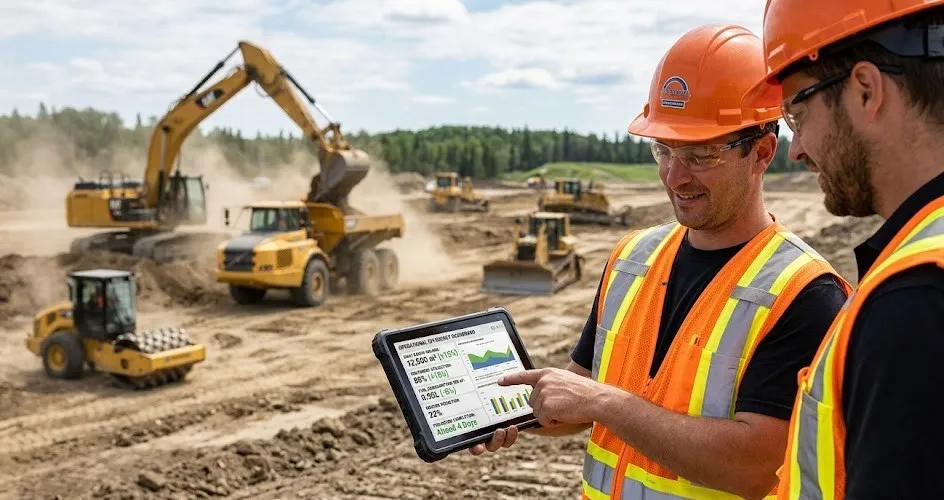

For years, construction companies focused heavily on project tracking.
Track the schedule.
Track the equipment.
Track production milestones.
But modern earthworks operations are becoming too complex for traditional tracking systems alone.
A quieter shift is now happening across heavy civil construction:
Operational visibility is becoming more important than static project management.
The Difference Between Tracking and Visibility
Traditional project tracking answers questions like:
- Is the project on schedule?
- How much material was moved?
- Which equipment is active?
Operational visibility answers something much larger:
“What is happening across the site right now?”
That difference becomes critical on large-scale earthworks projects where excavation, hauling, grading, and scheduling all depend on continuous coordination.
Why Traditional Workflows Are Reaching Their Limits
Most earthworks operations still rely on fragmented systems:
- spreadsheets
- radio communication
- delayed reporting
- disconnected software platforms
These workflows worked when projects were smaller and easier to coordinate manually.
But enterprise-scale heavy civil projects now involve:
- multiple crews
- large equipment fleets
- dynamic haul routes
- changing site conditions
- time-sensitive production targets
“The operational complexity of earthworks projects is increasing as disconnected workflows create visibility gaps across equipment, crews, and production systems” (source: Konverge Digital Solutions)
The challenge is no longer simply collecting project data.
The challenge is maintaining synchronized operational awareness across the site.
Why Small Visibility Gaps Create Large Operational Problems
In earthworks operations, even small delays compound quickly.
A truck waits too long at a loading point.
An excavator becomes idle.
Hauling efficiency drops.
Production forecasting becomes inaccurate.
Individually, these issues seem minor.
Collectively, they create:
- equipment underutilization
- fuel waste
- schedule overruns
- delayed project completion
- inefficient resource allocation
The project continues moving, but operational efficiency slowly degrades.
The Shift Toward Connected Operational Ecosystems
Construction companies are beginning to move away from isolated workflows and toward connected operational environments.
The focus is shifting toward:
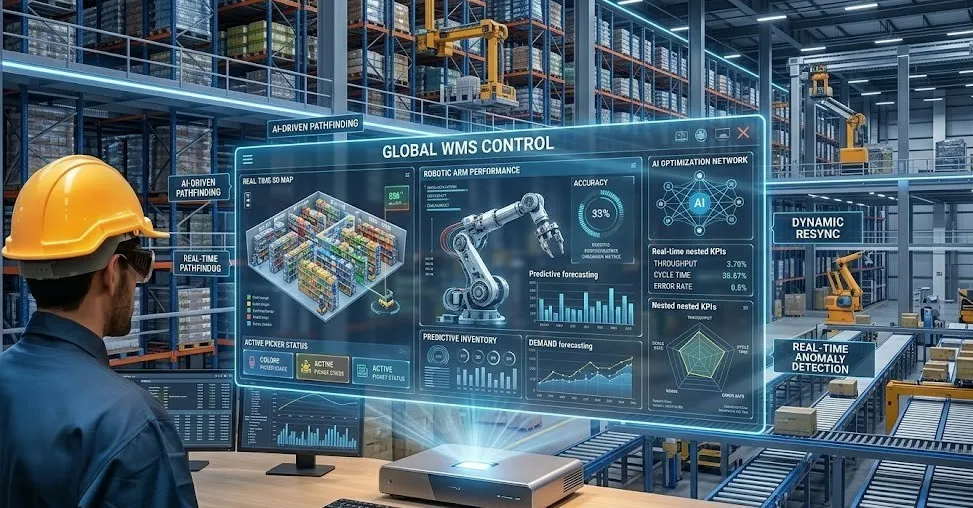
- centralized operational dashboards
- real-time equipment visibility
- connected field-to-office communication
- live production monitoring
- synchronized scheduling systems
The goal is not simply digitization.
It is operational continuity.
This reflects a broader transition happening across enterprise infrastructure, where connected execution environments are becoming more valuable than isolated software tools. AI-driven operational systems increasingly prioritize coordination and system-wide awareness over disconnected task management.
Why Visibility Matters More at Scale
At smaller project sizes, teams can compensate for operational gaps manually.
At enterprise scale, manual coordination becomes increasingly unsustainable.
As heavy civil projects become larger and more data-intensive, real-time operational visibility becomes essential for:
- maintaining productivity
- reducing bottlenecks
- improving equipment utilization
- responding to delays before they escalate
The companies that maintain synchronized awareness across operations gain a major competitive advantage.
Final Thought
Earthworks inefficiency is rarely caused by one major failure.
It usually comes from fragmented coordination across crews, equipment, and operational systems.
In the next phase of heavy civil construction, operational visibility across the entire site may become more important than project tracking alone.





























Sign in to leave a comment.