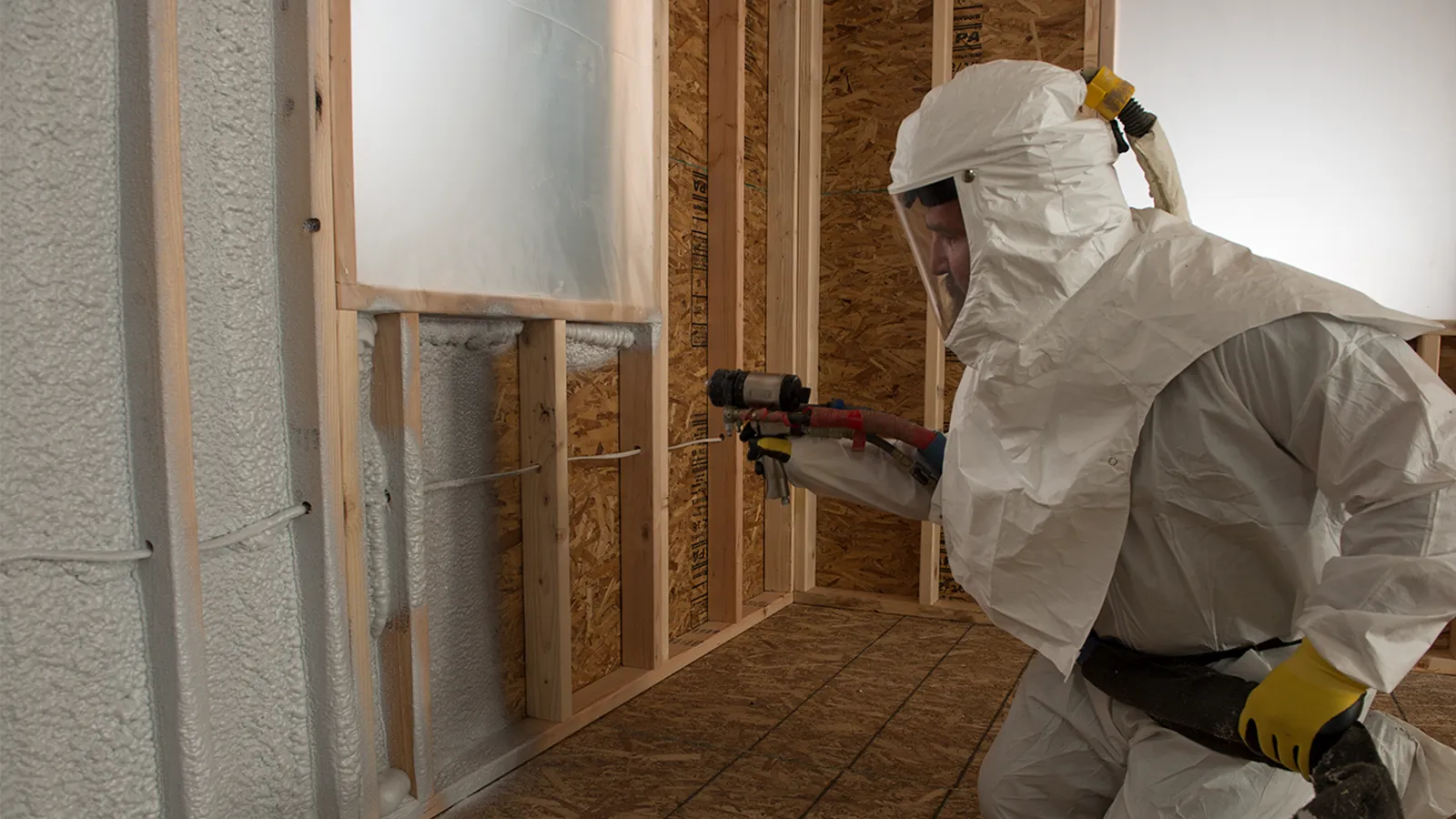

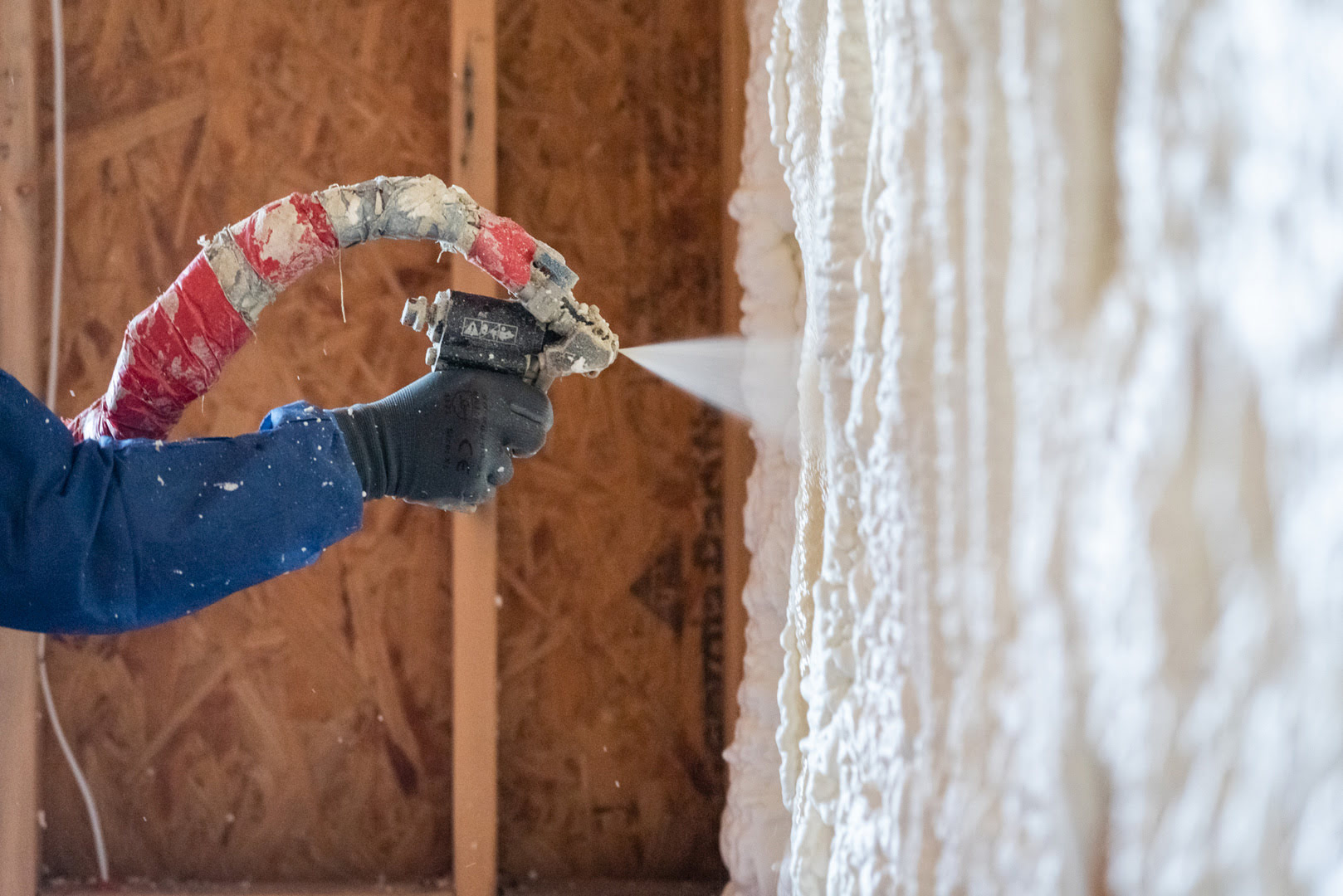
Selecting the Best Spray Foam Insulation for Hot Climate regions like Leander requires understanding how high temperatures and humidity interact with building materials. Closed-cell spray foam stands out as the most effective option for Central Texas because it provides a high R-value per inch and acts as a built-in vapor barrier. This dual-purpose nature helps keep conditioned air inside while preventing the heavy Texas humidity from entering your wall cavities or attic space.
Homeowners and business owners in the Hill Country often struggle with rising utility bills during the long summer months. Utilizing the Best Spray Foam Insulation for Hot Climate and Spray Foam Insulation Leander, TX ensures that your cooling system does not have to work overtime to combat radiant heat from the sun. This guide provides a detailed look at why specific spray foam types outperform traditional fiberglass or cellulose when the thermometer stays above 90 degrees for weeks at a time.
How does the Leander climate affect your insulation choices?
The local weather in Leander features intense direct sunlight and significant humidity shifts that can degrade traditional materials. Standard batts often sag or lose effectiveness when moisture accumulates, but spray foam insulation for the Texas climate remains stable regardless of the dew point. Heat moves in three ways: conduction, convection, and radiation. Spray foam is unique because it addresses all three by creating a seamless air seal that stops air movement entirely.
When temperatures peak in July and August, your roof deck can reach over 150 degrees. This heat transfers directly into your living space if your attic is not properly shielded. Choosing heat-resistant insulation solutions involves looking for materials that do not just slow down heat but actually stop the air that carries it. Because spray foam expands to fill every crack and crevice, it eliminates the "chimney effect" where cool air escapes through the bottom of the house, and hot air enters through the top.
- High humidity levels in Leander require a material that does not hold water.
- Extreme temperature swings between day and night can cause building materials to expand and contract.
- Dense insulation helps reduce the entry of outdoor allergens and dust common in the Texas Hill Country.
- Spray foam maintains its R-value over decades without settling or thinning out.
Technical differences between open-cell and closed-cell in hot climates
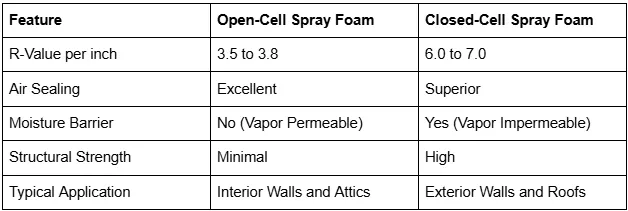
Understanding open cell vs closed cell in hot climates is the first step in planning a renovation or new build. Open-cell foam is lighter and more flexible, making it an excellent choice for soundproofing and filling large areas quickly. However, closed-cell foam is much denser and provides a higher R-value, which is often preferred for attic spray foam for high temperatures where space might be limited but heat resistance is a priority.
Closed-cell foam also adds structural integrity to a building, which can be beneficial during the high-wind events sometimes seen in Central Texas. While open-cell foam is more breathable, it may require an additional vapor retarder in very humid environments to prevent moisture issues. In most Leander residential applications, a wall insulation contractor will evaluate the specific orientation of the home to determine which density provides the best return on investment.
Maximizing energy-efficient insulation for hot weather
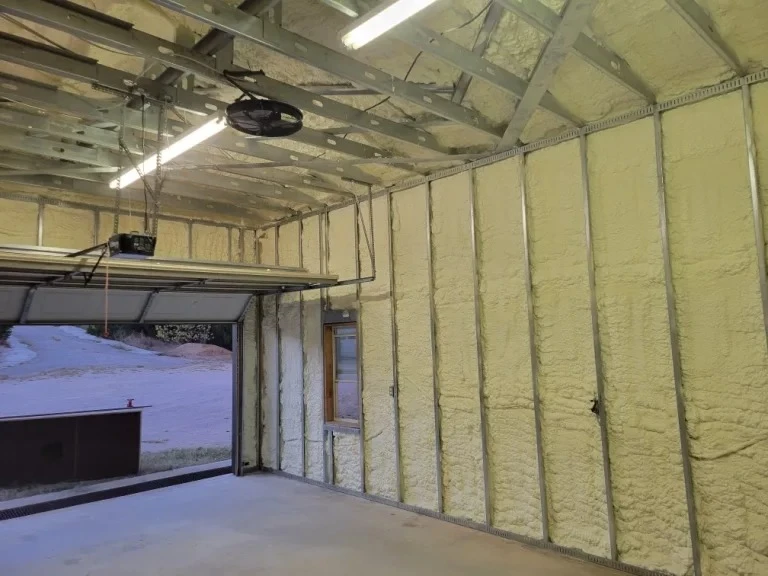
Achieving energy-efficient insulation for hot weather goes beyond just spraying foam; it requires a strategic approach to the entire building envelope. When a wall insulation company installs foam, they focus on the "envelope" to ensure there are no gaps where energy can leak. This creates a conditioned attic space, which is significantly cooler than a vented attic.
By bringing the attic into the conditioned space, your HVAC equipment and ductwork operate in a much milder environment. Instead of the unit sitting in a 140-degree room trying to create 60-degree air, it sits in an 80-degree room. This reduction in the temperature delta leads to a massive cooling cost reduction with insulation that traditional materials simply cannot match.
- Conditioned attics prevent ductwork from sweating and developing mold.
- Sealing the building envelope reduces the workload on air conditioning compressors.
- Modern wall insulation experts use infrared cameras to ensure total coverage.
- Better insulation allows for the installation of smaller, more efficient HVAC units.
Humidity control with spray foam insulation in Texas
Moisture management is just as important as heat management in the southern United States. Effective humidity control with spray foam insulation prevents the "muggy" feeling often found in older homes. Because closed-cell foam does not allow water vapor to pass through easily, it keeps the humid outdoor air from mixing with the dry, cooled air inside your home.
This is especially relevant for Residential Spray Foam Insulation projects where comfort is the primary goal. When a home is airtight, the air conditioner can focus on removing the moisture generated inside the home by breathing, cooking, and showering, rather than fighting the endless humidity from outside. This leads to a more consistent indoor environment and better air quality.

Bonus Tip: When choosing the Best Spray Foam Insulation for a hot climate, always ensure your wall insulation services provider checks for existing roof leaks before application, as foam can hide leaks until they become major issues.
Critical climate-specific insulation strategies for Leander
Implementing climate-specific insulation strategies involves looking at the house as a complete system. For instance, Commercial Spray Foam Insulation for local businesses often requires a different thickness than a residential bedroom. In Leander, the western-facing walls receive the most punishing solar load, and these areas often benefit from extra thickness to prevent "hot spots" in the building.
Another strategy involves using Spray Foam Roofing or Roof Coatings for flat-roofed commercial buildings. These applications reflect sunlight while providing a seamless layer of protection. For structures like barns or shops, a Spray Foam Pole Barn application can turn an unusable, sweltering tin shed into a comfortable workspace even in mid-August.
Analyzing spray foam performance in high heat
Research into spray foam performance in high heat shows that it maintains its physical properties even when exposed to extreme attic temperatures. Unlike some materials that may off-gas or lose their shape, high-quality spray foam remains rigid. This longevity is why it is considered the best insulation for southern climates, where the sun is a constant factor for nine months of the year.
Market data suggests that homes with professional attic insulation in Leander, TX, can see a reduction in energy consumption by as much as 40 percent compared to homes with degraded fiberglass. Furthermore, the structural reinforcement provided by closed-cell foam can increase the wind uplift resistance of a roof, which is a significant safety benefit during Texas storm seasons.
- Spray foam does not provide a food source for pests or insects.
- It fills irregular gaps around pipes and electrical wires that batts cannot reach.
- The material does not sag over time, ensuring the R-value remains constant.
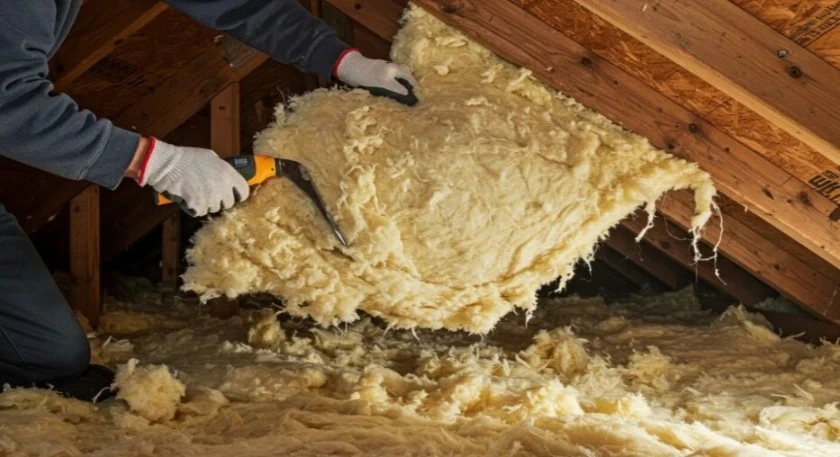
- Insulation Removal of old, dusty materials is often necessary before applying new foam for the best results.
Factors to consider before choosing your insulation provider
Before you hire a wall insulation contractor, you must evaluate the specific needs of your property. Not every building requires the same approach. Factors like the age of the structure, the type of framing, and the existing ventilation system will dictate whether you should use Open-Cell Spray Foam or Closed-Cell Spray Foam.
It is also wise to consider the long-term goals for the property. If you plan on staying in your Leander home for many years, the higher upfront cost of the Best Spray Foam Insulation for Hot Climate is easily offset by the monthly savings on cooling. However, if you are simply looking for a quick fix for a single room, Mineral Wool Insulation or Interior Insulation might be discussed as alternatives.
- Verify the experience of the crew with Residential Spray Foam in Texas.
- Ask about the specific brands of foam used and their fire ratings.
- Ensure the provider offers a comprehensive evaluation of your current attic state.
- Check if they offer Polyurea Coatings or other specialized services for unique surfaces.
Bonus Tip: A reputable wall insulation company will always provide a pre-installation checklist that includes moving personal items away from work areas and ensuring pets are secured.

Comparing spray foam to traditional insulation methods
When looking at spray foam insulation Leander, TX options, the comparison to traditional methods is striking. Fiberglass batts and blown-in cellulose rely on trapped air to insulate, but they do nothing to stop air from blowing through them. In a windy or high-pressure environment, the effective R-value of these materials can drop significantly.
In contrast, spray foam provides both thermal resistance and an air barrier. While the initial investment for New Construction Insulation using foam is higher, the total cost of ownership is lower because of the energy savings. Most homeowners in hot climates find that the system pays for itself within a few years through reduced utility costs and lower wear and tear on their air conditioning units.
How to get a professional assessment for your Leander property and save on cooling costs
Determining the right thickness and type of foam for your specific building requires a professional eye. You should look for wall insulation experts who understand the unique challenges of the Hill Country. For those ready to upgrade their comfort and efficiency, reaching out to Spray Foam Tech is a great next step. They offer a range of solutions, including Residential Spray Foam Insulation and Commercial Spray Foam Insulation, tailored to local needs.
You can contact them at (737) 777-9590 or via email at [email protected] to discuss your project. They are located in the area and understand exactly how to handle the Best Spray Foam Insulation for Hot Climate requirements. For more details on their location and service area, you can view their map at https://maps.app.goo.gl/EGjHWFsjyKuVz28T9. Requesting a free quote is the most effective way to see how much you could save on your monthly energy bills.
Common questions about southern climate insulation
Is open-cell foam or closed-cell foam better for Texas attics?
Closed-cell foam is generally superior for Texas attics because it offers a higher R-value and acts as a moisture barrier against humidity. However, open-cell foam is often used in residential attics because it is more cost-effective while still providing an excellent air seal.
Will spray foam insulation make my house too airtight?
Modern homes with spray foam are very airtight, which is excellent for energy efficiency. To maintain air quality, wall insulation experts often recommend ensuring your HVAC system has a fresh air intake or using a heat recovery ventilator to circulate clean air.
Can spray foam be applied over existing insulation?
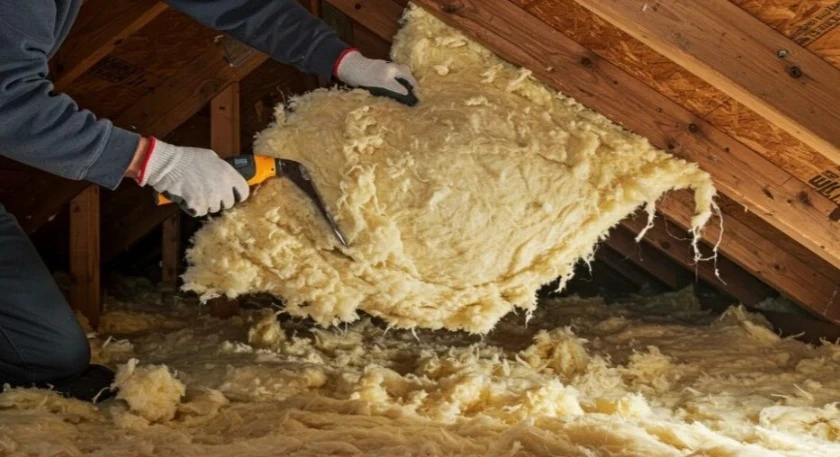
It is usually best to perform Insulation Removal before applying spray foam. This allows the foam to adhere directly to the roof deck or wall sheathing, ensuring a perfect seal and preventing old dust and allergens from being trapped behind the new material.
How long does spray foam insulation last in hot weather?
Spray foam is designed to last for the lifetime of the building. It does not settle, shrink, or degrade under normal conditions, making it one of the most durable heat-resistant insulation solutions available for the Leander area.
Does spray foam insulation help with noise reduction?
Yes, both types of foam provide significant sound dampening. Open-cell foam is particularly effective at absorbing mid-range sound frequencies, making it a popular choice for Interior Insulation in media rooms or home offices.
Final thoughts on selecting the right insulation
Choosing the right material for the Leander climate is a decision that affects your comfort and your finances for years to come. By prioritizing the Best Spray Foam Insulation for Hot Climate, you ensure that your property remains protected against extreme temperatures and high humidity. Whether you are focusing on wall insulation services for a new home or upgrading an existing attic, the air-sealing properties of spray foam provide a level of performance that traditional materials cannot match. Focus on the long-term value of an airtight building envelope and consult with professionals who have local experience to get the best results for your specific situation.


























Sign in to leave a comment.