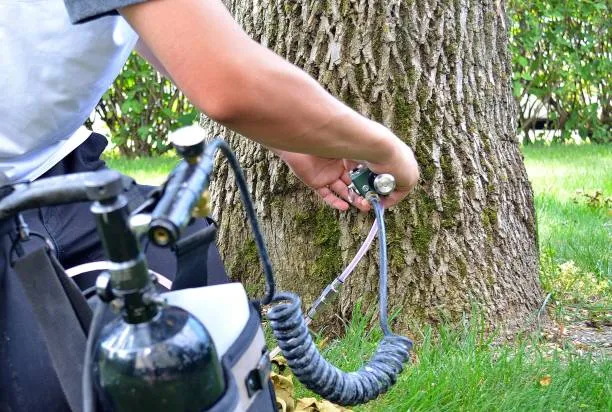

Elm leaf beetles are one of the most destructive pests affecting elm trees across Australia. While a single infestation may only cause cosmetic damage, repeated attacks can weaken trees, reduce growth, and make them more vulnerable to disease and environmental stress. For homeowners, councils, schools, and commercial property managers, timing is the key to successful treatment.
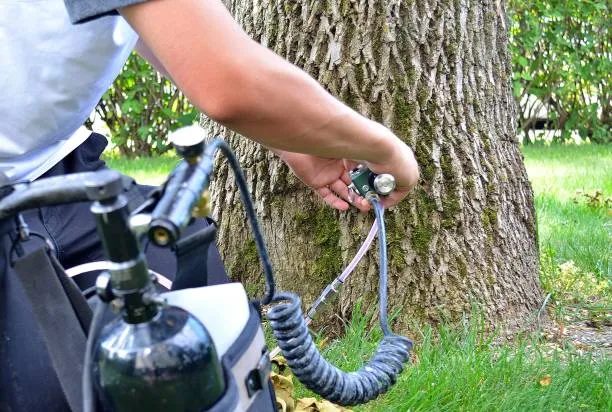
Tree injections are widely regarded as one of the safest and most effective methods for controlling elm leaf beetles because the insecticide is delivered directly into the tree's vascular system instead of being sprayed into the surrounding environment. However, even the best treatment can be less effective if it is applied too late.
Why Timing Matters for Elm Leaf Beetle Control
Elm leaf beetles follow a predictable seasonal life cycle. Adult beetles overwinter in sheltered locations before emerging as temperatures rise in spring. They feed on new leaves, lay eggs, and the resulting larvae cause the most noticeable damage by skeletonising foliage.
If treatment is applied before the beetles become active, the insecticide has time to move throughout the tree and protect fresh leaves before feeding begins. Waiting until severe damage is visible means the beetles have already completed much of their feeding cycle, making recovery slower and potentially requiring additional management.
The Best Time for Tree Injections in Australia
For most Australian regions, late winter through early spring (June to October) is considered the ideal window for elm leaf beetle trunk injection.
During this period:
- Trees begin preparing for new seasonal growth.
- The vascular system efficiently transports the injected product.
- Leaves receive protection before beetles begin feeding.
- New foliage develops with systemic protection already in place.
Many professional arborists also extend treatments into late spring where necessary, but earlier applications generally provide the best preventative protection.
Seasonal Timing Guide
Winter (June – August)
This is generally the preferred treatment period.
Advantages include:
- Beetles remain inactive.
- Trees are preparing for spring growth.
- Insecticide has sufficient time to circulate.
- Preventative protection is established before egg laying begins.
Many tree care specialists recommend scheduling injections during winter to avoid the rush that often occurs once beetle activity starts.
Early Spring (September – October)
Early spring remains highly effective.
At this stage:
- Sap movement increases.
- New leaves are forming.
- Adult beetles begin emerging.
Treatments applied during this period can still provide excellent protection, provided they are completed before heavy feeding begins. Stem injections typically become effective within several days, making them faster acting than soil injection methods.
Late Spring (November)
Treatment can still work, but the timing becomes less ideal.
By this stage:
- Beetles may already be feeding.
- Eggs may have hatched.
- Some leaf damage has likely occurred.
Although injections remain effective, they become more reactive than preventative.
Summer (December – February)
Summer injections can reduce further feeding but cannot reverse existing leaf damage.
Large infestations may already have:
- Skeletonised leaves
- Caused premature leaf drop
- Stressed the tree during hot weather
Professional arborists may still recommend treatment to minimise ongoing damage, particularly for valuable mature elms.
Autumn (March – May)
Autumn is less commonly recommended as the primary treatment season because beetle activity begins declining as adults prepare for overwintering. However, some specialists use autumn injections to target active adults before dormancy and prepare trees for the following season.
Why Trunk Injection Is Preferred
Compared with traditional spraying, trunk injection offers several advantages.
Precise Application
The insecticide is placed directly into the tree, reducing drift and environmental exposure.
Better Protection
The treatment reaches leaves throughout the canopy, including very tall trees that are difficult to spray.
Longer Lasting Results
Many trunk injection products remain effective for multiple growing seasons depending on the product used and local infestation levels.
Safe Around Surroundings
Because the chemical remains inside the tree, exposure to nearby gardens, pets, people, and beneficial insects is significantly reduced compared with broad foliar spraying.
Signs Your Elm Tree Needs Treatment
Don't wait until your tree has lost most of its leaves.
Early warning signs include:
- Small holes appearing in new leaves
- Skeletonised foliage
- Brown or dry-looking leaves
- Tiny yellow eggs on leaf undersides
- Black larvae feeding on leaves
- Adult yellow-green beetles visible during spring
Trees that suffered beetle damage the previous season should usually be considered for preventative treatment before the next spring.
Should Every Elm Tree Be Injected Every Year?
Not necessarily.
Treatment frequency depends on:
- Previous beetle pressure
- Tree size
- Local climate
- Product used
- Arborist recommendations
Some systemic trunk injection products protect for two to three years, while others may require more regular monitoring. Annual inspections remain important even when treatments last multiple seasons.
Additional Ways to Protect Elm Trees
Tree injections work best as part of an integrated pest management strategy.
Good practices include:
- Water trees during prolonged dry periods.
- Apply slow-release fertiliser in late winter.
- Avoid soil compaction around roots.
- Monitor leaves regularly during spring.
- Remove heavily infested fallen foliage where practical.
- Use sticky trunk bands where appropriate to intercept migrating larvae as part of an integrated management plan.
Why Professional Treatment Matters
Professional arborists understand:
- Correct injection timing
- Appropriate insecticide selection
- Tree health assessment
- Safe injection techniques
- Local pest activity
Incorrect drilling or unsuitable products may damage the tree or provide poor control. For large, mature, or heritage elm trees, professional treatment offers the safest and most effective solution.
Final Thoughts
When it comes to elm leaf beetle management, prevention always delivers better results than waiting for visible damage. Across most of Australia, the best timing for elm leaf beetle tree injections is late winter through early spring (June to October), allowing the systemic treatment to move through the tree before beetles begin feeding.
Scheduling injections during this period helps protect new foliage, reduces seasonal defoliation, and supports the long-term health of valuable elm trees. Combined with regular monitoring and professional arboricultural care, timely trunk injections remain one of the most reliable methods for managing elm leaf beetles in Australian landscapes.























Sign in to leave a comment.