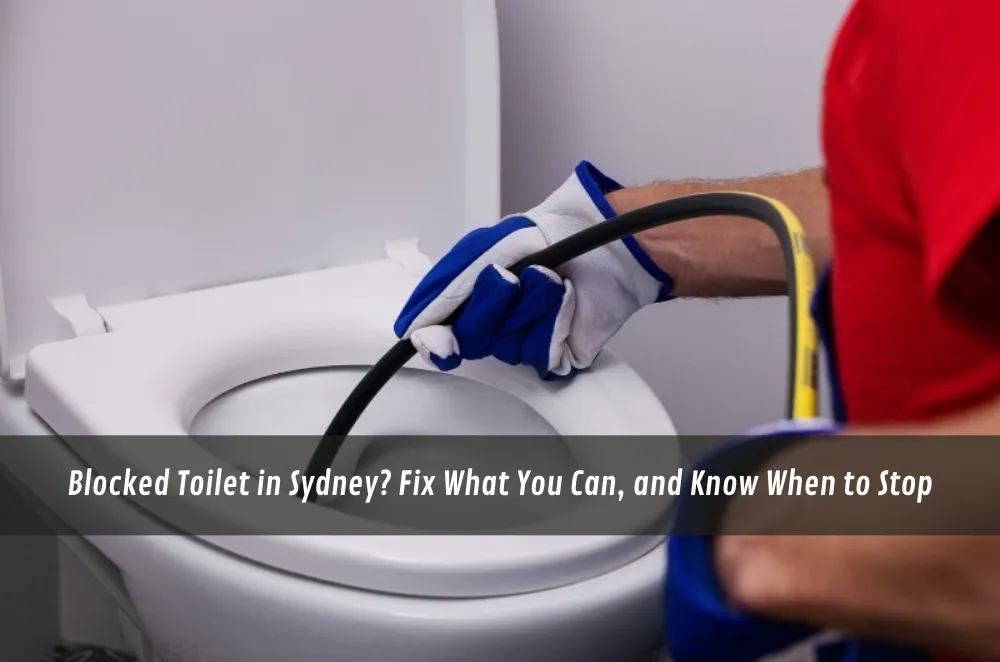

A blocked toilet is one of those problems that goes from “minor nuisance” to “why is the bathroom floor wet?” in about thirty seconds.
Most people do the same thing first: flush again to “see if it goes down”. That’s usually the moment it stops being a small job.
What follows is a practical way to approach a blocked toilet so you don’t turn a clog into an overflow, especially in Sydney homes where older pipe runs, renovations, and shared apartment stacks can complicate what looks like a simple blockage.
What’s usually causing the blockage
A toilet blocks for boring reasons more often than dramatic ones.
Too much paper, wipes (yes, even the ones labelled “flushable”), or something that shouldn’t have been flushed in the first place are the classics.
The more useful question is where the blockage is.
If it’s just the bowl and trap, you’ll usually get movement with the right plunge or an auger.
If it’s further down the line, you’ll often see odd side effects: gurgling in another drain, the bowl level rising and falling for no clear reason, or a pattern of “it clears, then it blocks again next week”.
In apartments, a single toilet can be connected to a shared stack, so your symptoms can show up in strange ways. In older freestanding homes, long runs and aging joins can mean the restriction isn’t anywhere near the toilet itself.
The first 10 minutes: make it boring and safe
Assume it will overflow until you prove otherwise.
If the water’s high, don’t flush again “to test”. Turn off the water at the isolation valve behind the toilet. If you can’t find it quickly, lift the cistern lid and hold the float up so it stops refilling.
Lay down towels. Grab gloves. Put a bucket nearby.
It’s not glamorous, but containment is cheaper than cleaning up after the water hits grout lines, skirting boards, or carpet in the hallway.
If someone has already poured chemicals into the bowl, treat it like a no-splash situation. You don’t want that stuff on skin, eyes, or a mop you’ll touch later.
What you can try yourself (and when you shouldn’t)
A plunger works, when it seals properly.
Use a flange plunger (the one with the rubber sleeve). If you’re using a flat sink plunger, you’re basically playing air-drum solo in a porcelain bowl.
Before you start, remove some water if it’s too high. You want room to work without sending water over the rim.
Then:
- Push down slowly to compress.
- Pull up sharply to create suction.
- Repeat for 20–30 seconds.
- Pause and wait a moment before checking.
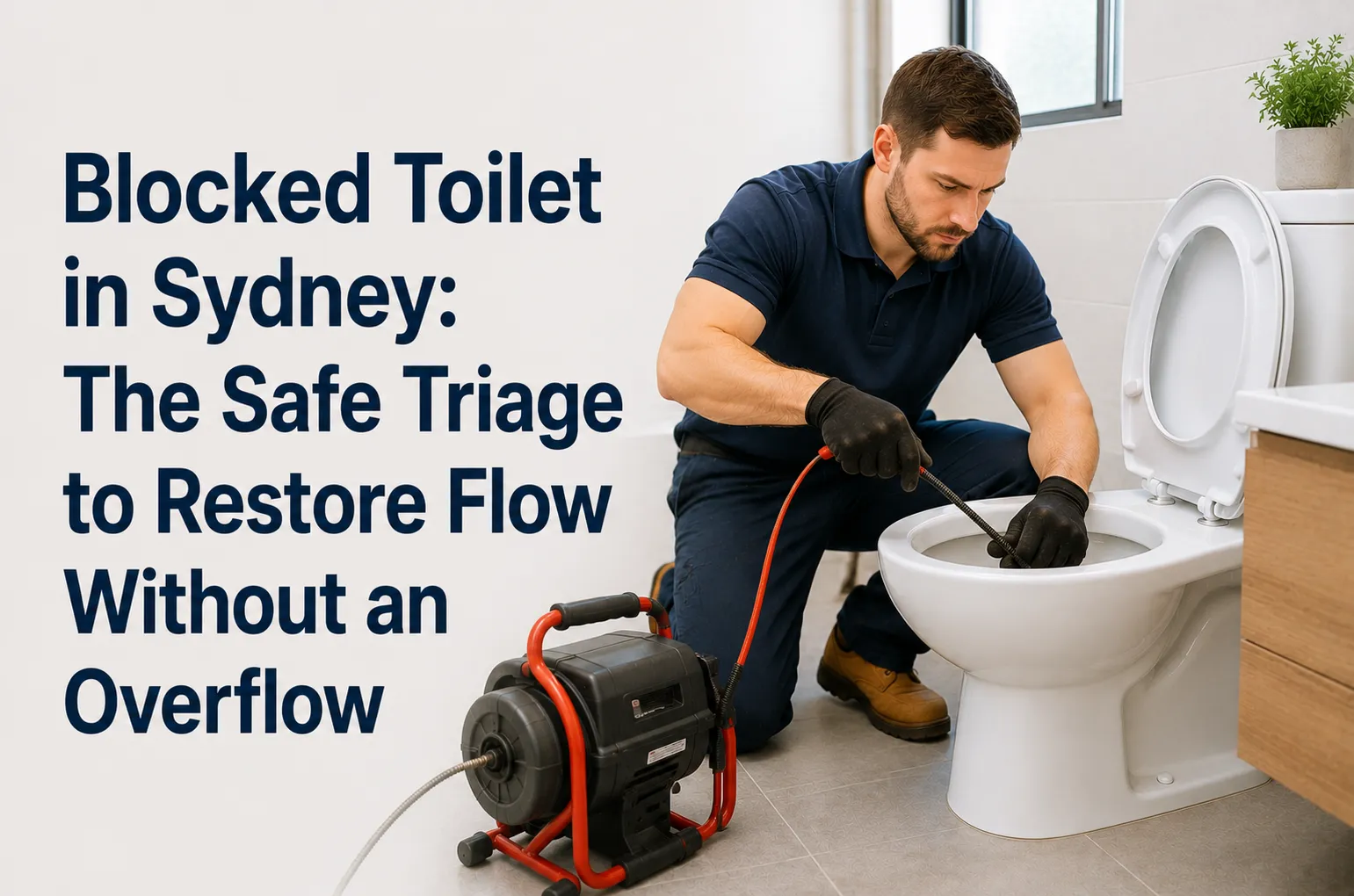
If that doesn’t shift it, a toilet auger is the next sensible tool. It’s designed for toilets, and it’s a lot safer than jamming improvised wire into a trap you can’t see.
Feed it gently, rotate through resistance, then withdraw slowly. If you feel like you’re forcing it, you probably are.
Hard stop lines (don’t push past these)
Stop DIY attempts if:
- the toilet nearly overflows more than once
- water backs up in another fixture (shower, basin, laundry)
- you get strong sewer odour that wasn’t there before
- it clears but re-blocks within days
Those are the moments where “more effort” can just push the obstruction further down, making the eventual repair slower and messier.
Common mistakes that create bigger repairs
A lot of people start searching for a repair for a blocked toilet fixes online and end up trying three or four risky “hacks” in a row.
The biggest one is repeated flushing. The toilet isn’t a slot machine, no jackpot is coming on the fifth try.
Boiling water is another gamble. It can crack porcelain or soften seals, especially if the toilet and pipes are already under stress.
Chemical drain cleaners are overused and often under-effective for toilets. They also make the situation more hazardous for whoever has to work on it later.
And the classic: coat hangers, metal rods, pressure washers, whatever’s on hand. Besides scratching the bowl, you can damage pipework or dislodge joins, particularly in older Sydney homes where previous repairs and renovations aren’t always consistent.
How to decide: DIY, scheduled repair, or urgent callout
The goal isn’t to “win” against the blockage. It’s to get the bathroom safely usable without causing collateral damage.
A few decision factors matter more than people expect:
1) How clear the trigger is
If there’s an obvious cause (too much paper, a one-off accident), a careful plunger attempt and a single auger attempt are reasonable.
If there’s no clear trigger and this is happening repeatedly, it’s usually not a one-off.
2) What else is happening in the house or building
Gurgling in other drains, slow emptying elsewhere, or water levels changing in nearby fixtures can point to a deeper restriction.
3) Building type and access
Apartments can involve shared stacks and strata access. Houses may have inspection points outside that change what a proper diagnosis looks like.
4) Timing and risk
If it’s stable (not rising, not overflowing), you may be better off booking a proper assessment in business hours than doing frantic “one more try” experiments at night.
If the blockage keeps returning, there’s gurgling in other drains, or you suspect a deeper obstruction, a structured assessment like the Sydney Blocked Drain Service repair guide can help map the likely causes and the safest repair path.
Operator experience moment
The worst jobs rarely start as disasters.
They start as someone pushing past a sensible stop point, because “it almost worked” ten minutes ago. Then the bowl fills faster than expected, and now you’re dealing with towels, buckets, and a hallway that smells like regret.
The calmer the first response, the fewer moving parts you’re cleaning later.
A simple 7–14 day plan to stop it happening again
Day 1–2: Note what happened and what you saw, especially whether any other drains gurgled or slowed. Memory gets unreliable once the toilet works again.
Day 2–4: Check what’s being flushed. Remove wipes and heavy paper products from the bathroom routine. If it’s a workplace or rental, put the rule in writing (and make it easy to follow).
Day 4–7: Watch for repeat symptoms after busy periods, mornings, weekends, or when guests visit. Those patterns tell you whether this is load-related.
Day 7–10: If there were multi-fixture symptoms or repeat blockages, organise a proper inspection instead of waiting for the next overflow.
Day 10–14: Set a stop point: if plunging doesn’t improve things quickly, switch tools once, then stop and escalate. “Same action, more force” is where damage happens.
Local SMB mini-walkthrough (Sydney, NSW)
A small Sydney office notices the toilet is slow on busy days and occasionally threatens to overflow.
They turn off the isolation valve and stop staff from test-flushing it into disaster territory.
They remove wipes and thick paper products from the bathroom and put a simple sign up about what can’t be flushed.
They notice light gurgling in the kitchenette sink when the toilet drains, which points away from a simple bowl blockage.
They book a weekday inspection when access is easier than an after-hours scramble.
They document the outcome and keep a basic prevention policy so the same issue doesn’t repeat next month.
Practical opinions
If you’re choosing between more force and better diagnosis, choose diagnosis.
Recurring toilet blockages are usually a “system” issue, not a technique issue.
Most expensive plumbing stories start with someone refusing to stop.
Key Takeaways
- Don’t test-flush a blocked toilet, containment first avoids overflow and damage.
- Use the right tools in order: flange plunger, then toilet auger, then stop if symptoms suggest a deeper issue.
- If other drains gurgle or slow down, assume the problem may be further down the line.
- A short 7–14 day plan (behaviour changes + timely inspection) prevents repeat disruptions.
Common questions we hear from businesses in Sydney, NSW, Australia
Q1) How can we tell if the problem is just the toilet or something in the main line?
Usually the giveaway is what other fixtures do when the toilet is used, gurgling, slow draining, or water levels changing elsewhere. Next step: run a single, controlled test (no repeated flushing) and note any cross-fixture symptoms before attempting more DIY. In most cases in Sydney apartments, shared stacks can make “one toilet issue” behave like a building issue.
Q2) Are chemical drain cleaners worth trying for a blocked toilet?
In most cases they’re a poor fit because many toilet blockages are physical obstructions, not grease build-up, and chemicals add splash and burn risk. Next step: use a proper flange plunger, then a toilet auger, and if chemicals have already been used, avoid plunging aggressively. In Sydney rentals and workplaces, chemical use can also complicate cleanup and maintenance responsibility.
Q3) What if it clears today but blocks again soon after?
It depends on whether the cause is behavioural (what’s being flushed) or structural (partial restriction further down the line). Next step: remove wipes and heavy paper products and keep a simple log of when symptoms return and whether other drains react. In many Sydney suburbs with older pipework and established trees, recurring restrictions can show up in predictable cycles.
Q4) Should we wait for business hours or call urgently?
Usually you can wait if the water level is stable and you can prevent overflow, but not if it’s rising, backing up elsewhere, or creating a hygiene hazard. Next step: shut off the isolation valve, contain the area, and decide based on risk rather than frustration. In most cases around Sydney, daytime access (especially with strata) makes a proper repair smoother than a rushed after-hours visit.























Sign in to leave a comment.