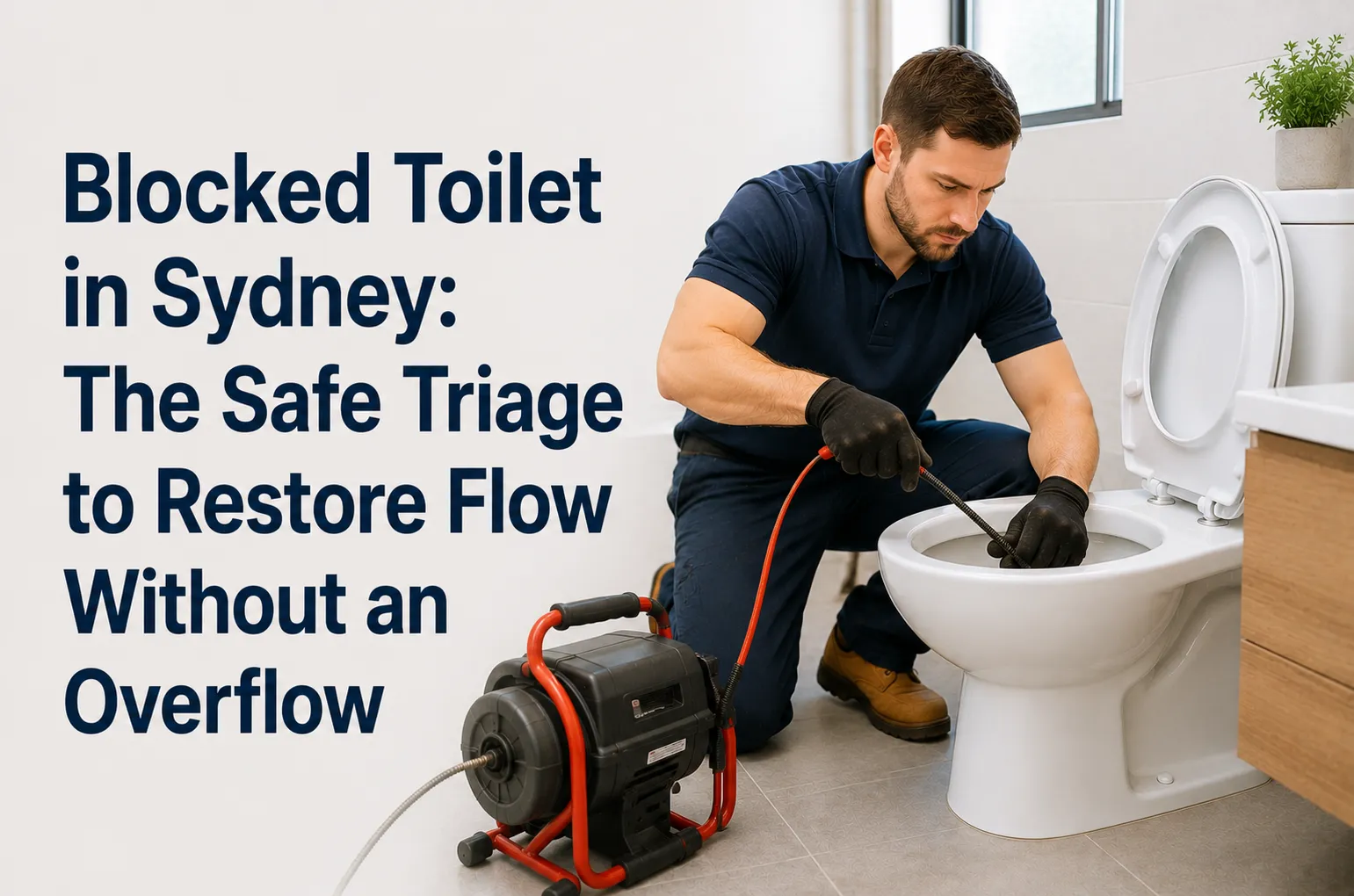

A blocked toilet is one of the few household problems that can turn from annoying to urgent in minutes.
If you’re restoring a blocked toilet, the safest approach is to stabilise the risk first, then troubleshoot in a way that doesn’t push the blockage deeper or create a hygiene mess.
This guide is designed to help you make calm decisions fast, especially when the bathroom is still “usable-but-wrong” and you want to avoid an overflow.
First priority: stop the overflow risk
Stop flushing, even if it looks like it might go down “next time,” because repeated flushing is how minor blockages become floods.
If the water level is high or rising, turn off the toilet’s isolation valve (usually behind the toilet), and keep the lid down to reduce splash risk if the level surges.
Protect floors early with towels or a mop, and keep kids and pets out of the bathroom until you know it’s stable.
If you’ve already had an overflow, treat it as a hygiene issue first and don’t delay cleanup and ventilation while you “test” the toilet again.
Why toilets block and what the symptoms are telling you
Some blockages are in the toilet trap (often caused by too much paper or a foreign object), and some are further down the line (where multiple fixtures can be affected).
If other drains are slow, you hear gurgling in nearby sinks or showers, or floor wastes start behaving oddly, the problem may not be isolated to the toilet.
A toilet that rises quickly and drains slowly often behaves differently from one that sits high and doesn’t move at all, and that difference can help you choose the next step.
Recurring blockages, especially after rain or during certain seasons, can also hint at underlying drainage issues that a plunger won’t “fix” for long.
Common mistakes that make things worse
The most common mistake is “just one more flush,” which is how blocked toilets become overflows and water damage.
Another mistake is pouring harsh chemicals into a slow toilet: they often don’t solve solid obstructions, and they can create splash hazards for anyone who needs to work on the toilet afterward.
Improvised tools (coat hangers, metal rods) can chip porcelain, damage seals, or push an obstruction deeper where it becomes harder to remove.
People also waste time by guessing instead of checking whether other fixtures are affected, which is the quickest way to tell if you’re dealing with a bigger line issue.
Finally, many households keep trying for hours when the situation is clearly escalating, increasing mess, stress, and the odds of damage.
Decision factors: when to try a simple fix vs when to call a licensed plumber
If the toilet is the only fixture affected, the water level is stable, and there’s no sign of overflow risk, a brief, controlled attempt can be reasonable.
If there’s any sign of a broader blockage (multiple drains slow, gurgling, water rising in other points), it’s usually smarter to stop experimenting and escalate early.
If you suspect a foreign object (kids’ toy, hygiene product, deodoriser block) avoid aggressive pushing, because that’s where “simple” becomes “expensive.”
If there’s been an overflow, or if this is a repeat issue, treat it as diagnosis work rather than a routine plunge-and-hope job.
If you want a clear “what to check and what to tell the plumber” reference before you book, Sydney Blocked Drain Service toilet repair guide is a practical way to organise the key details so the fix is faster and less guesswork-based.
A safe at-home attempt that avoids escalation
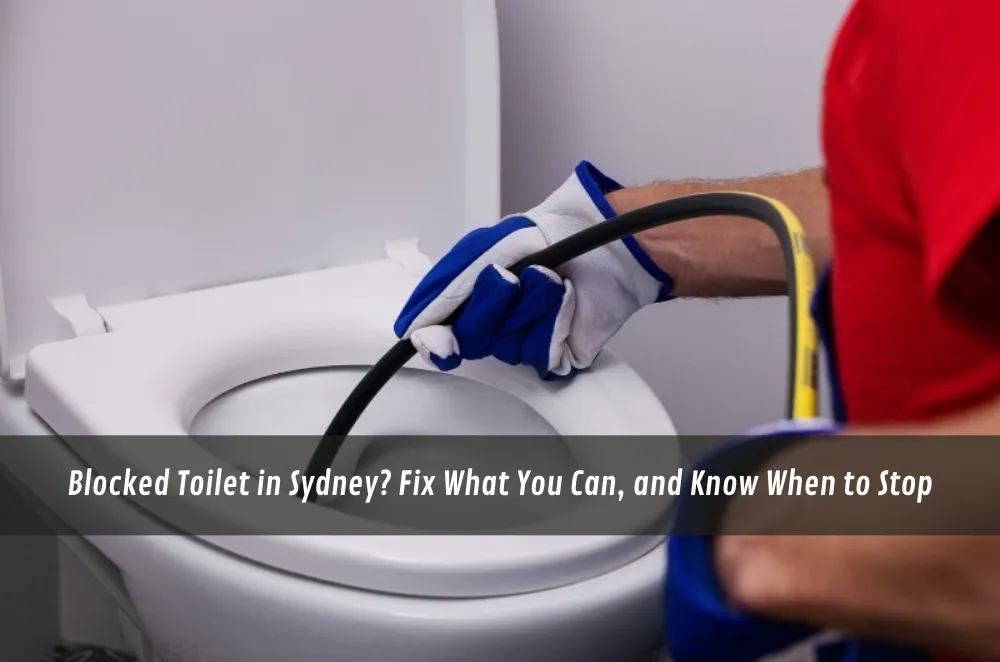
Use a proper toilet plunger (with a flange) rather than a flat sink plunger, because the seal and pressure control are different.
Keep plunging controlled and deliberate: several firm plunges, a pause, then reassess the water level and response before repeating.
If the bowl is near the rim, let the level drop before continuing, because splashback is a real risk and it’s not worth gambling your flooring to “save time.”
If nothing changes after a few controlled cycles, stop and reassess rather than increasing force, because “more force” often means “more mess.”
What to tell the plumber so it gets solved faster
Note whether the toilet is the only fixture affected, and whether gurgling or slow drainage is happening elsewhere, because that changes the likely location of the blockage.
Share what was flushed recently (wipes, paper towel, hygiene items, kids’ objects), because it helps narrow down whether the issue is a trap obstruction or a line issue.
Describe how the water behaves (rises fast, drains slow, doesn’t move), and whether the issue is sudden or recurring, because pattern matters.
If there’s been rain, recent renovations, or repeated blockages in the property, mention it, because it can hint at deeper drainage contributors.
If you’re in strata or a commercial site, access details matter, keys, floor waste locations, after-hours constraints, so the visit doesn’t become a stop-start.
A simple first-actions plan for the next 7–14 days
- Days 1–2: Record the symptoms and stabilise risk. Note whether other drains are affected and stop repeated flushing even if the toilet sometimes “half works.”
- Days 2–3: Do one controlled, safe attempt only if the situation is stable. If the water level is rising, or the blockage behaves like a main line issue, switch immediately to escalation.
- Days 3–5: If the problem is recurring, document the pattern. Write down when it happens, what else is affected, and whether rain or heavy usage correlates.
- Days 5–7: Put prevention basics in place. Make sure everyone knows what never goes in the toilet (wipes, paper towel, sanitary items) and keep a proper plunger available.
- Days 7–10: If a deeper cause is suspected, plan a diagnosis rather than repeated DIY. This is where early professional assessment often saves time compared to weekly “almost fixes.”
- Days 10–14: Set a simple household or site routine for response. “Stop flushing, isolate water if rising, check other drains, then escalate” prevents panic decisions next time.
Operator Experience Moment
The most avoidable disasters start with: “It was blocked, so we flushed it a few times to see if it would go down.”
Most of the time, the early signs were there, rising water, slow draining, and gurgling elsewhere, but urgency overrides good judgement.
Stopping early, protecting floors, and escalating when the pattern suggests a deeper issue usually prevents the messy version of the same job.
Local SMB mini-walkthrough in Sydney
A café notices the customer toilet is rising during a lunch rush and puts a temporary “out of order” sign up immediately.
They isolate the water supply and stop staff from “testing it again,” preventing an overflow in a high-traffic area.
They check nearby fixtures and notice sluggish drainage, suggesting the issue may be beyond the toilet itself.
They document what they’re seeing (water behaviour, timing, any gurgling) so the callout isn’t guesswork-based.
They protect floors and keep staff out of the bathroom to reduce splash risk and contamination.
They reopen the toilet only after the issue is resolved and the likely cause is understood, reducing the chance of repeat downtime.
Practical opinions
If the water is rising, the goal is containment, not “one more try.”
Avoid harsh chemicals in toilets; they rarely solve the real problem and can make the job riskier.
Recurring blockages are a system signal, treat them as diagnosis work.
Key Takeaways
- A blocked toilet becomes expensive when people keep flushing and escalating water levels. Two minutes of prevention often saves hours of cleanup.
- Use symptom clues to decide your next step. Check whether other drains are affected before assuming it’s “just the toilet.”
- Keep DIY attempts controlled and brief. If nothing changes quickly, stop and switch to a safer escalation path.
- Prevention is mostly behaviour and readiness. Clear “what not to flush” rules and the right plunger reduce repeat incidents.
Common questions we hear from Australian businesses
Q1: How can we tell if the blockage is just the toilet or the main line?
Usually the fastest indicator is whether other fixtures are affected (slow sinks, gurgling showers, floor wastes responding). Next step: check two other nearby drains before doing repeated plunging or flushing. In Sydney strata buildings and older commercial sites, shared lines can turn a “single toilet” problem into a broader blockage quickly.
Q2: Is it okay to use chemical drain cleaners in a blocked toilet?
In most cases it’s better to avoid them, because they often won’t clear solid obstructions and they create splash and handling risks if the toilet overflows. Next step: stabilise the water level, avoid further flushing, and use a proper toilet plunger only if the situation is safe and stable. In busy Sydney venues, chemicals also create a risk for staff and contractors if the bathroom needs to be closed urgently.
Q3: What should we do if the toilet overflows at a business premises?
Usually the priority is safety and containment: stop the water source, keep people out, ventilate, and treat it as a hygiene incident before anything else. Next step: isolate the water, begin controlled cleanup with appropriate PPE, and organise licensed help if contamination is present or the cause is unclear. In Sydney CBD and high-foot-traffic sites, fast containment reduces downtime and reputational impact.
Q4: Why do some toilets keep blocking every few weeks even after they’re cleared?
It depends on the underlying cause: repeated flushing of unsuitable items, partial obstructions further down the line, or site-specific drainage issues. Next step: track the pattern (timing, rain correlation, other drains affected) and arrange a diagnostic assessment rather than repeating the same quick fixes. In many Sydney suburbs with older infrastructure and established trees, deeper-line contributors can be a common driver of repeat incidents.
























Sign in to leave a comment.