
How Far Can Wireless Security Cameras Really Go?
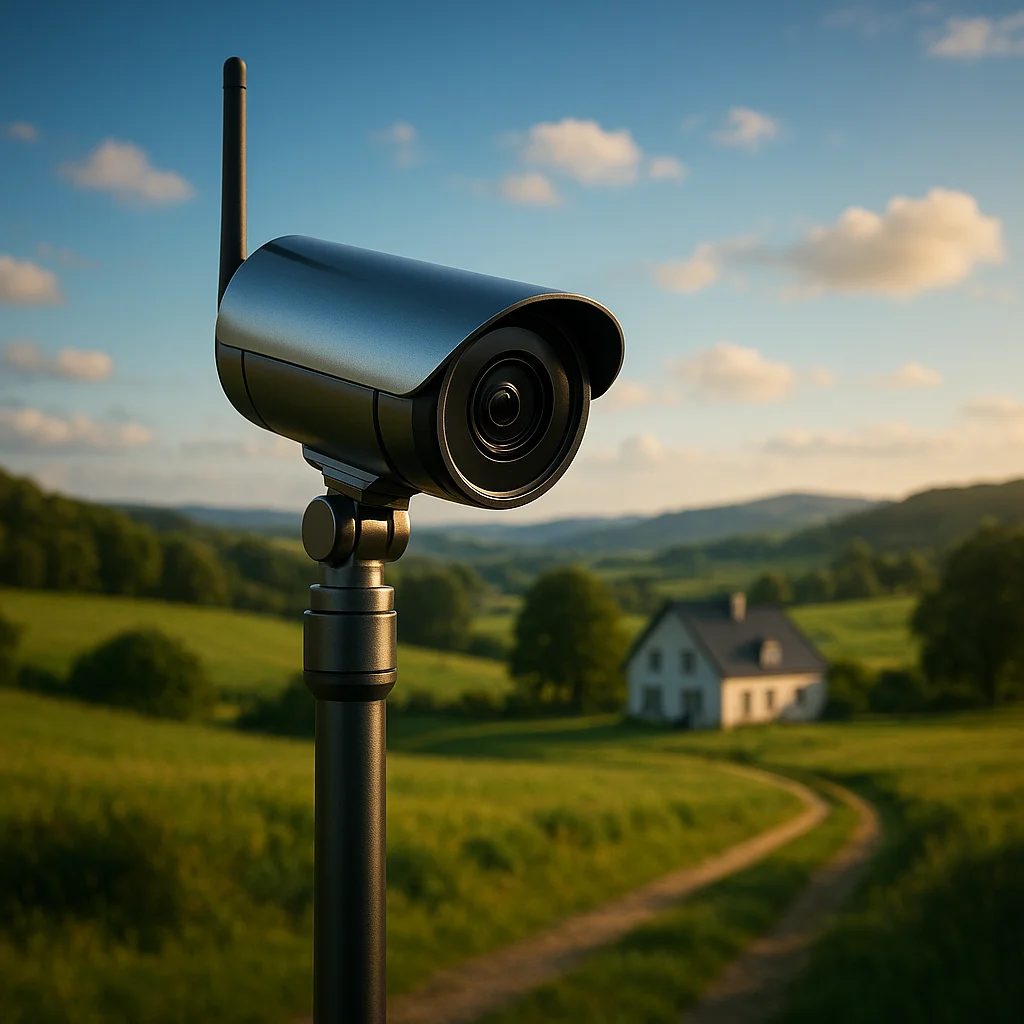
Have you ever wondered if you could secure a sprawling property or remote site with a wireless security camera system without resorting to expensive cabling or unreliable signal boosters? The answer is now a resounding yes. Imagine monitoring an estate, a remote warehouse, or even a large agricultural field with cameras installed over half a mile away from the control station — all without wires! This was once impossible or limited to professional-grade setups costing tens of thousands. But with recent breakthroughs, wireless security cameras have shattered previous distance limitations, enabling installations at unprecedented ranges.
Take the example of xThings’ new UltiCam system, which has been making waves since its reveal earlier this year. According to a detailed report by The Verge, this camera leverages cutting-edge Halow wireless technology to transmit live HD video over distances exceeding 2,500 meters (about 1.55 miles) without traditional Wi-Fi infrastructure. That’s not just a neat trick — it’s a paradigm shift for remote security and monitoring.
“UltiCam’s use of Halow technology means you can place a camera on the far end of your property, or even in locations where Wi-Fi doesn’t reach, and still get crystal-clear video streamed directly to your phone or security system.” — The Verge
This capability isn’t just for the tech elite anymore. It heralds a new era for remote work productivity and security, enabling professionals, property managers, and remote teams to operate with confidence in areas that were previously off-limits to wireless surveillance.
The Evolution of Wireless Security Cameras: From Near to Far
To appreciate how far wireless camera tech has come, we need to rewind a bit. Early wireless security cameras, emerging in the late 2000s, were limited by Wi-Fi’s range and signal attenuation. Typical consumer-grade models operated effectively within 100 to 150 feet indoors and up to 300 feet outdoors in ideal line-of-sight conditions. That might work for a home or small office but fell dramatically short for farms, warehouses, or large corporate campuses.
Manufacturers tried to extend range through signal boosters, mesh networking, and proprietary radio frequencies, but these solutions often came with trade-offs: increased latency, power demands, or complex setup. Moreover, many early systems struggled with reliability in challenging RF environments, such as urban areas dense with competing signals or rural zones with natural obstructions.
Recently, the industry saw a leap with the introduction of IEEE 802.11ah, or “Halow,” a Wi-Fi variant operating in sub-1 GHz bands. Unlike traditional 2.4 GHz and 5 GHz Wi-Fi, Halow penetrates obstacles better and reaches longer distances at lower power. This shift is a game-changer for surveillance because it balances range, bandwidth, and energy efficiency.
Alongside wireless advances, improvements in camera sensor technology, edge AI for on-device analytics, and battery efficiency have combined to create solutions truly fit for remote, large-scale deployment. These advances are reflected in specialized cameras like UltiCam and others from emerging startups and established brands alike.
Breaking Down the Technology: How Do These Cameras Cover Half a Mile?
Curious what technical wizardry makes half-a-mile wireless camera installs possible? The secret sauce lies in a few key innovations:
- Halow (IEEE 802.11ah) Wireless Standard: Operating at sub-GHz frequencies (around 900 MHz), Halow offers superior range and wall penetration compared to traditional Wi-Fi bands. Its lower frequency means signals degrade more slowly over distance and through obstacles like trees or buildings.
- High-Gain Antennas: These cameras and their receivers use directional or omnidirectional high-gain antennas to boost signal strength and maintain stable connections over extended distances.
- Low Power Consumption: Halow’s design prioritizes energy efficiency, enabling cameras to run longer on battery power or solar setups. This is critical for remote locations where wiring power is impractical.
- Advanced Video Compression: Cameras utilize codecs like H.265 and even AI-powered compression to transmit high-quality footage without overwhelming bandwidth, preserving clarity while minimizing data use.
- Edge Computing: Onboard AI processes video locally, so only critical alerts or relevant clips are sent over the network, reducing the need for continuous high-bandwidth streaming.
When combined, these features allow cameras to maintain reliable, low-latency video streams at distances well beyond previous wireless limits. It’s no wonder that companies deploying these systems report drastically reduced installation costs and increased flexibility.
“The ability to deploy wireless cameras over half a mile away means that agricultural monitoring, wildlife observation, and remote facility security can now be done in ways that were simply impractical before.” — Industry Expert, Security Tech Insights
2026 Breakthroughs: What’s New and Who’s Leading the Pack?
The year 2026 is proving pivotal for long-range wireless security cameras. Several companies have released or announced products pushing boundaries, with xThings’ UltiCam among the most prominent. Its commercial availability since early 2026 has sparked interest across sectors from remote work sites to sprawling estates and national parks.
Other notable developments include:
- Multi-Node Mesh Integration: Some systems now allow multiple cameras to form their own wireless mesh, extending coverage even further while maintaining connection integrity.
- Solar-Powered Independence: Advances in solar panel efficiency and battery tech permit cameras to operate in truly off-grid environments for months without human intervention.
- Seamless Cloud & Local Storage: Hybrid storage solutions offer users flexible options to store footage locally on an SD card while backing up critical clips to encrypted cloud servers, enhancing security and accessibility.
- AI-Powered Alerts & Analytics: Real-time object detection, facial recognition, and behavior analysis enable proactive security responses, reducing false alarms and boosting operational efficiency.
While xThings leads with its Halow-enabled UltiCam, competitors like Arlo and Hikvision are experimenting with proprietary sub-GHz wireless modules combined with 5G backup connectivity to ensure uninterrupted service.
For professionals working remotely or managing large properties from afar, these innovations translate into less downtime, fewer maintenance visits, and a higher degree of control — all crucial for productivity.
Real-World Impact: Case Studies and Practical Installations
What does this look like in practice? Here are some compelling examples where half-mile wireless cameras have transformed operations:
- Remote Logging Camp, Canada: A forestry company equipped their campsites and logging roads with UltiCam units, enabling supervisors based in offices hundreds of kilometers away to monitor safety conditions and unauthorized access, cutting incident response times by 40%.
- Vineyard in Southern France: A vineyard owner installed solar-powered wireless cameras across a 1,500-meter stretch of terrain to monitor irrigation equipment and detect trespassers, reducing theft and water waste significantly.
- Wildlife Reserve, Kenya: Conservationists deployed long-range wireless cameras to track endangered species movements without disturbing habitats or relying on cumbersome wiring, supporting more effective anti-poaching efforts.
These cases show the versatility and range of applications, from industrial to environmental and residential security. The ability to maintain high-quality surveillance over vast spaces redefines what’s possible for remote work and property management.
For a detailed technical guide on installation and setup, you might want to explore Install Wireless Security Cameras Over Half a Mile in 2026, which breaks down equipment choices, placement strategies, and troubleshooting tips.
Looking Ahead: What Should Remote Workers and Property Managers Expect?
As wireless technology continues to advance, expect the following trends to shape the future of remote camera surveillance:
- Expanded Integration with Smart Home and IoT Ecosystems: Cameras will increasingly sync with smart locks, lighting, and environmental sensors to create comprehensive security and automation platforms.
- More Affordable and Modular Solutions: Costs will continue to drop as competition grows and hardware standardizes, making long-range wireless cameras accessible to smaller businesses and individuals.
- Enhanced Privacy and Cybersecurity: Manufacturers will beef up encryption and user control to prevent hacking and misuse, a growing concern as devices proliferate.
- Hybrid Networks Combining Satellite, 5G, and Halow: To cover even the most remote locations globally, future systems may combine multiple wireless technologies for seamless connectivity.
For remote workers aiming to maximize productivity, these developments mean fewer blind spots, more reliable monitoring, and less stress over security. It also opens up new possibilities for managing projects and assets in isolated areas without constant physical presence.
You might enjoy reading Essential Remote Work Tools and Software for Peak Productivity to complement your security setup with workflow-enhancing digital solutions.
“The convergence of long-range wireless cameras with AI and IoT is not just about watching video — it’s about creating smart environments that empower remote teams to act fast and stay efficient.” — Sophia Lea Schmidt, WriteUpCafe
In summary, if you thought wireless security cameras were limited to your backyard or small business, think again! The technology now exists to cover half a mile or more, breaking down barriers for remote work and property security. Whether you manage farmland, construction sites, or just want peace of mind over a large estate, these systems offer flexibility, reliability, and advanced features that were science fiction a few years ago.
Explore more on WriteUpCafe about cutting-edge remote work tech and lifestyle tips, including the Essential Digital Nomad Lifestyle Guide for Beginners, to stay ahead in this rapidly changing world.


























Sign in to leave a comment.