

How did working from home become so exhausting?!
Remote work was sold as freedom: no commute, more autonomy, maybe lunch in your own kitchen instead of inhaling a sad desk sandwich under fluorescent lights. For millions of people, some of that promise was real. Yet the same setup also blurred the line between labor and life so aggressively that burnout followed workers right into their bedrooms, kitchens, and supposedly restful evenings. The contradiction is now impossible to ignore. A person can be physically at home and still feel permanently on call, socially drained, cognitively overloaded, and weirdly guilty for not doing more. That is the remote work trap.
Burnout, as defined by the World Health Organization, is an occupational phenomenon characterized by energy depletion, increased mental distance from one’s job, and reduced professional efficacy. Remote workers are not automatically more burned out than office workers, but they face a very specific cluster of risks: digital presenteeism, fragmented schedules, weak boundaries, isolation, and the pressure to prove productivity through constant responsiveness. According to Gallup’s long-running research on employee engagement and manager influence, workload, unfair treatment, unclear communication, and lack of support remain major burnout drivers regardless of location. Remote work simply changes the delivery system. The stress arrives through Slack pings, late-night emails, camera fatigue, and a calendar that somehow has no commute but even less breathing room.
That is why burnout prevention for remote workers cannot be reduced to bubble-bath self-care or another viral morning routine. It is structural, behavioral, and cultural. It involves work design, managerial expectations, home ergonomics, communication rules, and the daily micro-decisions workers make to protect attention and recovery. If you have read practical pieces such as Burnout Prevention for Remote Workers in 2026: Strategies That Work or Burnout Prevention for Remote Workers That Actually Works, you already know the basics. The deeper question is harder: which interventions truly lower burnout risk, and which ones merely make overwork look prettier on Zoom?
Remote burnout rarely begins with collapse. It usually starts with convenience: one more message, one more meeting, one more hour because the laptop is right there.
The answer matters in 2026 because remote and hybrid arrangements are no longer emergency improvisations. They are permanent features of the labor market in technology, media, consulting, customer support, education, design, and many knowledge-work sectors. Prevention now has to be designed on purpose. Not someday. Now!
Why remote burnout happens even when flexibility is real
The most misunderstood thing about burnout is this: flexibility and overload can coexist. A remote worker might appreciate school pickup flexibility, geographic freedom, or the ability to live in a cheaper city, while also experiencing unsustainable cognitive demand. That tension explains why many employees report liking remote work and still feeling depleted by it. The issue is not whether working from home is good or bad in the abstract. The issue is whether the work system contains enough friction to stop work from consuming everything else.
One of the biggest risk factors is boundary collapse. When the office is a laptop, work expands into every available gap. Researchers and workplace psychologists have repeatedly warned that “time autonomy” can mutate into “time sprawl.” Workers answer messages during dinner because they want to seem cooperative. They open email before bed because tomorrow looks packed. They skip true breaks because there is no social cue to leave the desk. The result is a day with fewer natural stopping points than office life once imposed.
There is also the problem of visibility anxiety. In many remote teams, people fear that if they are not seen, they will be forgotten for promotions, raises, or strategic projects. So they overcompensate. They reply instantly. They attend optional meetings. They maintain green-status theater on messaging platforms. This behavior looks productive from the outside and feels terrible from the inside. It is effort spent signaling work rather than doing the highest-value work.
Isolation adds another layer. Not every remote worker is lonely, but many miss the low-stakes social contact that helped regulate stress in physical workplaces. A quick corridor joke, a spontaneous problem-solving chat, even the tiny ritual of walking to coffee with a colleague can reduce friction and restore perspective. At home, small annoyances can grow unchecked because there is no ambient support around them.
- Boundary erosion: work begins earlier, ends later, and leaks into weekends.
- Digital overload: meetings, chat alerts, email, project tools, and phone notifications compete constantly.
- Performance signaling: workers feel pressure to appear available rather than be effective.
- Social thinning: fewer casual interactions can reduce belonging and emotional buffering.
- Physical strain: poor seating, lighting, and movement patterns quietly increase fatigue.
Burnout prevention has to address all five. If a company offers meditation apps but still rewards midnight responsiveness, the app is decoration. If an individual buys a standing desk but keeps accepting meetings across lunch, the desk helps posture, not recovery. Both the system and the person have work to do.
The strongest prevention strategies are boring, measurable, and effective
Here is the truth nobody turns into a glamorous TikTok montage: the best burnout prevention tactics are usually plain. They are schedule design, communication rules, workload triage, and recovery routines that are repeated until they feel normal. That may sound less exciting than a productivity hack, but it is far more credible.
Start with working hours. Remote workers need a visible start ritual and an equally visible shutdown ritual. That can mean a morning planning block, a defined first task, and a fixed end-of-day review that closes open loops. The point is to stop work from becoming a fog. Cal Newport and other productivity thinkers have argued for time-blocking because it forces trade-offs into daylight. In burnout terms, that matters because invisible work is often endless work.
Next comes meeting reduction. Microsoft’s Work Trend Index and similar corporate workplace analyses have repeatedly highlighted how digital interruptions fracture concentration. A remote worker who spends six hours in meetings and then tries to complete “real work” at night is on a direct road to exhaustion. Teams that cluster meetings into specific windows, protect focus time, and default to asynchronous updates remove one of the biggest burnout accelerants.
Then there is message discipline. The article Still replying to work messages after hours? Experts say that’s a problem, published by Mathrubhumi English, captures a core issue: after-hours communication is not neutral. It trains people to expect access. Once that expectation hardens, recovery shrinks. Remote workers who disable non-urgent notifications, delay-send emails, and state response windows openly are not being difficult. They are defending the conditions required for sustainable performance.
- Set a hard daily stop time and communicate it in your status, calendar, or team norms.
- Use asynchronous updates for routine progress instead of live meetings.
- Group notifications into scheduled check windows rather than constant monitoring.
- Protect one to three focus blocks each day for cognitively demanding tasks.
- Take recovery breaks away from screens, ideally with movement and daylight exposure.
- Review workload weekly and renegotiate deadlines before overload becomes crisis.
The physical environment counts too. National Herald recently highlighted in The Simple Workspace Upgrades Helping Indian Professionals Fight WFH Burnout how basic improvements such as chair support, desk setup, and lighting can reduce strain. Ergonomics alone will not solve burnout, but discomfort drains attention. A body under low-grade physical stress has less capacity for emotional regulation and deep work.
Burnout prevention is not about squeezing more output from tired people. It is about redesigning work so recovery is possible before exhaustion becomes identity.
Workers should also track energy, not only hours. Two people can both work eight hours and have radically different burnout risk depending on interruption load, emotional labor, and the number of unresolved decisions they carry into the evening. That is why a simple end-of-week audit can be powerful: What drained me? What restored me? Which meetings were unnecessary? Which tasks should be delegated, automated, or declined? Boring? Yes. Effective? Also yes!
What has changed recently, and why 2026 feels different
The conversation around remote burnout in 2026 is sharper because the novelty of remote work has worn off. Employers can no longer pretend that fatigue is a temporary adjustment issue. Workers have years of lived experience now, and they are naming patterns more clearly. One phrase that has circulated in recent coverage is the “soft off day,” a lighter-intensity workday used to create breathing room without fully disconnecting. MSN covered this trend in Remote workers embrace 'soft off days' to fight burnout, describing how employees use lower-pressure days to handle admin, avoid heavy meetings, and recover mentally.
The rise of that concept says something important. Workers are no longer waiting for annual leave to repair chronic overload. They are trying to build smaller forms of recovery into ordinary weeks. That is smart, but it also reveals a structural gap: many organizations still have not redesigned output expectations to match remote reality. If workers need improvised “soft off days” just to stay functional, the baseline may still be too intense.
Another 2026 shift is the growing use of AI inside remote workflows. AI can reduce repetitive tasks, summarize meetings, draft first-pass documents, and automate administrative clutter. Used well, that could lower burnout by freeing workers from low-value labor. Used badly, it can do the opposite. Teams may increase expected output because AI makes some tasks faster, creating a treadmill effect: more volume, less recovery, same exhaustion. The technology itself is not the answer. The management philosophy around it is.
There is also more scrutiny on “return-to-office by stealth” tactics, where companies keep flexible policies on paper but reward office visibility in practice. For remote workers, that ambiguity creates another stressor: uncertainty. If promotion criteria are unclear, employees often respond by overworking digitally to compensate. Clear performance metrics matter more than perks here. Burnout prevention improves when people know exactly how they are evaluated and do not have to perform constant availability theater.
Recent labor-market caution has intensified the problem for some workers. In sectors affected by layoffs or hiring slowdowns, employees may feel lucky just to have a job and therefore less willing to push back on workload. That dynamic can produce silent overextension. Managers who interpret silence as capacity are making a dangerous mistake.
- Soft off days are emerging as an informal recovery tool.
- AI adoption may reduce admin work but can also raise output expectations.
- Ambiguous promotion signals encourage digital presenteeism.
- Economic insecurity makes boundary-setting harder for many workers.
The 2026 lesson is blunt: remote burnout is no longer a side effect of transition. It is a management issue, a systems issue, and a health issue.
What managers and companies get wrong about remote resilience
Many companies still treat burnout as an individual weakness with a wellness solution. That approach fails because burnout often reflects mismatched demands, not poor character. A meditation stipend cannot compensate for chaotic priorities. A resilience webinar cannot fix a manager who schedules over lunch and praises people for answering at 10 p.m. If leadership wants lower burnout, it has to change conditions, not just language.
The first mistake is confusing flexibility with support. Saying “work whenever” sounds generous, but if deadlines are unrealistic and collaboration spans multiple time zones without clear rules, workers end up working all the time. Effective flexibility has guardrails. Teams need shared overlap hours, explicit response expectations, and permission to be offline outside them. Otherwise flexibility becomes permanent partial attention.
The second mistake is measuring commitment through responsiveness. Remote teams often reward the fastest replier instead of the best thinker. That is upside down. High-quality work requires uninterrupted concentration, and concentration requires delayed responses sometimes. Managers who expect immediate answers to non-urgent messages are training people into nervous-system overactivation.
Third, too many leaders underestimate the emotional load of remote coordination. Writing updates, documenting context, switching between tools, and compensating for missing in-person cues all consume energy. Remote work can reduce commute stress while increasing communication labor. Smart managers budget for that reality instead of pretending digital coordination is frictionless.
What should companies do instead? They should audit meetings, cap recurring calls, normalize camera-optional policies where appropriate, and train managers to discuss workload before it becomes a retention issue. Gallup has repeatedly emphasized that manager behavior is one of the strongest predictors of employee well-being. That is not abstract. A manager who clarifies priorities, protects focus time, and models boundaries can materially lower burnout risk across a team.
Practical policy matters more than performative concern.
- Define urgent versus non-urgent communication so employees know what truly requires fast replies.
- Publish team availability norms including local time zones and expected offline periods.
- Limit recurring meetings and require agendas for synchronous calls.
- Evaluate outcomes, not green dots on messaging platforms.
- Train managers in workload conversations, early warning signs, and psychological safety.
- Encourage actual time off by preventing backlog punishment when employees return.
One more thing! Companies that celebrate burnout language as ambition are asking for long-term damage. “Crushing it,” “always on,” “hustle,” “whatever it takes” — these phrases still float around corporate culture like motivational confetti. They are not harmless. They signal that exhaustion is admirable. It is not. It is expensive, destabilizing, and avoidable more often than leaders admit.
What remote workers can do this week, not in some ideal future
Not every worker has the power to rewrite company policy. That is real. Still, there are practical moves individuals can make immediately to reduce burnout risk, especially when they are chosen strategically rather than randomly. The key is to target the biggest drains first: after-hours intrusion, fragmented focus, poor physical setup, and lack of recovery structure.
Begin with a boundary script. Most people know they need boundaries; fewer know how to phrase them. Try something direct and calm: “I’m offline after 6 p.m. local time, but I’ll review this first thing tomorrow.” Or: “I can do this by Thursday, or I can prioritize the new request and move the earlier task. Which matters more?” These scripts convert vague stress into visible trade-offs. That is powerful because burnout thrives in unspoken assumptions.
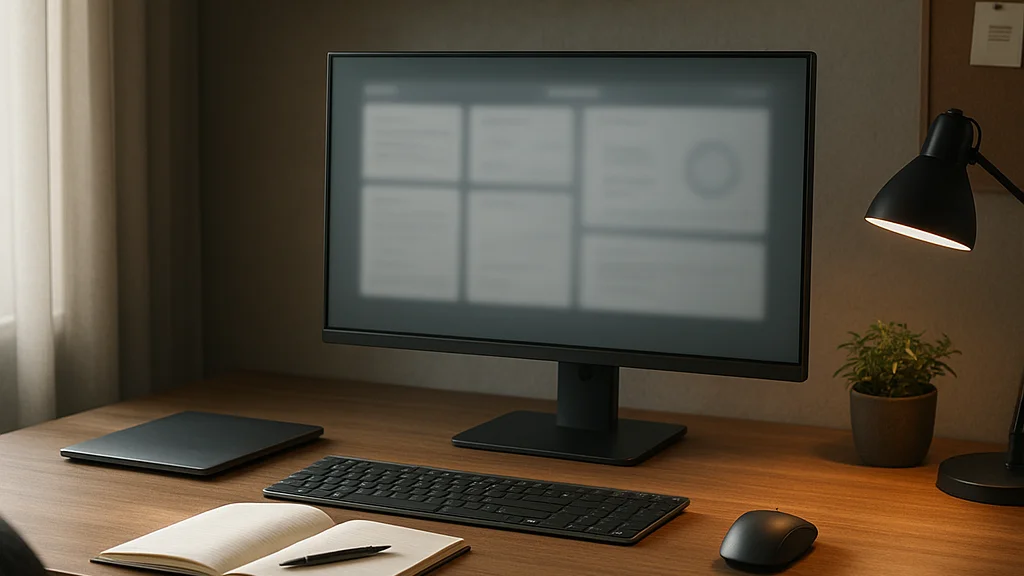
Next, redesign your workspace for friction. If you work from a sofa, bed, or painful dining chair, your body is paying a tax all day. The National Herald piece on workspace upgrades is useful here because it frames ergonomics as prevention, not luxury. A separate keyboard, proper chair support, screen elevation, and better lighting can reduce headaches, neck tension, and end-of-day depletion. Small upgrades matter when repeated over hundreds of workdays.
Then tackle notification chaos. Most remote workers do not need every ping the second it lands. Turn off banners for non-essential apps. Batch communication checks. Put your phone out of reach during deep work. If your role requires responsiveness, create tiers: urgent channel on, everything else checked at planned intervals. This is not anti-collaboration. It is anti-fragmentation.
Recovery also needs structure. A walk after the final meeting. A workout before opening the laptop. Lunch away from the desk. A shutdown list on paper. These rituals sound almost embarrassingly simple, but that is exactly why they work. They tell the brain that one mode has ended and another has begun.
If your workday has no edges, your stress will not have edges either.
Finally, pay attention to symptoms early. Cynicism, irritability, dread before opening email, reduced concentration, headaches, sleep disruption, and emotional numbness are not badges of dedication. They are signals. Waiting until full collapse is a terrible strategy. Escalate concerns, use leave if available, seek clinical support when needed, and renegotiate load before the damage compounds.
- Create a written shutdown ritual with tomorrow’s top three tasks and a visible sign-off time.
- Use boundary scripts to make trade-offs explicit with colleagues and managers.
- Upgrade one physical element this month: chair, monitor height, light, or keyboard.
- Protect lunch as a real break, not a multitasking slot.
- Schedule recovery first instead of hoping it appears after work is done.
That last point is crucial because work is never fully done. Remote workers who wait for a magically empty inbox before resting will wait forever.
The future of remote work will depend on whether recovery becomes normal
Where does this go from here? The healthiest version of remote work is still absolutely possible. It offers autonomy, broader hiring access, lower commute stress, and often better conditions for concentrated work. But those advantages survive only if recovery is treated as part of performance, not the reward for surviving performance.
Over the next few years, the companies that handle burnout best will likely be the ones that make expectations legible. They will specify what good work looks like, reduce unnecessary meetings, use AI to remove drudgery rather than intensify quotas, and train managers to spot overload before attrition spikes. They will also understand that retention is tied to energy. Burned-out workers do not stay creative, collaborative, or loyal for long.
For workers, the future challenge is resisting the normalization of total access. Remote tools are seductive because they make communication frictionless. But human attention is not frictionless, and neither is recovery. The smartest professionals in 2026 are learning that boundaries are not anti-career. They are career infrastructure. They preserve judgment, stamina, and the ability to do meaningful work over time.
There is also a cultural shift underway. More employees are talking openly about emotional exhaustion, after-hours pressure, and the absurdity of proving commitment through constant availability. That conversation matters. Once burnout becomes discussable, it becomes manageable. Silence protects dysfunctional norms. Clear language weakens them.
The most useful takeaway is not dramatic. Burnout prevention for remote workers is a stack of repeated choices: fewer unnecessary meetings, clearer priorities, firmer shutdowns, better ergonomics, stronger manager behavior, and more honest capacity conversations. None of that is flashy. All of it works.
And honestly? That is the part I love. Not the fake hustle aesthetics. Not the “rise and grind” nonsense. The real win is sustainable energy. The ability to finish work, close the laptop, and still feel like a person. Remote work promised freedom. Burnout prevention is how workers finally claim it.































Sign in to leave a comment.