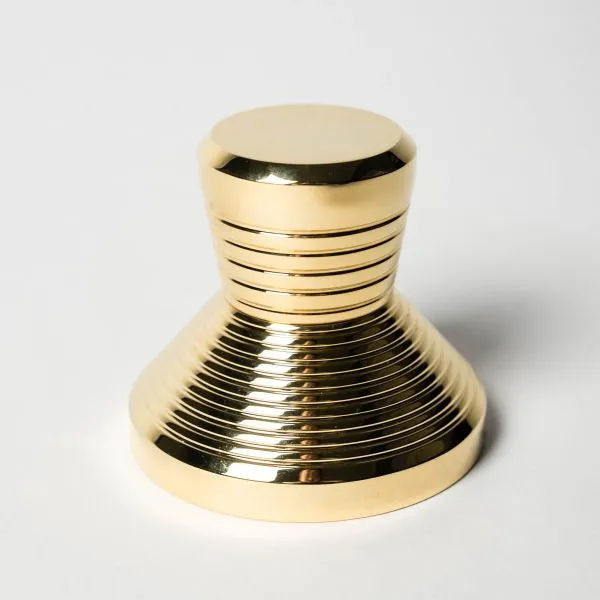

Vinyl playback depends on many small details, and each one can affect the final sound. A record clamp may seem like a simple accessory, but it can improve stability on a high-quality system. Choosing the best record clamp for high end turntable setups starts with understanding how a loose record sits on the platter. By creating better contact between the record and platter, a quality clamp can help reduce movement, improve tracking, and support a more focused listening experience.
Why Records Don't Always Sit Perfectly Flat
Vinyl is a soft material, and it warps over time. Heat, storage, and even the pressing process itself can leave a record slightly bowed or uneven. When that record spins freely on a platter, even a small warp can create problems.
Those problems include:
- Subtle pitch fluctuations as the record rises and falls.
- Reduced contact between the record and the platter surface.
- Increased resonance and unwanted vibration during playback.
- A stylus that has to work harder to track accurately.
- A slightly less stable, less focused soundstage.
A record clamp addresses this directly. It applies gentle, even pressure at the center of the record, pulling it flatter against the platter and improving contact across its surface.
What Makes a Record Clamp Worth Adding?
Not every clamp performs the same way. The best record clamp for high end turntable setups tends to share a few specific traits. Weight and material both play a role, since a clamp needs enough mass to flatten a warp without over-stressing the record or the turntable's bearing.
Look for these qualities:
- Consistent, even downward pressure across the record.
- Materials that resist vibration rather than adding their own resonance.
- A design that doesn't strain the motor or bearing over time.
- Compatibility with the turntable's spindle height and platter mat.
- Build quality that matches the rest of a high-end system.
Done well, a clamp doesn't just flatten a warped record. It also reduces resonance across the whole platter, which can tighten up bass response and sharpen imaging, even on records that were already flat to begin with.
How This Fits Into the Bigger Picture
A record clamp is a small, focused upgrade. But it's part of a much larger idea: that a luxury record player for audiophiles isn't defined by one standout feature. It's defined by how many small sources of vibration, resonance, and inconsistency have been addressed across the entire signal path, from the motor to the platter to the very last accessory that touches the record.
High-end systems tend to share this same philosophy at every level:
- Mass and materials chosen specifically to control resonance.
- Precision engineering applied to even the smallest components.
- Attention to details most listeners never think to ask about.
- A design approach built around long-term consistency, not shortcuts.
- The understanding that sound quality is cumulative, not the result of any single part.
A record clamp fits naturally into that philosophy. It's inexpensive relative to the rest of a serious analog system, but it addresses a real source of distortion that even excellent turntables can't fully eliminate on their own.
When Should You Consider Adding a Record Clamp?
A record clamp is not the first upgrade every vinyl listener needs. It works best when the rest of the system is already well set up. If you have a quality turntable, a good cartridge, and a growing record collection, a clamp can help you get more from your setup.
It can be especially useful for listeners who:
- Want more stable playback from older records.
- Notice slight warping or uneven surfaces.
- Want cleaner bass and improved focus.
- Are building a more refined analog system.
Small upgrades can make a noticeable difference when they solve a real problem. A well-designed record clamp is one of those simple additions that can help your turntable perform closer to its full potential.
Conclusion
Great vinyl sound rarely comes down to one dramatic upgrade. It comes from a series of smaller decisions, each one removing a little more noise, vibration, or inconsistency from the signal path. A well-chosen record clamp is exactly that kind of decision. It's a small, affordable addition that directly improves contact between the record and the platter, which in turn supports more stable pitch, cleaner bass, and sharper imaging.
For anyone building or refining a serious analog setup, it's a reminder that the difference between a good system and a genuinely exceptional one often comes down to details this small, applied consistently, across every part of the chain.
























Sign in to leave a comment.