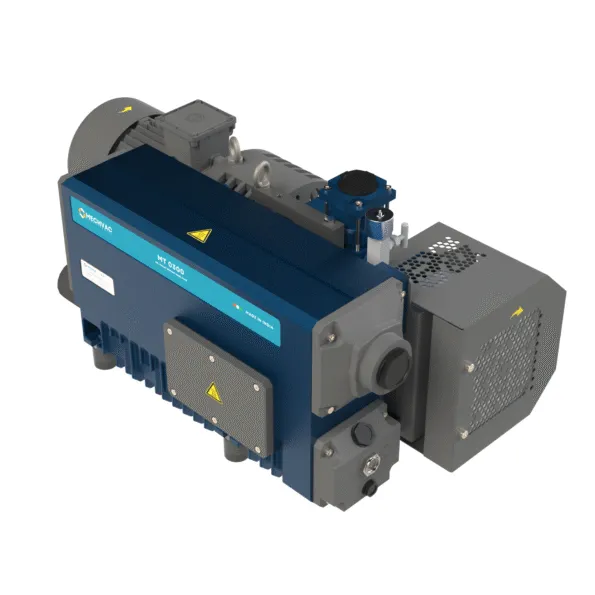

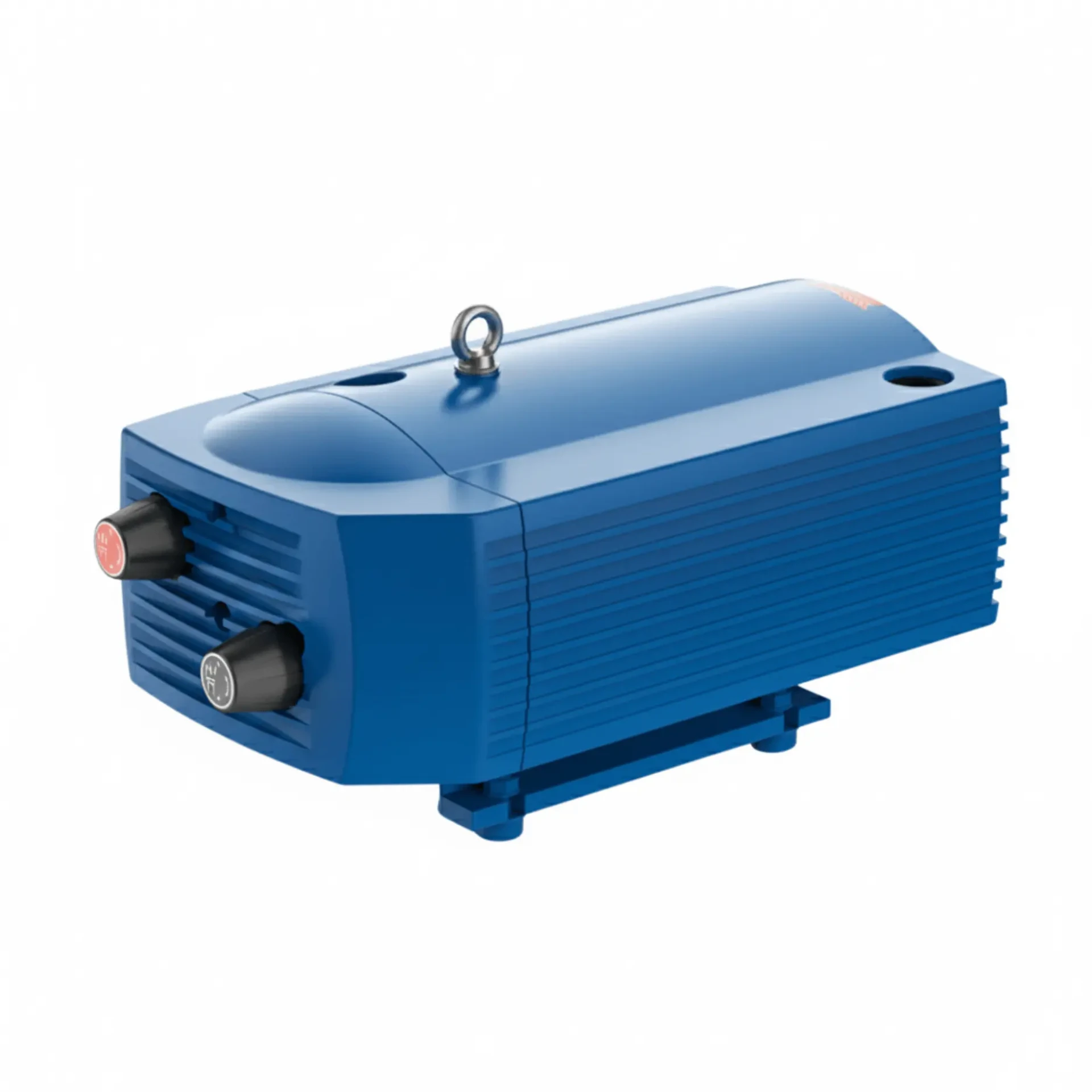
An oil sealed rotary vane vacuum pump is a widely used vacuum equipment solution for industries that need reliable and continuous vacuum generation. These pumps are known for their simple design, steady performance, compact size, and ability to achieve a strong vacuum level.
They are commonly used in packaging, chemical processing, pharmaceuticals, laboratories, food processing, printing, electronics, and many other industrial applications.
But how does an oil sealed rotary vane vacuum pump work? What makes it different from other vacuum pumps? And how can you select the right pump for your application?
This guide explains everything in simple terms.
What Is an Oil Sealed Rotary Vane Vacuum Pump?
An oil sealed rotary vane vacuum pump is a positive displacement vacuum pump that uses rotating vanes and oil to remove air and gases from a closed system.
The pump contains a rotor positioned inside a cylindrical chamber. The rotor has sliding vanes that move outward as the rotor turns. These vanes create separate chambers inside the pump.
As the rotor rotates, gas enters the pump, gets trapped between the vanes, and is compressed. The compressed gas is then discharged from the pump.
Oil plays an important role in the process. It provides lubrication, helps create a seal between moving parts, reduces internal leakage, and supports smooth operation.
Because of this oil sealing system, these pumps can achieve a relatively deep vacuum compared with many dry vacuum pump designs.
How Does an Oil Sealed Rotary Vane Vacuum Pump Work?
The working principle is simple but effective.
1. Gas enters the pump
When the pump starts operating, gas or air from the vacuum chamber enters through the inlet port.
2. The rotor starts rotating
An electric motor drives the rotor. The rotor is mounted eccentrically inside the pumping chamber.
3. Vanes create pumping chambers
The sliding vanes remain in contact with the chamber wall. As the rotor turns, the space between the vanes changes continuously.
4. Gas is trapped and compressed
The gas entering the pump becomes trapped in one of these spaces. As the space becomes smaller, the gas is compressed.
5. Gas is discharged
Once the gas reaches the required pressure, it is released through the exhaust side of the pump.
6. Oil provides sealing and lubrication
The oil fills small internal gaps. This improves sealing and reduces leakage. It also lubricates the moving components and helps remove heat generated during operation.
This continuous cycle allows the pump to maintain a stable vacuum.
Main Components of an Oil Sealed Rotary Vane Pump
Understanding the main components can help users choose and maintain the right equipment.
Rotor
The rotor is the rotating element that drives the pumping action. Its eccentric position inside the chamber allows the pumping volume to change during rotation.
Rotary Vanes
The vanes slide inside slots in the rotor. They divide the pumping chamber into smaller sections and trap the gas during operation.
Pumping Chamber
This is the area where gas compression takes place. Its internal design directly affects pump performance.
Oil Reservoir
The oil reservoir stores the pump oil required for sealing, lubrication, and cooling.
Oil Filter or Separator
Many designs use an oil separator at the exhaust side to separate oil mist from discharged gas and return oil to the pump.
Inlet and Exhaust Ports
The inlet port connects the pump to the vacuum system. The exhaust port releases the compressed gas from the pump.
Motor
An electric motor provides the rotational power required to operate the rotor.
Key Benefits of Oil Sealed Rotary Vane Vacuum Pumps
Oil sealed rotary vane pumps continue to be popular because they offer several practical advantages.
Reliable Vacuum Performance
These pumps can provide stable vacuum performance for many industrial processes. Their consistent operation makes them suitable for applications where dependable vacuum is important.
Good Ultimate Vacuum
Oil sealing helps reduce internal leakage. This allows the pump to achieve a deeper vacuum than many basic dry pumping systems.
Compact Design
Rotary vane pumps generally have a relatively compact construction. This makes them useful where installation space is limited.
Smooth Operation
The rotary mechanism provides continuous pumping rather than intermittent operation. This supports smooth and stable vacuum generation.
Good Lubrication
The oil reduces friction between moving components. Proper lubrication can help extend component life and improve operating efficiency.
Wide Range of Applications
These pumps can be used in many industries. They are available in different capacities to suit small laboratory systems as well as larger industrial processes.
Cost-Effective Solution
For many applications, rotary vane technology provides a practical balance between purchase cost, vacuum performance, maintenance requirements, and operating life.
Common Applications
Oil sealed rotary vane vacuum pumps are used across different industries.
Vacuum Packaging
They are used to remove air from packaging systems. Removing air can help improve packaging quality and protect certain products during storage and transportation.
Pharmaceutical Manufacturing
Vacuum is used in several pharmaceutical processes, including filtration, drying, solvent recovery, and other controlled manufacturing operations.
Chemical Processing
Chemical industries use vacuum pumps for processes such as evaporation, distillation, drying, and vacuum filtration.
Laboratory Equipment
Laboratories often require controlled vacuum for experiments, filtration, drying, and analytical equipment.
Food Processing
Vacuum systems can support food packaging, drying, degassing, and other food-processing applications.
Electronics Manufacturing
Vacuum is required in certain electronics and component manufacturing processes where controlled atmospheric conditions are important.
Printing Industry
Vacuum pumps can be used in paper handling, printing equipment, and material feeding systems.
Vacuum Furnaces
Some heat-treatment and industrial furnace systems require vacuum conditions to control the processing environment.
Why Pump Selection Matters
A vacuum pump is only one part of a complete vacuum system. The chamber size, piping, valves, filters, gas load, leakage rate, and operating conditions can all affect final vacuum performance.
For this reason, selecting a pump based only on its advertised capacity may not produce the expected results.
A proper selection should consider the complete process. This helps achieve the required vacuum while reducing energy consumption, maintenance costs, and unnecessary downtime.
Conclusion
An oil sealed rotary vane vacuum pump is a dependable and versatile solution for applications that require stable and efficient vacuum generation. Its rotary vane mechanism, combined with oil lubrication and sealing, provides reliable performance and good vacuum capability.
From packaging and laboratories to pharmaceuticals, chemical processing, food production, and industrial equipment, these pumps can support a wide range of processes.

























Sign in to leave a comment.