
The global seafood industry relies on a complex network of logistics to deliver fresh and live products across the world. At the heart of this operation is the fish transport container, a specialised piece of equipment designed to maintain the quality and vitality of its precious cargo. This guide explores the various types, technologies, and best practices for moving fish safely and efficiently.
Understanding Fish Transport Containers
A fish transport container is not a single type of equipment but rather a broad category of vessels designed to hold and move seafood. The design varies dramatically based on the cargo's state—whether it is fresh, frozen, or alive—and the mode of transport. The primary objectives are always the same: maintain the correct temperature, prevent spoilage, and, in the case of live fish, ensure the water quality supports their survival.
The choice of container is the first and most critical decision in the journey. For fresh fish, insulated containers prevent temperature fluctuations. For live fish, a "live container" is a self-contained ecosystem that provides oxygen, filtration, and cooling.
Chilled and Frozen Fish Containers
For the majority of the seafood trade, the goal is to preserve fish in a chilled or frozen state. The technology used for this task is straightforward but highly effective.
Insulated Boxes for Fresh Fish
One of the most common and effective ways to transport fresh fish is in an insulated box. These boxes are designed to hold the fish on ice, slowing bacterial growth and maintaining freshness. Early studies showed that using insulated containers could dramatically reduce spoilage. For example, polythene-lined, thermocole-insulated plywood boxes were shown to eliminate spoilage losses entirely, compared to a 10- 25% loss in non-insulated boxes.
Modern insulated containers are made from high-density polyethylene (HD-polyethylene) and often feature double-walled construction. The hollow space between the walls is filled with polyurethane foam, which provides excellent thermal insulation and structural strength. This "sandwich" construction is durable and highly effective at keeping the cold in and the heat out.
Improving Fresh Fish Container Design
Innovations in container design have significantly improved the quality of fresh fish transport. A key example is a patented design featuring bowed side walls . This shape was created to solve a common problem in rectangular boxes: uneven cooling.
When a large fish, like a salmon, is laid on its side in a standard rectangular box, there is a large amount of empty space at the corners and a tight fit in the middle. This causes ice to accumulate in the corners, leading to a temperature differential where the center of the container is warmer than the edges. The warmer center is exactly where the main body of the fish sits, which can lead to spoilage . The bowed side walls conform more closely to the shape of the fish, allowing for a more uniform distribution of ice and consistent cooling .
Chilled Seawater (CSW) Containers
Chilled Seawater containers are another specialised type of equipment used for storing and transporting fish . They are well-suited for species like small pelagics, which are caught in large quantities and need rapid chilling without being crushed. Portable, insulated CSW containers made of fibreglass or aluminium are used both on fishing vessels and at landing sites . Cargo containers can also be converted into chill stores for fish or ice, using either an attached cooling unit or a central refrigeration plant .
Live Fish Transport: The Ultimate Challenge
Transporting live fish presents the greatest logistical challenge. A fish must be delivered to its destination healthy and vibrant, which requires precise control over its environment .
Traditional Transport Tanks
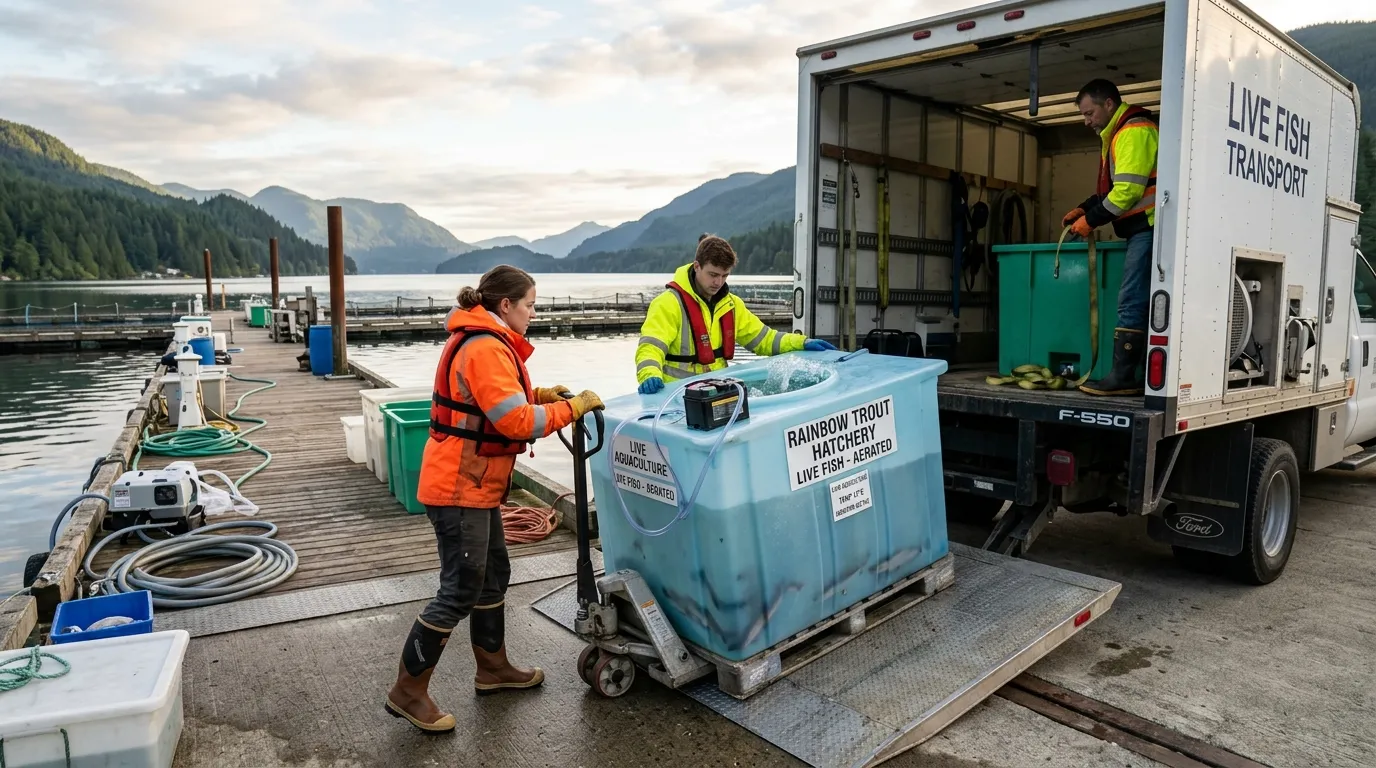
The most common method for moving live fish is in large tanks. These can be fibreglass or plastic tanks installed on trucks, often with multiple compartments . Specialised transport trucks can carry tanks with volumes exceeding 11,000 litres .
A 20-ton semi-trailer used in Great Britain for transporting young eels (elvers) is a prime example of a large-scale operation. It carried 18 insulated water tanks and could transport up to 12 million elvers, weighing four tons. The vehicle was equipped with life-support systems, including refrigeration and aeration, all powered by generators . These systems can maintain optimal conditions for journeys lasting several days, such as the 3,600-kilometer trip from England to Hungary that took 3.5 days .
Aeration and Oxygenation
Maintaining the dissolved oxygen level in the water is the most critical factor in live fish transport . Fish consume oxygen and produce carbon dioxide, which must be constantly removed.
Gaseous Oxygen: A traditional and reliable method involves using compressed oxygen cylinders. The oxygen is released through diffusers into the tank water .
Liquid Oxygen: This is becoming more common because the equipment is lighter than for gaseous oxygen and the cost is lower .
Integrated Life Support: Advanced transport systems combine mechanical aeration and refrigeration. The German HTT-Fischzuchttechnologie GmbH transporter, for instance, uses an integral air blower to prevent the danger of oxygen toxicity, sometimes called "burning the fish" .
The Modern Live Container
A significant innovation in live fish logistics is the development of the "live container" . These units are often modified standard shipping containers (40-foot) that can be transported by sea freight, providing a cost-effective alternative to air freight .
These live containers are self-contained life-support systems. They feature water recirculation, UV sterilization, oxygen generators, and refrigeration. The technology can induce a semi-sleep state in the fish, reducing their metabolism and eliminating the need for feeding during the long journey . In one example, a company using this technology shipped nearly 2,000 tons of live halibut, flounder, and abalone over 14 years, generating substantial revenue .
Specialised Transport Totes
For smaller-scale or more flexible live fish transport, totes are a practical solution. These are reusable, stackable containers often made from food-grade plastic . Advanced totes include a gasket seal for a fluid-tight lid and a latching mechanism to keep the lid secure during transport .
A patented live fish tote features a unique design with hinges that allow a forklift operator to release two latches on one side. This allows the tote to be tilted to dump the fish out, while the lid remains in a pendulum position to prevent the fish from jumping out .
Air Freight vs. Sea Freight
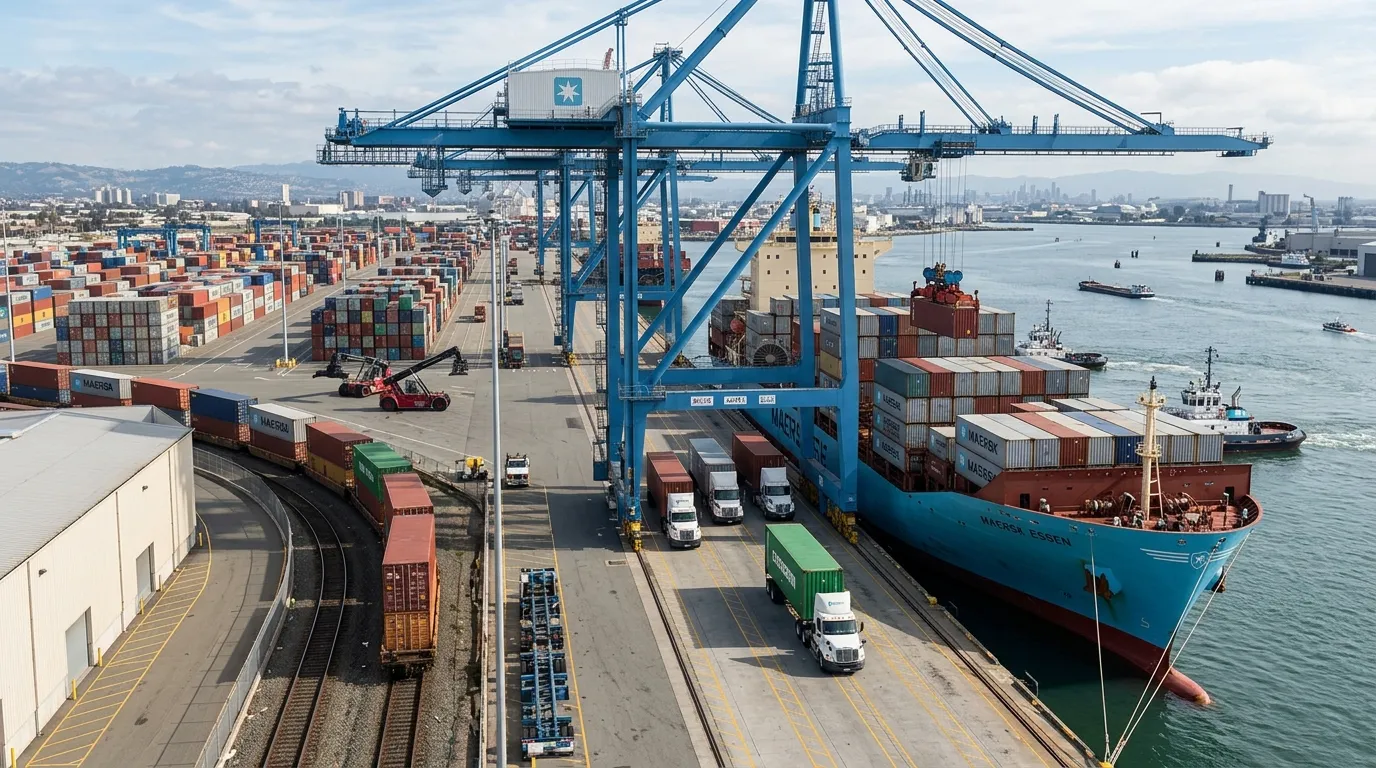
The choice between air and sea freight is a major logistical decision. Air freight is faster but significantly more expensive, with costs exceeding KRW 12,000 per kilogram for some exports . In contrast, sea freight is slower but can be up to 70% cheaper, making it essential for large-volume exports .
However, air freight offers speed and reliability, which is critical for the highest-value or shortest-lived products. Sea freight is the logical choice for bulk or less time-sensitive shipments, and the development of sophisticated live containers is making this option increasingly viable for live seafood .
Conclusion
The fish transport container is a vital component of the global seafood supply chain. From simple insulated boxes holding ice to complex live containers with integrated life-support, the technology has evolved to meet the challenge of delivering products in perfect condition. Whether using cost-effective sea freight or rapid air freight, the principle remains the same: careful temperature control, effective oxygenation, and robust design are the keys to success in fish transport.






















Sign in to leave a comment.