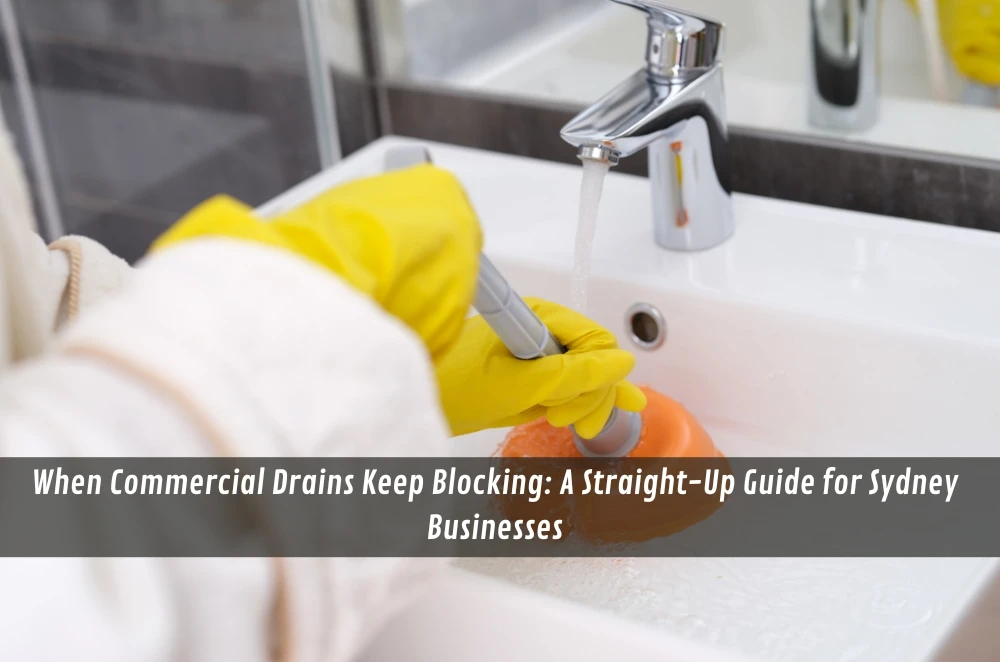

Commercial drains have a habit of failing at the worst possible moment. You’ll be flat out, the place is humming, and then someone calls out, “The sink’s not draining,” or “The bathroom smells off,” or “There’s water coming up through the floor waste.”
That’s when it stops being a plumbing issue and becomes a business problem.
If you’re running a site in Sydney or nearby areas like Wollongong, the Central Coast, or Newcastle, drain trouble can mean lost trade, unhappy customers, and a staff team trying to work around a mess. The thing is, most blockages aren’t random. They build up slowly, and they leave clues.
This piece walks through what typically causes commercial drains to block, what actually fixes them (without guesswork), and what a sensible maintenance routine looks like for real-world businesses.
Sometimes the best time to act is when it’s only “a bit slow”.
What “commercial drain cleaning” really means
Commercial drain cleaning is clearing and cleaning drainage lines for business sites—think cafés, offices, medical clinics, warehouses, strata buildings, schools, gyms, and retail premises.
It’s not just bigger pipes. It has bigger consequences.
Commercial plumbing often involves higher flow, more people using facilities, and more “stuff” getting into the lines—grease, food scraps, lint, sediment, wipes. Add multiple tenancies or shared stacks, and a small issue can spread quickly.
So commercial drain cleaning is really about keeping the place running and safe, not just getting water to go away.
Why do commercial drains block so often
Grease and food build-up
Hospitality is the big one. Oils and fats cool inside the line and stick to the pipe. Food solids cling to that layer, and the pipe slowly narrows. For a while, it’s fine… until it’s not.
If you’ve ever seen a kitchen line after it’s been opened up, you don’t forget it.
Wipes and “flushable” products
This shows up everywhere: offices, gyms, clinics, strata. The word “flushable” creates false confidence. Wipes don’t break down like toilet paper. They tangle, snag, and collect everything else.
One wipe won’t do it. A hundred will.
Tree roots in older areas
In suburbs with mature trees or older pipework, roots can work their way into joints and cracks. They start small. Then they thicken into a web that catches debris and slows the flow.
You often won’t know until the line blocks again and again.
Sediment and grit
Warehouses, workshops, sites near landscaping or building work—these places cop sand and silt into grates and stormwater. Once it compacts, it’s hard to shift with anything “DIY”.
Pipe damage or poor fall
Sometimes the issue isn’t what’s going down the drain. It’s the drain itself. A sag in the pipe (a “belly”), a shifted join, or a line that’s been patched over the years can create a spot where waste settles.
If you’re clearing the same line every few months, it’s worth assuming there’s a reason.
Recurring blockages aren’t “normal”. They’re a hint.
The early signs people brush off
Most businesses don’t go from “fine” to “flood” instantly. You usually get a few warning shots.
Keep an eye out for:
- Slow drains across more than one area
- Gurgling after flushing or when appliances drain
- Smells that return even after cleaning
- Water backing up somewhere unexpected (like a toilet causing a floor waste to rise)
- Overflow near an outside inspection point after rain
- Staff casually saying, “It’s been doing that for a while”
That “for a while” part matters.
What actually clears commercial drains (and what doesn’t)
There are a few ways to tackle a blockage properly. The right one depends on what’s in the line and what condition the pipe is in.
High-pressure water jetting
Jetting is commonly used for grease, sludge, and general build-up. The key difference is it cleans the inside of the pipe walls rather than just punching a hole through the blockage.
Done properly, it leaves the line in a much better state than a quick clear.
CCTV drain inspection
A drain camera shows you what you’re dealing with and where it is. That matters when:
- The blockage keeps coming back
- The site has shared lines or multiple tenancies
- You suspect roots, damage, or a collapsed section
Guessing gets expensive. Seeing the problem saves time.
Grease trap and drain line cleaning (where relevant)
Grease traps help, but they’re not a set-and-forget solution. If the trap is overdue or staff habits are sloppy, grease still ends up travelling down the line.
Trap care + line cleaning is often what stops the cycle.
Mechanical clearing
Some jobs need tools suited to roots or compacted debris. It can be part of the fix, but it’s not automatically the best option for every line.
And just to say it: pouring harsh chemicals into a commercial line is usually a bad move. It can damage pipework, create fumes, and make the next step harder for whoever has to clear it.
Step 1: What to do right away (without turning it into a disaster)
When a blockage happens, a calm response helps. You don’t need to be a plumbing pro. You just need to stop it from getting worse.
- Stop using the affected fixtures and make it clear to staff which ones are off limits.
- Work out if it’s local or wider (one sink vs multiple drains slowing or backing up).
- Check floor wastes and outside inspection points for rising water.
- Avoid acids and harsh drain products, especially if you’re not sure what’s in the line.
- Note what happened (time, fixtures affected, any heavy use, any recent work). It helps diagnose what’s going on.
Contain first. Fix second.
Operator experience moment
One thing I’ve noticed on commercial sites is how often the first blockage gets dismissed. Someone clears it, the day moves on, and it’s forgotten. Then it happens again—often on the same busy day of the week—and suddenly everyone’s improvising. By that stage, the drain isn’t “breaking”. It’s just been quietly building up for months.
Step 2: Set up prevention that suits your business (not someone else’s)
A good plan isn’t complicated. It’s realistic.
Match the routine to the site
A restaurant kitchen line needs more attention than an office bathroom line. A hair salon has different risks again. The trick is not copying a generic schedule, but matching it to what your drains actually cop.
If a drain issue can shut you down, it deserves regular care.
Put the basics in writing
This is where many places fall over. There’s a “way we do things”, but it’s not written anywhere, and new staff never get told properly.
A simple one-page process can cover:
- What can’t go down the sinks and toilets
- Grease habits (scrape plates, wipe pans before washing)
- Who checks the floor wastes and grates, and when
- What staff do when a drain slows (and who they tell)
People follow what’s clear.
Use CCTV when problems repeat
If you’ve had repeat blockages in the same area, a camera inspection often pays for itself by stopping the loop of “clear it, hope for the best”.
If you’re already looking for a practical starting point, this commercial drain cleaning service page outlines what’s typically involved for business sites—especially when you need more than a one-off unblock.
Australian SMB mini-walkthrough: a busy café in the Inner West
You run a café with a tight kitchen and a steady lunch rush.
The floor waste starts draining slowly on most Fridays.
You pause the dishwasher and see the water level rise.
You check the grease trap log and realise it’s overdue.
You remind staff: coffee grounds go in the bin, not the sink.
You organise a clean of the line and grease trap before the next weekend.
If it happens again soon after, you book a camera inspection to find the choke point.
Small fixes early stop big mess later.
Step 3: Stop the “same problem, different week” routine
This is where you save the most time, money, and stress.
Don’t just clear—confirm
If blockages keep coming back, it’s usually one of these:
- grease rebuilding in the same section
- roots catching debris at a damaged joint
- a sag in the line where waste settles
- poor disposal habits (wipes, food solids, paper towels)
- shared lines with unclear responsibility
Clearing without finding the cause is like resetting a smoke alarm instead of checking for fire.
Plan work around your busiest times
If you know you’ve got a rush period—school holidays, summer weekends, special events—don’t leave drain maintenance to chance.
It’s a lot easier to book work on a quiet morning than deal with overflow at peak trade.
Remember, stormwater is its own beast
Stormwater problems often show up only after heavy rain. That can look like a “random” drainage issue, but it’s usually leaves, silt, or a blocked pit causing it.
Sydney weather doesn’t need much of an excuse.
Practical opinions (what I’d prioritise)
If your site deals with grease, I’d put grease control and jetting at the top of the list.
If the same drain blocks twice, I’d choose a camera inspection over another quick clear.
If lines are shared, I’d sort responsibility and routine early, before everyone starts blaming each other.
A quick checklist before approving drain work
You don’t need technical language. Just ask sensible questions.
- What do you think caused it, and what makes you think that?
- Did you clean the line fully, or just create a path through it?
- Should a camera inspection happen now, or only if it returns?
- Any signs of roots, breaks, or a sag in the pipe?
- What maintenance schedule suits this type of business?
Clear answers now prevent repeat issues later.
One good conversation can save three call-outs.
Key Takeaways
- Most commercial drain blockages are slow build-ups, not sudden surprises.
- High-pressure jetting is often the go-to for grease and sludge because it cleans the pipe walls.
- CCTV inspections are best when blockages repeat or you suspect roots or damage.
- Simple staff habits (and written rules) prevent a lot of avoidable problems.
- If you keep clearing the same drain, it’s time to find the cause—not just the clog.
Common questions we hear from Australian businesses
How often should a business get its drains cleaned?
Usually, it depends on your site type and what goes down the line. A restaurant or café will need a tighter routine than an office because grease and food solids build up faster. A practical next step is to look back over the last year and count how many slow drains, smells, or call-outs you’ve had—then set maintenance to prevent the next one, not react to it. In older Sydney areas, roots can also mean you need checks even if usage is moderate.
Is jetting enough, or should we do a CCTV inspection as well?
In most cases, jetting is enough when the line is simply dirty and the blockage is a one-off. If it comes back soon, a CCTV inspection is usually the smarter move because it tells you if you’ve got roots, a break, or a low spot in the pipe. Next step: if the same drain blocks twice in a short period, treat the third as “find the cause” rather than “clear it again”.
We’re in a strata building—how do we work out who’s responsible?
It depends on where the blockage sits: inside one tenancy’s pipework or in a shared line. Usually, the cleanest way to sort it is evidence. The next step is to document where the problem shows up (which fixtures, which units, when it happens) and get the line assessed so responsibility is based on location, not assumptions. In mixed-use buildings, grease from ground-floor food sites can also affect shared lines, so clarity early helps.
What’s the best way to reduce emergency call-outs without spending a fortune?
In most cases, it’s about focusing on the high-risk drains first rather than trying to “service everything” constantly. The next step is to identify your top two risk areas (often kitchen lines and shared stacks) and put a simple routine around them—staff habits, grease management, and periodic cleaning or inspection as needed. For businesses spread across Sydney and nearby regions, planning maintenance in off-peak windows also reduces disruption and keeps costs more predictable.



























Sign in to leave a comment.