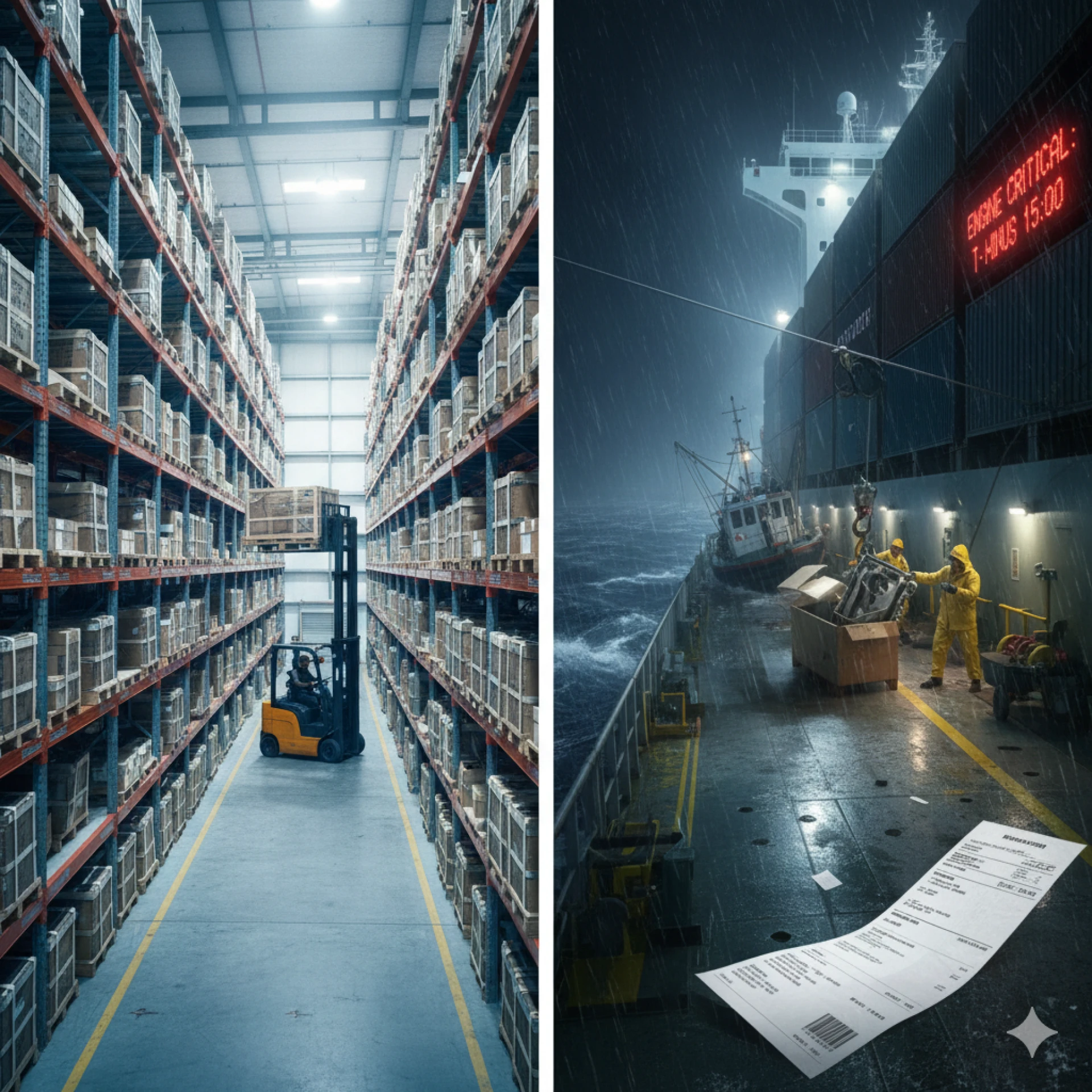

In the shipping industry, "time is money" isn’t just a catchy phrase—it’s a brutal financial reality. When a ship is stuck at the dock or drifting at sea because of a broken part, the costs don't just add up; they snowball.
For the people managing these ships, the big question is always: Do we buy in bulk and store it for a rainy day, or do we buy only what we need and pray we don't get hit with an "emergency" price tag?
At first glance, buying only when you need something feels like a "pay-as-you-go" convenience. Bulk buying, on the other hand, feels like a massive upfront bill. But when you look at the big picture—the Total Cost of Ownership—the answer is rarely that simple. Let’s look at which strategy actually keeps your fleet (and your budget) afloat.
1. The Hidden Sting of "Right Now": Emergency Purchasing
Emergency buying happens when a critical part snaps and there’s no backup on the shelf. You might save money on storage, but you’re opening the door to three "invisible" costs that can eat your profits for the whole month.
- The "Urgency Tax": When you need a fuel injector in 24 hours to hit a sailing window, you have zero leverage. Suppliers know you’re desperate, and you’ll likely pay 20% to 50% more than the normal price.
- The Logistics Nightmare: Marine parts are heavy. Flying a 100kg cylinder liner across the world isn't just expensive—it can cost more than the part itself. Toss in last-minute customs fees and "express" handling, and your shipping bill becomes a monster.
- The Off-Hire Disaster: This is the real budget-killer. A mid-sized ship can lose $20,000 to $50,000 in revenue every single day it’s sitting still. If a $500 sensor fails and you don't have a spare, that "cheap" part just cost you the price of a luxury car in lost time.
2. Bulk Strategy: Buying Peace of Mind
Bulk purchasing means ordering high-use or "insurance" parts in large quantities for the whole fleet at once.
- Power in Numbers: Buying 50 sets of piston rings instead of two lets you talk directly to the manufacturers. You can usually snag 10% to 25% discounts just by buying in volume.
- Smarter Shipping: Instead of paying for 20 different emergency air-freight packages, you send one big shipment by sea to a central hub. This can slash your logistics spending by up to 80%.
- The "Mobile Warehouse": If your ships use the same types of engines, a part bought for Ship A can be diverted to Ship B in a crisis. It keeps the whole family moving.
3. The "Capital Graveyard": When Bulk Fails
Bulk buying isn't perfect. If you aren't careful, it can become a trap:
- Sitting Cash: Money tied up in a warehouse is money you can't use for fuel or upgrades.
- Obsolescence: If you stock up on parts for an engine and then sell the ship, those spares become expensive paperweights.
- The "Rust" Factor: Parts sitting in a damp locker for three years can corrode. If they aren't stored perfectly, a "new" spare might be broken before you even use it.
4. The Math: A Quick Reality Check
| Feature | Bulk Purchase (Planned) | Emergency Purchase (Reactive) |
|---|---|---|
| Unit Cost | $1,200 | $1,800 |
| Shipping | $50 (Slow & Steady) | $450 (Rush Air) |
| Downtime Cost | $0 (Already on board) | $30,000 (1 day lost) |
| Total Cost | $1,250 | $32,250 |
Let’s look at a common scenario: Main Engine Fuel Injectors.In this case, waiting for an emergency made the part 25 times more expensive. Even if you paid for five years of storage, it would still be cheaper than losing one day of work.
5. The Winner: The "Hybrid" Approach
So, what’s the best way to save? Most successful managers use a "Criticality" strategy:
- Bulk Buy "Class A" Spares: These are the "must-haves" like injectors, pumps, and gaskets. If these fail, the ship stops. Never rely on the mail for these.
- Buy-as-Needed for "Class C" Spares: Things like light bulbs, cabin door handles, or paint can wait. If they’re late, the ship still sails.
The Bottom Line
To truly save money, stop looking at the price on the invoice and start looking at the risk. Bulk purchasing wins in the long run because it kills the astronomical costs of downtime and emergency logistics.
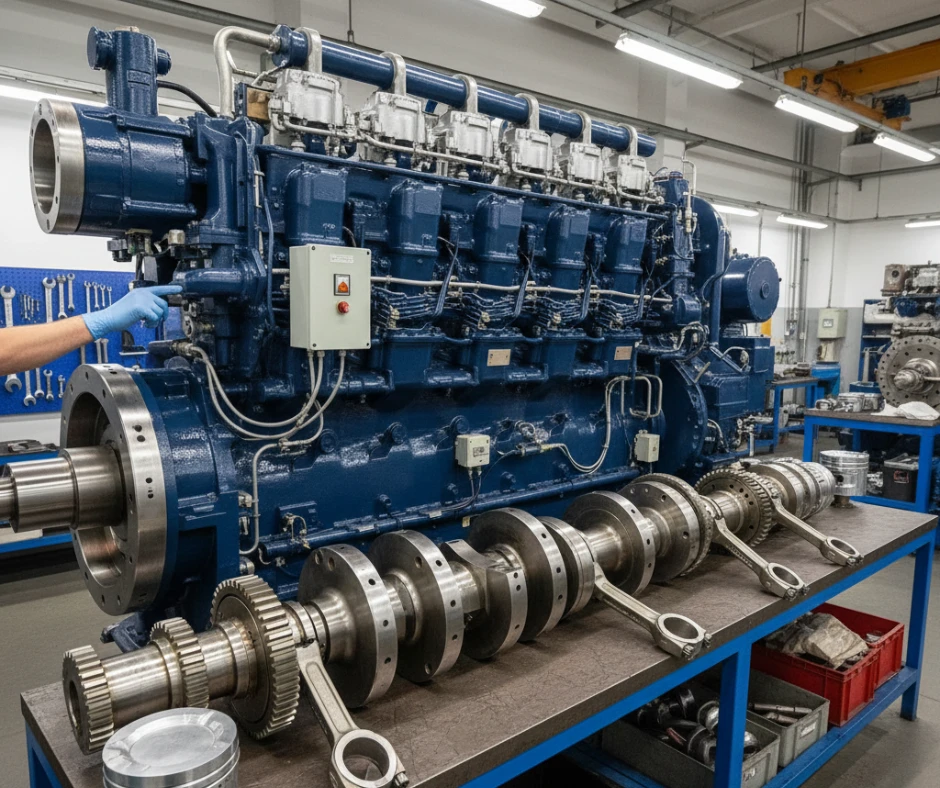
At the end of the day, strategies like bulk buying and hybrid inventory only work when you have a supplier who truly understands ship operations—and that’s where Labdhi Marine comes in. With deep roots in global sourcing and strong access to Alang’s ship recycling ecosystem, Labdhi Marine helps shipowners secure critical spares before they turn into costly emergencies. Their ability to supply new, reconditioned, and used parts allows fleet managers to balance cost, availability, and reliability without compromise. By supporting planned procurement instead of last-minute firefighting, Labdhi Marine helps reduce downtime risk and smooth out maintenance budgets. In an industry where every idle hour hurts, having the right partner makes all the difference between reacting to problems and staying confidently ahead of them.































Sign in to leave a comment.