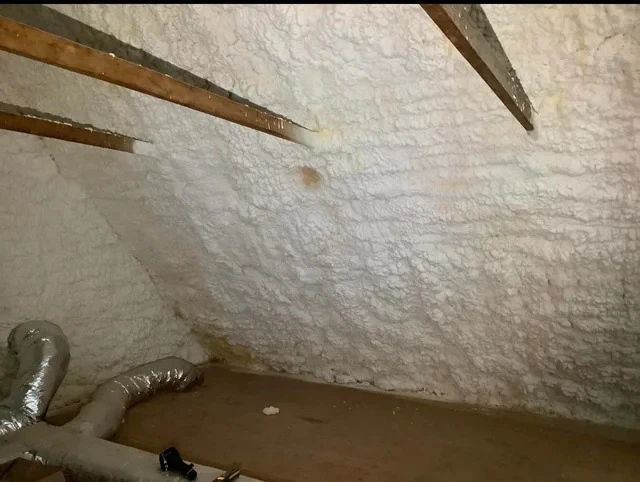

Spray foam insulation is widely used in both residential and commercial buildings because it seals air gaps better than traditional options. But insulation performance is just one side of the story. The more pressing question many homeowners, contractors, and property managers ask is: can spray foam insulation Contractor trap moisture and cause long-term problems?
This article breaks down the real risks, how they happen, where they happen, and how to avoid them—using up-to-date insights aligned with how search engines interpret and surface helpful content.
Can Spray Foam Insulation Trap Moisture?
Moisture problems from spray foam are possible, but they don’t originate from the foam itself. The issue usually comes from how and where the foam is installed, and how it interacts with other parts of the building envelope.
Misapplication Can Block Moisture Escape Paths
If spray foam is applied to an area without proper drying mechanisms—like poor ventilation or no vapor control—it can seal moisture into walls or roof cavities. This leads to trapped humidity, which in time can cause rot, mildew, or mold behind the foam layer.
Improper Substrate Conditions at Installation
Spray foam should only be installed on dry surfaces. Applying it over damp substrates locks in moisture. Since foam is air- and water-resistant, trapped moisture can’t evaporate or escape, causing long-term structural damage.
What’s the Difference Between Open Cell and Closed Cell Spray Foam?
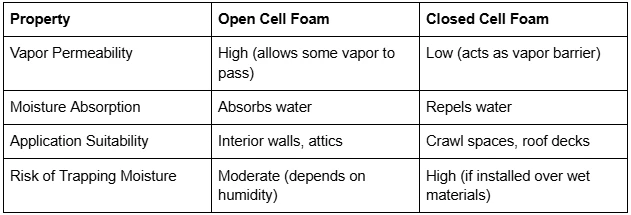
Both types of spray foam behave differently with moisture. Knowing the distinction helps determine when and where problems are more likely.
Open Cell Allows Some Moisture Movement
Open cell spray foam is more vapor-permeable. This means some moisture can pass through it. In humid climates, this can help prevent condensation buildup—if used with careful planning. But because it’s softer and more absorptive, it can retain moisture if it gets wet.
Closed Cell Acts as a Vapor Barrier
Closed cell spray foam resists water intrusion and acts as a vapor barrier. It's ideal for applications where vapor control is essential, like foundations or unvented roof assemblies. But it can also trap moisture if not paired with a balanced ventilation system or if applied over wet materials.
Comparison Table: Moisture Behavior of Open Cell vs Closed Cell Spray Foam
What Happens When Spray Foam Is Installed in Roof Decks or Attics?
Attics and roof decks are among the most common areas where spray foam moisture problems appear. Improper application in these zones can interfere with how the building dries.
Unvented Attic Assemblies
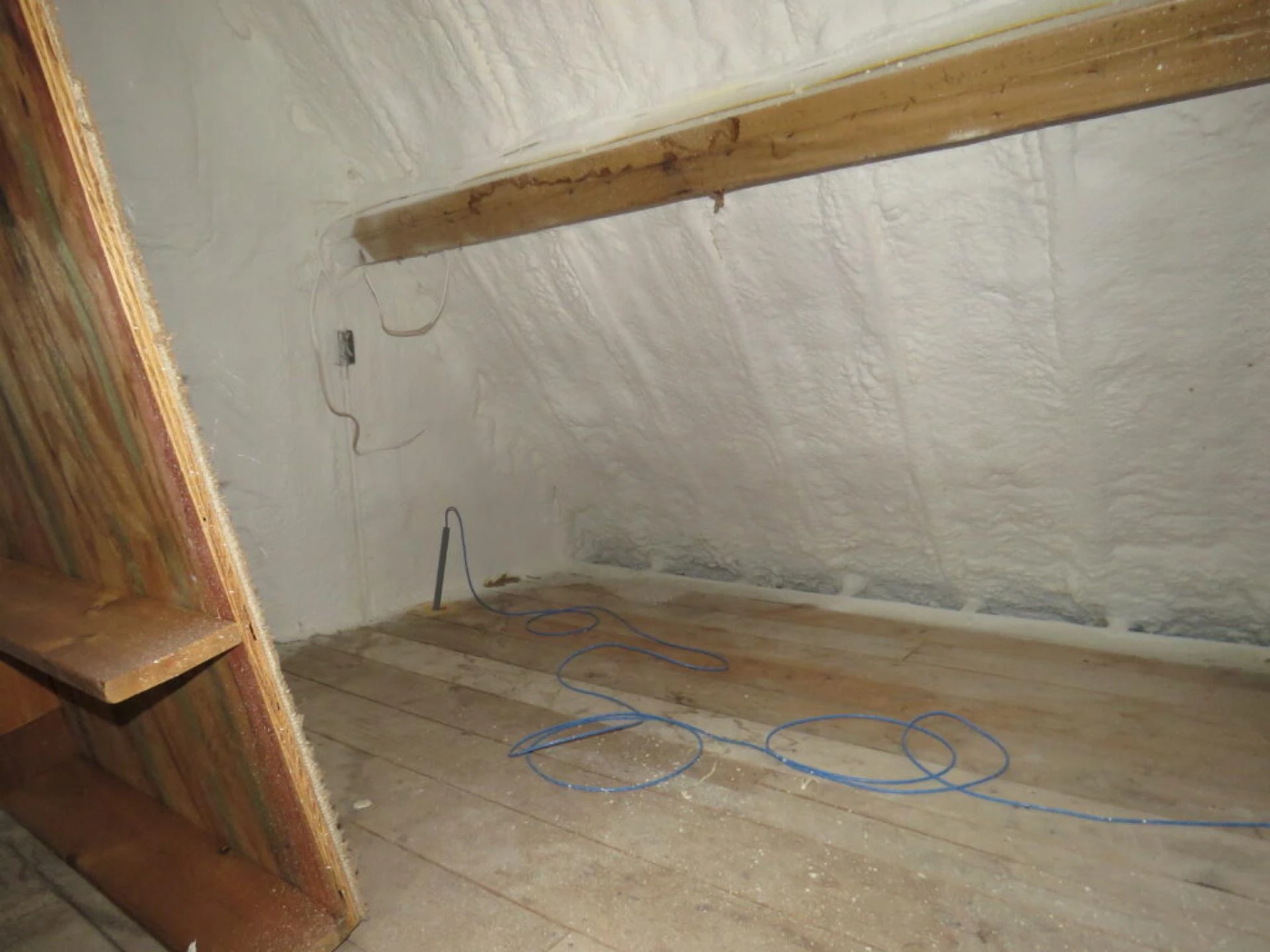
Spray foam is often used to insulate roof decks in unvented attics. If the attic isn’t sealed correctly and ventilation isn't managed, warm air from the living space can rise and condense on cold surfaces behind the foam. Over time, this can cause hidden moisture damage.
Roof Leaks and Water Intrusion
Once spray foam is in place, any water from a roof leak can stay hidden behind the foam for a long time. Without regular inspections or moisture sensors, this can lead to rot, mold, or delamination of the roof sheathing.
Is a Vapor Barrier Needed with Spray Foam?
Whether or not a separate vapor barrier is needed depends on the type of foam and the climate zone. Getting this wrong is one of the main ways moisture issues develop.
Cold Climates Require Careful Vapor Management
In colder regions, interior warm air can carry moisture into walls or roof structures. Without a vapor barrier (or the correct foam choice), this moisture may condense on colder outer surfaces, freeze, and later cause water damage when it thaws.
Warm and Humid Climates Need Different Strategies
In hot, humid areas, the direction of vapor drive is reversed—outside-in rather than inside-out. Using a vapor-impermeable closed cell foam on the wrong side of the building assembly can trap this exterior moisture and cause materials inside the structure to deteriorate.
Does Spray Foam Cause Mold?
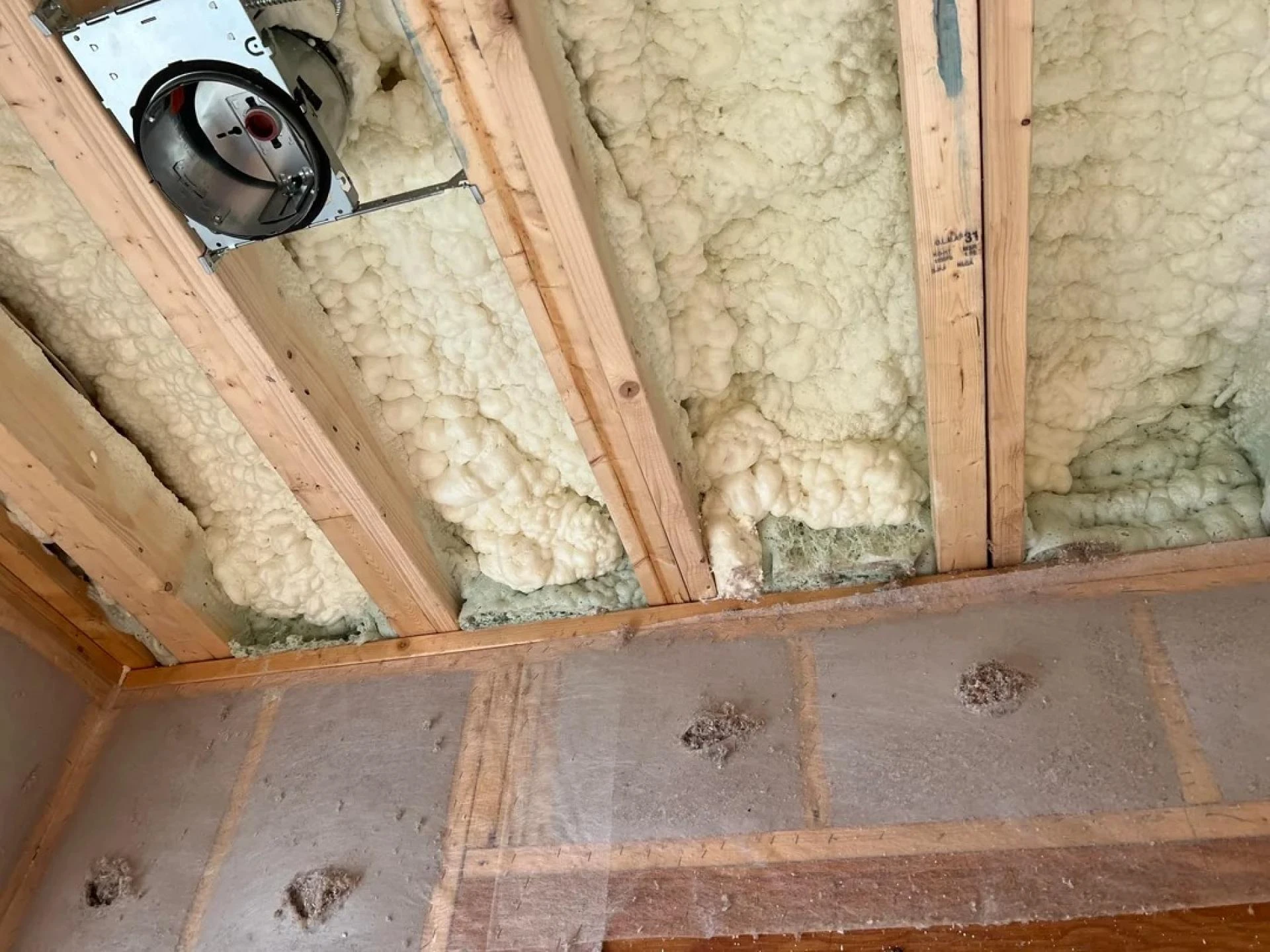
Spray foam does not support mold growth by itself. However, it can create the conditions where mold can thrive if applied over damp surfaces or if it traps moisture.
Mold Grows When Moisture Meets Organic Material
If spray foam is applied on wood framing or sheathing that contains excess moisture, and that moisture is trapped, mold will eventually develop on those organic surfaces behind the foam layer.
Lack of Air Circulation Can Exacerbate the Problem
Because spray foam seals off airflow, any existing moisture has no natural path to escape. Mold spores can grow undetected if not managed by mechanical ventilation or moisture detection systems.
How to Avoid Moisture Problems with Spray Foam
Preventing spray foam-related moisture issues comes down to two factors: installation quality and design compatibility.
Always Check Moisture Levels Before Application
Moisture meters should be used to check all surfaces before spraying. Applying foam over damp framing or sheathing is one of the most common triggers for hidden mold and rot.
Use Climate-Appropriate Assemblies
Understand the direction of vapor drive in your climate and choose insulation strategies accordingly. In many cases, combining spray foam with vapor retarders or ventilation systems helps manage moisture effectively.
Plan for Drainage and Inspection Access
Spray foam should never be the only moisture barrier. Drainage planes, weep systems, and occasional inspection access are critical—especially in commercial buildings or complex roof assemblies.
Conclusion
Spray foam can create moisture problems—but only when it’s installed incorrectly or used in a poorly planned assembly. The foam itself isn’t the issue. Moisture risks arise when it's applied over wet materials, used without understanding climate vapor behavior, or installed without room for inspection and drying.
Understanding the distinction between open and closed cell foams, knowing how each behaves in different environments, and taking the right steps during installation are the keys to preventing moisture issues. Whether you’re insulating a home attic or a large commercial space, spray foam can be safe and effective—as long as it’s used within the limits of its design.
Learn More: https://armored-insulation.com/?utm_source=backlink
FAQs
Can spray foam trap water behind it?
Yes, spray foam can trap water if applied over damp surfaces or in assemblies without drainage or ventilation. Once trapped, the moisture has limited pathways to escape.
Should closed cell spray foam be used in crawl spaces?
Closed cell spray foam is often used in crawl spaces because of its moisture resistance. But it must be applied over dry surfaces and should not block necessary ventilation unless a fully encapsulated system is planned.
Is it safe to use spray foam on roof decks?
It is safe when used as part of a properly designed unvented roof assembly. Installation should factor in moisture control, leak detection, and climate conditions to avoid condensation buildup.
Can spray foam lead to mold behind drywall?
If the foam is applied over wood or drywall with high moisture content, and that moisture is trapped, mold can grow behind it—even though the foam itself does not support mold.
How do I know if my spray foam insulation has caused moisture problems? Signs include musty odors, staining, bulging walls, or unexplained humidity indoors. A moisture inspection using thermal imaging or probes can detect issues behind foam layers.
Author: Jared Baker, Owner and Director of Business, brings deep local insight and strong business expertise to Armored Insulation as a native of Mayfield. While continuing a full-time role as a Staff Officer with a federal natural resources agency, has successfully built multiple ventures, including Bluegrass Commercial Cleaning, Animal Tales, and Undercover Properties. As Armored’s Business and Marketing Manager, plays a key role in upholding the company’s focus on delivering top-tier service.
Reviewer: Mia Clark used her 9 years of experience in spray foam to review this article and offered input focused on helping companies make their services easier to understand and market effectively.



























Sign in to leave a comment.