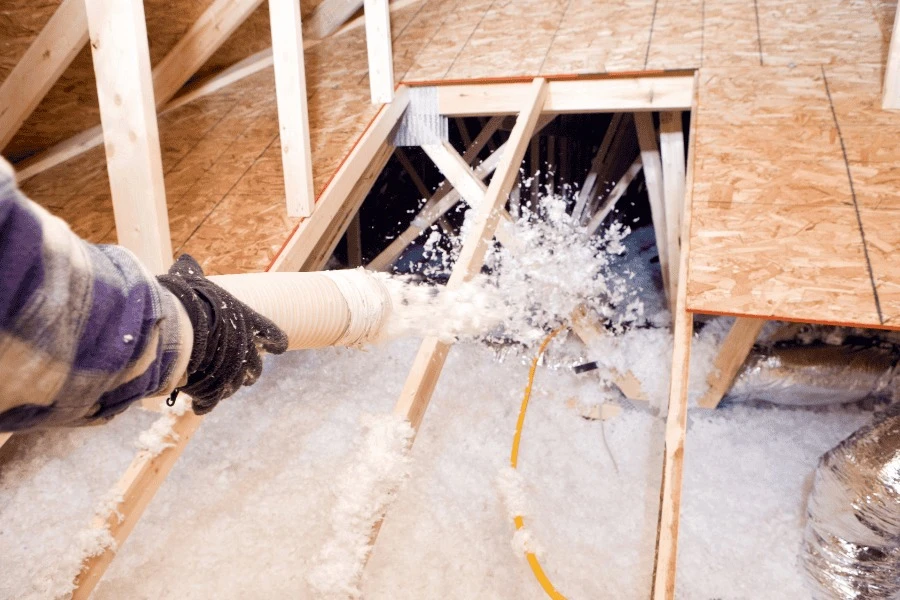

Affordable Blown-In Insulation is one of the most effective methods for controlling heat transfer in residential and commercial buildings. The performance of these systems depends heavily on two factors: density and R-value. Understanding how these characteristics interact helps property owners and facility managers choose the right insulation strategy for energy efficiency, comfort, and long-term durability.
How Density Influences Blown-In Insulation Performance
Density is the amount of insulation material packed into a given volume. In blown-in systems, density directly affects air movement control, settling rate, and thermal resistance.
Definition of Density in Insulation Systems
Density is measured in pounds per cubic foot (pcf). For cellulose, typical densities range from 1.5 to 3.5 pcf, while fiberglass often ranges between 0.5 and 1.2 pcf. Denser material reduces airflow, which increases overall effectiveness in reducing heat loss and gain.
Effects of Density on Settling and Longevity
Low-density insulation may settle over time, reducing its thickness and lowering R-value. High-density cellulose, for example, resists settling and provides more consistent performance over decades. Choosing the correct density ensures the system maintains its intended thermal resistance without significant degradation.
Case Example: Cellulose vs. Fiberglass Density
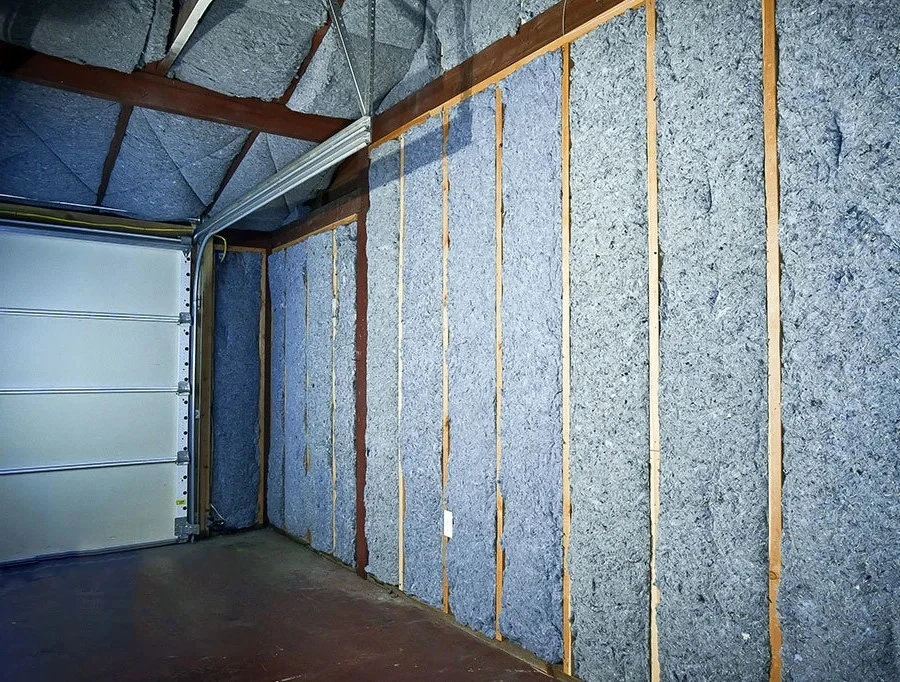
- Cellulose: Higher density, strong air-blocking qualities, less prone to settling when installed at proper compaction.
- Fiberglass: Lower density, but lightweight and effective in dry environments where air leakage is minimal.
R-Value and Its Role in Thermal Resistance
R-value measures resistance to heat flow. The higher the R-value, the greater the insulation’s ability to slow energy transfer.
R-Value Defined
R-value is expressed per inch of material. For example, cellulose averages about R-3.5 per inch, fiberglass blown-in about R-2.2 to R-2.7 per inch, and mineral wool about R-3.1 to R-3.4 per inch.
Relationship Between Thickness and R-Value
More inches of insulation increase total R-value. For example, 12 inches of cellulose (R-3.5/inch) yields approximately R-42, while the same thickness of fiberglass (R-2.5/inch) achieves about R-30. Thickness must be paired with density to achieve lasting performance.
Influence of Climate and Building Codes
R-value requirements vary by climate zone and building code standards. Northern regions with colder winters demand higher total R-values, while southern regions may allow lower targets. Compliance ensures both comfort and efficiency.
Comparing Blown-In Insulation Types by Density and R-Value
Each insulation material offers a different balance of density and R-value. The choice depends on the structure, budget, and long-term performance needs.
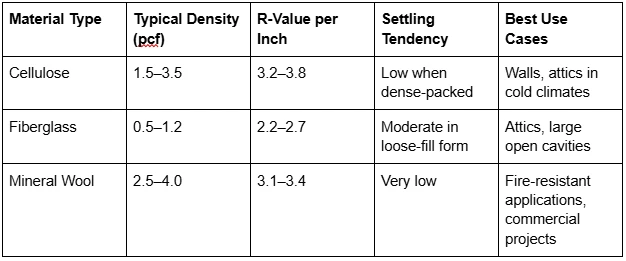
High-density cellulose often provides the strongest overall balance, while fiberglass remains cost-effective for large attic spaces. Mineral wool is chosen for its fire and sound resistance in specialized settings.
The Interaction Between Density and R-Value
Density and R-value are interconnected. Increasing density within certain ranges improves R-value performance by reducing air leakage. However, compressing insulation too much can reduce air pockets that contribute to thermal resistance.
Optimal Density Ranges
- Cellulose: Works best between 3.0–3.5 pcf in dense-packed applications.
- Fiberglass: Performs well at lighter densities; compressing reduces effectiveness.
- Mineral Wool: Naturally maintains structure and density, with stable R-value over time.
Why Balance Matters
Too little density allows airflow that reduces effective R-value. Too much density in the wrong material lowers efficiency by eliminating the air spaces that provide resistance. Correct installation ensures the right balance is achieved.
Application Methods That Affect Density and R-Value
The way blown-in insulation is installed determines whether the intended density and R-value are actually reached.
Loose-Fill Applications
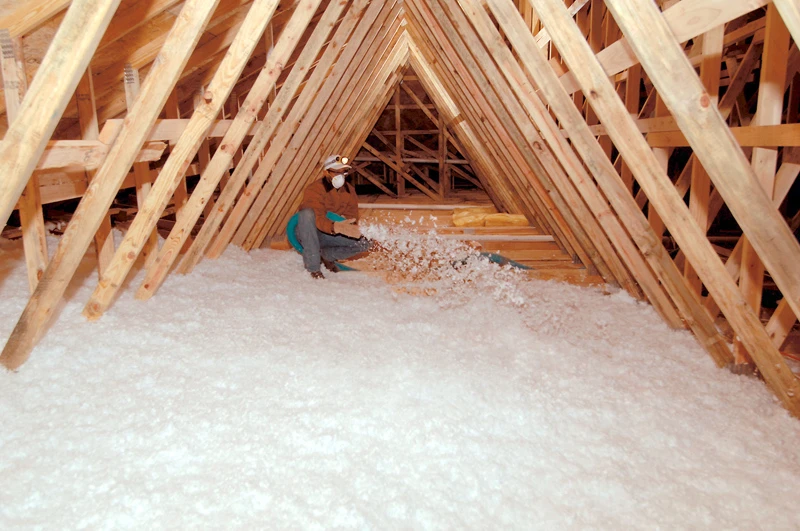
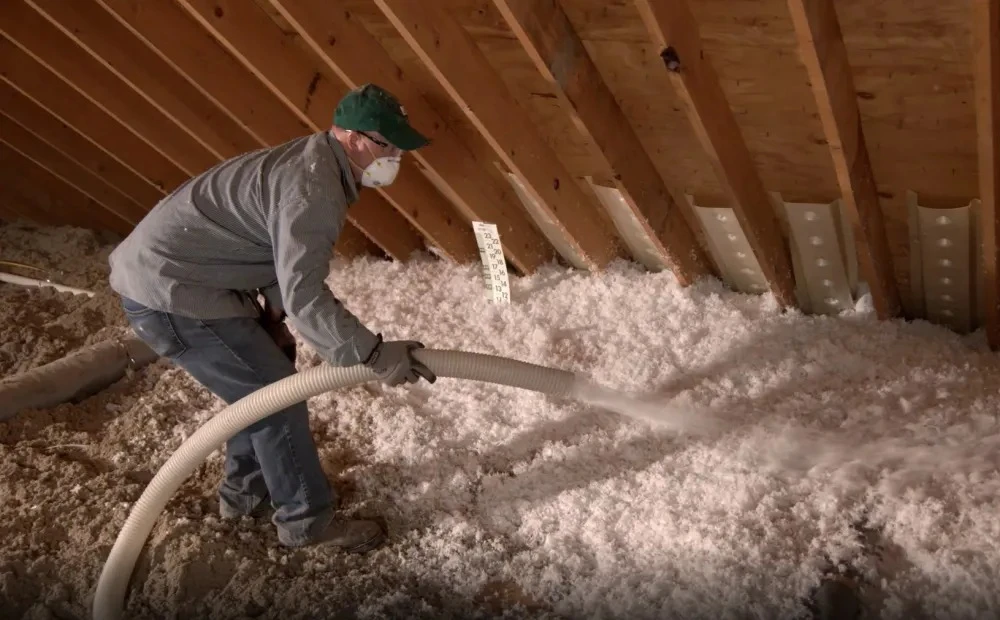
Used in open attics, loose-fill systems rely on thickness to achieve R-value. Settling must be accounted for by blowing in extra material at installation.
Dense-Pack Applications
Often used in walls and enclosed cavities, dense-packing increases material compaction, reducing settling and improving air control. This approach is especially effective for cellulose.
Hybrid Installations
Some projects combine dense-packed walls with loose-fill attics, optimizing performance across the building envelope.
How to Evaluate Blown-In Insulation for a Property
Choosing the right insulation involves balancing energy performance, structural requirements, and long-term durability.
Step 1: Identify Building Goals
Residential owners often prioritize comfort and utility bill savings, while commercial facilities may focus on code compliance, fire resistance, or acoustic control.
Step 2: Match Material to Application
Cellulose works well in cold climates where air leakage is a major concern. Fiberglass may be appropriate in dry regions with wide attic spans. Mineral wool offers fire and moisture resistance for commercial and industrial use.
Step 3: Confirm Installed Density and R-Value
Verifying that insulation meets design density and R-value requirements is critical. Professional-grade equipment and installation techniques ensure specifications are met.
Common Questions About Density and R-Value in Blown-In Insulation
Does higher density always mean higher R-value?
Not always. Higher density can improve R-value up to a point, but over-compression reduces air pockets that provide thermal resistance. Balance is key.
How does insulation settling affect R-value?
Settling reduces thickness, which lowers total R-value. Dense-packing or adding extra material during installation compensates for this long-term effect.
Can cellulose and fiberglass be used together?
Yes. Some projects layer cellulose over fiberglass to combine density and coverage. However, each system must be evaluated to avoid uneven settling.
Does climate zone affect recommended density?
Yes. Colder climates often use higher-density applications to minimize air leakage, while milder zones can rely on lower densities without major performance loss.
Is mineral wool worth the higher density?
In many commercial or fire-sensitive settings, yes. Its stability, resistance to settling, and non-combustible structure make mineral wool ideal despite its weight and cost.
Conclusion
Density and R-value define how blown-in insulation performs. Density controls airflow resistance and settling behavior, while R-value measures thermal resistance per inch. Both must be considered together to achieve long-lasting energy efficiency.
Visit us: https://armored-insulation.com/?utm_source=backlink
For residential properties, cellulose and fiberglass remain the most common choices, each offering different density and R-value characteristics. Commercial projects often rely on mineral wool for its stability and fire resistance. Correct installation is the deciding factor in whether the designed density and R-value translate into real-world performance.
When evaluating insulation strategies, the most important step is aligning the chosen material and application method with the building’s climate, use, and long-term performance requirements. Blown-in systems, when properly installed, provide reliable energy savings, healthier environments, and durable building protection.
Author: Jared Baker, Owner and Director of Business, brings deep local insight and strong business expertise to Armored Insulation as a native of Mayfield. While continuing a full-time role as a Staff Officer with a federal natural resources agency, he has successfully built multiple ventures, including Bluegrass Commercial Cleaning, Animal Tales, and Undercover Properties. As Armored’s Business and Marketing Manager, he plays a key role in upholding the company’s focus on delivering top-tier service.
Reviewer: Mia Clark used her 9 years of experience in spray foam to review this article and offered input focused on helping companies make their services easier to understand and market effectively.




























Sign in to leave a comment.