

Yes, and if your skin has been acting like a stranger lately, stress is worth looking at. When your body stays switched into stress mode for too long, your skin barrier weakens, water escapes faster than it should, and your skin loses some of its ability to stay calm and comfortable. That's why a routine that's worked for years can suddenly feel like it's stopped working overnight.
Here's the thing worth sitting with: your skin probably isn't "bad." It's overwhelmed.
If your face feels tight right after cleansing, your moisturiser seems to evaporate within the hour, products you've used for ages are suddenly stinging, or your glow has quietly packed up and left, stress could be a big part of why.
Let's get into what's actually going on underneath all of it.
What is stress-reactive skin, exactly?
Stress-reactive skin is exactly what it sounds like skin that becomes more sensitive, dry, dull, or unpredictable during stretches of emotional, physical, or lifestyle stress.
It doesn't mean you've suddenly developed a brand-new skin type. More often, your skin is simply reflecting what your body has been carrying. Maybe sleep has been bad for weeks. Maybe work has been relentless. Maybe your nervous system has been stuck in "just get through today" mode for longer than you'd like to admit.
And that's the frustrating part, you can be doing everything "right" with your skincare and still feel like your skin isn't cooperating.
When stress is the underlying issue, though, piling on more products rarely helps. The better move is usually to simplify, hydrate, protect, and give your skin room to rebuild.
How stress actually affects your skin barrier
Your skin barrier is the outermost layer of your skin, and its job is straightforward: keep moisture in, keep irritants out. When it's healthy, your skin feels resilient and balanced. When it's weakened, you'll notice tightness, roughness, sensitivity, or dryness that doesn't go away even after moisturising.
Stress chips away at the barrier in a few ways. Clinical studies published in Scientific Reports show that elevated stress hormones (like cortisol) directly impair the skin's lipid synthesis, making it significantly harder for the skin to hold onto water and repair itself.
And on top of the physiological side, stress tends to change our habits in ways that quietly make things worse. We cleanse more aggressively because our skin looks congested. We exfoliate more because the texture seems off. We panic-buy new products. We skip our routine entirely some nights because we're just too tired.
Put all of that together, and your barrier isn't just stressed anymore, it's exhausted. That's usually the point where your skin starts reacting to nearly everything you put on it.
Dry skin, dehydrated skin, and a damaged barrier: how they're different
These three overlap constantly, but they're not the same thing.
Dry skin means your skin lacks oil. This is usually just your skin type. It naturally produces less sebum, so it needs richer, lipid-based support to stay comfortable.
Dehydrated skin means your skin lacks water. This one's a condition rather than a type, so it can affect anyone, even oily skin. Dehydrated skin tends to feel tight and dull, with makeup that clings in odd patches.
A damaged barrier means your skin is struggling to hold moisture in and keep irritants out. This can come from over-exfoliating, harsh cleansers, weather shifts, poor sleep, stacking too many actives, or stress itself.
And it's entirely possible to deal with all three at once. That's usually when things get genuinely confusing. Your skin feels dry but looks shiny, your moisturiser helps for a little while and then stops, your face is tight after washing, and products that never used to bother you suddenly sting.
If that sounds familiar, your skin probably isn't asking for a dramatic overhaul. It's asking for stability.
Signs your skin is stressed, not just "dry"
Stressed skin shows up differently for everyone, but a few patterns come up again and again:
Your skin stays tight even after a full skincare routine. It looks dull or tired more often than not. It's become noticeably more sensitive. Products that were fine a month ago now sting. Texture feels rougher or more uneven. You're seeing dry patches, redness, or irritation that wasn't there before. And the whole thing seems to track almost exactly with how your sleep, stress, or consistency has been lately.
In fact, dermatological research tracking medical students during high-stress exam periods confirmed a measurable spike in transepidermal water loss (TEWL) tied directly to stress-induced poor sleep.
To be clear, stress is never the only possible explanation. Hormones, weather, diet, medication, allergies, eczema, and dermatitis can all play a role too. But if your skin tends to shift during the most demanding periods of your life, stress deserves a closer look.
Why does your skin sometimes get worse, right when you finally slow down
This catches a lot of people off guard. You push through a busy, high-pressure stretch, your skin somehow holds it together the whole time, and then the moment you actually rest. That's when the dryness, the breakout, the dullness all show up at once.
It feels unfair, but it tracks. While you're in survival mode, your body prioritises getting through the pressure, not maintenance. It's only once things slow down that you finally notice what your body and your skin have quietly been carrying the whole time.
This is exactly why stressed skin responds better to a ritual than to punishment. Not a complicated routine with twelve steps. Not a new activity every other week. Not "fix my face right now" energy. What it actually needs is something closer to a quiet signal: we're safe now, we're slowing down, and we're going to be consistent about this.
What actually helps stressed & reactive skin
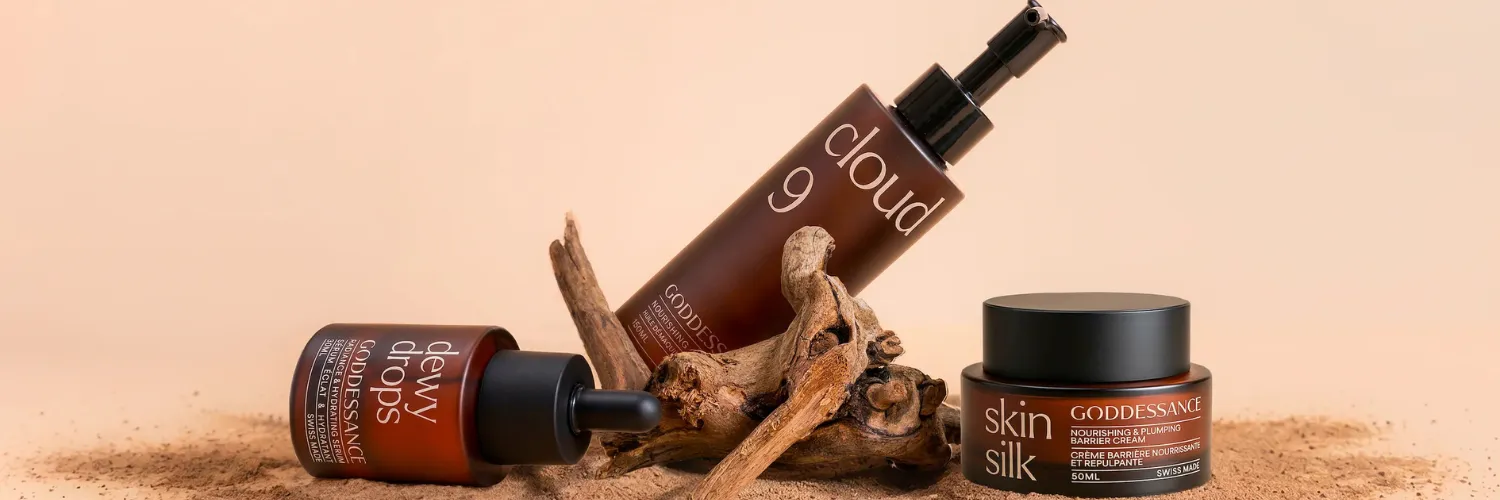
The most effective routine for stressed, dry, dehydrated, or reactive skin is almost always a simple one: cleanse gently, hydrate properly, seal with barrier support. That's the whole thing, not boring, just effective.
Start with a cleanser that doesn't strip.
If your skin feels tight the moment you finish washing your face, that tightness isn't proof of "clean" skin. It's often a sign your natural oils have just been stripped away. For stressed or barrier-compromised skin, look for something that removes the day without leaving your face uncomfortable.
Add hydration before you reach for moisturiser.
Dehydrated skin needs water, not just cream on top. A hydrating serum gives your skin that water-focused step first, so there's actually something for your moisturiser to seal in. Think of it as giving your skin something to hold onto, rather than just something to sit under.
Seal and support the barrier.
Once your skin has hydration, it needs help keeping it there. Especially if your skin is dry, sensitive, or already compromised. Ingredients like ceramides, cholesterol, and squalane support the outer layer of skin so it can gradually become more resilient.
Keep it consistent.
Stressed skin doesn't respond well to chaos. Switching products constantly makes it almost impossible to tell what's actually helping versus what's irritating things further. Give your skin a few consistent weeks with the same routine before deciding whether it's working. It doesn't need to be shocked into behaving, it needs to be supported long enough to actually calm down.
What to pull back on when your skin is already struggling
When your skin feels dry, tight, or irritated, the instinct is usually to do more. This is almost always the moment to do less instead.
Worth easing off: strong exfoliating acids used too often, physical scrubs, harsh foaming cleansers, heavy artificial fragrance, several new products introduced at once, layering multiple actives, skipping moisturiser because your skin feels oily, skipping SPF, and picking at or over-cleansing your skin.
One more thing worth saying clearly: your skin doesn't need to suffer for a product to be "working." A little tingling with certain actives is normal, but burning, stinging, redness, or lasting discomfort are signs to actually listen to, not push through.
The skin–nervous system connection
Your skin and your nervous system aren't separate systems quietly minding their own business, they're in constant conversation. In the medical world, this is studied as psychodermatology or the 'brain-skin axis.' Research via the National Institutes of Health (NIH) highlights how neuroendocrine pathways connect emotional stress directly to physical skin inflammation.
You blush when you're embarrassed. You sweat when you're nervous. Breakouts tend to cluster around your most intense weeks. Your face looks different when you're running on no sleep. None of that is random, your skin is often a fairly accurate readout of what your body is experiencing internally.
This is part of why a skincare ritual can matter beyond the surface. Not because skincare can solve the bigger picture, it can't. But the way you care for your skin can become one small, repeatable moment each day where your body gets a different message: slower, softer, less aggressive, less "fix yourself," more "come back to yourself." For stressed skin, that distinction actually matters.
How long does it take for stressed skin to calm down?
It depends on what's driving it and how compromised the barrier already is. Some people feel noticeably more comfortable within a few days of simplifying their routine. For others, especially with a more damaged barrier, it can take several weeks of steady consistency before things settle.
The main thing is resisting the urge to panic, and changing your entire routine every few days. That tends to restart the cycle rather than calm it.
If your skin is severely inflamed, cracking, bleeding, extremely itchy, or simply not improving at all, it's worth seeing a dermatologist. Skincare can support your skin, but persistent irritation sometimes needs proper medical attention.
The bottom line
Stress can genuinely make your skin feel dry, dehydrated, dull, and reactive. It weakens the barrier, disrupts hydration, and makes your skin less tolerant of products it normally handles just fine.
The fix usually isn't more products. It's a calmer routine, in the right order: cleanse gently, hydrate deeply, seal with barrier support. Your skin isn't asking to be punished into behaving. It's asking to feel safe again.
FAQ
Can stress make your skin dry?
Yes, stress can contribute to dry-feeling skin by affecting the barrier, hydration levels, inflammation, and sleep quality. A weakened barrier loses water more easily, which often shows up as tightness, roughness, or general discomfort.
Can stress damage the skin barrier?
It can, especially when combined with poor sleep, harsh products, over-exfoliation, weather changes, or an inconsistent routine. A weakened barrier tends to bring dryness, sensitivity, redness, and stinging along with it.
How do I know if my skin is dry or dehydrated?
Dry skin lacks oil and is usually a skin type. Dehydrated skin lacks water and can affect any skin type. If your skin feels tight, dull, or thirsty regardless of what you put on it, dehydration is likely involved.
Why does my skin suddenly react to everything?
This usually points to a compromised barrier. Once the barrier is weakened, products sting more easily, and skin becomes less tolerant of overall stress, over-exfoliation, harsh cleansers, and fragrance can all push things in that direction.
What's the best routine for stressed, reactive skin?
A simple one: a gentle, non-stripping cleanser, a hydrating serum, and a barrier-supporting cream. The goal is to cleanse without drying skin out, reintroduce water, and seal everything in with ingredients that help the barrier hold up over time.
Should I exfoliate stressed skin?
Hold off if your skin already feels tight, flaky, or irritated. Let the barrier stabilise first, then reintroduce exfoliation slowly and gently once your skin feels calmer.
Can oily skin be dehydrated, too?
Yes, absolutely. Dehydrated skin sometimes produces more oil to compensate, which is exactly why it can feel tight while still looking shiny.


























Sign in to leave a comment.