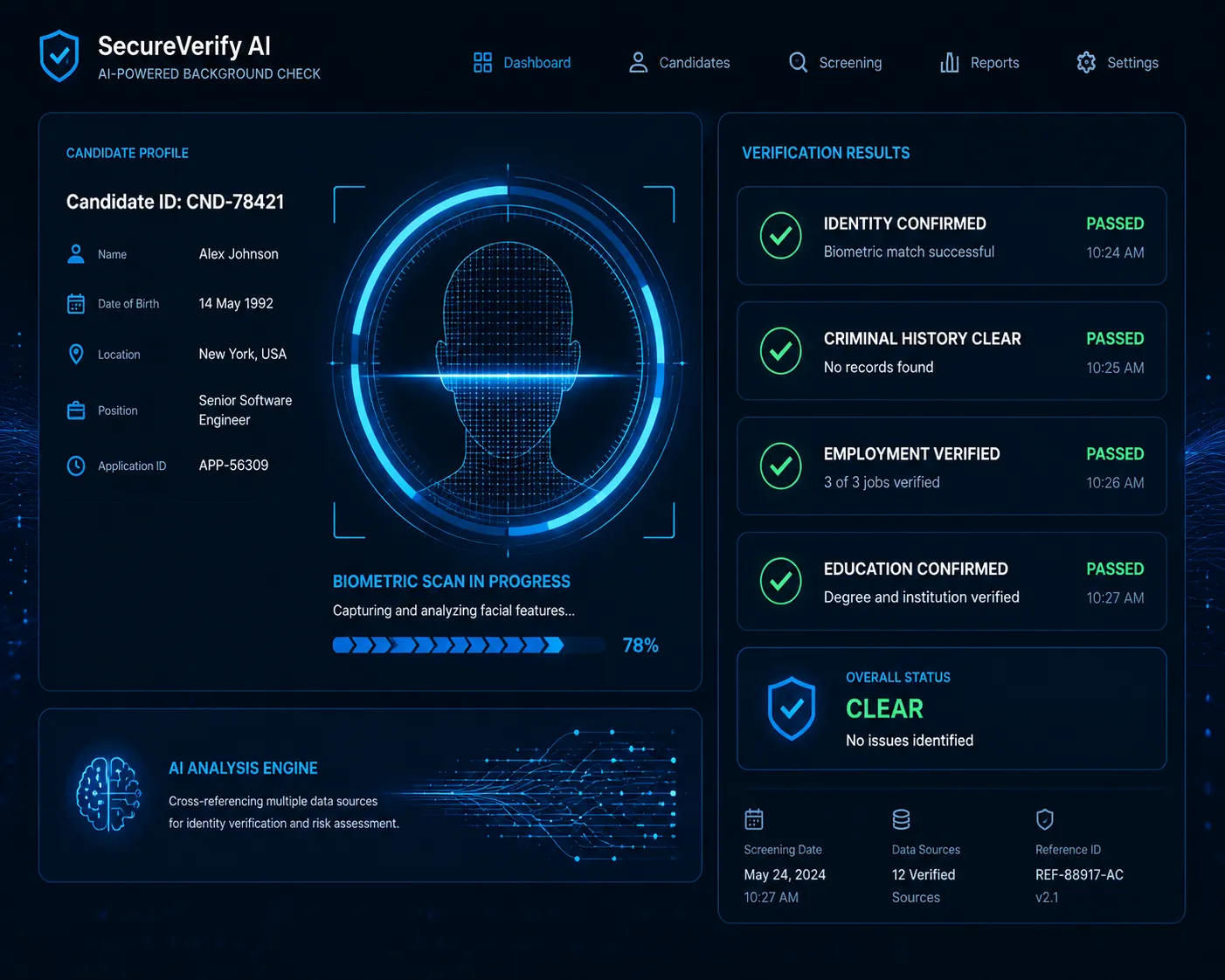

A bad hire costs an average of $14,900 per incident, according to a 2025 CareerBuilder study. That figure does not include legal exposure, team disruption, or reputational damage. For HR and compliance professionals, running a thorough candidate background check before extending an offer is one of the most cost-effective risk controls available.
The screening market now sits at $7.78 billion globally and is growing at 7.3% annually, driven by rising workforce mobility and tighter compliance requirements. Platforms built on AI and biometric verification are cutting turnaround times from five business days to under 12 hours in many cases. This guide covers what a complete candidate background check looks like, how to run one compliantly, and where technology is changing the equation for hiring teams.
What Does a Candidate Background Check Actually Cover?
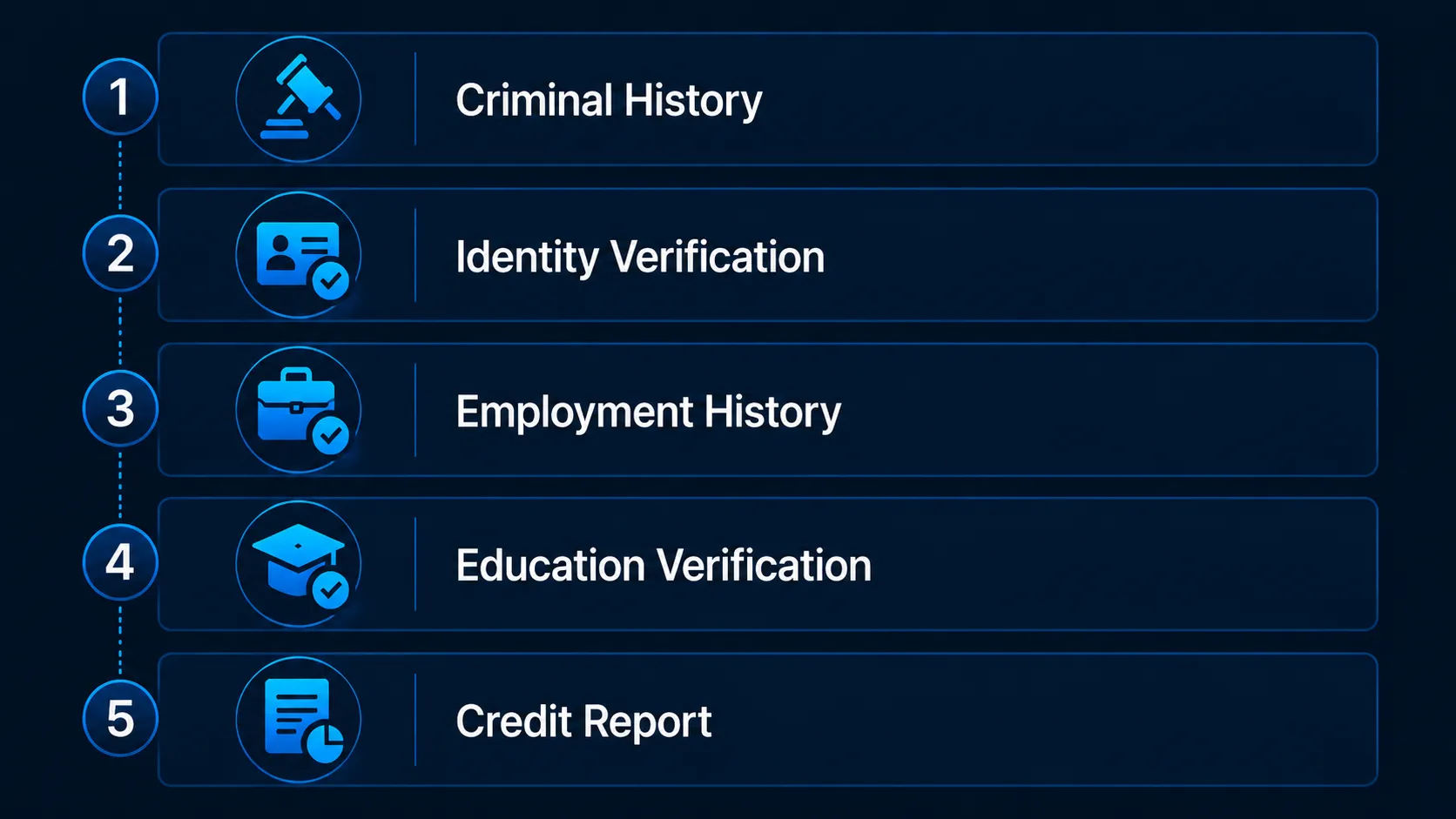
A candidate background check pulls verified data across several distinct record categories. Each category serves a specific risk management purpose and should be scoped to the role you're filling.
| Check Type | What It Verifies | Common Use Case |
|---|---|---|
| Criminal History | County, state, and federal records | All roles |
| Identity Verification | Biometric match, government ID | Remote and high-trust roles |
| Employment History | Dates, titles, reason for leaving | Professional and managerial roles |
| Education Verification | Degrees, certifications, institutions | Credentialed and licensed roles |
| Credit Report | Financial history, liens, bankruptcies | Finance and executive roles only |
Resume fraud is a real and growing problem. Data from late 2025 showed a 12% rise in fraudulent credential submissions. Direct verification through a secure background check platform is the only reliable way to catch fabricated qualifications before they enter your workforce.
VEVR's background verification services cover all of these categories through a single AI-powered workflow, reducing the manual coordination that typically slows HR teams.
How Does AI Change the Candidate Background Check Process?
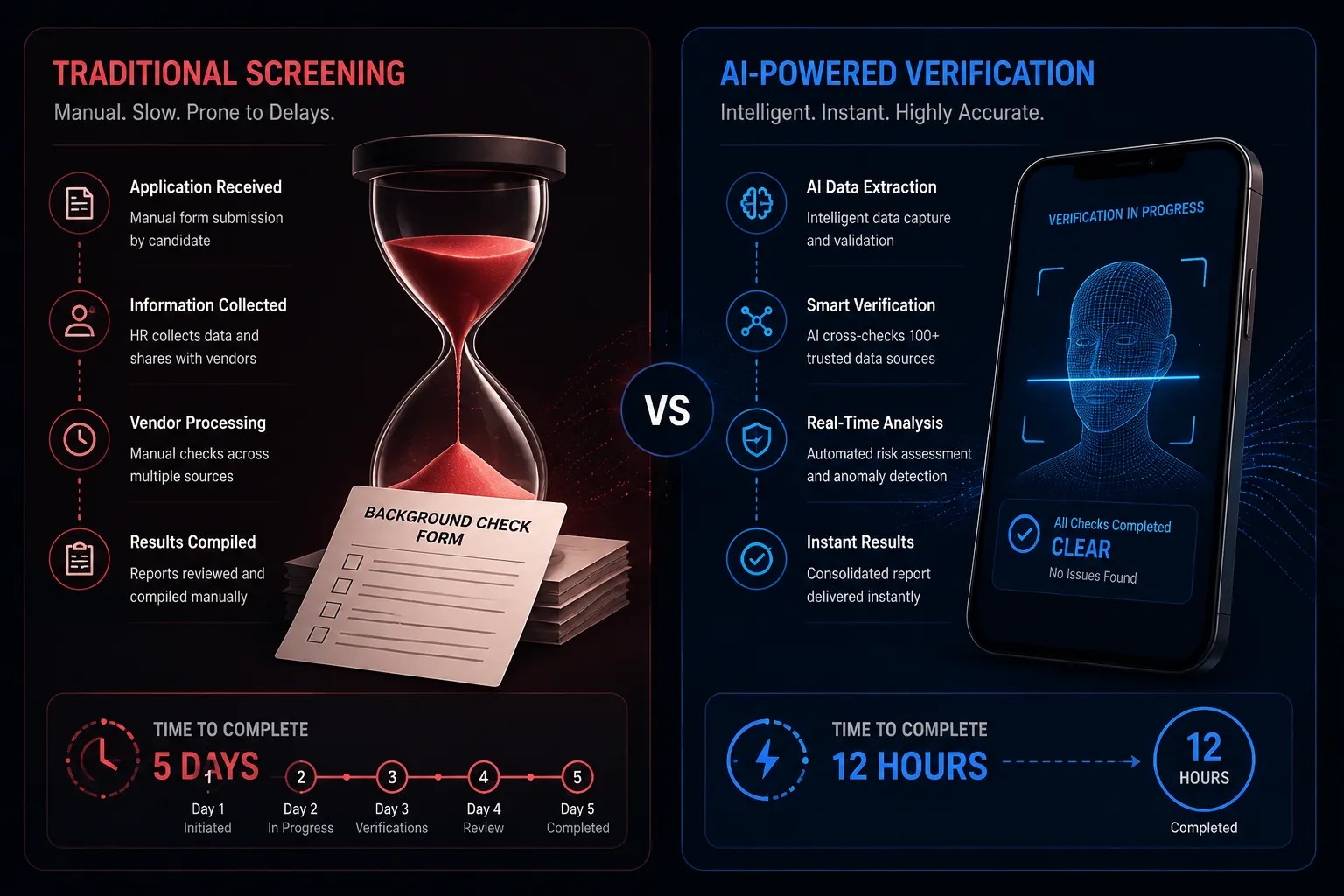
AI-driven applicant screening software changes background verification in two concrete ways: speed and accuracy. Traditional manual processes took five business days on average. Platforms using automated data retrieval and biometric identity verification now complete most checks in under 12 hours.
What AI Verification Actually Does
- Matches a candidate's submitted ID against biometric data using facial recognition to confirm identity in real time.
- Cross-references criminal record data across county, state, and federal databases simultaneously rather than sequentially.
- Flags discrepancies in employment dates or job titles automatically, surfacing inconsistencies that manual reviews miss.
- Generates an audit trail for every data point pulled, which supports FCRA compliance documentation.
The limitation worth acknowledging: AI adjudication can produce false positives in cases involving common names or partial record matches. A well-designed platform combines automated flagging with human review for any disputed results. This hybrid approach keeps speed high without sacrificing accuracy or candidate rights.
VEVR's AI hiring platform uses high-precision facial recognition alongside real-time law enforcement database integration to deliver same-day background check results with full data encryption and GDPR and CCPA-compliant handling.
What Are the FCRA Compliance Requirements for a Candidate Background Check?
The Fair Credit Reporting Act (FCRA) governs how employers use third-party consumer reports in hiring decisions. Non-compliance carries significant legal risk: EEOC discrimination claims related to improper vetting rose 12% annually through 2025, and penalties can include class-action exposure.
The Required Steps Before and After Running a Check
- Written consent: Obtain signed authorization from the candidate before initiating any check. This must be a standalone document, not buried in onboarding paperwork.
- Disclosure notice: Tell the candidate clearly which types of checks will run and which consumer reporting agency you use.
- Pre-adverse action notice: If a check result may lead you to withdraw an offer, provide the candidate with a copy of the report and a Summary of Rights before taking action.
- Adverse action notice: After the waiting period (typically five business days), issue the formal adverse action notice if you proceed with rejection.
- Consistent standards: Apply the same screening criteria to every candidate for the same role. Inconsistent application is grounds for discrimination claims under EEOC guidelines.
Ban-the-box laws in numerous jurisdictions now restrict when you can ask about criminal history. In many states, this inquiry can only happen after a conditional offer has been made. Your screening policy needs to account for multi-state variations if you hire across locations.
VEVR's verification FAQs cover common compliance questions for HR teams navigating FCRA and state-level screening laws.
What Should HR Teams Look for in Background Verification Software?
Choosing the right pre-hire background check platform has a direct impact on hiring speed and legal risk exposure. The wrong tool creates bottlenecks and compliance gaps. Here are the criteria that matter for compliance-focused HR teams.
- Turnaround time: Look for platforms that complete standard checks within 24 hours. Over 85% of checks on leading platforms clear within that window when direct digital court access is used.
- Data source breadth: The platform should pull from county, state, and federal criminal databases simultaneously rather than sequentially. International data access matters for global hiring.
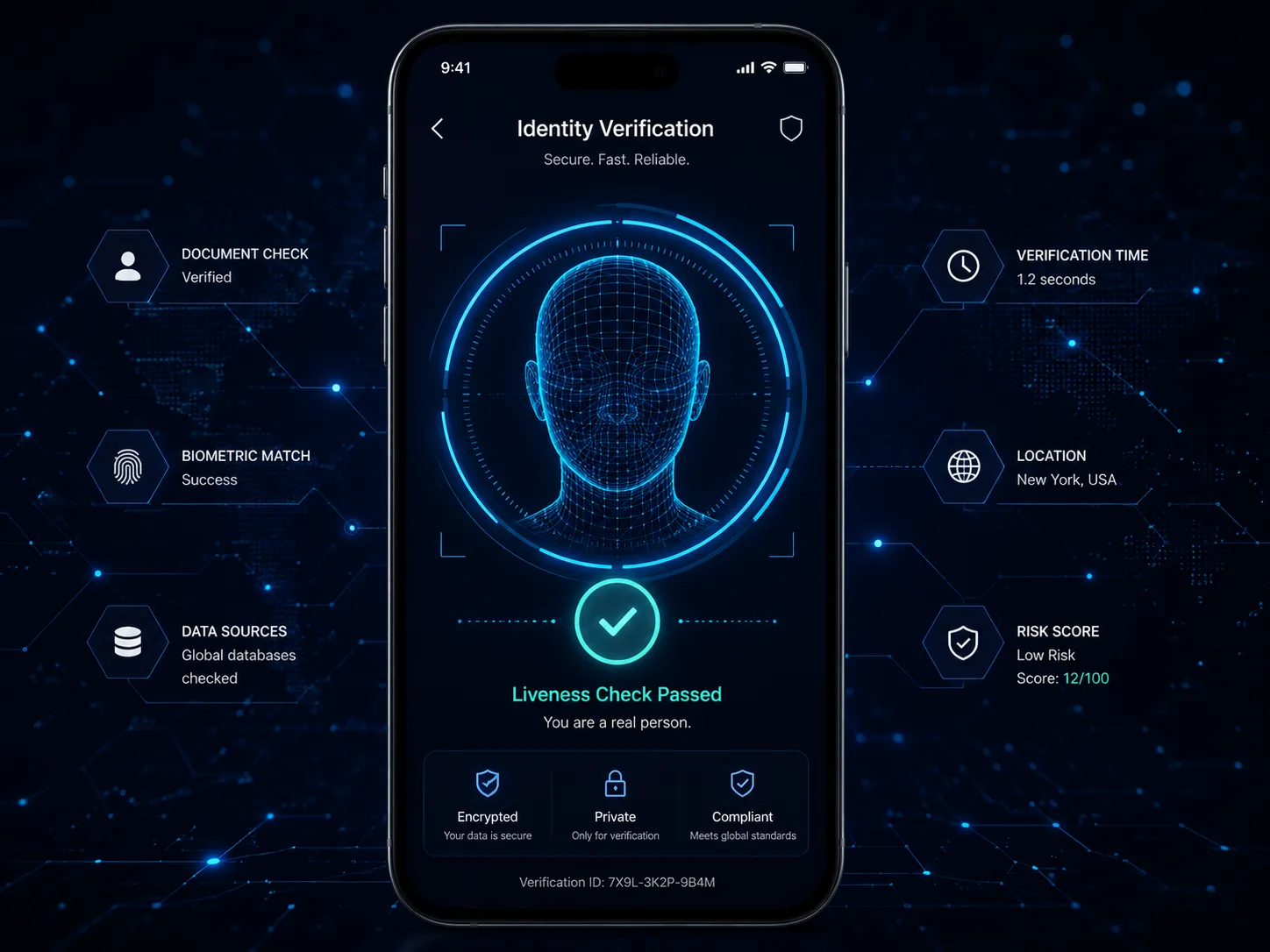
- Biometric identity verification: Facial recognition matched against government-issued ID catches identity fraud that document review alone misses.
- FCRA-compliant workflow: The platform should automate consent collection, adverse action documentation, and audit trails rather than leaving those steps to your team.
- Candidate experience: Mobile-friendly portals with real-time status updates reduce candidate dropout during the verification stage. Nearly half of candidates who begin a screening process abandon it when the experience is unclear or slow.
- Dispute resolution support: Any credible platform should provide a clear process for candidates to dispute inaccurate records and for HR to track resolution.
VEVR's online background verification platform meets all of these criteria with a mobile-first design, encrypted data management, and multilingual support for global hiring teams.
Frequently Asked Questions
How long does a candidate background check take?
With AI-powered platforms, most standard checks complete within 12 to 24 hours. Checks that require manual court record retrieval or international data sources may take two to three business days. The key variable is whether the platform uses direct digital court access or manual researcher requests.
Can a candidate refuse a background check?
Yes. Candidates have the right to refuse consent under the FCRA. However, employers can legally withdraw a job offer if a candidate declines to authorize the check, as long as this policy is applied consistently to all candidates for the same role. Employers must obtain written consent before initiating any third-party check.
What shows up on a candidate background check?
A standard pre-hire background check includes criminal history at the county, state, and federal levels, employment and education verification, identity confirmation, and professional license validation. Credit reports and driving records are role-specific additions that require separate consent and must be relevant to the position.
How far back does a candidate background check go?
The FCRA limits most negative information, including criminal convictions other than active incarceration, to seven years. Some states have shorter windows. Certain positions with no salary ceiling are exempt from this limit. "Clean slate" legislation in multiple states is also automatically sealing older records, which means they won't appear even if the lookback window would technically cover them.
Is it legal to run a background check before a job offer?
In most jurisdictions, yes, with written consent from the candidate. However, ban-the-box and fair chance laws in many states and cities require that criminal history questions be deferred until after a conditional offer is made. Review the laws for each location where you're hiring before setting your screening timeline.
Conclusion
A candidate background check is not a formality. It's a structured risk management process that protects your organization from fraud, compliance exposure, and workplace harm. Getting it right means choosing the right technology, following FCRA and EEOC requirements at every step, and treating candidates with transparency throughout.
The shift toward AI-powered verification is real. Turnaround times are shorter, biometric checks are more accurate, and audit documentation is automated. The organizations that adopt these tools while maintaining compliant processes will hire faster and safer than those still running manual workflows.
Ready to see how VEVR handles background verification from identity confirmation to final report? Explore our services or download the VEVR app on iOS or Android to get started.
























Sign in to leave a comment.