
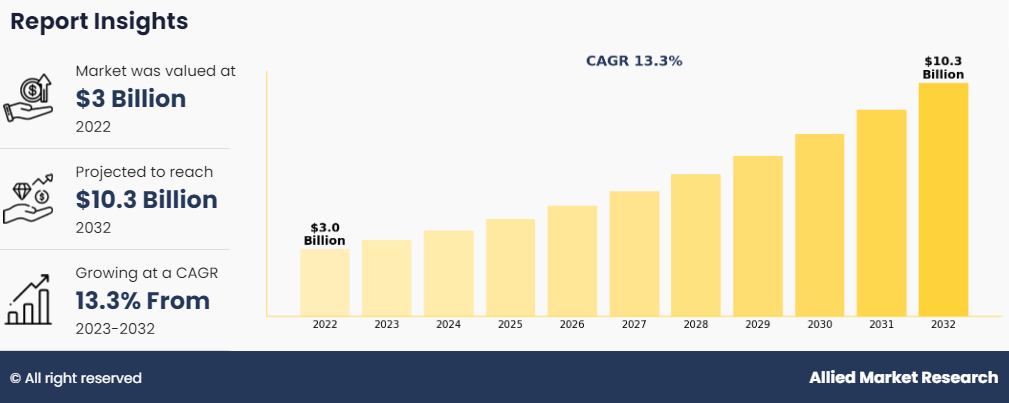
According to a new report published by Allied Market Research, the carbon capture, utilization, and storage (CCUS) market size was valued at $3 billion in 2022 and is projected to reach $10.3 billion by 2032, growing at a robust CAGR of 13.3% from 2023 to 2032. Rising concerns over climate change, increasing industrial emissions, and strong government initiatives to reduce carbon footprints are key factors accelerating market expansion worldwide.
Key Findings
- Post-combustion capture technology accounted for nearly half of the CCUS market share in 2022
- Capture services dominated the market with over two-thirds share
- Oil & gas remained the leading application segment
- North America emerged as the largest regional market
Download PDF Brochure: https://www.alliedmarketresearch.com/request-sample/A12116
Introduction to Carbon Capture, Utilization, and Storage (CCUS)
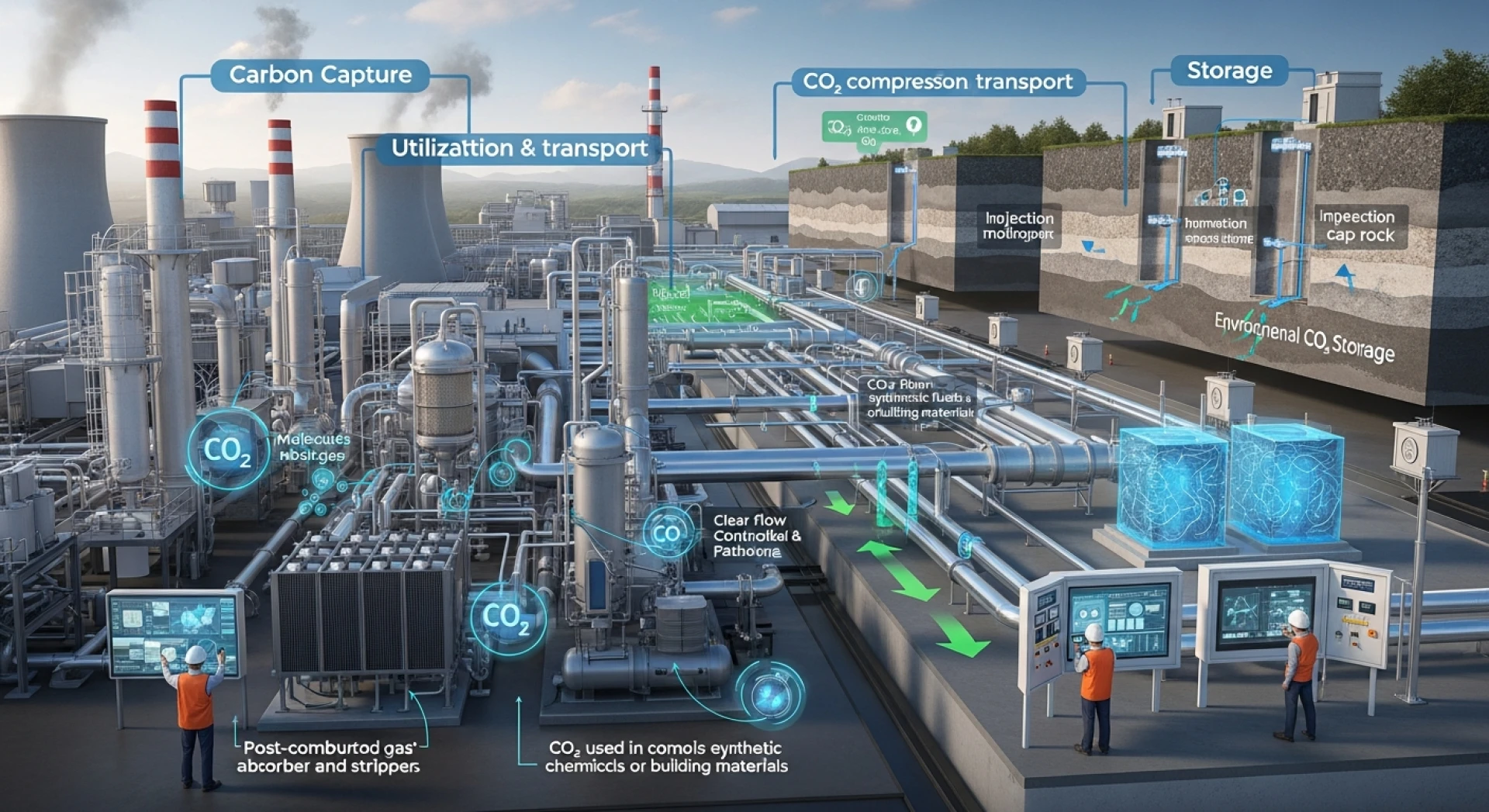
Carbon capture, utilization, and storage (CCUS) is an advanced emission reduction technology designed to prevent large volumes of carbon dioxide (CO₂) from being released into the atmosphere. The CCUS process includes three primary stages: capture, transportation, and storage.
The capture phase involves separating CO₂ from industrial exhaust gases generated during power generation and manufacturing processes. The captured CO₂ is then transported using pipelines, ships, or trucks to suitable utilization or storage sites. In the final stage, CO₂ is injected into underground geological formations such as depleted oil and gas reservoirs, deep saline aquifers, and rock formations, where it can be safely stored for decades.
The carbon capture, utilization, and storage (CCUS) market plays a vital role in achieving global net-zero emission targets while enabling continued industrial growth.
Market Dynamics
Key Market Drivers
One of the primary drivers of the carbon capture, utilization, and storage (CCUS) market is the growing global focus on reducing CO₂ emissions. Governments and regulatory bodies worldwide are implementing stricter emission norms for industrial facilities, compelling industries to adopt CCUS technologies.
Another significant growth driver is the rising demand for CO₂-enhanced oil recovery (EOR). In the oil & gas sector, captured CO₂ is increasingly used to improve oil recovery rates from mature reservoirs, creating a revenue-generating use case for CCUS technologies.
Additionally, increasing adoption of CCUS across end-use industries such as oil & gas, power generation, iron & steel, cement, and chemical & petrochemical sectors is fueling market growth. These industries are among the largest contributors to global carbon emissions, making CCUS an essential decarbonization solution.
Investment and Industry Initiatives
Major industry players are heavily investing in CCUS projects, strategic partnerships, and pilot programs to commercialize the technology. For instance, Shell’s Quest project in Alberta, Canada—developed in partnership with Chevron and Canada Energy—is one of the world’s largest fully integrated CCUS facilities. It captures and stores more than one million tons of CO₂ annually, showcasing the commercial viability of CCUS.
Similarly, Chevron’s CCUS initiatives in Australia’s Gorgon gas fields highlight the growing adoption of CCUS in LNG and offshore energy projects.
Market Restraints
Despite strong growth potential, the carbon capture, utilization, and storage (CCUS) market faces challenges such as high capital and operational costs. The deployment of capture technologies, transportation infrastructure, and storage facilities requires substantial upfront investment.
Additionally, declining crude oil prices can negatively impact CO₂-EOR projects, reducing financial incentives for CCUS adoption in the oil & gas sector. Regulatory uncertainty and long project development timelines further restrain market growth in certain regions.
Growth Opportunities
On the contrary, a rising number of upcoming CCUS projects in Asia-Pacific and Europe present lucrative growth opportunities. Continuous R&D investments aimed at developing cost-effective and energy-efficient carbon capture technologies are expected to improve economic feasibility and broaden adoption across industries.
Segments Overview
The global carbon capture, utilization, and storage (CCUS) market is segmented by service, technology, application, and region.
By Service
- Capture
- Transportation
- Utilization
- Storage
The capture segment dominated the market in 2022, accounting for more than two-thirds of the total market share. This dominance is attributed to increasing CO₂ emissions from industrial operations and the urgent need for effective capture solutions.
By Technology
- Pre-combustion capture
- Oxy-fuel combustion capture
- Post-combustion capture
The post-combustion capture segment held the largest share in 2022, driven by its widespread adoption in coal- and gas-fired power plants. Its compatibility with existing infrastructure makes it a preferred choice for emission reduction.
By Application
- Oil & gas
- Power generation
- Iron & steel
- Chemical & petrochemical
- Cement
- Others
The oil & gas segment emerged as the leading application area, capturing more than half of the total market share due to extensive use of CO₂ for enhanced oil recovery.
Regional Analysis
Region-wise, the carbon capture, utilization, and storage (CCUS) market is analyzed across North America, Europe, Asia-Pacific, and LAMEA.
North America dominated the global market in 2022, accounting for more than two-fifths of total revenue. Strong government support, favorable tax incentives, and large-scale investments in decarbonization projects have positioned the region as a global CCUS leader.
The presence of a robust oil & gas sector and heightened focus on reducing industrial emissions across cement, chemical, and food & beverage industries further drive regional growth. Europe and Asia-Pacific are also witnessing rapid expansion due to ambitious climate policies and increasing industrialization.
Get a Customized Research Report: https://www.alliedmarketresearch.com/request-for-customization/A12116
Competitive Landscape
The global carbon capture, utilization, and storage (CCUS) market is highly competitive, with key players focusing on technology innovation, strategic alliances, and large-scale project development.
Major companies operating in the market include:
- Royal Dutch Shell PLC
- Fluor Corporation
- Mitsubishi Heavy Industries, Ltd.
- Linde Plc
- Exxon Mobil Corporation
- Schlumberger Limited
- Honeywell International Inc.
- Halliburton
- Aker Solutions
Other notable players include Siemens AG, General Electric, Total S.A., Equinor ASA, and C-Capture Ltd.
Conclusion
The carbon capture, utilization, and storage (CCUS) market is poised for strong growth through 2032, driven by global decarbonization goals, rising industrial emissions, and supportive government policies. While high costs remain a challenge, technological advancements and expanding project pipelines are expected to unlock significant growth opportunities across regions and industries.
About Us
Allied Market Research (AMR) is a full-service market research and business-consulting wing of Allied Analytics LLP based in Portland, Oregon. Allied Market Research provides global enterprises as well as medium and small businesses with unmatched quality of "Market Research Reports" and "Business Intelligence Solutions." AMR has a targeted view to provide business insights and consulting to assist its clients to make strategic business decisions and achieve sustainable growth in their respective market domain.
Pawan Kumar, the CEO of Allied Market Research, is leading the organization toward providing high-quality data and insights. We are in professional corporate relations with various companies and this helps us in digging out market data that helps us generate accurate research data tables and confirms utmost accuracy in our market forecasting. Each and every data presented in the reports published by us is extracted through primary interviews with top officials from leading companies of domain concerned. Our secondary data procurement methodology includes deep online and offline research and discussion with knowledgeable professionals and analysts in the industry.





















Sign in to leave a comment.