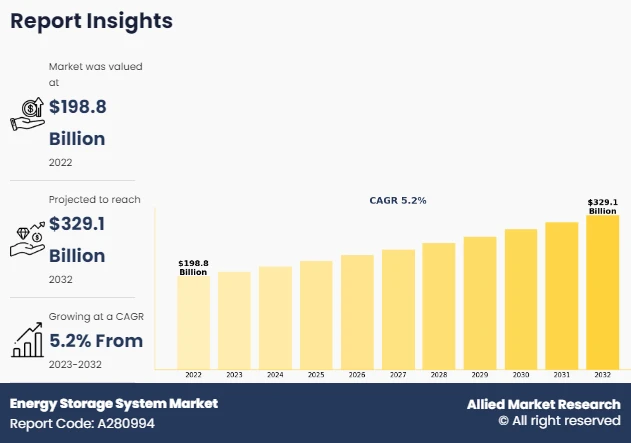

The global energy storage system market is becoming a cornerstone of the modern power ecosystem as countries transition toward renewable energy and resilient grid infrastructure. According to a new report published by Allied Market Research, the energy storage system market was valued at $198.8 billion in 2022 and is projected to reach $329.1 billion by 2032, growing at a CAGR of 5.2% from 2023 to 2032.
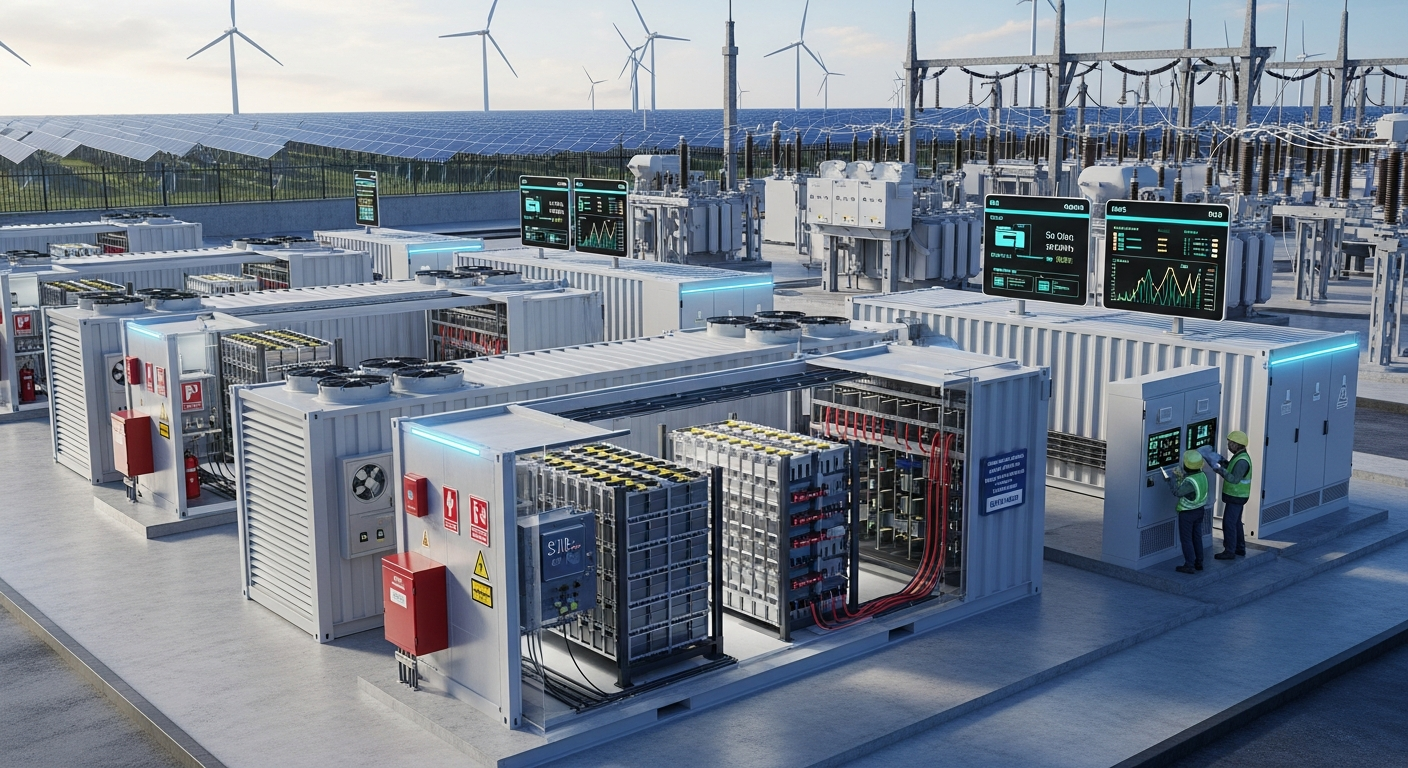
Energy storage systems (ESS) enable electricity to be stored and dispatched when required, supporting grid stability, renewable integration, and efficient energy management. As electricity demand rises and power systems become increasingly decentralized, the role of energy storage is expanding across residential, commercial, industrial, and utility-scale applications.
Download PDF Brochure: https://www.alliedmarketresearch.com/request-sample/A280994
Introduction to Energy Storage Systems
An energy storage system represents a pivotal technological advancement that allows electricity to be stored for later use. These systems may consist of individual storage units or interconnected networks, providing flexibility across a wide range of energy applications.
Energy storage plays a vital role in enhancing grid reliability and power quality by balancing supply and demand. It enables the seamless integration of renewable energy sources such as solar and wind by compensating for their intermittent nature. In addition, energy storage supports time shifting, allowing excess electricity generated during off-peak hours to be stored and utilized during peak demand periods, optimizing grid performance and reducing operational costs.
Market Dynamics
Key Market Drivers
Supportive Government Policies and Incentives
Government policies and regulatory frameworks are among the strongest drivers of the energy storage system market. Many countries have implemented renewable energy mandates, investment tax credits, subsidies, and incentive programs that encourage the deployment of energy storage projects. These initiatives lower financial risks, accelerate adoption, and provide long-term certainty for investors and project developers.
Rising Renewable Energy Integration
The rapid growth of renewable energy generation is significantly boosting demand for energy storage systems. Energy storage bridges the gap between intermittent power generation and consumption, ensuring a stable and reliable electricity supply. This capability is critical for achieving decarbonization goals and enhancing energy security.
Grid Reliability and Power Quality Enhancement
Energy storage systems enhance grid resilience by providing frequency regulation, voltage control, and backup power during outages. Utilities increasingly rely on energy storage to replace or complement traditional thermal power plants for grid-balancing services.
Market Restraints
Perception of Risk and Technology Uncertainty
Despite technological progress, the perceived risk associated with energy storage systems remains a major restraint. Concerns regarding long-term reliability, performance variability, and financial viability can discourage investment, particularly for large-scale projects.
Uncertainties related to regulatory frameworks, market structures, and revenue mechanisms further amplify this perception of risk. In the absence of long-term performance data and standardized business models, utilities and investors may hesitate to commit to energy storage deployments.
High Initial Capital Costs
Although costs are declining, upfront capital investment for energy storage systems can still be significant, especially for grid-scale installations. This can limit adoption in cost-sensitive markets.
Market Opportunities
Industrial Energy Optimization
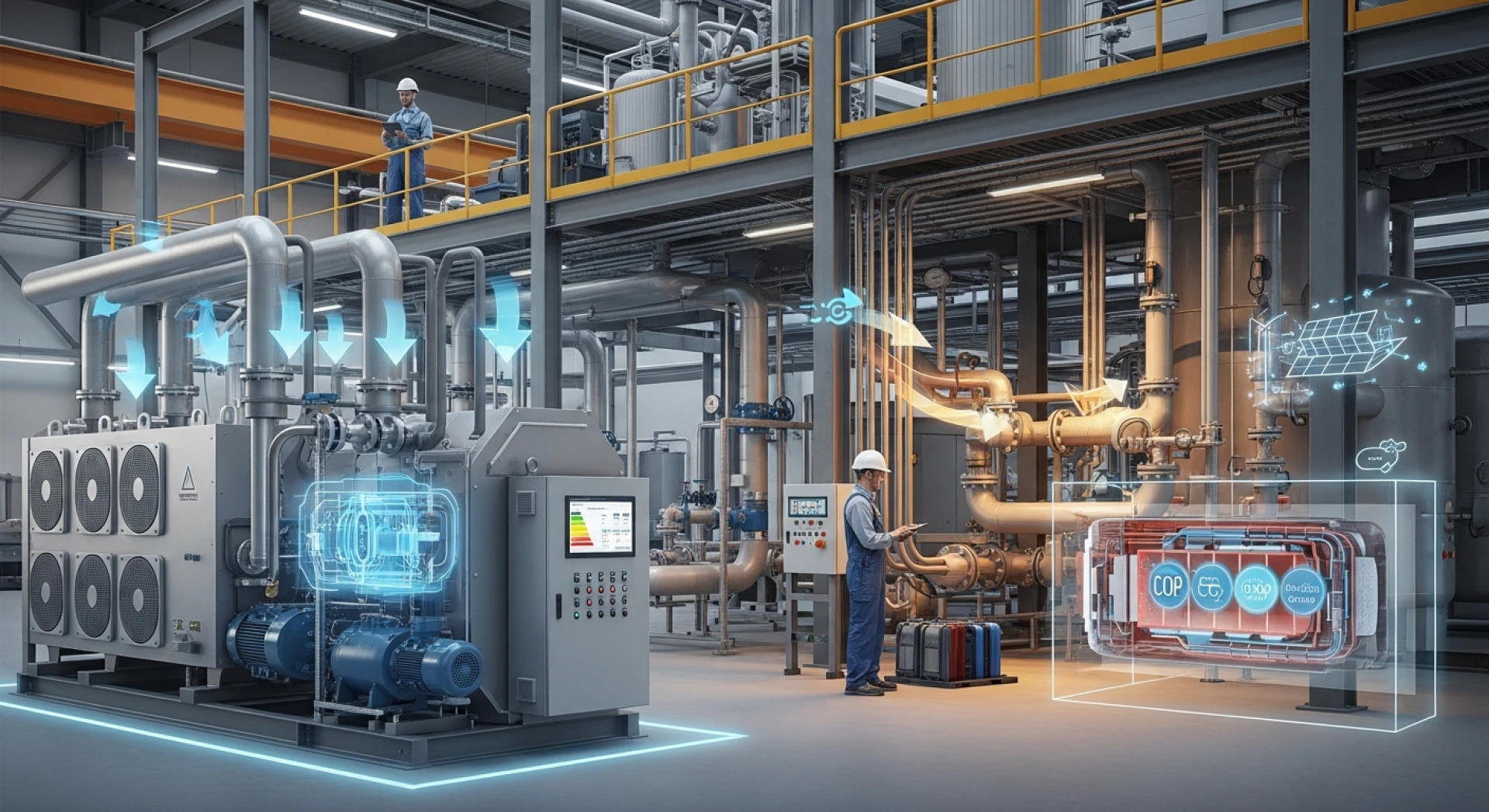
Industries account for a substantial share of global energy consumption, creating significant opportunities for the energy storage system market. Industrial facilities are increasingly adopting energy storage to optimize energy usage through peak shaving, load management, and demand response strategies.
By storing electricity during low-demand periods and using it during peak hours, industries can reduce energy costs, improve power quality, and enhance operational resilience. Energy storage also reduces dependence on fossil fuel-based backup generators, supporting sustainability objectives.
Cost Reduction and Technological Innovation
Advancements in battery technology, power electronics, and digital energy management systems are improving efficiency while reducing costs. These innovations are expected to unlock new applications and accelerate market adoption across multiple sectors.
Market Segmentation
By Technology
The energy storage system market is segmented into:
- Pumped Hydro Storage: Dominated the market in 2022, accounting for more than four-fifths of total market share due to its large capacity and long operational life.
- Battery Energy Storage: Rapidly expanding due to declining battery costs and scalability.
- Compressed Air Energy Storage
- Flywheel Energy Storage
- Others
By End-Use
- Residential: The fastest-growing segment, driven by rooftop solar adoption and home energy management systems.
- Commercial
- Industrial
By Application
- Stationary: Accounted for around four-fifths of the market size in 2022, supported by grid-scale and behind-the-meter installations.
- Transportation: Includes energy storage used in electric mobility and supporting infrastructure.
Regional Analysis
Asia-Pacific
Asia-Pacific dominates the energy storage system market and is expected to maintain its leadership during the forecast period. China announced plans to deploy over 30 GW of energy storage by 2025, while India’s draft National Electricity Plan targets 51–84 GW of battery energy storage by 2031–32.
Australia
In December 2022, the Australian Renewable Energy Agency (ARENA) announced funding support for 2 GW/4.2 GWh of grid-scale storage capacity equipped with grid-forming inverters, strengthening grid stability.
United States
The U.S. Inflation Reduction Act, passed in August 2022, introduced an investment tax credit for stand-alone storage, significantly improving the economics of grid-scale energy storage projects.
Europe and LAMEA
Europe continues to invest in energy storage to support renewable integration and grid modernization, while LAMEA regions show long-term growth potential driven by rising energy demand and infrastructure development.
Get a Customized Research Report: https://www.alliedmarketresearch.com/request-for-customization/A280994
Competitive Landscape
The energy storage system market is moderately competitive, with key players focusing on technological innovation, strategic partnerships, and capacity expansion. Major companies operating in the market include:
- Schneider Electric
- SMA Solar Technology AG
- Exide Industries Ltd.
- SK Holdings
- Autobat
- Enerbrax Accumulators Ltd.
- Eguana Technologies
- Imergy Power Systems
- Ionotec Ltd
- Tata Power
These companies are investing in advanced storage technologies and integrated energy solutions to strengthen their market position.
Key Findings
- Pumped hydro storage accounted for more than four-fifths of market share in 2022.
- Residential end-use is the fastest-growing segment, with a CAGR of 6.0%.
- Stationary applications dominated the market in 2022.
- Asia-Pacific is the leading and fastest-growing regional market.
Conclusion
The global energy storage system market is set for sustained growth through 2032, driven by renewable energy expansion, supportive government policies, and rising demand for grid resilience. While challenges related to risk perception and capital costs persist, ongoing technological advancements and growing industrial adoption are expected to unlock significant long-term opportunities.
About Us
Allied Market Research (AMR) is a full-service market research and business-consulting wing of Allied Analytics LLP based in Portland, Oregon. Allied Market Research provides global enterprises as well as medium and small businesses with unmatched quality of "Market Research Reports" and "Business Intelligence Solutions." AMR has a targeted view to provide business insights and consulting to assist its clients to make strategic business decisions and achieve sustainable growth in their respective market domain.
Pawan Kumar, the CEO of Allied Market Research, is leading the organization toward providing high-quality data and insights. We are in professional corporate relations with various companies and this helps us in digging out market data that helps us generate accurate research data tables and confirms utmost accuracy in our market forecasting. Each and every data presented in the reports published by us is extracted through primary interviews with top officials from leading companies of domain concerned. Our secondary data procurement methodology includes deep online and offline research and discussion with knowledgeable professionals and analysts in the industry.


















Sign in to leave a comment.