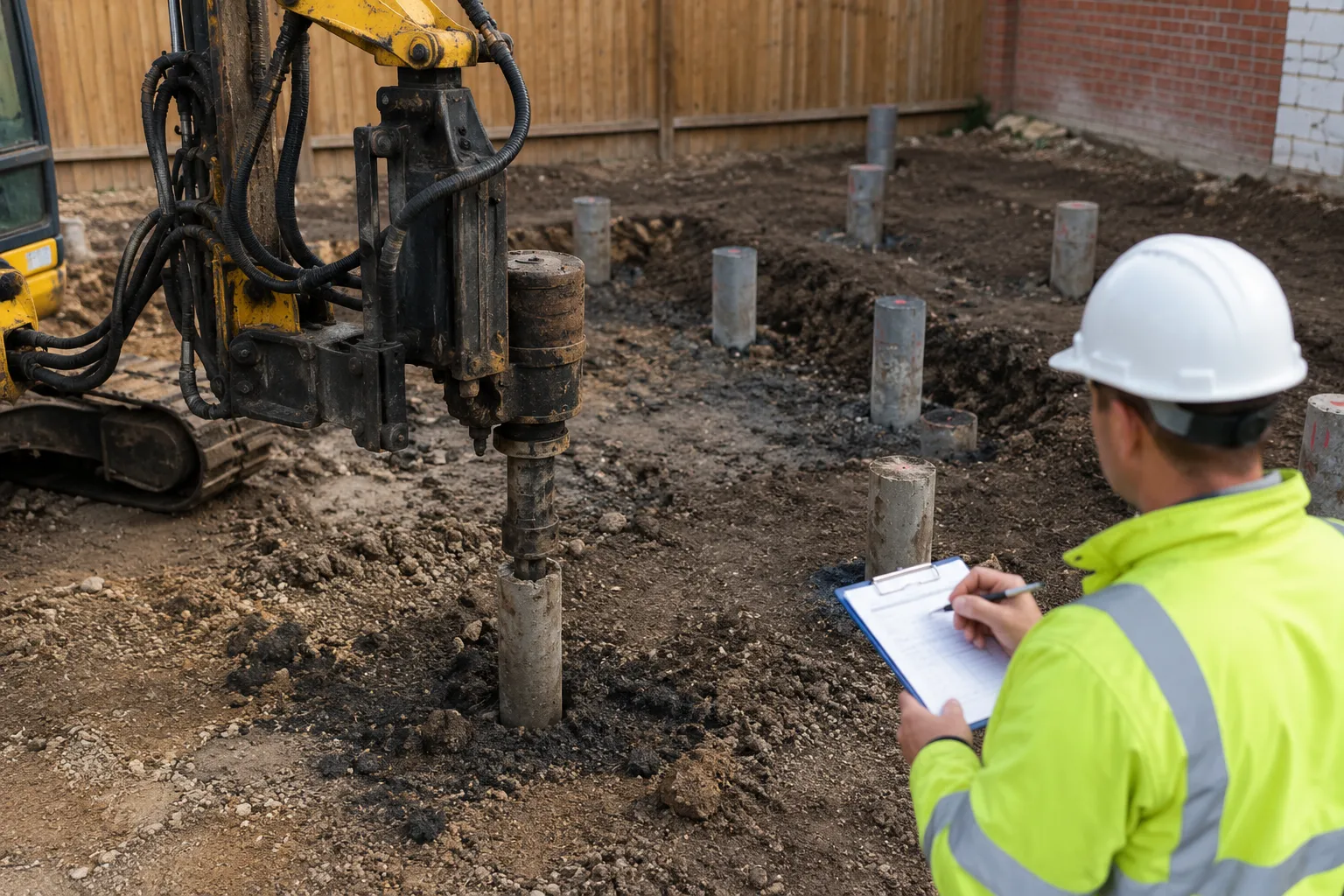
Foundation design is one of the most important stages of any construction project. A strong foundation helps transfer building loads safely into the ground and provides long-term stability. Depending on the site conditions, project size and ground profile, different piling methods may be required.
CFA piles, also known as continuous flight auger piles, are widely used where efficient deep foundations are needed. CFA piling can provide a practical solution for projects that require reliable load-bearing capacity with controlled installation. In other situations, mini piling may be more suitable, especially where access is restricted.
Understanding how these systems work can help developers, engineers and property owners make better-informed foundation decisions.
What Are CFA Piles?
CFA piles are deep foundation elements installed using a continuous flight auger. The auger is drilled into the ground to the required depth. Concrete is then pumped through the hollow centre of the auger while the auger is withdrawn.
Reinforcement can subsequently be placed into the fresh concrete, depending on the structural requirements of the project.
This process allows piling and concrete placement to take place in a controlled sequence. It can also reduce the need for temporary casing in suitable ground conditions.
Because of their installation method, CFA piles can be useful for a wide range of commercial, residential and infrastructure projects.
How Does CFA Piling Work?
The CFA piling process involves several key stages.
1. Site Preparation
Before piling begins, the working area must be prepared. Access, ground conditions, underground services and working space should all be considered.
2. Auger Drilling
A continuous flight auger is drilled into the ground to the required design depth. The auger remains in the ground during drilling.
3. Concrete Placement
Once the required depth has been reached, concrete is pumped through the hollow stem of the auger.
As the auger is slowly withdrawn, concrete fills the space created by the drilling process.
4. Reinforcement Installation
Where required, reinforcement is installed into the freshly placed concrete. The reinforcement helps the pile meet the structural requirements of the design.
5. Quality Checks
The completed piles can then be checked against the design requirements. Monitoring installation data can provide useful information about depth, concrete volume and other installation factors.
This controlled process makes continuous flight auger piles a useful option for many foundation projects.
What Are Continuous Flight Auger CFA Piles Used For?
Continuous flight auger CFA piles can be used where foundations need to transfer structural loads deeper into suitable bearing strata.
Typical applications can include:
- Commercial buildings
- Residential developments
- Industrial buildings
- Extensions
- Infrastructure projects
- Retaining structures
- Foundations near existing buildings
The suitability of the system depends on the ground investigation and structural design.
A piling contractor should assess the specific site before recommending a foundation solution. Soil strength, groundwater, access and nearby structures can all affect the choice of piling technique.
Advantages of Continuous Flight Auger Piles
One of the main benefits of continuous flight auger piles is the efficient installation process.
CFA systems can often provide good production rates because drilling and concrete placement form part of the same operation.
Other potential advantages include reduced open excavation and a controlled installation process.
CFA piling can also be suitable for urban construction where controlling disruption is important. However, the actual benefits depend on the site and equipment being used.
Noise, vibration and spoil generation should still be considered during project planning.
CFA Piling and Ground Conditions
Ground conditions have a major influence on piling design.
Different soil layers can behave in very different ways. A ground investigation helps engineers understand the site's soil profile and identify potential challenges.
For example, loose or unstable ground may require a different approach from dense soils. Groundwater can also influence construction methods.
This is why piling should not be selected based solely on the type of building. The foundation solution needs to respond to both structural loads and ground conditions.
A detailed site investigation can therefore reduce uncertainty and support better foundation planning.
When Is Mini Piling a Better Option?
Not every construction site has enough room for conventional piling equipment.
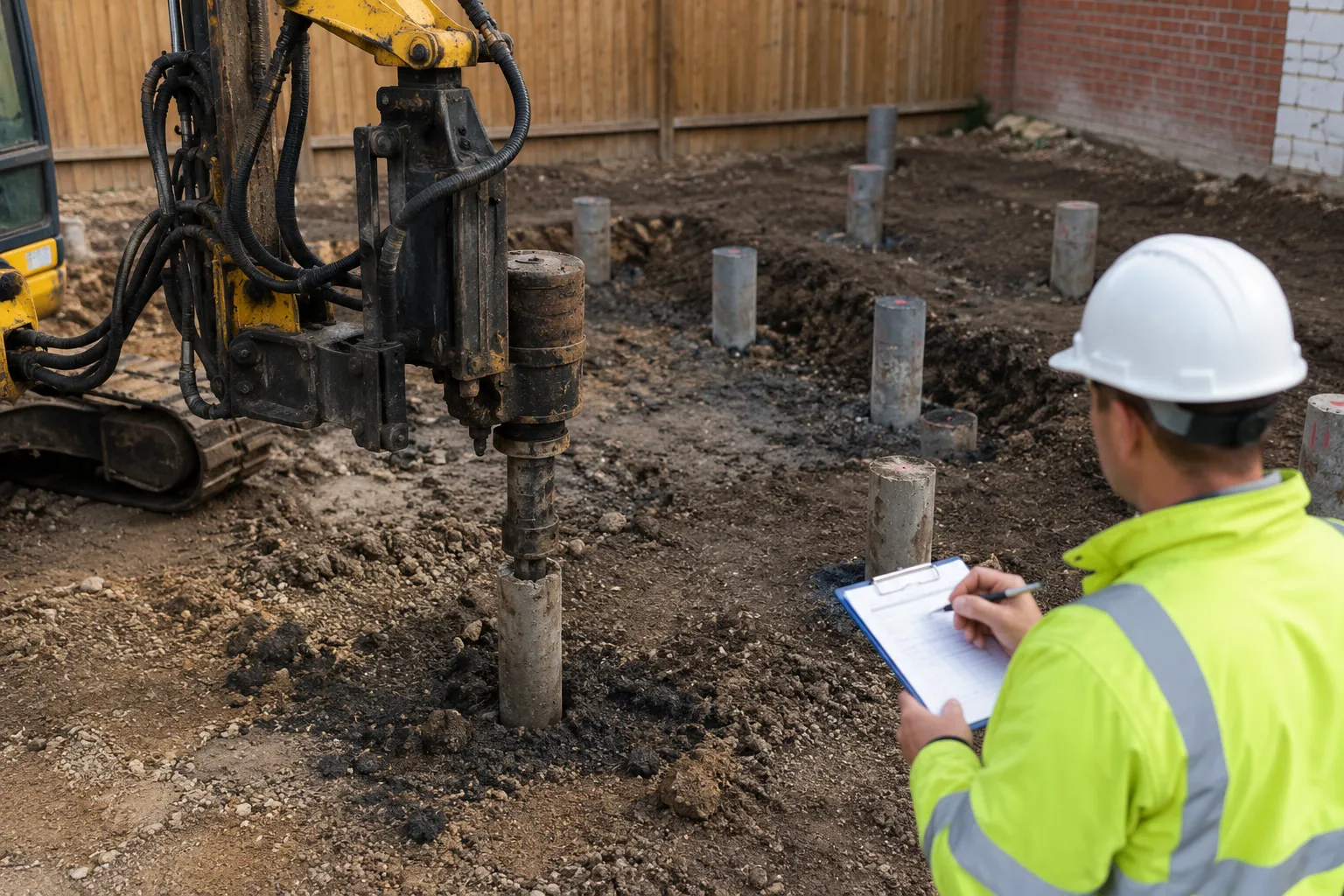
Mini piling is often considered where access is restricted or where larger machinery cannot operate effectively.
Mini piles use smaller piling equipment and can be particularly useful for:
- Home extensions
- Basement projects
- Renovations
- Restricted-access sites
- Projects close to existing structures
- Areas with limited headroom
- Challenging urban locations
The compact nature of mini piling equipment can make it easier to work in spaces where conventional piling rigs may not be practical.
Benefits of Mini Piling
One of the main advantages of mini piling is flexibility.
Smaller equipment can sometimes access areas through narrow entrances or within existing buildings. This can make mini piling suitable for renovation and extension projects.
Mini piling can also be useful where working space is limited. For example, a residential extension may have restricted access between neighbouring properties.
Another benefit is that mini piling can provide a deep foundation solution without requiring the same physical working area as some larger piling systems.
However, the correct system should always be selected based on engineering requirements and site conditions.
Choosing Experienced Mini Piling Contractors
Choosing the right mini piling contractors is an important part of any foundation project.
A professional contractor should be able to understand the design requirements and work with the wider construction team.
Before appointing a contractor, consider their:
- Relevant piling experience
- Site assessment process
- Equipment capabilities
- Health and safety procedures
- Quality control methods
- Understanding of ground conditions
- Project planning approach
- Ability to work within restricted spaces
It is also useful to discuss access requirements before work begins. Even compact piling equipment needs suitable working conditions.
CFA Piles vs Mini Piling
CFA piling and mini piling can both provide effective foundation solutions, but they are suited to different project requirements.
| Factor | CFA Piling | Mini Piling |
|---|---|---|
| Equipment | Larger piling rigs | Compact equipment |
| Typical use | Commercial and larger projects | Restricted-access projects |
| Access | Requires suitable working space | Better suited to limited access |
| Installation | Continuous auger process | Various mini piling methods |
| Ground conditions | Depends on soil profile | Depends on system and site |
| Project type | Larger foundations | Extensions and constrained sites |
There is no universally better option. The most suitable method depends on structural loads, ground conditions, access, site constraints and project requirements.
Why Professional Piling Design Matters
Foundation work should never be treated as a simple construction task. The piles need to support the expected loads and perform reliably within the ground.

Engineers may consider factors such as:
- Building loads
- Soil strength
- Pile depth
- Groundwater
- Existing foundations
- Nearby structures
- Site access
- Construction sequence
The piling method must then be planned around these factors.
Professional design and installation can help reduce construction risks and ensure the foundation system matches the requirements of the project.
Final Thoughts
Both CFA piles and mini piling can provide effective foundation solutions when correctly designed and installed.
CFA piling and continuous flight auger piles can be well suited to projects requiring efficient deep foundation installation. Meanwhile, mini piling can provide a practical alternative where access, headroom or working space is restricted.
The right choice should always be based on the site's ground conditions, structural requirements and construction constraints.
Working with experienced mini piling contractors and piling professionals can help ensure the foundation strategy is carefully planned from the beginning. A detailed ground investigation, suitable engineering design and controlled installation process can all contribute to a stable and durable foundation.






















Sign in to leave a comment.