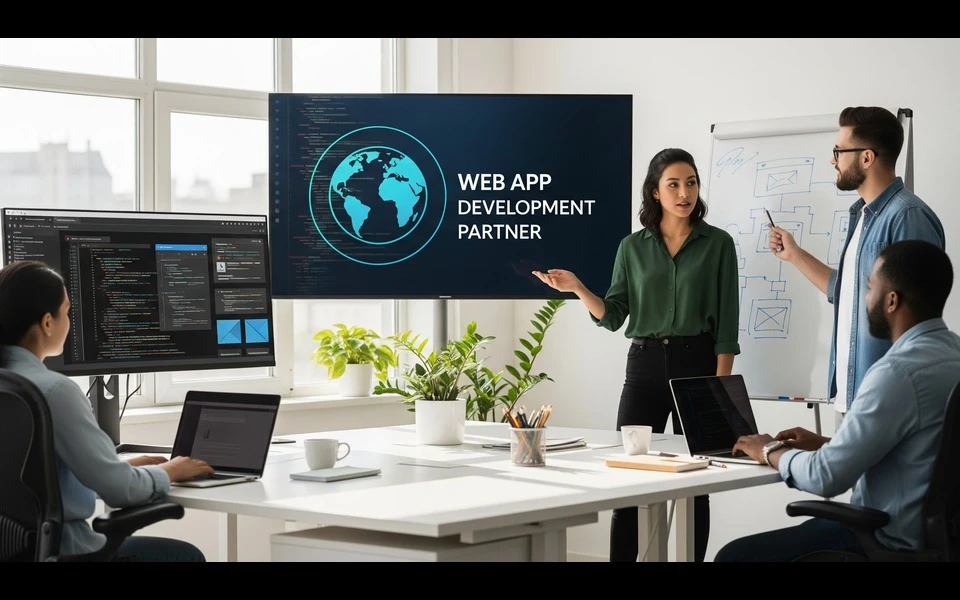

In the fast-paced world of startups, the Minimum Viable Product (MVP) is your most critical milestone. It is the bridge between a raw idea and market validation. However, the success of an MVP depends less on the brilliance of the concept and more on the execution. For non-technical founders, this execution relies entirely on the technical partner they choose.
Selecting the right partner is not merely a recruitment task; it is a strategic business decision. A wrong choice can lead to bloated budgets, missed deadlines, and a product that fails to resonate with users. Conversely, the right partner brings technical foresight, scalability, and speed.
This guide explores how to evaluate, vet, and select a partner who aligns with your vision, ensuring your MVP is built for success.
Part 1: Understanding the Stakes (The "Upper" Phase)
Before diving into the selection process, it is essential to understand what you are actually looking for. You aren't just looking for code; you are looking for product maturity.
The Role of the MVP
An MVP is not a half-baked version of your final product. It is a functional, usable version that solves a core problem for a specific audience. It requires a delicate balance between "minimum" (cost and time efficiency) and "viable" (quality and user value).
Many founders make the mistake of treating development agencies as simple order-takers. They hand over a requirements document and expect a perfect result. In reality, the best products are built through collaboration. You need a team that challenges your assumptions, suggests better user flows, and understands the business logic behind the features.
Defining Your Requirements
Before you approach a web app development company, you must have clarity on your own goals. Are you bootstrapping, or do you have seed funding? Is your priority speed-to-market, or is it building a highly scalable architecture from day one?
Knowing your constraints helps you filter potential partners. If you have a strict budget, you might look for boutique agencies. If you have complex compliance requirements (like HIPAA for HealthTech or GDPR for FinTech), you need a specialized firm.
Technology Stack Considerations
While you don't need to be a coding expert, you should have a preference for modern, scalable technologies. Whether you choose the MERN stack (MongoDB, Express, React, Node.js), Python, or Ruby on Rails, the goal is to build web apps that are modular and easy to maintain. Your partner should be able to explain why they are recommending a specific technology, not just what they are using.
Part 2: Evaluation and Selection (The "Middle" Phase)
Once you have a shortlist of potential partners, the vetting process begins. This is where you peel back the layers of marketing to find the substance.
1. Portfolio and Case Studies
Don't just look at the screenshots on their website; look at the live products. Download the apps they have built or sign up for the web platforms.
- User Experience (UX): Is the interface intuitive?
- Performance: Does the app load quickly?
- Complexity: Have they built products with similar logic to yours?
If you are building a marketplace, a partner who has only built brochure websites will not suffice. You need a team that offers specialized web application development services tailored to complex logic and database management.
2. The Development Methodology
How a team works is just as important as what they build. For an MVP, the Agile methodology is non-negotiable. You need an iterative process where you can review progress every two weeks (sprints).
Ask them:
- How do you handle scope creep?
- What project management tools do you use (Jira, Trello, Linear)?
- How often will we have demos?
Avoid partners who work in a "Waterfall" model, where they disappear for three months and return with a finished product. That approach is a recipe for disaster in the startup world.
3. Communication and Culture
If you are outsourcing to a different time zone, communication becomes the lifeline of the project.
- Fluency: Can the project manager and lead developers communicate complex technical ideas in simple English?
- Transparency: Are they open about potential risks, or do they say "yes" to everything?
- Availability: Will there be an overlap in working hours for real-time collaboration?
4. Technical Expertise and Team Composition
When you decide to hire web app developers, you are hiring a team structure, not just individuals. A healthy MVP team usually consists of:
- A Project Manager (PM): Your main point of contact.
- Frontend/Backend Developers: The builders.
- QA Specialist: To ensure the product is bug-free.
- UI/UX Designer: To ensure the product is usable.
Ask to interview the lead developer who will be working on your project. Their problem-solving attitude during a brief conversation will tell you more than a sales pitch ever could.
Part 3: Red Flags and Deal Breakers
During your search, be wary of these warning signs:
- The "Yes" Men: If a developer agrees to every feature request without mentioning budget or timeline impacts, they are setting you up for failure. A good partner will push back and help you prioritize.
- Extremely Low Estimates: Quality code costs money. If a quote is significantly lower than the market average, they are likely cutting corners, outsourcing to junior freelancers, or planning to hit you with hidden costs later.
- Lack of Source Code Ownership: Ensure the contract states that you own the code from day one. You should never be held hostage by a vendor.
Part 4: finalizing the Partnership (The "Lower" Phase)
After vetting, you will likely have two or three strong candidates. The final decision often comes down to the engagement model and long-term vision.
Engagement Models
- Fixed Price: Best for small MVPs with very clearly defined requirements. It provides budget certainty but lacks flexibility.
- Time and Material (T&M): You pay for the hours worked. This is ideal for Agile development where requirements might evolve based on user feedback.
- Dedicated Team: You hire a team that works exclusively for you. This acts like an in-house team but without the overhead.
Scalability and Future-Proofing
Your MVP is just the starting line. As you acquire users, your application needs to handle increased traffic and data. The architecture chosen today must support the growth of tomorrow.
During the final negotiations, discuss the roadmap beyond the MVP. Does the partner offer comprehensive web development solutions that include DevOps, cloud scaling (AWS/Azure), and security auditing? If they only care about the launch and not the lifecycle, they may not be the right long-term partner.
The Contract and SLA
Draft a contract that protects your intellectual property (IP) and defines success metrics.
- NDA: Non-disclosure agreement to protect your idea.
- Warranty Period: A period (usually 30-90 days) after launch where they fix bugs for free.
- Exit Strategy: If things go wrong, how can you transfer the code and database to a new team?
Conclusion
Building an MVP is an exhilarating journey, but it is fraught with challenges. The difference between a failed startup and a market leader often lies in the technical foundation laid during the early days.
By focusing on communication, technical transparency, and strategic alignment rather than just the lowest price, you increase your odds of success. Take your time to vet potential partners. Check their references, test their logic, and ensure they share your passion for the product.
When you are ready to scale, remember that the goal is not just to write code, but to build a business. Whether you choose a local agency or hire web developers remotely, make sure they are partners in the truest sense of the word—committed to your vision and invested in your growth.



















Sign in to leave a comment.