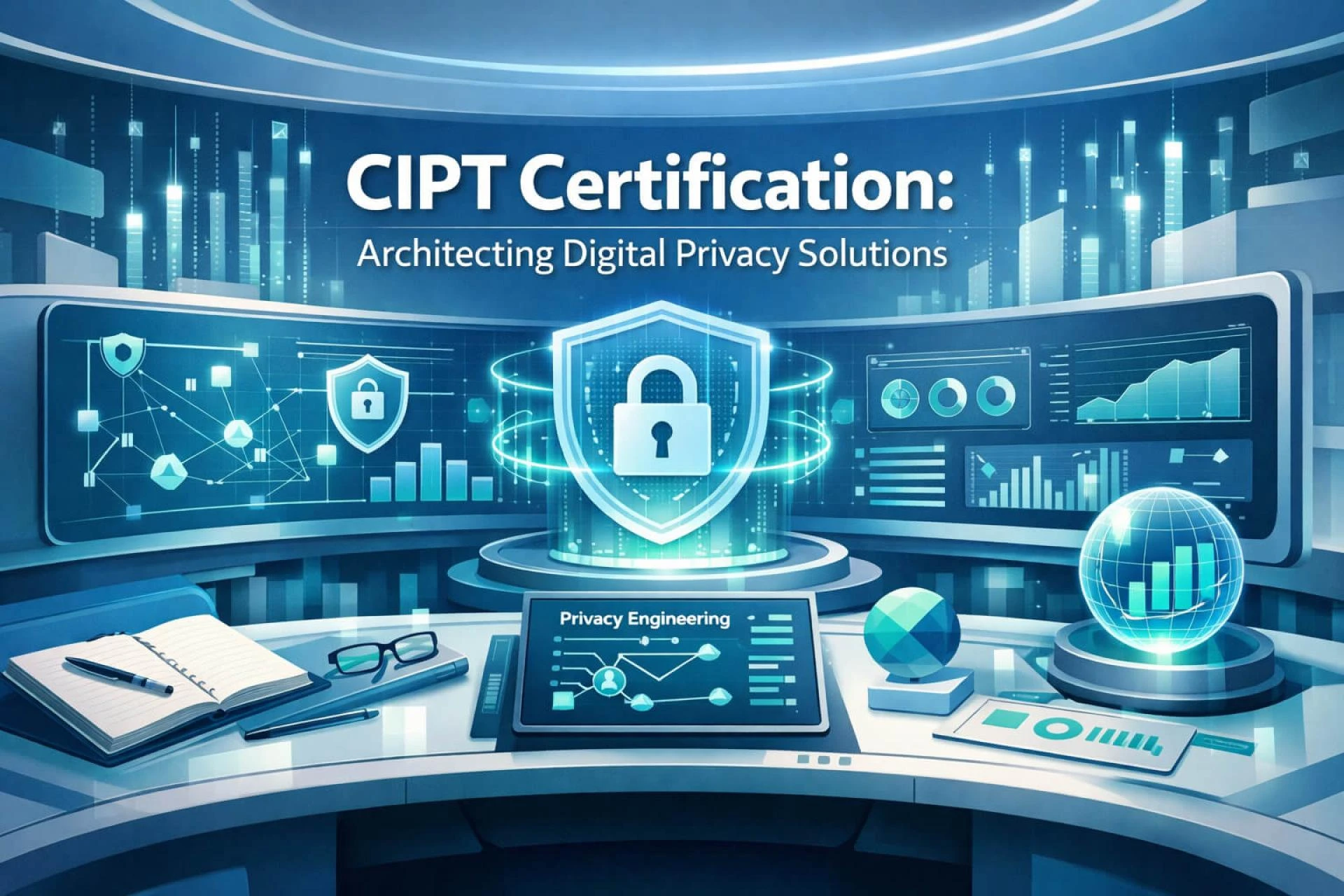

CIPT Certification validates the specialized technical expertise required to implement and manage privacy-by-design principles within an organization's technology infrastructure. Offered by the IAPP (International Association of Privacy Professionals) under the exam code CIPT, this credential empowers technology professionals to integrate privacy requirements seamlessly into their development, deployment, and operational processes. This article explores the core value of the IAPP CIPT certification, its comprehensive curriculum, preparation strategies, and the significant impact it has on career progression for those dedicated to upholding digital privacy standards.
Elevating Expertise with IAPP CIPT Credentials
The digital landscape continually evolves, bringing with it complex privacy challenges and stringent regulatory demands. The IAPP Certified Information Privacy Technologist (CIPT) certification addresses this critical need by recognizing individuals who possess the technical knowledge to build and manage privacy into products, services, and operations. This credential is far more than a resume builder; it signifies a deep understanding of how privacy principles translate into actionable technological solutions, making certified professionals indispensable in an era of heightened data sensitivity.
Earning the CIPT demonstrates an advanced capability to guide organizations in embedding privacy considerations from the ground up, reducing risks and fostering trust. Professionals holding this certification are equipped to design systems that protect personal data proactively, aligning technological innovation with ethical data handling. This proactive approach is vital for compliance with global privacy regulations such as GDPR and CCPA, transforming privacy from a mere legal obligation into a core competitive advantage. For more details on the certification's scope, consider exploring the official IAPP CIPT page.
The CIPT certification provides a robust framework for technologists to apply privacy principles in real-world scenarios, covering everything from software development to data analytics. It bridges the gap between legal privacy mandates and their technical implementation, ensuring that privacy considerations are not an afterthought but an integral part of system architecture and data lifecycle management. This makes the IAPP CIPT certification a cornerstone for individuals seeking to define their role in digital privacy definitively and lead their organizations toward a more secure and compliant future.
Understanding the IAPP CIPT Exam Essentials
Achieving the IAPP CIPT certification requires successfully passing the CIPT exam, a comprehensive assessment designed to evaluate a candidate's technical privacy knowledge. Understanding the structure and requirements of this exam is the first step toward effective preparation and certification success. The CIPT examination is standardized globally to ensure a consistent measure of proficiency across all candidates.
The exam details are structured as follows:
- Exam Code: CIPT
- Exam Price: $550 (USD)
- Duration: 150 minutes
- Number of Questions: 90
- Passing Score: 300 / 500
Candidates must achieve a minimum score of 300 out of a possible 500 points to pass the CIPT exam, demonstrating a solid grasp of the subject matter. The 90 questions are carefully formulated to test both theoretical understanding and practical application of privacy technology concepts. With 150 minutes allotted, test-takers have approximately 1 minute and 40 seconds per question, emphasizing the need for both speed and accuracy. Familiarity with these logistical aspects is crucial for candidates to manage their time effectively during the exam and approach it with confidence.
Deciphering the CIPT Curriculum Domains
The IAPP CIPT certification curriculum is meticulously designed to cover the critical aspects of privacy technology, ensuring that certified professionals possess a holistic understanding of how privacy intersects with technical operations. The syllabus is divided into several key topics, each addressing a unique facet of building and maintaining privacy within technological systems.
These core domains guide candidates through the foundational knowledge and practical skills necessary to integrate privacy-by-design principles:
- The Privacy Technologist’s Role in the Context of the Organization: This section defines the responsibilities and scope of a privacy technologist, emphasizing their strategic importance in shaping an organization's privacy posture and ensuring compliance across various departments.
- Data Collection, Use, Dissemination, and Destruction: Candidates explore the entire data lifecycle, learning best practices for handling personal data at every stage. This includes secure collection methods, ethical data usage, controlled dissemination, and responsible, secure destruction to prevent data breaches.
- Privacy Risk Management: This domain focuses on identifying, assessing, and mitigating privacy-related risks within technological systems. It covers methodologies for evaluating potential vulnerabilities and implementing controls to protect sensitive information.
- Privacy by Design: A cornerstone of the CIPT, this topic delves into the principles of embedding privacy proactively into the design and architecture of IT systems, products, and services from the outset, rather than addressing it reactively.
- Privacy Engineering and Privacy Governance: This section combines the practical application of privacy principles through engineering techniques with the overarching strategies of privacy governance, ensuring that privacy policies are not only developed but also effectively implemented and maintained within the organization’s technical framework.
Understanding these topics is vital for any professional aspiring to earn the CIPT certification. A detailed breakdown of the `IAPP CIPT exam blueprint` and `IAPP CIPT certification curriculum` can provide further insight, which you can find through dedicated resources like the IAPP CIPT exam syllabus guide.
Cultivating a Privacy-Centric Career Path
The IAPP CIPT certification significantly bolsters a professional's career trajectory, positioning them as a critical asset in any organization navigating the complexities of data privacy. As regulatory landscapes become stricter and consumer expectations for data protection rise, the demand for technologists who can implement privacy-by-design principles continues to soar. The CIPT credential opens doors to advanced roles and leadership opportunities within privacy and security departments.
Diverse Roles for Certified Professionals
An IAPP Certified Information Privacy Technologist (CIPT) is qualified for a variety of roles that blend technical expertise with privacy acumen. These positions are often at the forefront of digital transformation, ensuring that innovation doesn't come at the expense of privacy:
- Privacy Engineer: Responsible for embedding privacy controls directly into software, systems, and processes.
- Privacy Architect: Designs privacy-compliant systems and ensures that data protection is built into the foundational architecture of new technologies.
- Data Protection Officer (DPO) support: Assists DPOs with the technical implementation of privacy policies and compliance frameworks.
- Security & Privacy Analyst: Focuses on identifying and mitigating privacy risks, often working closely with cybersecurity teams.
- Privacy Consultant: Advises organizations on developing and implementing technical privacy solutions, helping them achieve regulatory compliance and build consumer trust.
- Product Manager with Privacy Focus: Oversees the development of products, ensuring privacy considerations are integrated throughout the product lifecycle.
These roles underscore the versatility and vital impact of the CIPT in today’s data-driven world. Organizations increasingly seek individuals who can translate legal requirements into practical technical safeguards, making `jobs requiring IAPP CIPT` highly sought after.
Understanding CIPT Salary Expectations
While `IAPP CIPT salary expectations` can vary widely based on factors such as location, industry, experience, and the specific role, holding the CIPT certification typically correlates with higher earning potential. Professionals with privacy certifications often command salaries above their non-certified counterparts due to their specialized and in-demand skills. According to various industry reports, privacy professionals are among the highest-paid within the IT and compliance sectors.
This credential not only validates technical expertise but also demonstrates a commitment to professional development in a niche and critical field, driving upward mobility and increased remuneration. Investing in the CIPT certification is an investment in a robust and rewarding `IAPP CIPT certification career path` that is resilient to economic fluctuations, thanks to the ongoing necessity of data privacy.
For those considering further specializations in the rapidly evolving data domain, exploring related certifications can provide additional career advantages. For instance, understanding roles that benefit from AI governance can be a valuable complement to privacy expertise, offering insights into emerging fields like responsible AI leadership.
Strategic Preparation for CIPT Success
Effective preparation is paramount for passing the IAPP CIPT exam. Given the technical depth and breadth of the curriculum, a structured and disciplined approach is essential. Candidates should aim to cover all `IAPP CIPT exam topics covered` thoroughly, leveraging a variety of resources and study methods to ensure comprehensive understanding.
Crafting Your CIPT Study Plan
A well-devised `IAPP CIPT study guide` is crucial. Start by reviewing the official `IAPP CIPT exam blueprint` to understand the weightage of each domain. This allows you to allocate your study time effectively, focusing more on areas with higher percentages. Break down the syllabus into manageable modules and set realistic goals for each study session. Consistency is key, so regular review and practice are more beneficial than last-minute cramming.
Utilize official IAPP resources, including their textbooks and training materials. These are developed directly from the exam objectives and provide the most accurate and in-depth information. Supplement official materials with reputable third-party study guides and technical literature on privacy engineering and privacy-by-design principles. Engaging with online privacy communities and forums can also offer valuable insights and peer support.
Leveraging Training and Practice Questions
Participating in `IAPP CIPT training courses` can significantly enhance your preparation. These courses, often led by experienced privacy professionals, offer structured learning environments, clarify complex topics, and provide opportunities for interactive discussions. Whether in-person or online, formal training can streamline your study process and ensure you grasp the nuances of the CIPT curriculum. You can find more about these structured learning opportunities on the IAPP training page.
Beyond theoretical knowledge, practical application is vital. This is where `IAPP CIPT practice questions` become indispensable. Working through a substantial number of practice questions helps you:
- Familiarize yourself with the exam format: Understanding question styles, timing, and navigation.
- Identify knowledge gaps: Pinpointing areas where your understanding is weak and requires further study.
- Improve time management: Practicing under timed conditions to ensure you can complete the exam within the allotted 150 minutes.
- Build confidence: Gaining comfort with the subject matter and reducing exam-day anxiety.
For effective preparation, consider using practice tests that simulate the real exam environment. Resources like Certfun provide comprehensive practice questions designed to mimic the actual CIPT exam, helping candidates assess their readiness and refine their knowledge. Engaging with these practice questions is a proven method for understanding `how to pass IAPP CIPT exam` with confidence.
Moreover, supplementing your study with additional resources, such as books specifically designed to guide you through the CIPT exam, can deepen your understanding and provide alternative perspectives. An IAPP CIPT exam guide available on platforms like Amazon can be a valuable addition to your study arsenal.
Assessing the CIPT Exam Challenge
Many prospective candidates ponder, "Is IAPP CIPT certification difficult?" The answer often depends on an individual's background, existing knowledge of privacy concepts, and technical expertise. The CIPT exam is certainly rigorous, reflecting the specialized and critical nature of privacy technology roles. It demands a solid understanding of both theoretical privacy principles and their practical application in technical environments.
Factors Influencing Exam Difficulty
The perceived difficulty of the CIPT exam stems from several factors. Firstly, it requires a blend of legal/policy understanding and technical knowledge. Candidates must not only know *what* privacy regulations mandate but also *how* to implement those mandates through technology. This interdisciplinary aspect can be challenging for those coming from a purely technical or purely legal background.
Secondly, the exam covers a wide array of topics, from data lifecycle management to privacy engineering and governance. Each domain requires a good depth of knowledge, making broad and superficial study inadequate. Success requires a commitment to comprehensive learning and the ability to connect different privacy concepts across the technical spectrum. However, with dedicated study and access to quality materials, the exam is certainly achievable.
Understanding CIPT Prerequisites
While there are no mandatory `IAPP CIPT prerequisites` in terms of prior certifications or specific work experience, the IAPP recommends that candidates possess a foundational understanding of information technology concepts and have some exposure to privacy principles. Professionals with backgrounds in IT, information security, data management, software development, or legal compliance (with a technical leaning) often find the CIPT content more accessible.
Having practical experience in implementing technological solutions or managing data systems can provide a significant advantage, as the exam questions often test the application of privacy principles in real-world scenarios. For those new to privacy, starting with foundational IAPP certifications or related privacy courses can build a strong base before tackling the CIPT. Thorough preparation, regardless of prior experience, is the most crucial prerequisite for success.
Reaping the Benefits of CIPT Credibility
The IAPP CIPT certification offers a multitude of benefits that extend beyond individual career advancement, significantly impacting an organization's overall privacy posture and competitive standing. This credential serves as a testament to a professional's deep commitment and proven ability to navigate the complex world of data protection, transforming challenges into opportunities for trust and innovation.
Enhancing Professional Validation and Trust
One of the primary `IAPP CIPT certification benefits` is the unparalleled professional validation it provides. In an industry where trust is paramount, the CIPT acts as a globally recognized symbol of expertise. It signals to employers, clients, and peers that the holder possesses the specialized skills to design, develop, and implement privacy-respecting technology solutions. This credibility is vital for establishing leadership in data governance and demonstrating compliance with evolving regulatory requirements.
Certified professionals are better equipped to advise on emerging technologies, conduct privacy impact assessments, and manage privacy-related incidents effectively. Their validated expertise contributes directly to an organization’s reputation, fostering consumer confidence and demonstrating a proactive stance on data protection. This commitment is particularly crucial in a world where privacy breaches can severely damage brand image and incur significant financial penalties.
Driving Organizational Compliance and Innovation
Beyond individual recognition, the CIPT certification equips organizations with a skilled workforce capable of embedding privacy into every layer of their operations. This leads to more robust compliance frameworks, reduced legal and financial risks, and a stronger ethical foundation. CIPT professionals can proactively identify potential privacy vulnerabilities and implement preventative measures, ensuring that products and services are compliant from their inception.
Moreover, privacy-by-design, a core tenet of the CIPT, encourages innovation. By integrating privacy early in the development cycle, organizations can build more secure and user-friendly products that meet privacy expectations without compromising functionality. This transforms privacy from a burdensome requirement into a strategic advantage, enabling companies to stand out in the market. Understanding the nuances of privacy certificates and their impact can further illuminate these benefits, as highlighted in comprehensive analyses like those found on TermsFeed’s privacy articles.
Ultimately, the CIPT certification empowers professionals to champion privacy within their organizations, driving both compliance and responsible innovation. It’s a credential that not only defines a role in digital privacy but also elevates it, making certified individuals invaluable architects of a more secure and trustworthy digital future.
The CIPT Certification offers a clear path for technology professionals to become leaders in digital privacy. By mastering the intricate balance between technological innovation and data protection, certified individuals drive both compliance and strategic advantage for their organizations. This credential is an investment in a future where privacy is not just a regulatory obligation but a fundamental component of every digital endeavor.
Embarking on the CIPT journey signifies a commitment to excellence in a field that continues to grow in importance. By deepening your expertise in privacy-by-design, risk management, and privacy engineering, you not only enhance your career prospects but also contribute to building a more secure and trustworthy digital world. Consider this pivotal step in your professional development and explore valuable resources for further career growth, such as insights into strategic tech career moves.
Frequently Asked Questions
1. What does the IAPP CIPT certification validate?
The IAPP CIPT certification validates a professional's technical expertise in integrating privacy requirements into the design, development, and implementation of technology products and services. It focuses on the practical application of privacy-by-design principles.
2. Who should consider taking the CIPT exam?
The CIPT exam is ideal for IT professionals, software developers, privacy engineers, security architects, and anyone involved in the technical implementation and management of data and systems who wants to build privacy into their work from the ground up.
3. What are the primary benefits of holding a CIPT certification?
Benefits include enhanced career opportunities in privacy technology, increased salary potential, global recognition of specialized skills, the ability to drive organizational compliance, and the capacity to foster trust through proactive data protection strategies.
4. Is there a specific technical background required for the CIPT certification?
While there are no strict prerequisites, the IAPP recommends candidates have a foundational understanding of information technology concepts. Professionals with experience in software development, data management, or IT security will typically find the content more aligned with their existing knowledge.
5. How long is the CIPT certification valid, and what is required for renewal?
IAPP certifications are typically valid for two years. To maintain the certification, professionals usually need to earn continuing privacy education (CPE) credits and pay a maintenance fee. Specific renewal requirements are outlined on the official IAPP website.



Sign in to leave a comment.