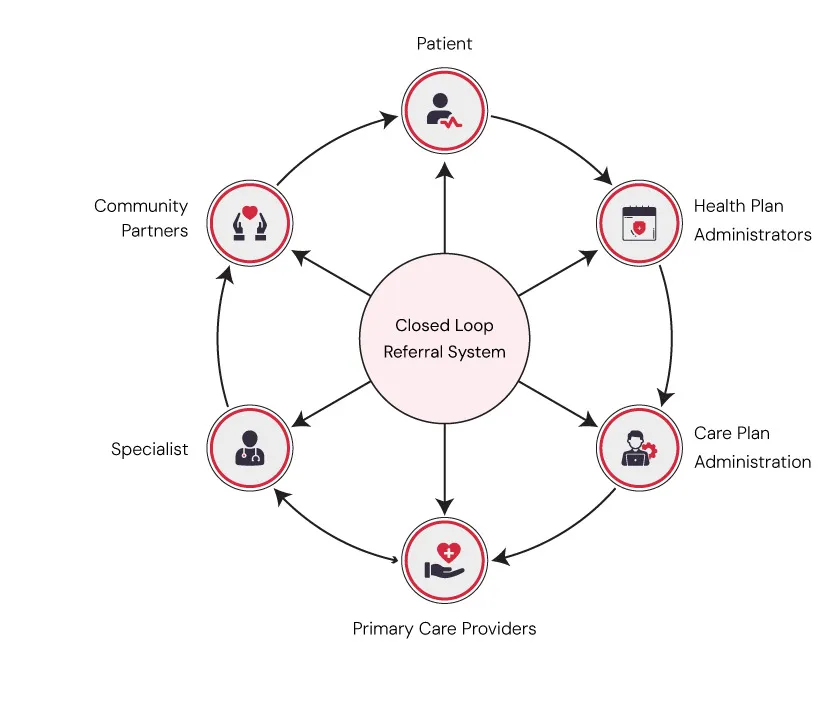

Healthcare coordination often begins with a simple decision: connect a patient with another person or organization that can help. Yet the real challenge starts after the referral is sent. Did the patient reach the specialist? Was the community service delivered? Did the receiving organization respond? Was the original need actually resolved? A Closed Loop Referral System helps answer these questions by creating a connected process that follows referrals beyond their initial submission. Instead of allowing referrals to disappear into disconnected workflows, organizations can maintain visibility throughout the journey and work toward confirmed resolution.
The Missing Link in Modern Care
Healthcare has become increasingly collaborative.
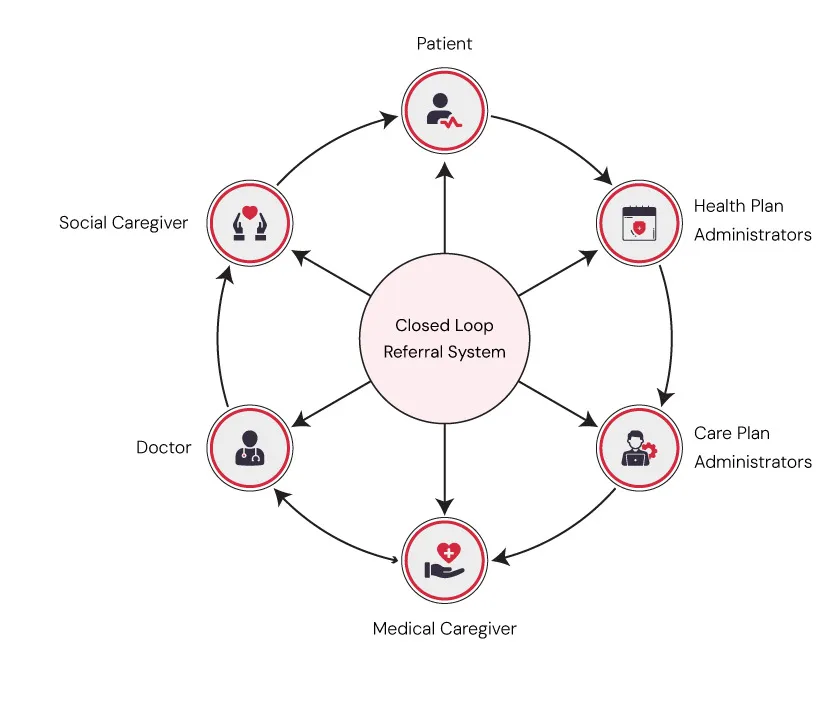
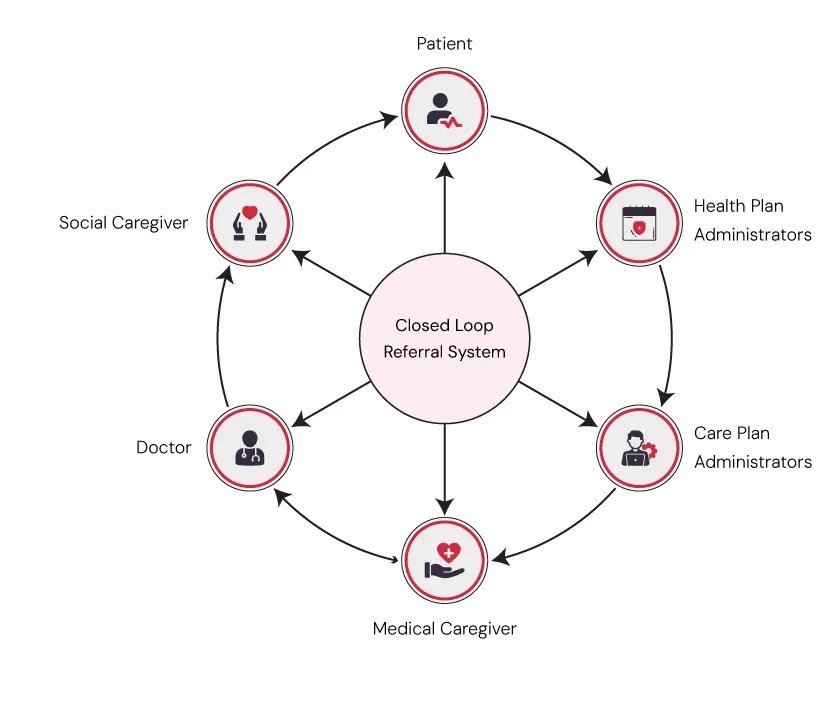
A patient's needs may involve primary care, specialists, health plans, behavioral services, community organizations, transportation providers, food programs, and other support networks. Each participant may have an important role, but coordination becomes difficult when information remains scattered across separate systems.
A referral can be created in seconds.
Resolving the underlying need can take considerably longer.
This difference is why referral management deserves more attention. The value of a referral is not determined by how quickly it is sent. It is determined by what happens afterward.
A coordinated referral workflow provides a bridge between intention and outcome.
Why Referral Completion Matters
Imagine a physician identifying a patient who needs specialist care.
The referral is submitted successfully. From an administrative perspective, the task appears complete.
But what if the patient cannot schedule the appointment?
What if the specialist's office never receives the information?
What if the appointment is postponed?
What if nobody informs the referring provider?
The referral exists, but the care connection has not necessarily happened.
A closed-loop approach addresses this gap by keeping the referral visible throughout its lifecycle. SocialRoots.ai describes GridSocial as a two-way referral network that tracks referrals until confirmed resolution. (socialroots.ai)
That additional layer of visibility can make referral management considerably more meaningful.
From Referral Transmission to Referral Intelligence
Traditional referral systems often concentrate on moving information from one point to another.
Modern organizations need more.
They need to understand referral activity.
A connected system can help teams identify outstanding referrals, recognize delays, monitor progress, and understand whether services have been completed.
This transforms referral data into operational intelligence.
For example, if an organization repeatedly notices delays with one category of referral, leadership can investigate the underlying reason. Perhaps the receiving network has limited capacity. Perhaps patients need additional assistance. Perhaps the workflow contains unnecessary steps.
Without tracking, these patterns can remain hidden.
With tracking, they can become opportunities for improvement.
Creating a Two-Way Conversation
Healthcare coordination is rarely successful as a one-way communication process.
The referring organization sends information.
The receiving organization responds.
The patient participates.
Care coordinators may intervene.
Additional services may become necessary.
A two-way referral structure helps these participants remain connected.
SocialRoots.ai's description of GridSocial emphasizes bidirectional referral workflows and shared visibility across participating organizations. (socialroots.ai)
This is particularly useful when a referral encounters an obstacle.
Instead of treating a problem as the end of the process, the network can provide an opportunity for people to respond and coordinate the next step.
Bridging Healthcare and Community Services
Many patient needs extend beyond conventional medical treatment.
A person may require help with transportation, food, housing, medication access, or other community-based resources. These needs can influence whether someone is able to follow a healthcare plan successfully.
That makes community organizations an important part of many care networks.
SocialRoots.ai positions GridSocial to support referrals involving both healthcare and community services, allowing organizations to connect patients with appropriate resources and monitor the referral journey. (socialroots.ai)
This creates a broader definition of care coordination.
Care does not necessarily stop when a patient leaves the clinic.
Sometimes the next important step happens somewhere else.
Giving Care Teams Better Visibility
Care teams already manage significant amounts of information.
Adding manual referral follow-up to that workload can create additional pressure.
A centralized referral workflow can reduce the need to search through multiple communication channels to determine what happened.
According to SocialRoots.ai, GridSocial provides centralized visibility and enables authorized staff to track and manage referrals through the workflow. (socialroots.ai)
The benefit is straightforward: teams can spend less time trying to reconstruct the history of a referral and more time deciding what should happen next.
Visibility can therefore become a practical productivity tool.
Automation That Keeps Important Referrals Moving
Some referrals require repeated attention.
If a status remains unchanged for too long, someone needs to notice.
SocialRoots.ai states that GridSocial can provide automated reminders and flag overdue referrals when statuses are not updated. (socialroots.ai)
Automation does not eliminate the need for human judgment.
Instead, it can help direct human attention.
A care coordinator can prioritize referrals that require intervention rather than manually reviewing every referral with equal urgency.
This can make high-volume referral environments easier to manage.
When the First Referral Is Not the Right Answer
Real-world patient needs are often complicated.
A referral may go to an organization that cannot provide the required service. A program may have reached capacity. A patient's circumstances may change.
A strong referral workflow should allow teams to adapt.
SocialRoots.ai describes GridSocial as enabling authorized staff to collaborate and reassign referrals when additional support or a different destination is required. (socialroots.ai)
This creates flexibility within the referral journey.
Instead of starting from scratch when something changes, the organization can continue managing the case through the existing workflow.
Connecting Referral Management With EHRs
Technology adoption becomes easier when new systems can work with existing healthcare infrastructure.
Electronic health records remain central to clinical operations, which makes interoperability an important consideration for referral technology.
SocialRoots.ai states that GridSocial can work with any EHR and can read from and write back to multiple EHRs. The company describes a typical 9–10-week implementation for full deployments involving EHR integration, workflow configuration, and staff training. (socialroots.ai)
For smaller networks using standalone deployment without EHR integration, SocialRoots.ai describes a 3–4-week implementation timeline. (socialroots.ai)
Integration can help referral coordination become part of established workflows rather than another isolated administrative task.
Supporting the People Behind the Process
Even powerful technology must be approachable.
Referral management often involves care coordinators, administrative staff, community partners, and other frontline users. These individuals need tools that fit naturally into their responsibilities.
SocialRoots.ai describes GridSocial as designed for everyday frontline use and states that users do not need to be highly tech-savvy to work with the platform. Staff training is also included in its implementation approach. (socialroots.ai)
An intuitive experience can encourage more consistent participation.
That consistency matters because a referral system is only as reliable as the information being maintained within it.
Measuring More Than Referral Counts
Counting referrals is easy.
Understanding their outcomes is more valuable.
A closed-loop approach gives healthcare organizations the opportunity to look beyond referral volume and consider completion and resolution.
Organizations can examine questions such as:
- How many referrals were successfully completed?
- Which referrals remain open?
- Where are delays most common?
- Which services receive the highest demand?
- How often are referrals reassigned?
- Which community needs appear repeatedly?
- Where should additional coordination resources be focused?
These questions can help leadership understand how the referral network actually operates.
The resulting insights can support process improvement and more informed resource allocation.
Helping Payers Identify Unmet Needs
Payers can benefit from greater visibility into member needs as well.
A referral may reveal that a member is experiencing a transportation problem, struggling with food access, missing follow-up care, or encountering another barrier.
SocialRoots.ai describes GridSocial as supporting payers in addressing issues such as missed follow-ups, medication gaps, housing, food, and transportation before they potentially become more serious challenges. (socialroots.ai)
The value lies in connecting identification with action.
Recognizing a need is only the first step.
A coordinated referral process helps organizations keep working toward resolution.
Strengthening Accountability Across Networks
Every referral involves responsibility.
The referring organization has a reason for making the connection.
The receiving organization has a role in responding.
The patient is ultimately the person who should benefit from the process.
When there is no visibility, accountability can become unclear.
A closed-loop workflow provides a clearer record of where the referral stands and whether the intended service has been delivered.
This can encourage stronger coordination between organizations while helping teams recognize referrals that require additional intervention.
Scaling Without Losing Visibility
Healthcare networks rarely remain the same size.
Organizations add new locations, services, partners, and programs. As the network expands, manually coordinating every relationship becomes increasingly difficult.
SocialRoots.ai states that GridSocial uses a multi-tenant architecture designed to scale across sites, programs, and geographies. (socialroots.ai)
Scalability therefore becomes more than a technical feature.
It becomes an operational requirement.
A referral network should be able to grow while maintaining visibility across its expanding ecosystem.
Making Every Connection More Meaningful
The real purpose of referral technology is not to generate more administrative activity.
It is to create better connections.
A successful referral connects a person with a service at the moment that service is needed.
A successful referral network goes further by making those connections visible, measurable, and actionable.
This distinction can influence how organizations design their workflows.
Instead of asking, “How many referrals did we send this month?” leaders can begin asking, “How many patient needs did those referrals help resolve?”
That is a much more meaningful measure of coordination.
The Road Ahead for Connected Care
The healthcare ecosystem will likely become even more interconnected as organizations collaborate across clinical and community settings.
Patients increasingly need coordinated support rather than isolated interactions.
That requires systems capable of connecting people, information, and services.
A closed-loop referral model provides one way to build that connection.
It creates a continuous pathway where referrals can be initiated, monitored, followed up, reassigned when necessary, and ultimately closed with an outcome.
The result is a more complete picture of the patient's journey.
Conclusion: Close the Loop, Strengthen the Connection
A referral is only the beginning.
The real value appears when organizations know what happened after the referral was made.
A Closed Loop Referral System helps create that visibility by connecting referring teams, receiving organizations, community resources, and other participants through a trackable workflow. SocialRoots.ai's GridSocial platform brings together two-way referrals, centralized tracking, automated reminders, EHR connectivity, and outcome-focused management to support this approach. (socialroots.ai)
For healthcare organizations, the opportunity is significant.
Better referral visibility can help teams identify gaps, follow up on unresolved cases, coordinate across organizational boundaries, and understand whether intended services actually reached patients.
Ultimately, the strongest referral process is not the one that sends information the fastest.
It is the one that stays connected long enough to know what happened.
When the loop closes, the referral becomes more than a transaction.
It becomes a measurable step toward better-connected care.


























Sign in to leave a comment.