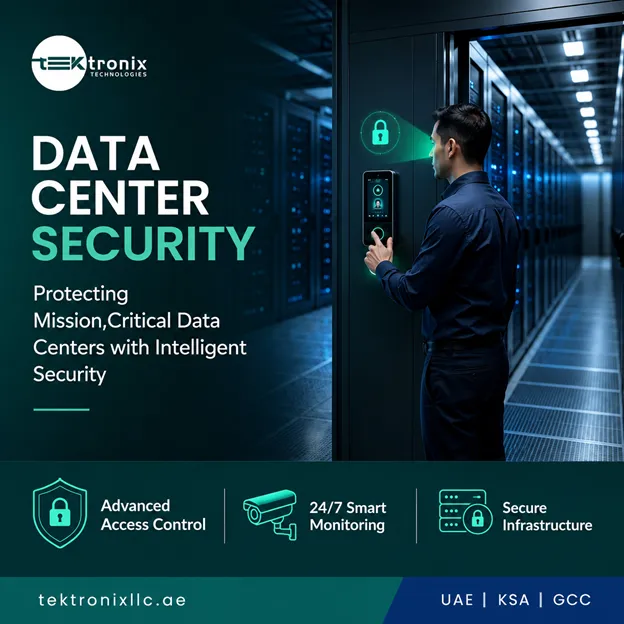

Data Center Security has become a board-level priority for every organisation operating in the UAE's fast-growing digital economy. As Dubai and Abu Dhabi cement their status as regional cloud and connectivity hubs, facility owners are investing in layered data center security solutions that combine physical protection with digital defence to safeguard servers, storage, and network infrastructure around the clock.
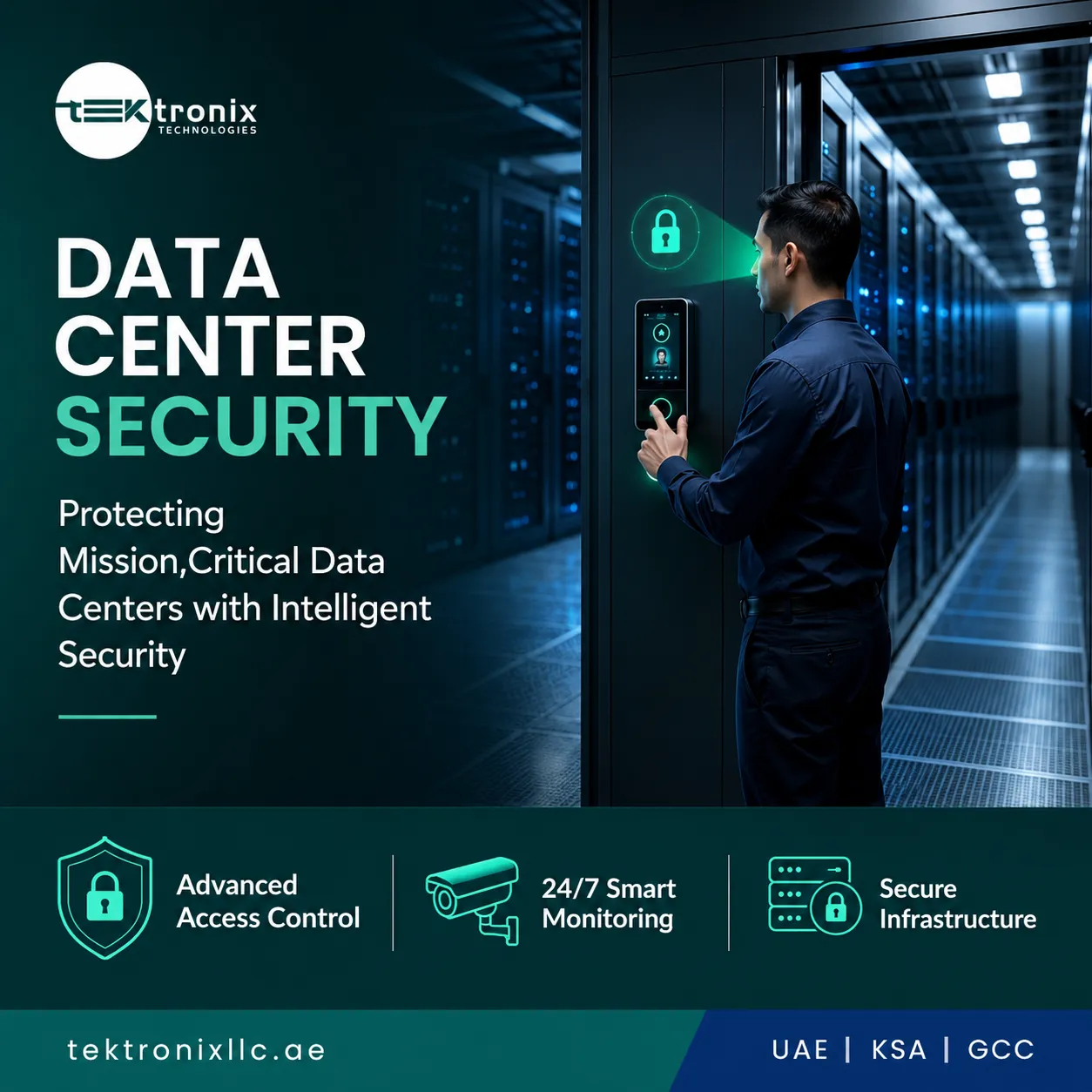
A single data center outage or breach can disrupt banking, government services, telecoms, and enterprise operations across the region simultaneously. This guide walks through the physical and digital layers that make up a complete protection strategy, and what facility owners in the UAE should look for when evaluating a provider.
Why Data Center Security Is Business-Critical in the UAE
The UAE has positioned itself as a regional hub for cloud services, fintech, and government digital infrastructure, drawing hyperscale and colocation facilities into Dubai, Abu Dhabi, and the free zones that support them. That concentration of critical infrastructure makes data centers a high-value target for both physical intrusion and cyberattack, and operators are expected to defend against both simultaneously — a single unguarded loading dock or an unpatched firewall can be equally damaging to uptime and client trust.
Enterprise clients and regulators alike now expect documented, auditable security controls before entrusting sensitive workloads to a facility, making a defensible security posture a commercial requirement as much as a technical one.
Cybersecurity for Data Center: The Digital Layer of Protection
Cybersecurity for Data Center operations covers everything from network segmentation to endpoint monitoring, protecting the digital infrastructure that physical security alone cannot reach. Modern facilities treat this layer as inseparable from physical protection, since an attacker who compromises credentials remotely can cause as much damage as one who breaches a perimeter fence.
Data Center Encryption
Data Center Encryption protects data at rest and in transit, ensuring that even if storage media or network traffic were intercepted, the information remains unreadable without the correct keys. Strong key-management practices are as important as the encryption algorithm itself.
Data Center Firewalls
Data Center Firewalls filter and inspect traffic entering and leaving the facility's network, blocking unauthorised access attempts while allowing legitimate operations to pass. Modern deployments layer next-generation firewalls with intrusion-prevention rules tuned specifically for data center traffic patterns.
Physical Security Layers for UAE Data Centers
Digital defences only work if the hardware behind them is physically protected. UAE facilities typically build physical security in concentric rings — perimeter, building, and server-room level — so that no single failure exposes the entire site.
Data Center Access Control
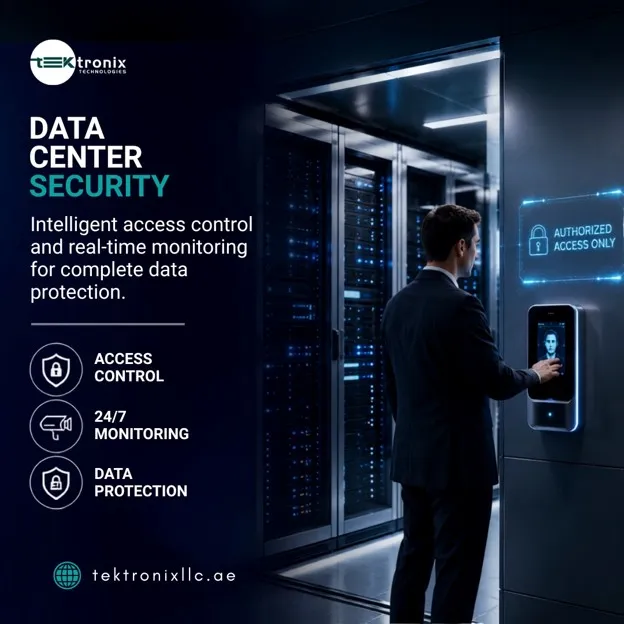
Data Center Access Control restricts entry to server halls, cages, and cabinets using biometric verification, mantraps, and role-based credentials, ensuring only authorised personnel reach sensitive equipment and every entry is logged for audit purposes.
Data Center Surveillance
Data Center Surveillance combines high-resolution CCTV, thermal cameras, and analytics-driven monitoring across perimeters, loading docks, and server rows, giving security teams continuous visual coverage and a searchable video record for incident investigation.
Detecting Threats Before They Escalate
Prevention alone is not enough — a mature security programme also needs to detect and respond to anomalies as they happen, before they turn into a breach or downtime event.
Data Center Intrusion Detection
Data Center Intrusion Detection systems monitor perimeter fencing, doors, and restricted zones for unauthorised entry attempts, triggering immediate alerts to security personnel so a physical breach can be contained within seconds rather than discovered after the fact.
Data Center Threat Detection
Data Center Threat Detection extends monitoring into the network layer, using behavioural analytics to flag unusual traffic patterns, credential misuse, or lateral movement that could indicate an active cyber intrusion, closing the gap between a suspicious event and a confirmed incident.
Data Center Security UAE: Regulatory & Compliance Landscape
Data Center Security UAE requirements are shaped by national data-protection regulations and sector-specific compliance frameworks covering banking, telecoms, and government workloads. Facilities hosting regulated data are increasingly expected to demonstrate independently verifiable physical and cyber controls, not just internal policy documents, before signing enterprise contracts.
Data Center Security Abu Dhabi: Growing Demand
Data Center Security Abu Dhabi deployments have expanded alongside the emirate's push into government cloud, fintech, and AI infrastructure. New facilities in Abu Dhabi's free zones are being designed with security specified from the ground up, while established sites are upgrading legacy perimeter systems to match the sensitivity of the workloads they now host.
Data Center Security Dubai: Growing Demand
Data Center Security Dubai demand has grown in step with the emirate's colocation and hyperscale expansion, as international cloud providers and enterprise clients require documented physical and cyber controls before committing to a facility. Dubai's competitive data center market has made a strong, auditable security posture a genuine differentiator for operators.
Why Tektronix LLC Is a Trusted Data Center Security Partner
Tektronix LLC designs and deploys perimeter and facility security for data centers, colocation providers, and enterprise server rooms across the UAE. The team's engineers are trained on integrating access control, surveillance, and intrusion-detection hardware into a single monitored security platform.
- Experience: deployment history across colocation, enterprise, and government-adjacent data center projects in the UAE.
- Expertise: certified engineers covering perimeter intrusion detection, biometric access control, and integrated surveillance systems.
- Authority: solutions built on established, internationally recognised physical-security and monitoring platforms.
- Trust: transparent site assessment, documented testing, and ongoing local support across Dubai and Abu Dhabi.
Facility owners evaluating a new deployment can review Tektronix LLC's data center perimeter security solutions to see how access control, surveillance, and intrusion detection are scoped for their specific site.
Choosing the Right Data Center Security Solutions
- Map every physical layer — perimeter, building shell, server hall, and individual cabinets — and assign controls to each.
- Confirm how physical alerts (intrusion, forced door) are correlated with network-layer alerts for a unified incident view.
- Verify encryption key-management practices are independent of the storage or network vendor where possible.
- Plan for redundancy in surveillance and access-control power and network paths, not just IT equipment.
- Schedule regular penetration testing and physical security audits rather than treating the initial deployment as final.
Implementation Best Practices
- Conduct a full site risk assessment covering perimeter, building access, and internal server-room zoning.
- Integrate physical security systems with the network operations centre for unified incident response.
- Enforce least-privilege access policies for both physical entry and network credentials.
- Test failover procedures for surveillance, access control, and detection systems during planned maintenance windows.
- Review access logs, firewall rules, and camera coverage on a fixed audit schedule.
Conclusion
Data Center Security in the UAE now demands a combined strategy spanning Cybersecurity for Data Center operations, from Data Center Encryption to Data Center Firewalls, alongside physical layers like Data Center Access Control and Data Center Surveillance.
Reliable Data Center Intrusion Detection and Data Center Threat Detection close the gap between a suspicious event and a contained incident, protecting uptime and client trust.
From Data Center Security Abu Dhabi facilities to Data Center Security Dubai colocation hubs, a complete Data Center Security UAE strategy is now essential to protecting the region's digital infrastructure.
FAQs
1. What does a complete data center security strategy include?
It combines physical layers such as access control, surveillance, and perimeter intrusion detection with digital layers such as firewalls, encryption, and network threat monitoring, so both physical and cyber risks are addressed together.
2. Why is physical security still important when data is encrypted?
Encryption protects data content, but physical access to a server allows tampering, theft of hardware, or installation of malicious devices, so physical controls remain essential even with strong encryption in place.
3. How does intrusion detection differ from threat detection in a data center?
Intrusion detection typically monitors physical entry points such as doors and perimeter fencing, while threat detection monitors network traffic and system behaviour for signs of a cyber intrusion, and mature facilities run both together.
4. Are data center security requirements different in Dubai versus Abu Dhabi?
Both emirates follow UAE-wide data-protection principles, but specific compliance expectations can vary by free zone and sector, so facilities typically align their controls to the strictest relevant framework for their client base.
5. How often should a data center's security systems be audited?
Most facilities review access logs and camera coverage on a monthly basis, with a full physical and network security audit, including penetration testing, conducted at least annually or after any significant infrastructure change.
For more information contact us on:
Tektronix Technology Systems Dubai-Head Office
+971 50 814 4086
+971 55 232 2390
Office No.1E1 | Hamarain Center 132 Abu Baker Al Siddique Rd – Deira – Dubai P.O. Box 85955




























Sign in to leave a comment.