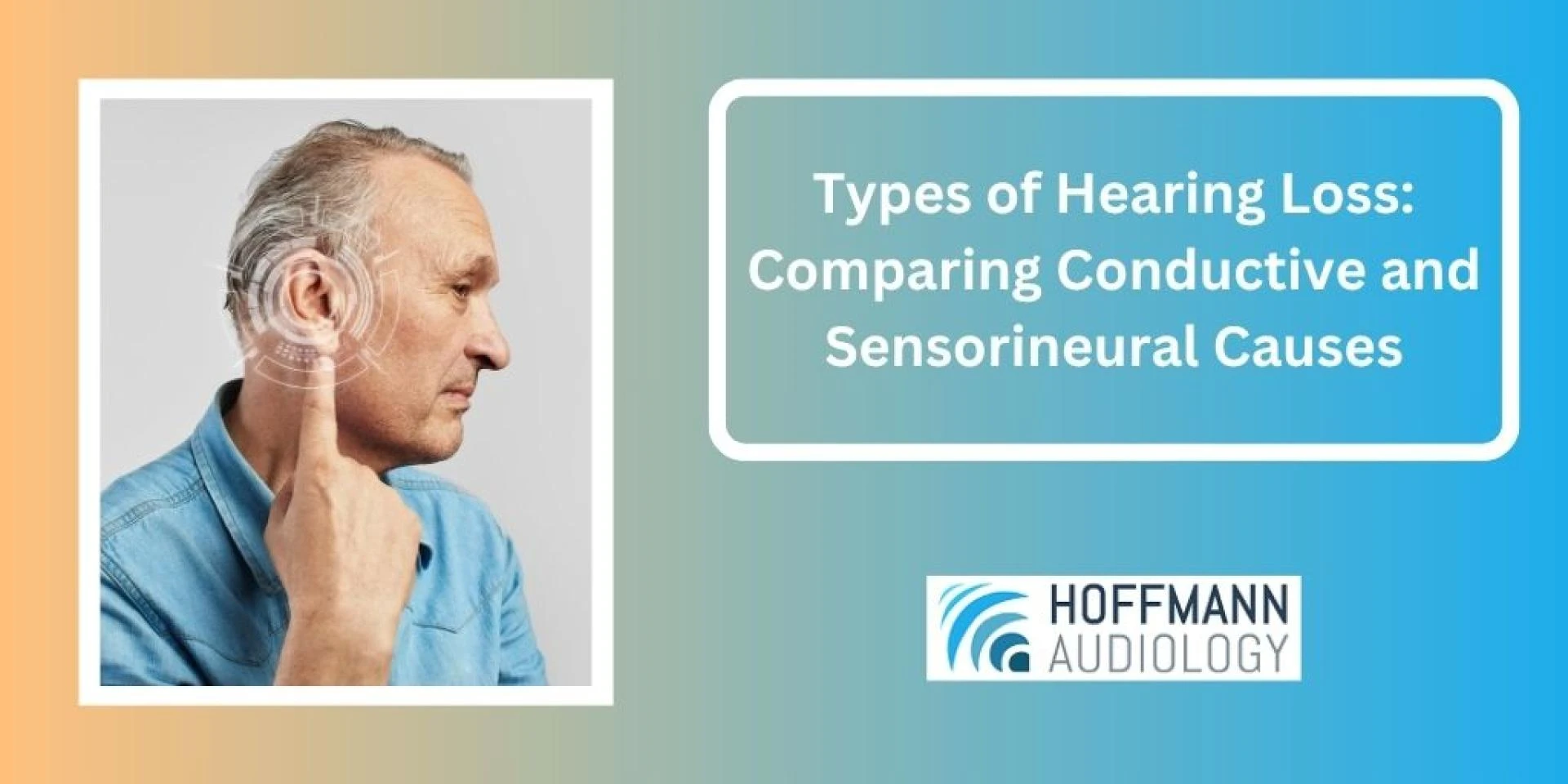

If you’ve ever struggled to hear conversations clearly or found yourself constantly turning up the volume, you’re not alone. Hearing loss affects millions of people every year - and not all hearing loss is the same. One of the most important things I’ve learned in my experience working with individuals facing hearing challenges is that understanding what type of hearing loss you’re dealing with is the first step to finding the right solution.
Today, I’d like to break down the two most common types of hearing loss: conductive and sensorineural. Knowing the difference between them can help you or your loved one feel more empowered when it’s time to speak with a hearing care provider.
Let’s Start with Conductive Hearing Loss
Conductive hearing loss happens when something is blocking or interfering with the way sound travels through the outer or middle part of the ear. This could be something as simple as earwax buildup, or something more complex like a middle ear infection or structural issue.
Here are a few common causes I’ve seen:
- Excess earwax
- Fluid buildup from allergies or colds
- A hole in the eardrum
- Frequent ear infections (especially in kids)
- Objects stuck in the ear canal
- Abnormal bone growth in the middle ear
In most cases, conductive hearing loss is temporary and treatable. Once the underlying issue is resolved - like draining fluid or removing a blockage - many people notice a big improvement.
What About Sensorineural Hearing Loss?
Sensorineural hearing loss, on the other hand, is usually permanent. It happens when there’s damage to the inner ear or the auditory nerve that carries signals to the brain. This type of hearing loss often comes on gradually, but in some cases, it can happen suddenly.
Some common causes include:
- Aging (a natural part of life for many)
- Exposure to loud noise over time
- Certain illnesses or inner ear infections
- Genetic conditions
- Head injuries
- Ototoxic medications (those that harm the ear)
What makes sensorineural loss trickier is that it doesn’t just affect how loud things are - it affects clarity, especially in noisy environments. People often tell me they can hear people talking, but the words sound jumbled or unclear.
How Are the Two Types Different?
Here’s a quick breakdown to help distinguish them:
- Conductive loss is usually related to a physical issue in the outer or middle ear.
- Sensorineural loss stems from damage deeper inside the ear - the cochlea or nerve.
- Conductive hearing loss tends to be treatable. Sensorineural is usually permanent, but manageable with hearing technology.
- With conductive hearing loss, sound is muffled. With sensorineural hearing loss, it’s often distorted.
Understanding the difference can help you know what questions to ask during your hearing exam - and what to expect from treatment.
How Do We Know What Type You Have?
If you’ve been wondering what’s going on with your hearing, the best place to start is with a professional hearing evaluation. An audiologist or hearing specialist will run a few tests - painless, I promise - to determine whether your hearing loss is conductive, sensorineural, or a mix of both.
Here’s what we usually check:
- Visual inspection of the ear canal (otoscopy)
- Pure-tone testing (listening for beeps at various pitches)
- Bone conduction tests (to figure out where the hearing issue is happening)
- Tympanometry (checks how your eardrum is moving)
Getting the right diagnosis is the first step toward hearing more clearly and confidently.
Can Sensorineural Hearing Loss Be Treated?
While we can’t reverse sensorineural hearing loss, we can definitely help manage it - and this is where hearing aids come in. Today’s hearing aids are smarter and more discreet than ever.
One option many of my patients love is the Lyric hearing aid. It’s designed specifically for mild to moderate sensorineural hearing loss and fits deep inside the ear canal. What’s really cool about Lyric is that it stays in for weeks at a time - no need to take it out at night or worry about batteries.
Lyric offers incredibly natural sound because it works with the ear’s natural anatomy. And for those who prefer something totally invisible and low-maintenance, it’s a fantastic option.
Mixed Hearing Loss: When It’s a Little of Both
Some people have what we call mixed hearing loss, meaning there’s both conductive and sensorineural damage happening at the same time. For example, someone might have age-related inner ear damage but also fluid in the middle ear from allergies. In these cases, we work to address the conductive component (if treatable) and fit the appropriate hearing technology for the sensorineural part.
Signs It’s Time to See a Specialist
I always tell people: if something feels off with your hearing, don’t ignore it. Here are some common signs that it’s time for a hearing test:
- People seem like they’re mumbling all the time
- You ask others to repeat themselves often
- Conversations are especially hard in noisy places
- You find yourself turning the volume up more than usual
- There’s a “blocked” or full feeling in your ears
- You notice a sudden change in hearing
The earlier you take action, the easier it is to adapt and improve your hearing quality.
Final Thoughts
There’s no one-size-fits-all when it comes to hearing loss. Whether it’s conductive, sensorineural, or a bit of both - there are real, effective solutions that can make a big difference in your daily life.
If you or someone you love is struggling with hearing, I encourage you to reach out to a hearing professional for support. With the right diagnosis and technology, clearer hearing is absolutely possible.
Disclaimer: Please note that this information is for educational purposes only. There is no patient-doctor relationship established. Please consult your healthcare provider for individualized recommendations.




























Sign in to leave a comment.