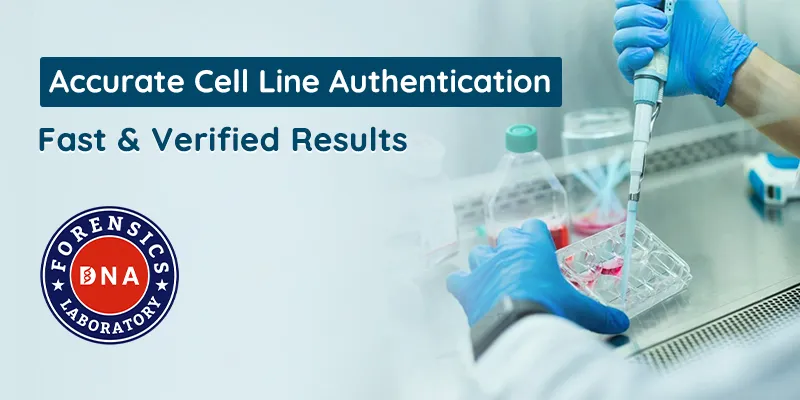

Scientific research is a long and difficult journey that requires patience and precision. Researchers often spend years studying diseases or creating new medicines to help people live better lives. However, all that hard work can be lost if the cells used in the lab are not what they seem to be.
This is why cell line authentication in India has become a vital requirement for every modern laboratory. It serves as a quality control check to make sure that the building blocks of an experiment are correct and pure.
The Dangers of Using the Wrong Cells
Unidentified cell lines can cause several issues that can put the integrity of the research in question. Therefore, they need to be verified due to the following common reasons:
1. Misidentification of Cells
This occurs when a sample is labeled incorrectly from the very beginning. A researcher might receive a vial from another lab, thinking it contains one thing, while it actually contains something else entirely. Working on a misidentified cell line can cause a major blunder in research results and lead to unreliable reports.
2. Genetic Drift
As cells grow and divide over many years, their genetic code can slowly change until they no longer behave like the original sample. This means that cell lines stored in the lab for a long time eventually lose their original identity and become completely different, which significantly impacts the research.
3. Cross-Contamination
This happens when a small amount of one cell line accidentally enters the container of another. It can also occur if a researcher accidentally uses the same tool for two different types of cells. Because some cells grow much faster than others, they can quickly take over the entire sample without the researcher ever noticing.
The Process of Cell Line Authentication
To prevent these mistakes, experts use a specific testing process to confirm the identity of their samples. This cell line authentication process involves several scientific steps to create a unique genetic profile for the cells.
- Sample Collection: A tiny portion of the cells is taken from the culture. This must be done very carefully to ensure that no bacteria or environmental pollutants get into the sample.
- DNA Extraction: In the laboratory, scientists use specialized chemicals to break open the cells and pull out the DNA. This DNA is then cleaned so that nothing interferes with the analysis.
- DNA Copying (PCR): Sometimes, the amount of DNA is too small to see clearly. Experts use a method called Polymerase Chain Reaction, or PCR, to make millions of copies of specific areas of the DNA.
- Creating the Profile: The test focuses on areas called Short Tandem Repeats (STRs). These are repeating patterns in the DNA that are different for every single cell line. A computer reads these patterns and creates a graph that acts like a unique ID card for those cells.
- Final Comparison: The genetic profile is compared against a massive database of known and verified cell lines. If the patterns match perfectly, the cells are confirmed as authentic.
Protecting Research Budgets & Professional Reputation
Conducting research is very expensive. It requires high-tech tools, costly chemicals, and the time of many skilled professionals. If a lab finds out at the end of a long project that the cells were wrong, all the money spent from regular financial institutions or private grants is wasted. It is much more affordable to perform authentication once or twice a year than to abandon a project after years of effort.
Beyond the money, a researcher’s reputation is also at stake. Scientists around the world must be able to trust each other's data so they can build on new discoveries. Using authenticated cells ensures that a scientist’s name remains respected in the international community.
Why Choose DNA Forensics Laboratory for Cell Line Authentication?
When a laboratory decides to verify its samples, it is important to choose a provider that follows the highest international standards. DNA Forensics Laboratory, also called DFL, is a trusted choice for cell line authentication in India. The lab holds accreditation from NABL and ISO certification, which demonstrates its high standards for such procedures.
This ensures that all research data is handled with care and that the results are delivered quickly so that experiments can continue without delay. Finding a trusted provider for cell line authentication in India is the most effective way for any researcher to ensure that their hard work leads to lasting success.




























Sign in to leave a comment.