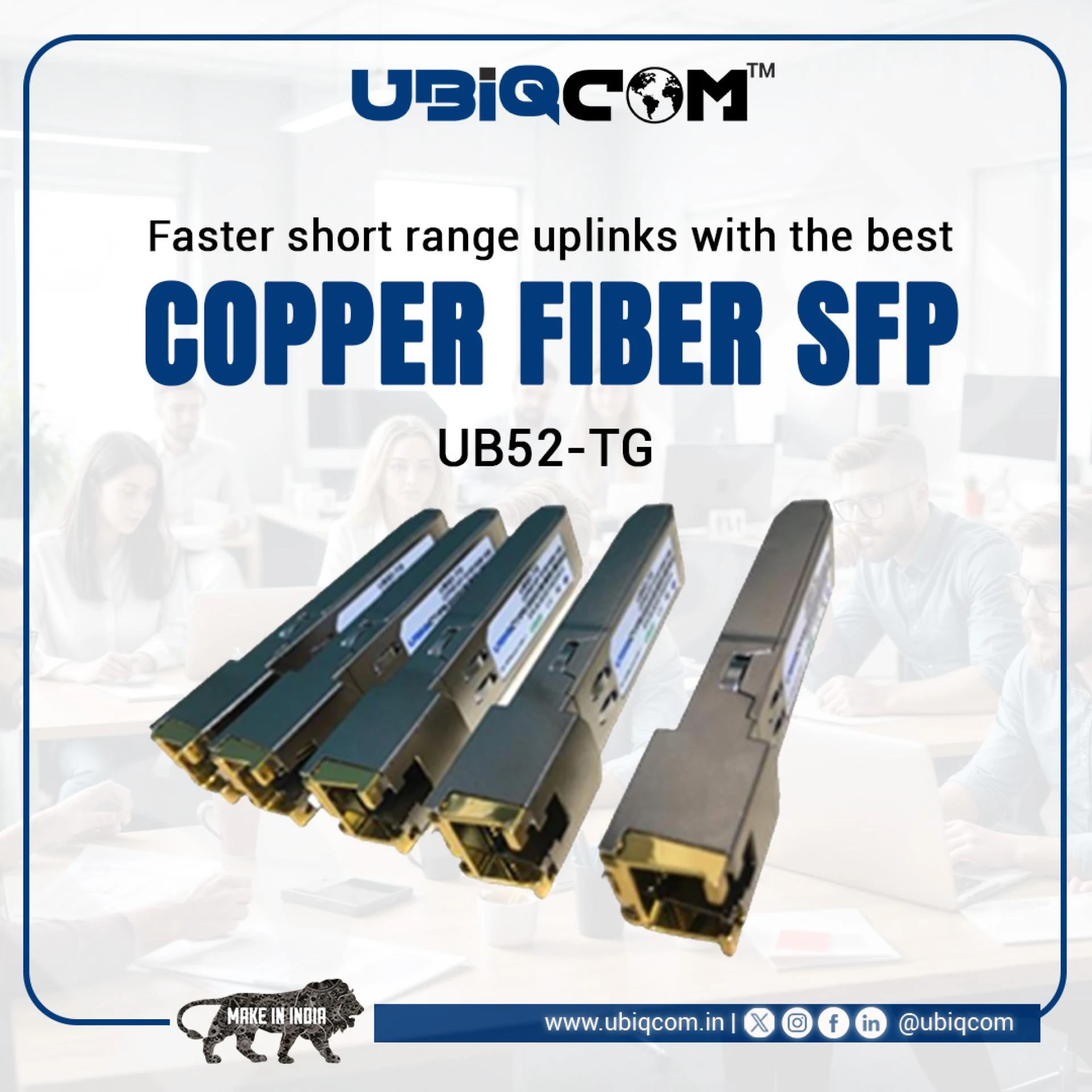

In today’s fast-paced digital world, businesses and data centers rely on high-performance, flexible, and cost-effective network solutions. One of the most commonly used components in network infrastructure is the Small Form-factor Pluggable (SFP) transceiver. Among the different types of SFP modules, the Copper SFP plays a pivotal role, offering a reliable and efficient solution for Ethernet networking over copper cables. Whether you're upgrading your existing infrastructure or building a new one, understanding the benefits and applications of Copper SFP modules can significantly enhance your network's capabilities.
What is Copper SFP?
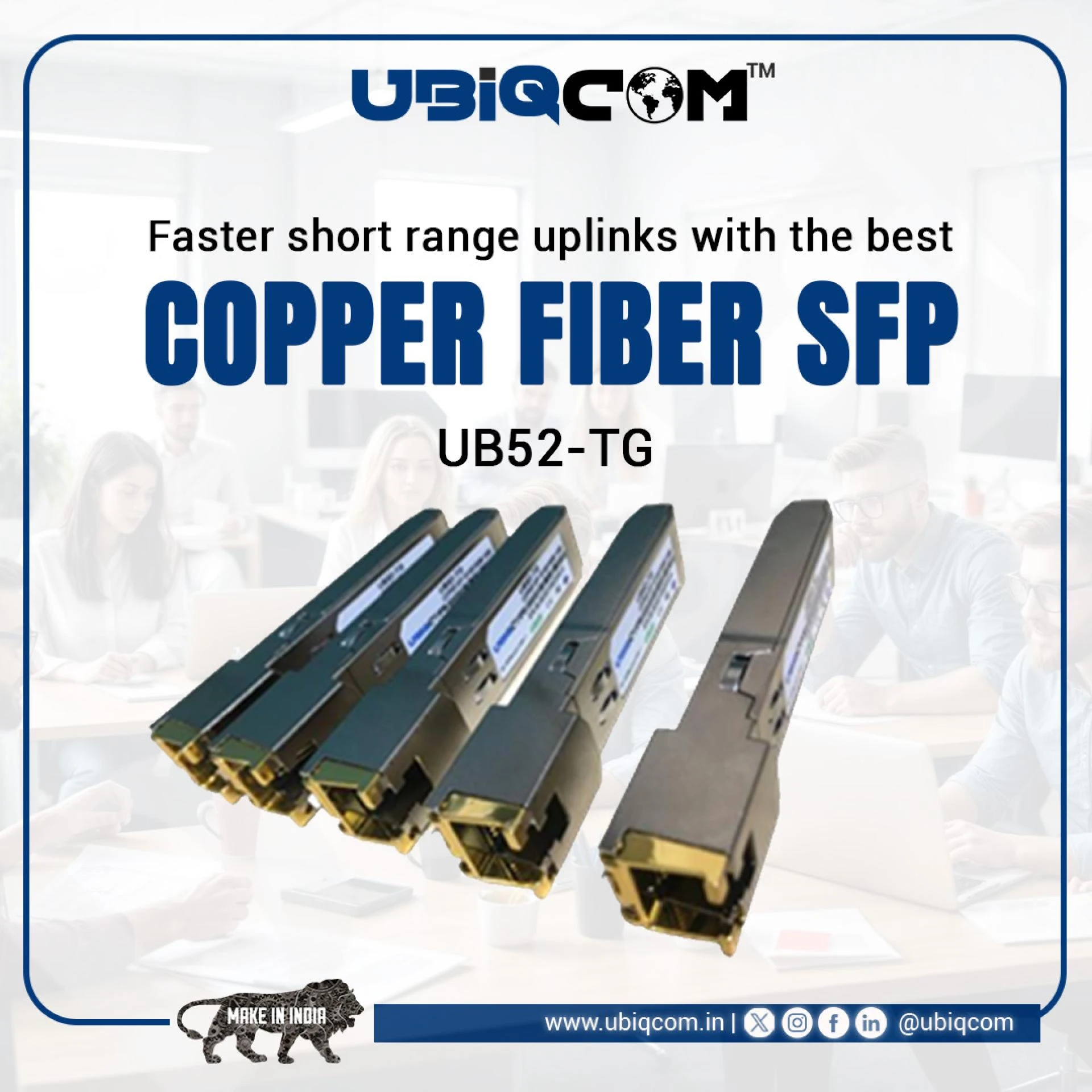
A Copper SFP is a compact, hot-pluggable network transceiver that enables Ethernet connectivity over copper cables. It is primarily used in 1000BASE-T, or Gigabit Ethernet, applications. Copper SFP modules are designed to support data transmission rates of up to 1 Gbps (Gigabit per second), making them ideal for short-range connections within a local area network (LAN). These modules are typically inserted into SFP ports on networking devices such as switches, routers, and servers, offering seamless connectivity over twisted-pair copper cables, specifically Cat5e or Cat6 cables.
The key feature of Copper SFP is its ability to provide a simple, cost-effective alternative to fiber optic transceivers, which are often used for long-range connections. Copper SFP modules offer flexibility, easy deployment, and a more affordable solution for businesses that require Gigabit Ethernet speeds without the need for expensive fiber optic infrastructure.
How Copper SFP Works
Copper SFP modules function by converting electrical signals from the network device into signals suitable for transmission over copper cables. These modules are equipped with an integrated chipset that handles the signal conversion process, ensuring compatibility with Ethernet standards. Once inserted into an SFP port, the Copper SFP transceiver automatically detects the connected cable type and adjusts the transmission speed accordingly.
The communication between two devices using Copper SFP relies on the use of standard twisted-pair copper cables, such as Cat5e or Cat6 cables. These cables have multiple copper wires inside that allow for the transmission of data signals between devices. The Copper SFP module uses electrical signals to transfer data over these cables, ensuring that data can be transmitted at high speeds with minimal interference and data loss.
Benefits of Using Copper SFP
- Cost-Effectiveness
- One of the most significant advantages of SFP Copper modules is their affordability. Fiber optic transceivers are typically more expensive and require specialized cables, which can drive up the overall cost of a network installation. Copper cables, on the other hand, are relatively inexpensive, and many businesses already have existing copper cabling in place. By using Copper SFP modules, businesses can take advantage of their existing infrastructure without the need for costly upgrades.
- Easy Deployment
- Copper SFP modules are designed for easy installation and deployment. These modules are plug-and-play, meaning that they can be easily inserted into an SFP port without the need for additional configuration or setup. Once installed, the module will automatically detect the network settings and begin transmitting data. This ease of deployment makes Copper SFP a popular choice for businesses looking to quickly expand their network without encountering complex setup procedures.
- Flexibility
- Copper SFP modules are highly versatile and can be used in a wide range of applications. Whether you're connecting devices in a small office or a large data center, Copper SFP offers a flexible solution that can meet the specific needs of your network. The modules are available in different variants, including 1000BASE-T and other speeds, which allows businesses to choose the right module for their specific network requirements.
- Hot-Pluggable
- Another notable benefit of Copper SFP modules is their hot-pluggable nature. This means that the modules can be inserted or removed from an SFP port while the network is running without causing any downtime or disruptions. This feature is especially useful in environments where network uptime is critical, such as in data centers and enterprise networks.
- Backward Compatibility
- Copper SFP modules are generally backward compatible with earlier Ethernet standards, such as Fast Ethernet (100BASE-T) and Gigabit Ethernet (1000BASE-T). This backward compatibility ensures that businesses can use Copper SFP modules alongside older networking equipment without compatibility issues, making it easier to integrate new technology into existing infrastructures.
Applications of Copper SFP
- Enterprise Networks
- Copper SFP modules are widely used in enterprise networks to provide high-speed Ethernet connections between networking devices. Whether it's connecting servers, switches, routers, or storage devices, Copper SFP offers a cost-effective solution for businesses looking to build a reliable and efficient network. Additionally, because of their flexibility and ease of deployment, SFP Copper modules are ideal for scaling networks to accommodate growing business needs.
- Data Centers
- In data centers, Copper SFP modules are commonly used to establish high-speed connections between servers and switches. These modules can help improve data transfer rates and ensure that the data center's infrastructure operates efficiently. By utilizing existing copper cabling, data centers can reduce the cost of network upgrades while maintaining high-performance connectivity.
- Telecommunications
- Copper SFP modules are also used in telecommunications networks to connect switches, routers, and other networking equipment. They offer a reliable solution for short-range data transmission, making them ideal for last-mile connections, such as connecting telecom equipment to customer premises.
- Small and Medium-Sized Businesses (SMBs)
- For SMBs, Copper SFP provides an affordable and straightforward solution for networking needs. SMBs often work with limited budgets and may already have existing copper cabling in place. Copper SFP modules allow these businesses to upgrade their network infrastructure without incurring substantial costs, providing them with the bandwidth needed to support modern applications and services.
Copper SFP vs. Fiber Optic SFP
While both Copper SFP and Fiber Optic SFP serve similar purposes in terms of providing network connectivity, there are notable differences between the two:
- Cost
- Copper SFP modules are significantly more affordable than their fiber optic counterparts. The cost of fiber optic cabling and transceivers can be prohibitive for small businesses and organizations, making Copper SFP a more cost-effective choice.
- Distance
- Fiber optic SFP modules are designed for long-range data transmission, often capable of spanning distances of several kilometers. Copper SFP, on the other hand, is best suited for shorter-range connections, typically within a range of 100 meters, depending on the quality of the copper cabling.
- Bandwidth
- Fiber optic SFP modules generally offer higher bandwidth capabilities than Copper SFP, with some models supporting speeds up to 10 Gbps or more. Copper SFP typically supports speeds up to 1 Gbps, making it suitable for most enterprise and SMB applications.
- Signal Quality
- Fiber optic connections offer superior signal quality over longer distances, as they are immune to electromagnetic interference (EMI). Copper cables are more susceptible to EMI, which can affect the signal quality over longer distances. However, for short-range connections, Copper SFP can still provide reliable performance.
Choosing the Right Copper SFP for Your Network
When selecting a Copper SFP module for your network, there are several factors to consider:
- Speed and Performance Requirements
- Copper SFP modules are available in different speeds, such as 100BASE-T and 1000BASE-T. Determine your network's performance requirements and choose the appropriate module to meet those needs.
- Cable Type
- Ensure that your network uses the correct type of copper cable, such as Cat5e or Cat6, to support the Copper SFP module. The quality of the cable will impact the signal integrity and transmission distance.
- Compatibility
- Verify that the Copper SFP module is compatible with your networking devices. Check the specifications of your switches, routers, or servers to ensure that the SFP ports support the Copper SFP module.
- Environmental Factors
- If your network operates in an environment with high electromagnetic interference (EMI), consider using shielding or upgraded copper cabling to ensure reliable performance.
Conclusion
Copper SFP modules are an essential component of modern Ethernet networks, providing businesses with a cost-effective and efficient solution for short-range data transmission. They offer numerous benefits, including affordability, flexibility, and ease of deployment. Whether you're working in an enterprise network, data center, or small business, Copper SFP can meet your networking needs without breaking the bank. By understanding the advantages and applications of Copper SFP, you can make informed decisions to optimize your network’s performance and scalability.























Sign in to leave a comment.