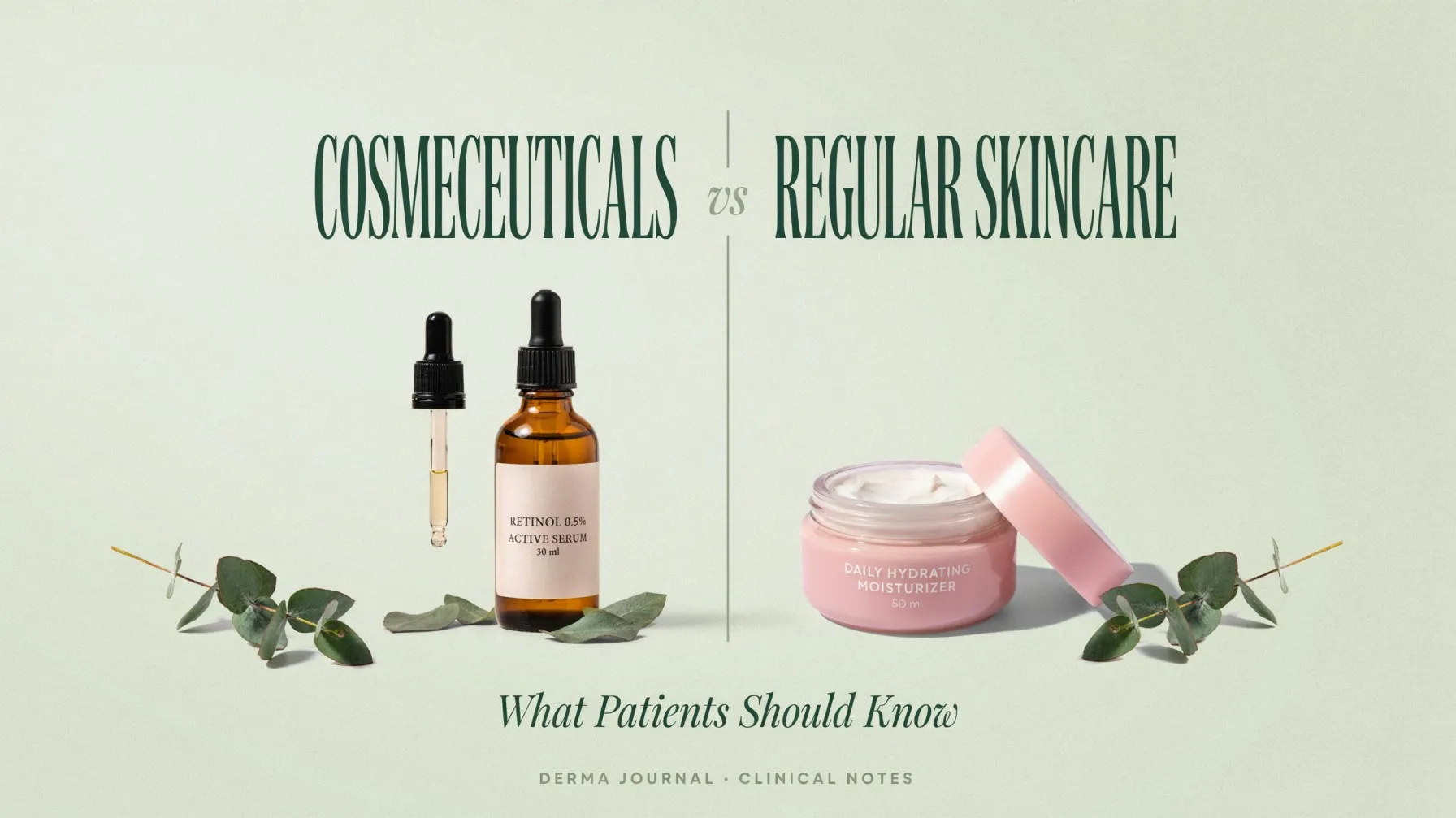

Standing in front of a skincare aisle, or scrolling through countless product options online, most people assume all skincare products work more or less the same way; some just cost more than others. This assumption often leads to confusion, especially when a dermatologist mentions cosmeceuticals during a consultation. Understanding the actual difference can help patients make far better decisions about what they are putting on their skin.
Where Regular Skincare Fits In
Regular skincare products, cleansers, basic moisturizers, and everyday lotions, focus primarily on maintaining skin's general condition. They cleanse, hydrate, and offer surface-level protection, but they are not designed to treat specific medical or dermatological concerns in a targeted way.
These products play an important role in daily hygiene and comfort, but their formulations typically do not contain concentrated active ingredients meant to address deeper skin issues like pigmentation, significant barrier damage, or chronic inflammation.
What Actually Makes Cosmeceuticals Different
Cosmeceuticals sit in a distinct category, combining cosmetic benefits with pharmaceutical-level active ingredients. Unlike regular skincare, cosmeceutical products are formulated with specific, higher concentrations of ingredients designed to create measurable changes in skin function, whether that means reducing fine lines, correcting uneven pigmentation, or genuinely repairing a damaged skin barrier.
This distinction matters because it changes what patients can realistically expect. A regular moisturizer might make skin feel comfortable temporarily, while a cosmeceutical formulation is designed to create lasting, structural improvement over consistent use.
Why Ingredient Concentration Makes Such a Big Difference
One of the clearest differences between these two categories comes down to ingredient strength. Many ingredients found in both regular skincare and cosmeceuticals, like vitamin C or retinol, exist in dramatically different concentrations depending on the product category. A regular skincare product might contain just enough of an active ingredient to make a marketing claim, while a properly formulated cosmeceutical often contains clinically meaningful concentrations backed by actual research showing genuine effectiveness.
This is exactly why patients sometimes feel disappointed switching from a dermatologist-recommended cosmeceutical to a similar-sounding drugstore product: the ingredient list might look similar on paper, but the actual concentration and formulation quality often differ significantly.
Why Testing and Research Standards Differ Too
Reputable cosmeceutical brands typically invest more heavily in research and clinical testing compared to standard skincare lines. A genuine Cosmeceutical pharmaceutical company usually conducts more rigorous formulation testing, ensuring ingredients remain stable, safe, and genuinely effective once they reach the patient's skin.
This deeper research investment often reflects in pricing too, since developing and testing these more advanced formulations naturally costs more than producing a basic, general-purpose moisturizer.
Why Patients Should Not Assume More Expensive Always Means Better
While cosmeceuticals generally involve more research and stronger active ingredients, price alone should not be the deciding factor for patients. Not every expensive product qualifies as a genuine cosmeceutical, and not every affordable option lacks effectiveness. Patients are better served by understanding actual ingredient concentrations and researching whether meaningful clinical evidence supports a product's claims, rather than assuming price automatically indicates quality or category.
When Regular Skincare Is Genuinely Enough
For people without specific skin concerns, simply maintaining healthy, comfortable skin with regular skincare products often works perfectly well. Not every skin routine requires cosmeceutical intervention, and dermatologists frequently recommend basic, gentle products for patients who do not have specific conditions requiring more targeted treatment.
When Cosmeceuticals Become Genuinely Necessary
Patients dealing with more persistent concerns, significant pigmentation, visible signs of premature ageing, or compromised skin barrier function, often benefit far more from properly formulated cosmeceuticals, especially when recommended and monitored by a dermatologist who can guide appropriate usage and set realistic expectations.
Why Professional Guidance Matters in Making This Choice
Given how much variation exists within both categories, consulting a dermatologist before choosing between regular skincare and cosmeceuticals remains genuinely valuable. A professional can assess actual skin condition, recommend appropriate ingredient concentrations, and help patients avoid wasting money on products unlikely to address their specific concern effectively.
Final Thoughts
Understanding the difference between cosmeceuticals and regular skincare helps patients make more informed, realistic decisions about their skin health. While regular skincare serves an important role in daily maintenance, cosmeceuticals offer a more targeted, research-backed approach for patients dealing with specific dermatological concerns. Recognizing this distinction, rather than assuming all skincare products work the same way, ultimately helps patients choose products genuinely suited to their actual skin needs.































Sign in to leave a comment.