
Introduction
Have you ever brushed your teeth and noticed a pink tinge in the sink? Or maybe you've felt that nagging tenderness along your gumline that just won't quit? You're not alone—and you're definitely not imagining things. Gum problems are far more common than most people realize, and they rarely fix themselves.
Here's the truth that doesn't get talked about enough: your gums are the foundation of your entire smile. When they're unhealthy, everything else crumbles. The good news? Modern dentistry offers custom solutions tailored to your specific situation, whether you're dealing with early-stage inflammation or a full-blown infection.
In this article, we're diving deep into personalized approaches for gum health. No generic advice. No one-size-fits-all solutions. Just real strategies that work for real people with real gum problems. Let's get into it.
Why Gum Health Deserves Your Immediate Attention
Think of your gums like the soil in a garden. You can plant the most beautiful flowers, but if the soil is toxic, nothing thrives. Your gums serve the same purpose—they anchor your teeth, protect sensitive roots, and act as a barrier against bacteria.
When gum problems start, they often whisper before they scream. A little bleeding here. Some redness there. Maybe bad breath that mints can't mask. These aren't cosmetic issues. They're warning signs. Ignore them, and that whisper becomes a roar.
Periodontal disease affects nearly half of American adults over 30, according to the Centers for Disease Control and Prevention. That's not a niche problem. That's an epidemic hiding in plain sight. And here's what makes it particularly sneaky: gum disease is usually painless in its early stages. By the time you feel real discomfort, the damage may already be significant.
The takeaway? Proactive care isn't optional—it's essential. If you want to explore treatment options or book a consultation, you can visit the website of Dentist St Leonards, which provides professional dental care at an affordable budget.
Understanding the Spectrum of Gum Problems
Not all gum issues are created equal. Understanding where you fall on the spectrum helps determine the right custom solution.
Gingivitis: The Wake-Up Call
Gingivitis is gum disease in its infancy. It's characterized by inflammation, bleeding, and mild discomfort. The culprit? Plaque buildup that hardens into tartar along the gumline.
Here's the encouraging part: gingivitis is reversible. With the right intervention, your gums can return to full health. But—and this is important—reversal requires more than just brushing harder. It demands a strategic, customized approach.
Periodontitis: When Things Get Serious
If gingivitis is the warning shot, periodontitis is the battle. At this stage, the infection spreads below the gumline, destroying the tissue and bone that support your teeth. Pockets form between teeth and gums, creating perfect hideouts for bacteria.
Symptoms escalate quickly: receding gums, loose teeth, persistent bad breath, and even changes in your bite. Periodontitis isn't just a dental problem—it's been linked to heart disease, diabetes, and respiratory issues. Your mouth and body are more connected than you might think.
Acute Gum Infections: The Emergency Scenario
Sometimes gum problems flare up suddenly. An abscess forms. Swelling spreads. Pain becomes unbearable. These acute infections require immediate, targeted treatment. They're not something to "wait and see" about.
Custom Treatment Solutions: A Personalized Roadmap
Modern gum care isn't about pulling out a standard playbook. It's about building a treatment plan around your unique biology, lifestyle, and the specific stage of your gum disease.
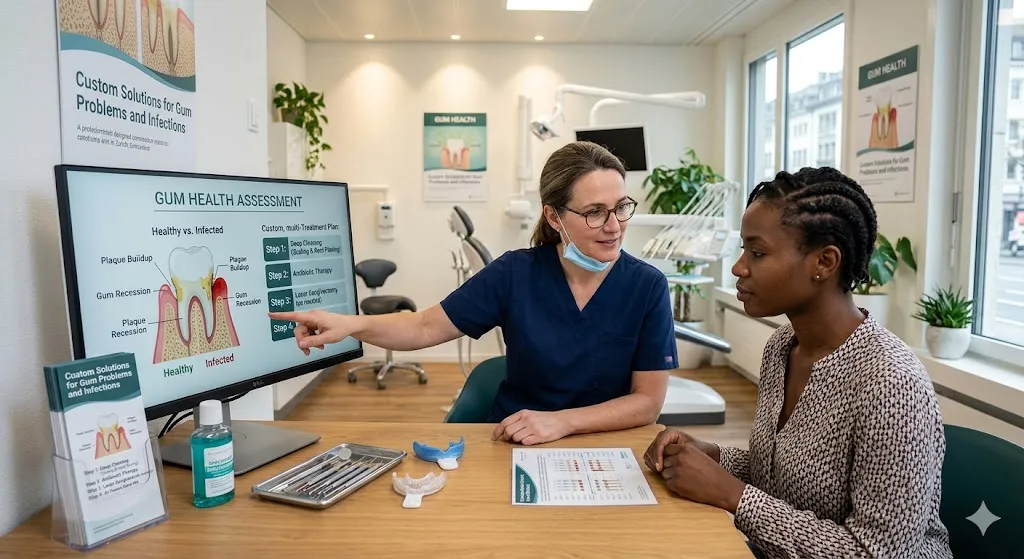
Professional Deep Cleaning: Scaling and Root Planing
For many patients with early to moderate gum disease, scaling and root planing is the first line of defense. Think of it as a deep clean that goes where your toothbrush can't.
Your hygienist removes plaque and tartar from above and below the gumline. Then they smooth the root surfaces, making it harder for bacteria to reattach. It's not the most comfortable procedure, but it's incredibly effective.
What makes this custom? The depth of cleaning, the areas targeted, and the frequency of follow-up visits all depend on your specific condition. Some patients need one session. Others need several, spaced strategically.
Antibiotic Therapy: Targeting Hidden Bacteria
Sometimes mechanical cleaning isn't enough. Bacteria hide in pockets and crevices that instruments can't reach. That's where localized antibiotic therapy comes in.
Your dentist places antibiotic medication directly into periodontal pockets. It releases slowly over days, attacking bacteria at the source. This isn't a pill you swallow—it's precision medicine for your gums.
Laser Gum Therapy: The Modern Approach
Laser technology has revolutionized gum treatment. Instead of cutting tissue with scalpels, dentists use focused light energy to remove infected tissue and bacteria.
The benefits? Less bleeding, reduced swelling, faster healing, and often less discomfort. It's minimally invasive and remarkably precise. Not every case qualifies for laser therapy, but for the right patient, it's a game-changer.
Gum Grafting: Rebuilding What's Been Lost
Receding gums don't grow back on their own. When tissue loss is significant, gum grafting becomes necessary. Your dentist takes tissue from another area—often the roof of your mouth—and grafts it where gums have receded.
This isn't just about aesthetics. Exposed roots are vulnerable to decay and sensitivity. Grafting protects them while restoring a natural gumline. Recovery takes time, but the long-term results are worth it.
Periodontal Surgery: For Advanced Cases
When gum disease has caused substantial bone and tissue destruction, surgery may be the only path forward. Procedures like flap surgery, bone grafting, and guided tissue regeneration aim to rebuild the supportive structures around your teeth.
Yes, surgery sounds intimidating. But consider the alternative: losing teeth. Modern periodontal surgery is far more refined than it used to be, with better outcomes and shorter recovery times.
The Role of At-Home Care in Custom Solutions
Professional treatments are only half the equation. What you do at home determines whether your gums stay healthy or slide backward.
Your Personalized Oral Hygiene Protocol
A custom solution includes a custom home care plan. This might mean:
- A specific toothbrush type: Soft bristles for sensitive gums, or an electric brush for better plaque removal
- Targeted interdental cleaning: Floss, interdental brushes, or water flossers chosen based on your spacing and pocket depth
- Prescription mouthwash: Chlorhexidine or other therapeutic rinses for infection control
- Toothpaste selection: Formulas designed for gum health, sensitivity, or both
Lifestyle Factors That Impact Your Gums
Your daily habits either support or sabotage your gum health. Smoking? It's one of the biggest risk factors for gum disease. Stress? It weakens your immune response. Poor nutrition? Your gums need vitamins and minerals to fight infection.
A truly custom solution addresses these factors. Your dentist should ask about your habits, your stress levels, your diet. Because treating gums without addressing the root causes is like bailing water from a boat with holes in it.
Comparative Analysis: Treatment Approaches for Gum Disease
Table
| Treatment Type | Best For | Invasiveness | Recovery Time | Cost Range | Long-Term Success Rate |
|---|---|---|---|---|---|
| Scaling & Root Planing | Early to moderate gum disease | Minimal | 1-3 days | $$ | 85-90% with maintenance |
| Localized Antibiotics | Persistent pockets after deep cleaning | Minimal | None | $ | 70-75% as adjunct therapy |
| Laser Therapy | Moderate disease, sensitive patients | Low | 2-7 days | $$$ | 80-85% |
| Gum Grafting | Receding gums, root exposure | Moderate | 2-4 weeks | $$$$ | 90-95% |
| Periodontal Surgery | Advanced bone/tissue loss | High | 2-6 weeks | $$$$$ | 75-85% |
Recognizing When You Need Professional Help
How do you know when home care isn't enough? Watch for these red flags:
- Bleeding gums that persist for more than a week
- Persistent bad breath or bad taste in your mouth
- Gum recession making teeth appear longer
- Loose or shifting teeth
- Pus between teeth and gums
- Changes in your bite or how dentures fit
If any of these sound familiar, schedule an appointment. Early intervention saves teeth, money, and discomfort.
The Connection Between Gum Health and Overall Wellness
This isn't just about keeping your smile pretty. Gum disease has been linked to serious systemic conditions:
- Cardiovascular disease: Inflammation in gums may contribute to artery inflammation
- Diabetes: Gum disease makes blood sugar harder to control, and diabetes increases gum disease risk
- Respiratory infections: Bacteria from infected gums can be inhaled into lungs
- Pregnancy complications: Gum disease is associated with preterm birth and low birth weight
Treating your gums isn't vanity. It's healthcare.
Building a Long-Term Gum Health Strategy
Custom solutions aren't one-and-done treatments. They're ongoing partnerships between you and your dental team.
Maintenance Protocols That Work
After active treatment, you'll enter a maintenance phase. This typically means:
- More frequent cleanings: Every 3-4 months instead of every 6
- Regular monitoring: Measuring pocket depths, checking for bleeding
- Adjustments as needed: Your plan evolves as your gums heal
Technology That Supports Gum Health
Modern tools make home care more effective:
- Smart toothbrushes that track your brushing habits
- Water flossers that clean below the gumline
- Apps that remind you to floss and track your progress
Technology won't replace professional care, but it amplifies everything else you're doing right.
Conclusion
Gum problems aren't a life sentence. They're a signal—one that modern dentistry is uniquely equipped to answer with precision, personalization, and compassion.
Whether you're dealing with early gingivitis or advanced periodontitis, there's a custom solution designed for your situation. The key is acting now, not later. Your gums support everything your smile is built on. Protect them, and they'll protect you for decades to come.


























Sign in to leave a comment.