

In the age of connected vehicles and smart manufacturing, the automotive industry is facing an unprecedented need for robust cybersecurity services. The ISO/SAE 21434 standard, which focuses on cybersecurity risk management for road vehicle electrical and electronic systems, has become a cornerstone for ensuring security across concept development, production, operation, maintenance, and decommissioning stages.
As vehicles become increasingly software-driven, automakers and suppliers must adopt structured cyber risk assessments and implement scalable cybersecurity assurance levels to manage risks effectively. Understanding and integrating these assurance levels not only supports compliance but also strengthens the overall resilience of the automotive supply chain.
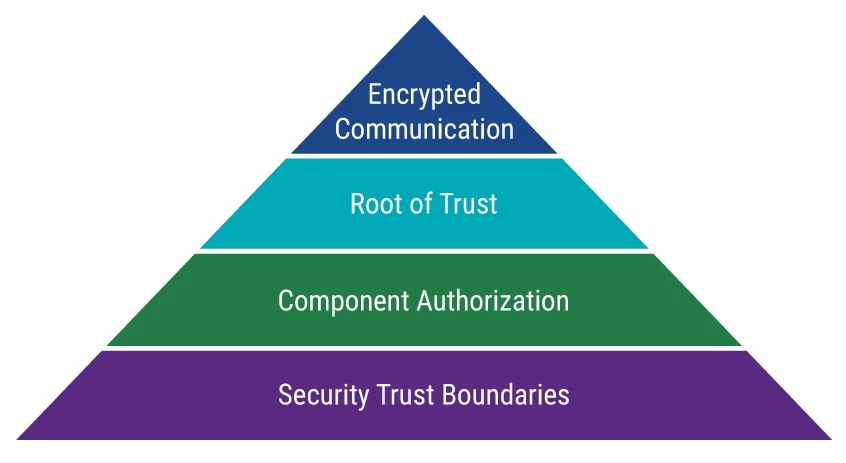
Understanding Cybersecurity Assurance Levels
Cybersecurity assurance levels (CALs) provide a structured framework for defining and maintaining security objectives at every stage of a vehicle’s lifecycle. These levels are not technical specifications in themselves; instead, they establish security goals that are justified through measurable technical metrics.
A trusted cybersecurity agency helps organizations define and achieve these assurance levels by aligning them with evolving technologies and industry maturity. Much like functional safety requirements under ISO 26262, CALs are progressive — each level must be satisfied before advancing to the next. The foundational level typically involves establishing “trust boundaries,” ensuring that high-sensitivity electronic systems are properly isolated from lower-level systems to prevent cascading failures.
To meet this requirement, authentication, authorization, and encryption protocols are combined to build a secure ecosystem. While encryption standards may evolve, the principle of maintaining a verifiable root of trust remains constant. This adaptive structure allows businesses to align their operational goals with evolving cybersecurity environments.
Determining the Number of Assurance Levels Needed
The appropriate number of cybersecurity assurance levels depends on the complexity of the system and its exposure to potential threats. The levels serve as a vital communication tool between technical teams, management, and third-party suppliers.
Effective cyber risk assessments help determine the impact and likelihood of various attack vectors — from localized, physical attacks to remote cyber intrusions conducted via long-range networks. The assessment results guide the assignment of assurance levels to specific components or systems, ensuring that protection aligns with risk exposure.
For instance, a component that interfaces directly with vehicle control systems requires higher assurance than a peripheral module. A cybersecurity agency will typically evaluate each system based on impact severity — such as safety, operational disruption, financial loss, and data privacy — and define assurance levels accordingly.
Assigning single or multiple assurance levels per cybersecurity goal provides flexibility. Organizations can take a “defense-in-depth” approach, layering protections to reduce risk exposure at multiple points in the system.
Aligning Cybersecurity Goals with Business Objectives
Every automotive organization has unique cybersecurity goals shaped by its role in the supply chain. A manufacturer may focus on protecting firmware and connectivity modules, while a supplier might prioritize securing embedded systems or communication interfaces.
Integrating cybersecurity risk management with business planning ensures that these goals are not isolated technical initiatives but part of a broader strategic framework. For example, aligning assurance levels with the company’s powertrain roadmap allows for a phased introduction of cybersecurity features. As new technologies are introduced, customers and regulatory agencies increasingly expect security maturity to grow in parallel.
By documenting and communicating these goals, companies can enhance internal accountability and improve transparency across supplier relationships. This documentation becomes essential evidence of due diligence when addressing compliance audits or external cybersecurity risk assessments.
Tailoring Cybersecurity Assurance Activities
Not every organization requires the same set of cybersecurity assurance levels. A large automotive OEM might adopt an extensive hierarchy of assurance levels, covering multiple systems and subsystems. Meanwhile, a smaller vendor offering a specialized component could maintain a single assurance level aligned with its service scope.
Tailoring assurance levels to the scale and complexity of your business model ensures realistic and achievable security outcomes. A professional cybersecurity agency can assist in designing these customized frameworks, providing end-to-end cybersecurity services that cover governance, technical validation, and compliance monitoring.
Documenting assurance levels also promotes cross-functional communication between engineering, IT, and operations teams. It creates traceability throughout the supply chain, allowing organizations to manage third-party risks more effectively. A risk-based documentation approach helps evaluate threats ranging from physical tampering to global, remote-control cyberattacks, ensuring each risk category—safety, operational, financial, and privacy—is properly addressed.
The Role of Cybersecurity Services in Automotive Safety
Modern vehicles rely on software for everything from navigation to braking systems. This interconnectivity introduces multiple potential entry points for cyberattacks. Engaging specialized cybersecurity services helps identify these vulnerabilities early through ongoing cyber risk assessments and continuous monitoring.
Such services provide advanced threat modeling, penetration testing, and automated compliance tracking, ensuring that even the smallest system component meets required assurance levels. Additionally, well-defined cybersecurity risk management policies establish clear escalation procedures for when incidents occur, minimizing downtime and financial impact.
A robust cyber security breach response plan is equally vital. In the event of a breach, coordinated response protocols — including system isolation, incident forensics, and recovery actions — help limit damage and restore operations swiftly. Automotive companies partnering with an experienced cybersecurity agency can strengthen these response capabilities through regular simulations, employee training, and policy optimization.
Building a Secure Future for the Automotive Industry
As digital transformation continues to reshape the automotive sector, the line between mechanical and digital safety has blurred. Cybersecurity assurance levels are becoming as essential as traditional safety standards.
Organizations that invest in comprehensive cybersecurity risk management programs gain a competitive advantage by ensuring not just compliance but also customer trust. Collaboration with a trusted cybersecurity agency provides the technical expertise, frameworks, and automation necessary to maintain that trust across every stage of the vehicle lifecycle.
From cyber risk assessments to proactive cyber security breach response, the future of automotive security depends on a holistic, continuous approach — one that blends people, processes, and technology under a unified security vision.
With the right cybersecurity services in place, automotive manufacturers and suppliers can protect innovation, maintain regulatory compliance, and drive safely into a connected future.


























Sign in to leave a comment.