
Introduction
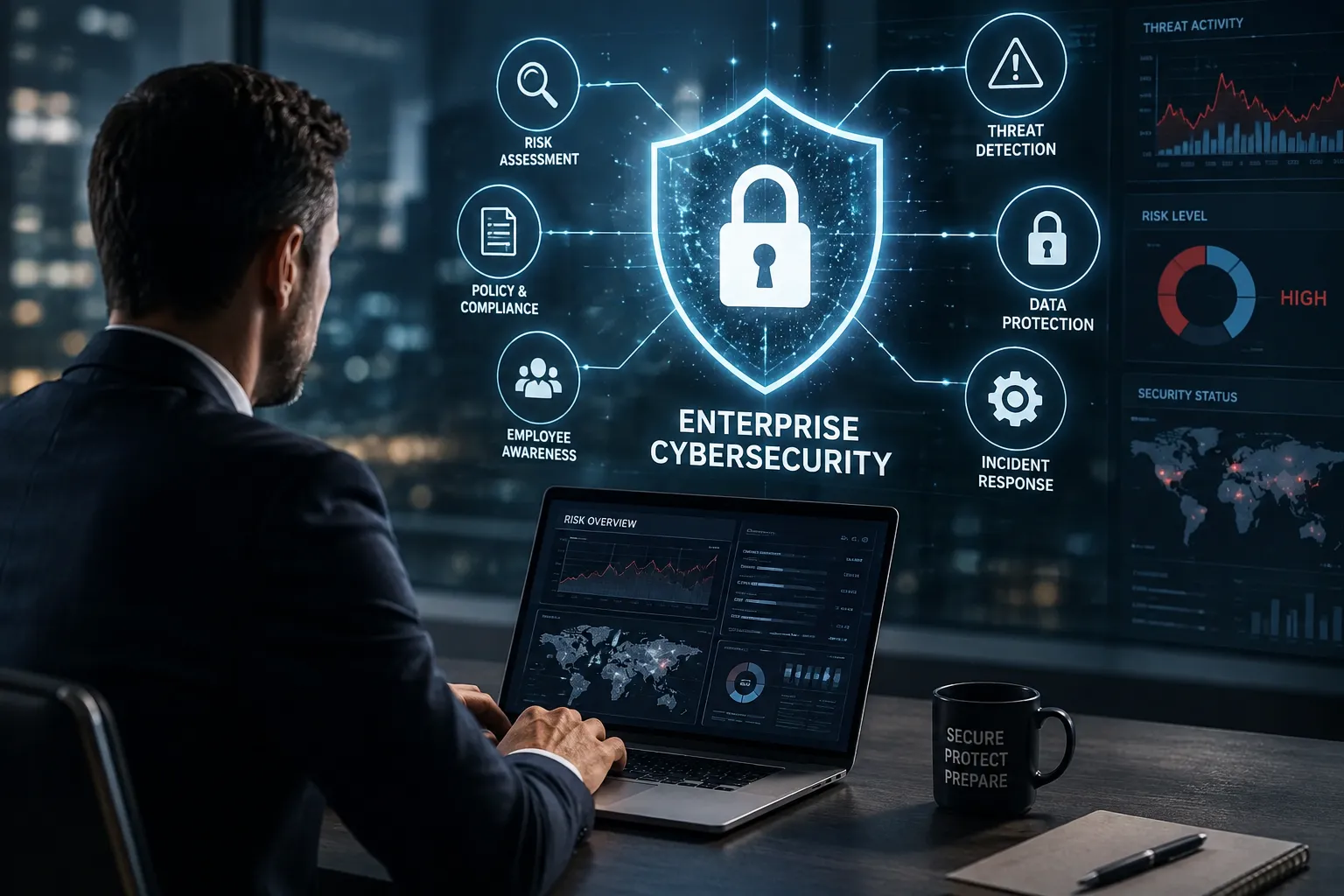
Every large organization now runs on data, and that data is under constant siege. Boardrooms that once treated digital defense as a technical afterthought now discuss it in the same breath as revenue and reputation. Cybersecurity for enterprises has shifted from a compliance checkbox to a core business function, because a single breach can erase years of customer trust within hours. This shift is not driven by fear alone. It reflects a genuine understanding that attackers have grown more organized, patient, and financially motivated than ever before. Large companies sit on troves of intellectual property, financial records, and personal information, making them prime targets for ransomware gangs, nation-state actors, and opportunistic criminals alike.
Why Cybersecurity for Enterprises Has Become a Boardroom Priority
A decade ago, security decisions were largely left to IT departments. Today, chief executives and directors ask pointed questions about incident response plans, insurance coverage, and vendor risk. This change happened because the financial consequences of neglect became impossible to ignore. Regulatory fines, lawsuits, operational downtime, and reputational damage now routinely cost organizations far more than proactive investment ever would. When leadership treats cybersecurity for enterprises as a strategic pillar rather than a line item, security teams gain the budget and authority needed to act decisively, and staff understand that protecting company systems is everyone's responsibility.
The Changing Threat Landscape
Attackers no longer rely solely on crude malware or obvious phishing emails. Many now use artificial intelligence to craft convincing messages, study an organization's public footprint before striking, and exploit trusted relationships between companies and their partners. Ransomware operators have professionalized their operations, offering support services that mirror legitimate businesses. Cloud misconfigurations, exposed application programming interfaces, and unpatched software remain common entry points, even at companies with sizable security budgets. A vulnerability disclosed publicly can be weaponized within days, leaving little room for delayed patching. Enterprises that succeed in this environment treat threat intelligence as a living discipline rather than a static report reviewed once a quarter.
Building a Culture of Security Awareness
Technology alone cannot protect an organization if its people remain unprepared. Human error continues to open the door for a significant share of breaches, whether through a clicked link, a reused password, or a misdirected file. Building genuine awareness means moving beyond annual training videos that employees forget within weeks. It requires ongoing, practical education paired with a workplace culture where reporting a mistake is met with support rather than punishment. When staff feel safe flagging suspicious activity immediately, security teams can respond before minor issues become major incidents. This human layer, often underestimated, is frequently the difference between a contained event and a headline-making disaster.
Technology Investments That Matter
Not every security tool delivers equal value, and enterprises with limited resources must prioritize wisely. Identity and access management remains foundational, since controlling who can reach sensitive systems limits the damage any single compromised account can cause. Endpoint detection tools that monitor unusual behavior in real time help catch threats that slip past traditional antivirus software. Network segmentation prevents attackers from moving freely once they gain an initial foothold, containing incidents before they spread across an entire infrastructure. Encryption of data both at rest and in transit protects information even when other defenses fail. The strongest approach to cybersecurity for enterprises blends these layers rather than relying on any single solution.
Third-Party and Supply Chain Risks
Modern enterprises rarely operate in isolation. They depend on vendors, contractors, and cloud providers who each introduce their own security posture into the equation. A weakness at a small supplier can cascade into a major breach at a much larger partner, as several high-profile incidents have shown. Vetting third parties before granting access, requiring contractual security standards, and continuously monitoring vendor relationships have become essential practices. Attackers increasingly view smaller, less-defended partners as the easiest path into a larger target's network.
Regulatory Compliance and Trust
Governments worldwide have introduced stricter data protection laws, and enterprises operating across borders must navigate a patchwork of requirements. Compliance frameworks often set a useful minimum standard, but organizations that treat regulation as the ceiling rather than the floor tend to fall behind. Genuine cybersecurity for enterprises goes further than what any law mandates, because customers and partners increasingly expect transparency about how their data is protected. Demonstrating strong governance, clear incident disclosure practices, and regular third-party audits builds the kind of trust that regulation alone cannot guarantee.
The Road Ahead
Looking forward, enterprises will need to balance innovation with caution as artificial intelligence, connected devices, and remote work reshape how business gets done. Each new technology expands the potential attack surface, even as it creates efficiency gains. Security leaders who stay engaged with emerging risks, invest in adaptable defenses, and maintain open communication with employees and executives alike will be best positioned to weather whatever comes next. The organizations that treat security as a continuous journey, rather than a project with a finish line, are the ones most likely to avoid becoming tomorrow's cautionary tale.
Conclusion
The stakes surrounding cybersecurity for enterprises will only grow as digital infrastructure becomes further woven into daily operations. Success depends on combining thoughtful technology choices with a workforce that understands its role in defense, supported by leadership willing to invest before a crisis forces their hand. Enterprises that internalize this lesson early, rather than after a costly breach, position themselves not just to survive the current threat environment but to compete confidently within it.



























Sign in to leave a comment.