

Data Center Security is no longer a luxury for financial institutions in the Kingdom of Saudi Arabia and the broader Gulf Cooperation Council region — it is a strategic imperative. As banks, insurance firms, fintech companies, and capital market entities accelerate their digital transformation journeys, the physical and cyber perimeters protecting their most sensitive assets are under unprecedented strain. From Riyadh to Dubai, Abu Dhabi to Doha, financial regulators are tightening compliance mandates, and threat actors are growing more sophisticated by the day.
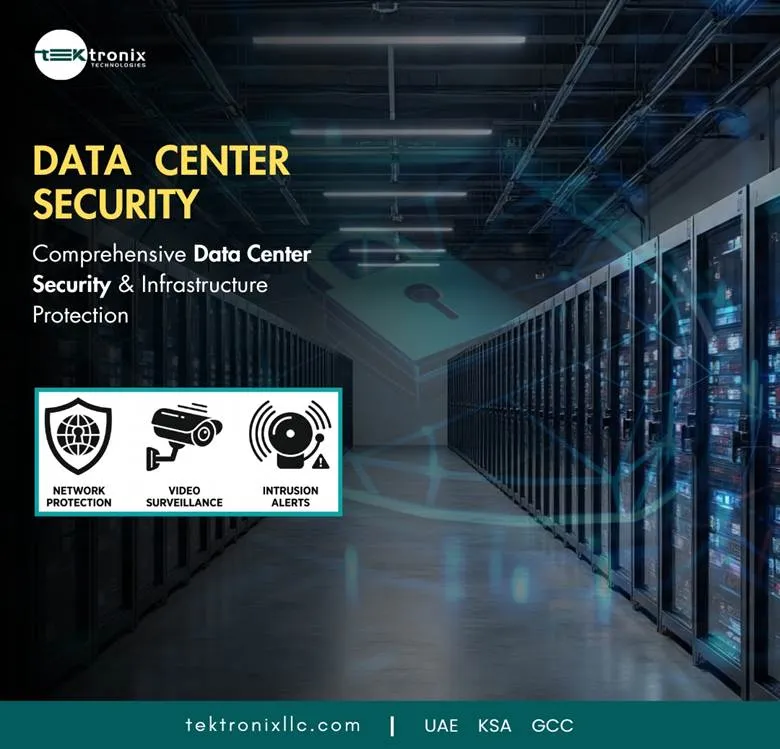
This article provides a practitioner-level deep dive into the full spectrum of cybersecurity for data centers in the financial services sector across KSA and GCC — examining threat landscapes, layered defense frameworks, regulatory drivers, and the technology stacks that leading institutions are deploying. Whether you are a CISO, infrastructure architect, or compliance officer, you will find actionable intelligence here that goes well beyond surface-level awareness.
1. The Threat Landscape Facing Financial Data Centers in KSA & GCC
The financial sector remains the single most targeted vertical globally for cyber-attacks, and the GCC is no exception. Data Center Security KSA teams are contending with a threat matrix that blends geopolitical cyber-espionage, financially motivated ransomware, supply-chain compromises, and insider threats — often simultaneously.
Key threat vectors relevant to the region include:
- Advanced Persistent Threats (APTs): State-sponsored groups targeting sovereign wealth funds, central banks, and large commercial lenders with long-dwell-time intrusions designed to exfiltrate transactional and strategic data.
- Ransomware-as-a-Service (RaaS): Criminal syndicates deploying encrypted payloads against core banking systems, payment gateways, and disaster recovery nodes to extort large settlements.
- Distributed Denial-of-Service (DDoS): Volumetric and application-layer flood attacks targeting internet-facing banking portals and API endpoints, disrupting customer-facing operations.
- Insider Threats and Privilege Abuse: Both malicious insiders and negligent employees continue to represent a disproportionately high share of breach incidents in highly trusted financial environments.
- Supply Chain Attacks: Compromised third-party software updates, hardware implants, and managed service provider (MSP) pivot attacks that bypass perimeter defenses entirely.
In this environment, Data Center Security GCC professionals cannot rely on perimeter-centric approaches. The convergence of physical and logical risk demands a unified, layered security posture aligned to both international standards and local regulatory mandates issued by the Saudi Central Bank (SAMA), the UAE Central Bank, and Qatar's QCB.
2. Regulatory and Compliance Framework Driving Security Investment
Regulatory pressure is one of the most powerful catalysts accelerating data center security investments across the GCC's financial sector. Understanding the compliance landscape is essential for mapping security controls to auditable requirements.
2.1 SAMA Cyber Security Framework (Saudi Arabia)
The Saudi Arabian Monetary Authority's Cyber Security Framework (SAMA CSF) mandates that financial institutions implement controls across five domains: Leadership & Governance, Identify & Assess, Protect & Prevent, Detect & Respond, and Recover & Improve. Critical requirements include continuous data center intrusion detection, risk-based access management, encrypted communications, and documented incident response procedures — all of which directly translate to data center infrastructure requirements.
2.2 UAE IA Regulations and CBUAE Guidance
The UAE Central Bank's Information Assurance standards require financial institutions to implement physical data center access control mechanisms, network segregation, and regular vulnerability assessments. The National Electronic Security Authority (NESA) U-AE-IAS framework further specifies controls for critical infrastructure protection that apply to tier-1 financial data centers operating in the Emirates.
2.3 NCA Essential Cybersecurity Controls (Saudi Arabia)
Saudi Arabia's National Cybersecurity Authority (NCA) Essential Cybersecurity Controls (ECC-1:2018) establish minimum baseline security requirements across 29 control domains. For data center operators, this translates to mandatory implementation of network data center firewalls, endpoint protection, data center surveillance systems, and cryptographic controls for data-at-rest and data-in-transit — making data center encryption a compliance necessity rather than a best-practice recommendation.
3. The Six-Layer Data Center Security Framework for Financial Institutions
Tektronix LLC's six-layered data center security architecture provides a holistic, defense-in-depth model that addresses physical, network, host, application, data, and operational security in an integrated manner. Each layer is described below in the context of GCC financial services deployment scenarios.
Layer 1: Physical Security and Data Center Surveillance
Data center surveillance forms the outermost protective shell. In financial services environments across KSA and GCC, this encompasses biometric entry controls (fingerprint and iris scanning), multi-factor authentication for server room access, mantrap vestibules, 24×7 HD-CCTV coverage with AI-driven behavioural analytics, and armed security personnel for Tier III and Tier IV facilities. Motion-triggered alerts, thermal imaging for server room monitoring, and tamper-evident sealing of hardware racks round out the physical layer.
Modern data center surveillance platforms integrate directly with security information and event management (SIEM) systems, ensuring physical access events — door propped open, badge cloned, unauthorized tailgating — generate the same priority alerts as a network intrusion.
Layer 2: Perimeter Network Security and Data Center Firewalls
Next-generation data center firewalls represent the primary logical control boundary. For financial institutions, this means deploying application-aware, stateful inspection firewalls with deep packet inspection (DPI) capabilities capable of identifying and blocking protocol anomalies at line speed. Leading platforms from Palo Alto Networks, Fortinet, and Check Point are widely deployed across GCC financial data centers, offering integrated SD-WAN, SSL/TLS decryption, and threat intelligence feeds.
Network segmentation using virtual routing and forwarding (VRF), micro-segmentation via software-defined networking (SDN), and zero-trust network access (ZTNA) policies ensure that compromise of any single segment cannot propagate laterally across payment processing, core banking, or treasury management environments. Data center firewalls are configured with deny-by-default rule sets aligned to the principle of least privilege.
Layer 3: Data Center Intrusion Detection and Threat Detection
Data center intrusion detection systems (IDS) and intrusion prevention systems (IPS) provide real-time monitoring of network traffic for signatures indicative of known attack patterns and behavioural anomalies suggesting zero-day exploitation. In GCC financial institutions, these systems are increasingly augmented by AI-powered data center threat detection engines that apply machine learning to establish traffic baselines and identify deviations — catching low-and-slow exfiltration attempts, lateral movement by credential-harvested accounts, and encrypted C2 (command-and-control) communications that signature-based IDS would miss.
Network traffic analysis (NTA) tools such as Darktrace, ExtraHop, and Vectra AI are gaining significant traction across Saudi and Emirati financial institutions precisely because data center threat detection at machine speed is the only viable response to modern adversary tactics. East-west traffic monitoring — inside the data center perimeter — is particularly critical given the rise of insider threats and supply chain compromises.
Layer 4: Data Center Access Control
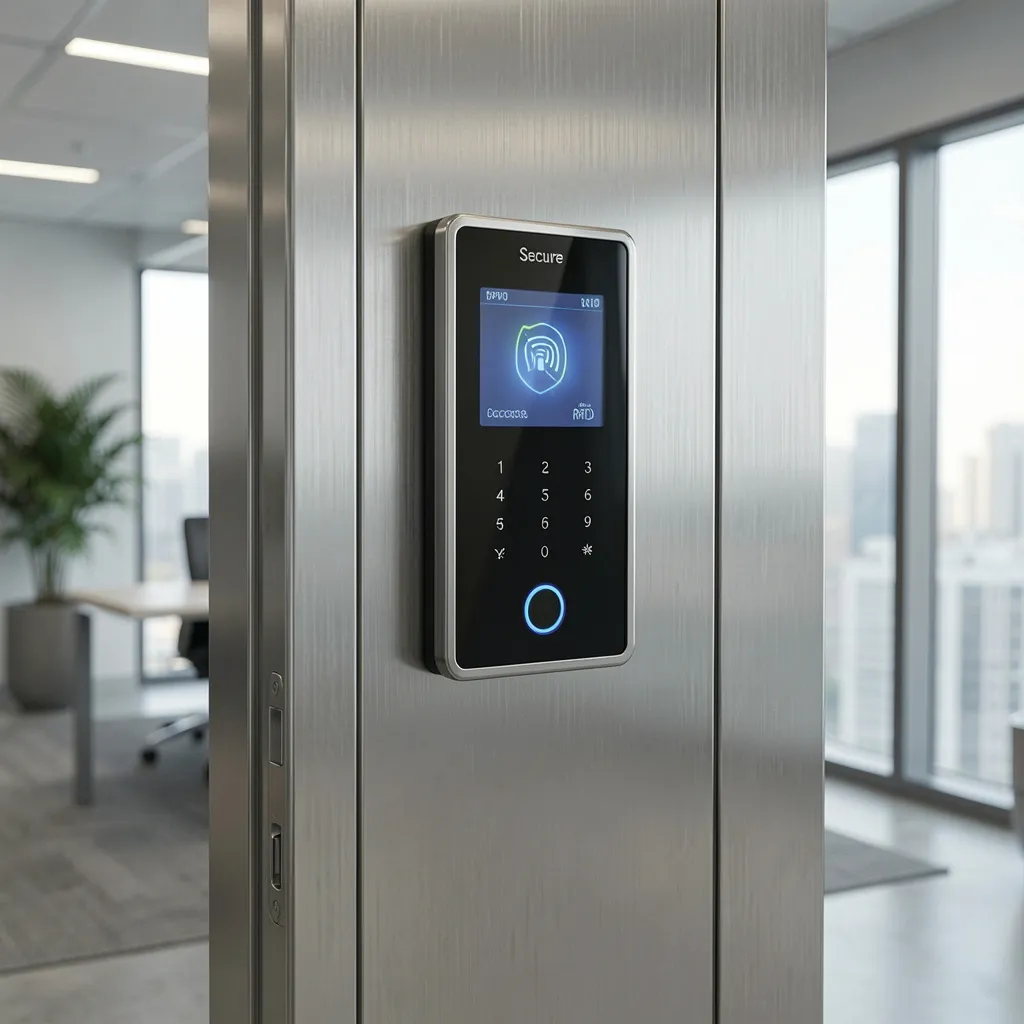
Data center access control in financial environments extends far beyond badge readers. It encompasses privileged access management (PAM) platforms that enforce just-in-time (JIT) access provisioning, session recording, and credential vaulting for all administrative accounts. Role-based access control (RBAC) and attribute-based access control (ABAC) frameworks govern which users, applications, and service accounts can interact with which systems and datasets.
For SAMA-regulated entities in Saudi Arabia, data center access control policies must be documented, reviewed quarterly, and demonstrably enforced — with automated de-provisioning triggered by HR system changes to prevent ghost accounts accumulating excessive privileges over time. Multi-factor authentication (MFA) is mandatory for all privileged access sessions, and time-boxed access windows prevent standing administrative access to production systems.
Layer 5: Data Center Encryption
Data center encryption is the last line of defense should attackers breach perimeter and access controls. For financial institutions, this spans encryption of data at rest across storage arrays (AES-256), encryption of data in transit across internal and external networks (TLS 1.3), database-level encryption for core banking and payment card data, and application-layer tokenization for PAN (Primary Account Number) data in compliance with PCI-DSS requirements.
Hardware Security Modules (HSMs) — physical devices that manage cryptographic keys in tamper-resistant enclosures — are mandatory in high-security GCC financial deployments, particularly for key management in real-time gross settlement (RTGS) and inter-bank payment systems. Data center encryption key management strategies must address key lifecycle management, split-knowledge procedures, and dual-control requirements to prevent any single administrator from having unilateral access to decryption keys.
Layer 6: Cybersecurity Operations — SOC, SIEM, and Continuous Monitoring
The capstone of a mature cybersecurity for data center strategy is the Security Operations Center (SOC) — either an in-house capability or a managed security service provider (MSSP) partnership. A 24×7 SOC integrates telemetry from all underlying layers — physical access events, firewall logs, IDS/IPS alerts, endpoint detection signals, and application logs — into a unified SIEM platform that provides correlated, contextualized threat intelligence.
For GCC financial institutions, SOC capabilities must be underpinned by documented incident response playbooks, tested via tabletop exercises and purple-team engagements, and capable of meeting regulatory notification timelines — SAMA, for instance, requires breach notification within 72 hours for material cyber incidents. Threat intelligence feeds sourced from FS-ISAC, regional sharing platforms, and commercial providers ensure SOC analysts are working with current adversary TTPs (Tactics, Techniques, and Procedures) relevant to the regional threat environment.
4. Technology Stack Considerations for GCC Financial Data Centers
Beyond framework design, technology selection decisions profoundly shape the effectiveness of data center security implementations. The following considerations are particularly relevant to the KSA and GCC financial sector context.
4.1 Hybrid and Multi-Cloud Security Posture Management
Many GCC financial institutions are operating in hybrid cloud environments, with sensitive workloads retained on-premises in sovereign data centers and less-sensitive workloads hosted on hyperscaler platforms with local availability zones (AWS, Microsoft Azure, and Google Cloud all have regional infrastructure in Saudi Arabia and UAE). Cloud Security Posture Management (CSPM) tools and Cloud Workload Protection Platforms (CWPP) extend cybersecurity for data center principles into cloud-native and containerized workloads, ensuring consistent security policy enforcement across both environments.
4.2 OT/IT Convergence Security
Data center physical infrastructure — UPS systems, HVAC, power distribution units, and building management systems — increasingly exposes internet-facing management interfaces that represent a novel attack surface. Financial data centers in KSA must assess and harden these operational technology (OT) systems against cyber intrusion, applying network segmentation and data center intrusion detection capabilities to OT networks to prevent infrastructure sabotage from disrupting service availability.
4.3 Sovereign Data Residency and Localization
Saudi Arabia's Cloud Computing Regulatory Framework and the UAE's Data Residency requirements mandate that specific categories of financial customer data remain within national borders. This has driven significant investment in domestic data center capacity and shapes the architecture of data center security GCC solutions — requiring that encryption key management infrastructure, backup repositories, and disaster recovery facilities are all maintained within compliant jurisdictions.
5. Why Tektronix LLC Leads Data Center Security in KSA & GCC
Tektronix LLC brings over two decades of specialized ICT and security infrastructure experience across the Middle East. Our engineering teams hold certifications from Cisco (CCIE), Palo Alto Networks (PCNSE), Fortinet (NSE 7/8), ISACA (CISM, CRISC), and ISC² (CISSP) — providing the depth of expertise required to design, implement, and operate data center security architectures that satisfy both regulatory examiners and the most demanding CISOs in the region.
Our six-layered data center security methodology has been deployed across financial institutions, government entities, healthcare organizations, and critical national infrastructure across Saudi Arabia, UAE, Qatar, Kuwait, and Bahrain. We combine vendor-neutral assessment rigor with deep implementation capability — ensuring our clients receive security architectures optimized for their specific threat profiles, regulatory obligations, and operational realities, not generic blueprints.
As a trusted partner recognized by regional regulators and international standards bodies, Tektronix LLC's approach to data center security KSA is grounded in real-world threat intelligence, continuous improvement feedback loops, and a commitment to transparent, evidence-based security assurance.
Conclusion
The financial services sector in KSA and GCC operates at the intersection of enormous opportunity and acute cyber risk. Data center security is the foundational discipline that allows institutions to innovate — deploying real-time payments, open banking APIs, and AI-driven financial products — without exposing themselves to existential threats. The layered framework described here, anchored by robust data center surveillance, next-generation data center firewalls, intelligent data center threat detection, granular data center access control, pervasive data center encryption, and continuous data center intrusion detection, represents the current best practice for the region.
Institutions that treat security as a board-level priority, invest in the right technology partnerships, and align their security programs to both SAMA/NCA mandates and international frameworks such as ISO 27001 and NIST CSF will be best positioned to protect their customers, preserve their reputations, and sustain the trust of regulators in an increasingly contested threat environment.



























Sign in to leave a comment.