
Robust Data Center Security is no longer optional for enterprises operating in Qatar and the broader Gulf Cooperation Council region — it is the bedrock of digital resilience. As organisations across banking, energy, government, and healthcare accelerate their digital transformation journeys, protecting critical infrastructure has become a boardroom priority. This guide explores the multi-layered strategies, technologies, and regulatory drivers that define world-class data center protection across the GCC, and explains how Tektronix LLC's Six-Layered Data Center Security solutions are purpose-built for the region's unique operational landscape.
1. Why Data Center Security Is a Strategic Imperative in the GCC
The GCC is experiencing an unprecedented surge in data centre investment. Qatar's National Vision 2030, Saudi Arabia's Vision 2030, and the UAE's Smart Government initiatives are fuelling massive buildouts of hyperscale and enterprise-grade facilities. With this growth comes an expanded attack surface — and adversaries are paying close attention.
Threat actors ranging from nation-state actors to ransomware syndicates specifically target energy infrastructure, financial systems, and government networks in the region. According to cybersecurity analysts, the Middle East consistently ranks among the top regions for cyberattacks against critical sectors. This reality makes a holistic, defence-in-depth approach to Data Center Security in Qatar and across the GCC not just advisable, but non-negotiable.
Key regional drivers include:
- Regulatory frameworks: Qatar's National Cyber Security Agency (NCSA) guidelines, Saudi Arabia's Essential Cybersecurity Controls (ECC), and the UAE's Information Assurance Standards mandate strict physical and logical protection measures for data assets.
- Data sovereignty requirements: Gulf governments increasingly require that sensitive data remain within national borders, placing additional responsibility on in-country data center operators.
- Rising digital dependency: Financial transactions, smart city infrastructure, oil & gas SCADA systems, and healthcare records are all converging on digital platforms, raising the stakes of any security breach.
- Cloud adoption acceleration: Hybrid cloud and colocation strategies are expanding the perimeter that security teams must defend, requiring consistent policy enforcement across on-premises and cloud-connected environments.
2. Understanding the Modern Data Center Threat Landscape
Effective Data Center Threat Detection begins with a clear understanding of the adversarial techniques targeting facilities in Qatar and the wider GCC. Threats are no longer solely digital — modern attacks often combine cyber and physical vectors to achieve their objectives.
2.1 Cyber Threat Vectors
- Advanced Persistent Threats (APTs): Long-dwell intrusions designed to exfiltrate strategic data from government and energy sectors.
- Ransomware-as-a-Service (RaaS): Commodity ransomware kits that encrypt mission-critical datasets and demand payment, increasingly targeting operational technology (OT) networks.
- Distributed Denial-of-Service (DDoS) attacks: Volumetric floods designed to overwhelm network infrastructure and disrupt business continuity.
- Supply chain compromise: Exploitation of third-party hardware and software vendors to introduce malicious code into trusted environments.
- Insider threats: Malicious or negligent employees, contractors, and privileged users who misuse their access to sensitive systems.
2.2 Physical Threat Vectors
- Unauthorised physical access: Tailgating, badge cloning, and social engineering to bypass perimeter controls.
- Environmental sabotage: Tampering with power distribution units (PDUs), cooling systems, or network hardware to cause outages.
- Theft of storage media: Physical removal of drives or tapes containing confidential information.
Countering these threats requires an integrated strategy that spans Data Center Firewalls, Data Center Encryption, Data Center Access Control, Data Center Surveillance, and Data Center Intrusion Detection — the five technical pillars explored in the sections below.
3. The Six-Layer Security Framework: A Defense-in-Depth Architecture
Tektronix LLC's approach to Data Center Solutions for Qatar and GCC clients is grounded in a proven six-layer security model. Each layer independently reduces risk while reinforcing every other layer, creating a compounding defensive effect. This framework aligns with international benchmarks including ISO/IEC 27001, NIST SP 800-53, and the Uptime Institute's Tier standards.
Layer 1 — Perimeter Security & Physical Deterrence
The outermost ring of defence establishes a clear security perimeter around the data center campus. This includes anti-ram barriers, security fencing with intrusion-sensing cables, CCTV coverage of all entry and exit points, and security guard stations with biometrically controlled access. In Qatar's harsh climate, all physical deterrence hardware must be rated for high-temperature and sandstorm conditions — a specification that Tektronix LLC designs into every regional deployment.
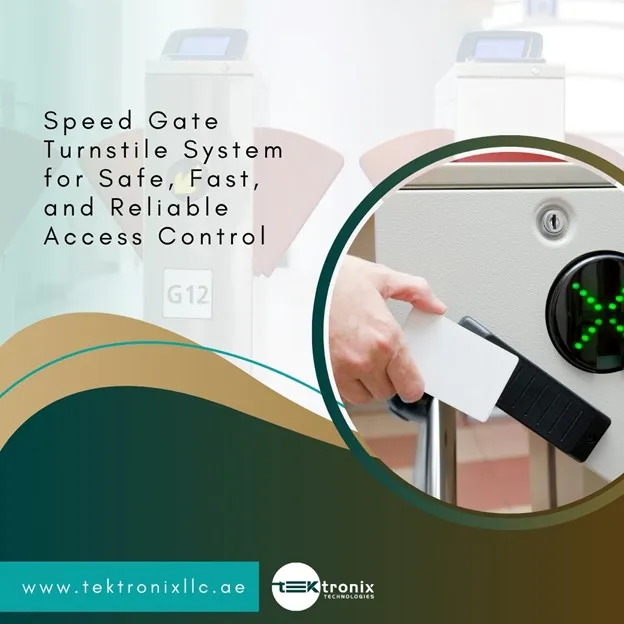
Layer 2 — Data Center Access Control
Data Center Access Control is the discipline of ensuring that only authorised individuals can enter specific zones within a facility, and only for the periods their role demands. Modern access control systems leverage multi-factor authentication (MFA) combining something you know (PIN), something you have (smart card), and something you are (biometric — fingerprint, retinal scan, or facial recognition).
Best practices implemented by Tektronix LLC for GCC clients include:
- Granular zone segmentation: Separate access tiers for lobby, operations floor, server halls, Meet-Me Rooms (MMRs), and network operation centres (NOCs).
- Time-based access policies: Automatic revocation of access privileges outside an employee's designated working hours.
- Mantrap / airlock entry systems: Two-door interlocking chambers that verify one person at a time before granting entry to sensitive areas.
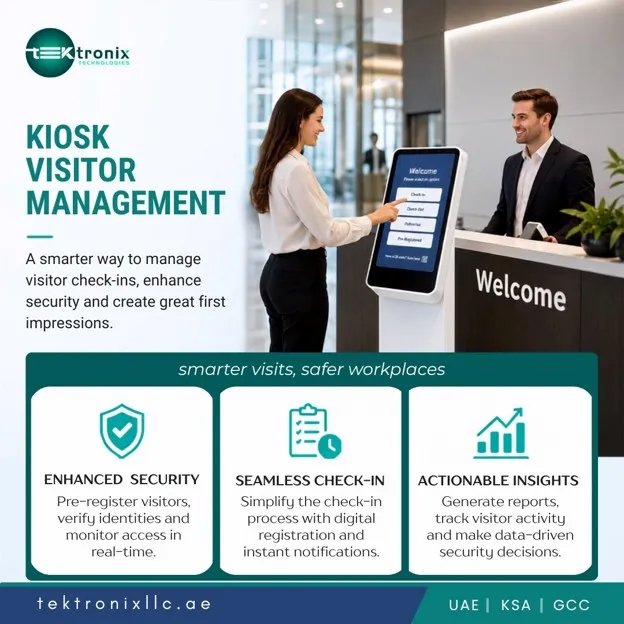
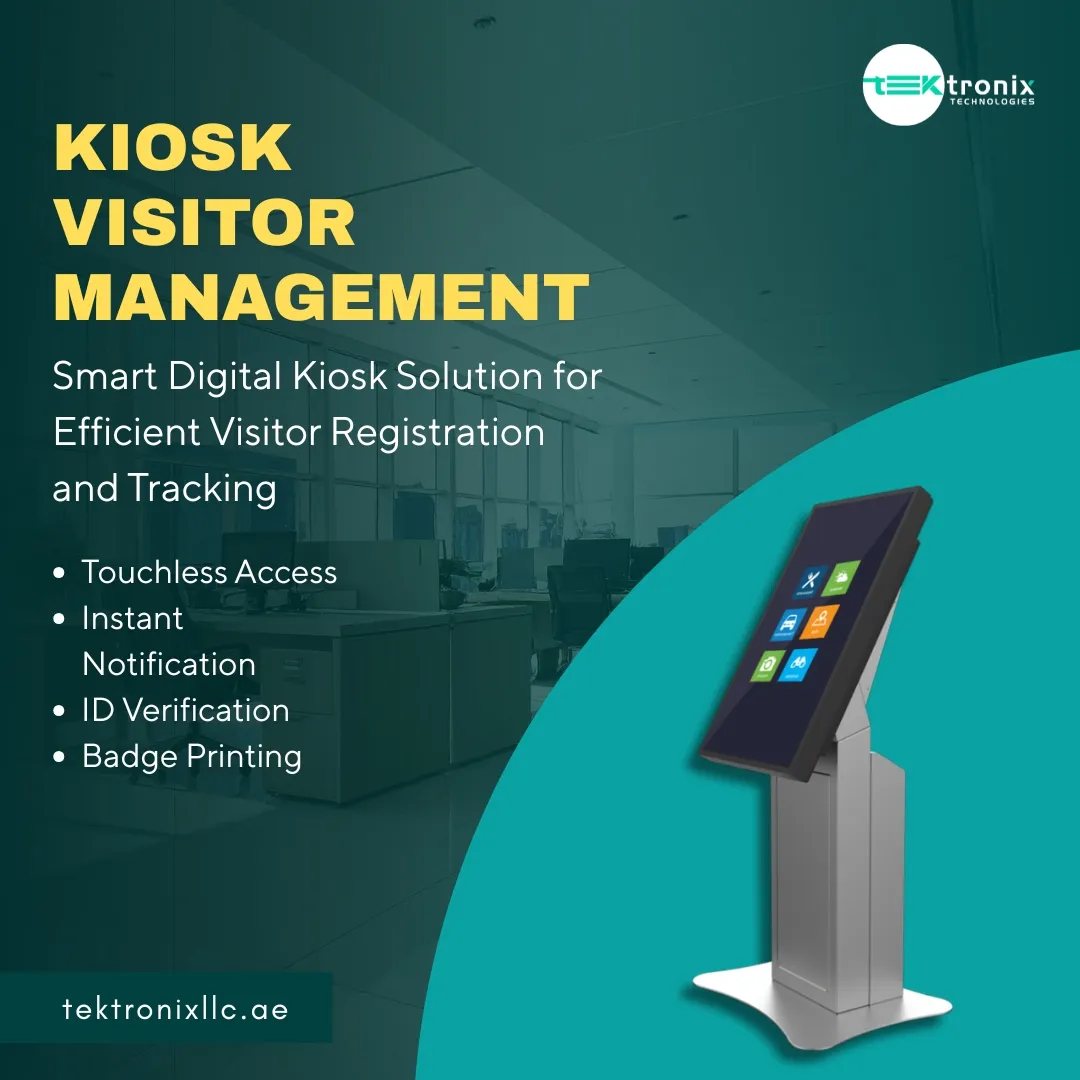
- Visitor management integration: Digital visitor logs, escort tracking, and temporary badge provisioning with automatic expiry.
- Privileged Access Management (PAM): Vendor-neutral PAM solutions that vault credentials, session-record privileged activity, and enforce least-privilege principles for remote administrative access.
Layer 3 — Data Center Surveillance
Data Center Surveillance provides the continuous visibility needed to detect anomalous behaviour, investigate incidents, and comply with regulatory evidence-preservation requirements. In Qatar and across the GCC, regulators expect facilities handling sensitive or classified information to maintain surveillance footage for extended retention periods.
A state-of-the-art surveillance infrastructure includes:
- 4K PTZ cameras: Pan-tilt-zoom cameras with licence plate recognition capability covering all vehicular entry points.
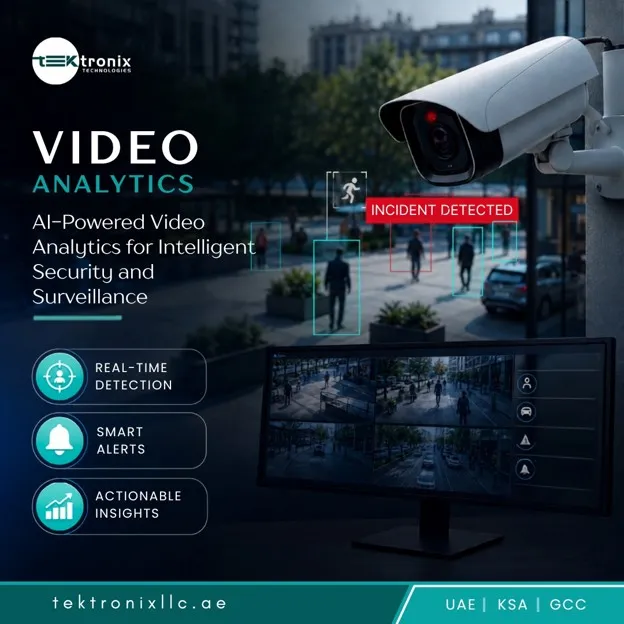
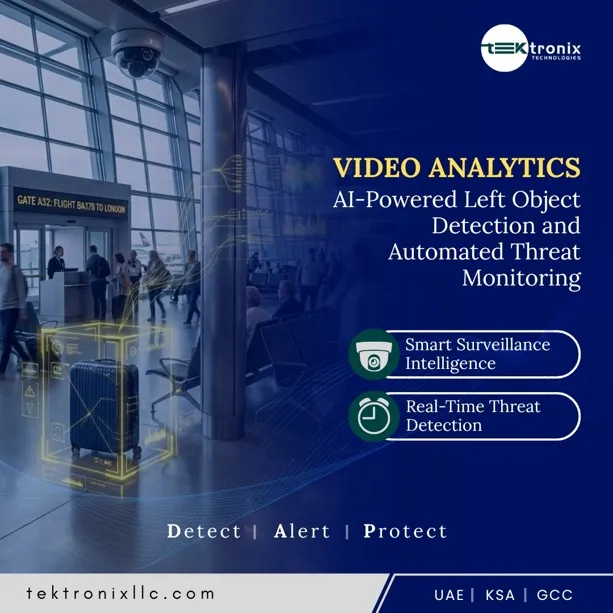
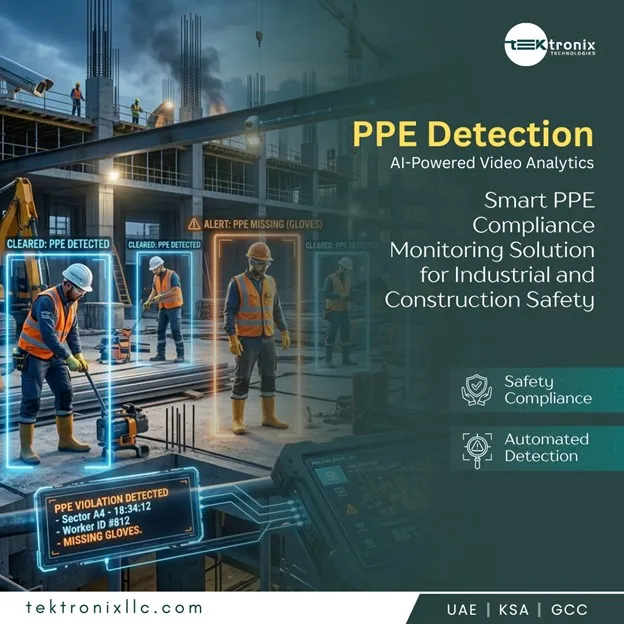
- AI-powered video analytics: Intelligent algorithms that detect perimeter breaches, loitering, object removal, and crowd anomalies without operator fatigue.
- Thermal imaging: Detects body heat in low-light or zero-visibility conditions, critical for after-hours intrusion detection.
- Tamper-evident recording: Encrypted, air-gapped video archive systems that ensure footage integrity for forensic and legal purposes.
- Centralised Security Operations Centre (SOC) integration: All camera feeds aggregated into a 24/7 SOC with alarm correlation and automated escalation workflows.
Layer 4 — Data Center Firewalls & Network Segmentation
Data Center Firewalls are the primary gatekeepers of network traffic flowing into, out of, and within the facility. Next-generation firewalls (NGFWs) deployed in GCC data centers must handle massive throughput volumes while delivering application-layer inspection, SSL/TLS decryption, and integrated threat intelligence feeds.
Tektronix LLC architects firewall environments that deliver:
- North-south traffic inspection: Deep packet inspection (DPI) of all traffic entering and leaving the data center to prevent data exfiltration and command-and-control communications.
- East-west micro-segmentation: Zero-trust micro-perimeters between server workloads that limit lateral movement if an attacker breaches the network edge.
- Application-aware policy enforcement: Firewall rules tied to specific applications, users, and devices rather than IP addresses alone — essential as cloud workloads come and go dynamically.
- Redundant firewall clusters: Active-passive or active-active firewall pairs with sub-second failover to eliminate the firewall as a single point of failure.
- Unified threat management (UTM) integration: Web filtering, anti-malware, and DNS security bundled into the firewall stack to reduce solution sprawl.
Layer 5 — Data Center Intrusion Detection & Prevention
Data Center Intrusion Detection encompasses both physical and cyber dimensions. On the cyber side, Intrusion Detection Systems (IDS) and Intrusion Prevention Systems (IPS) monitor network packets and host activity for signatures of known attacks and statistical anomalies indicative of novel threats.
Physical intrusion detection, meanwhile, integrates vibration sensors, door contact sensors, glass-break detectors, and motion sensors into a unified alarm management platform. For GCC data centers operating in remote or industrial zones, wireless mesh sensor networks can supplement wired infrastructure.
Key capabilities deployed by Tektronix LLC for regional clients:
- SIEM integration: IDS/IPS alerts fed into a Security Information and Event Management (SIEM) platform for correlation, enrichment, and automated response playbooks.
- Deception technology (honeypots): Decoy assets planted in the network that attract and fingerprint attacker tools and techniques without exposing real data.
- Network Traffic Analysis (NTA): Machine-learning models that baseline normal communication patterns and flag deviations in real time.
- Endpoint Detection & Response (EDR): Agent-based monitoring on all servers and management hosts within the data center to detect fileless malware, process injection, and credential dumping.
Layer 6 — Data Center Encryption & Data Protection
Data Center Encryption is the last line of defence ensuring that even if an attacker bypasses every other control and exfiltrates data, they obtain only meaningless ciphertext. An encryption strategy for GCC data centers must address data at rest, data in transit, and data in use.
- Encryption at rest: AES-256 encryption on all storage media, including SSDs, HDDs, and backup tapes, managed through a centralised key management server (KMS).
- Encryption in transit: TLS 1.3 for all management interfaces, inter-server communications, and customer-facing APIs; MACsec for Layer 2 encryption across internal network segments.
- Hardware Security Modules (HSMs): Tamper-resistant devices that generate, store, and manage cryptographic keys — ensuring keys never exist in plaintext outside the HSM boundary.
- Tokenisation and data masking: Replacement of sensitive data fields (payment card numbers, national IDs) with non-sensitive tokens in non-production environments.
- Quantum-ready cryptographic agility: Framework for transitioning to post-quantum cryptographic algorithms as NIST standards are finalised — essential for organisations protecting data with long confidentiality lifespans.
4. Data Center Security Qatar: Regional Considerations
Qatar occupies a unique position in the GCC cybersecurity landscape. As the host of major international events and the home of sovereign wealth institutions managing assets exceeding USD 450 billion, Qatar's data centers safeguard intelligence of enormous geopolitical and financial value.
The Qatar National Cyber Security Agency (NCSA) has published a National Cybersecurity Framework (NCF) that maps directly onto international standards while incorporating region-specific requirements for government entities, critical national infrastructure (CNI) operators, and licensed telecommunications providers. Compliance with the NCF is increasingly being extended to private-sector operators who process government data or operate in regulated industries.
Tektronix LLC's Data Center Security Qatar engagements are structured to:
- Align security controls to the Qatar NCF and NCSA guidelines from day one of design.
- Address the high-availability requirements of facilities supporting Vision 2030 smart infrastructure projects.
- Accommodate the multilingual, multinational workforce common in Qatar's data center operations sector through culturally sensitive security awareness training programmes.
- Integrate with Qatar's national CERT (Q-CERT) for real-time threat intelligence sharing during incident response.
5. Data Center Security GCC: A Pan-Regional Perspective
While each GCC member state has distinct regulatory nuances, the Data Center Security GCC landscape is converging around common themes: zero-trust architecture, AI-driven threat analytics, cloud security posture management, and sovereign encryption key control. Tektronix LLC's regional footprint across Qatar, the UAE, Saudi Arabia, Kuwait, Bahrain, and Oman positions the company to deliver consistent, policy-aligned security frameworks that span borders while respecting local regulatory requirements.
Cross-GCC considerations that Tektronix LLC addresses in every engagement:
- Harmonised compliance mapping: Security controls mapped simultaneously to NCSA (Qatar), NCA/ECC (Saudi Arabia), CBUAE (UAE), and ISO 27001 to reduce duplicated effort.
- Multi-cloud security integration: As GCC hyperscale cloud availability zones proliferate (AWS, Azure, and Google Cloud have all launched or announced GCC regions), security policies must extend seamlessly from on-premises data centers to cloud environments.
- OT/IT convergence security: Energy and industrial clients across the Gulf require security architectures that protect both information technology (IT) and operational technology (OT) networks within the same physical facility.
- Business continuity and disaster recovery: Geographically distributed data center pairs within the GCC, with sub-four-hour RTO/RPO targets and cryptographically verified backup integrity.
6. Why Tektronix LLC Is the Trusted Authority
Experience, Expertise, Authoritativeness, and Trustworthiness (E-E-A-T) are the hallmarks of any credible security partner. Tektronix LLC's credentials in the GCC data center security space are underpinned by:
- Decade-plus regional presence: Established operations across Qatar and the broader GCC, with deep relationships in government, energy, and financial services verticals.
- Vendor-neutral engineering: Partnerships with industry leaders including Cisco, Palo Alto Networks, Fortinet, Honeywell, and Genetec ensure clients receive best-of-breed components assembled for interoperability.
- Certified engineering workforce: CISSP, CISM, CEH, Palo Alto PCNSE, and Cisco CCIE-certified professionals who have delivered security projects across Tier III and Tier IV facilities in the region.
- Regulatory engagement: Active participation in NCSA working groups and GCC CERT coordination forums, keeping Tektronix LLC's knowledge at the regulatory frontier.
- Proven incident response: Documented track record of containing and remediating security incidents for GCC clients, with mean time-to-contain (MTTC) metrics that benchmark above industry averages.
7. Operational Security: Processes, People & Governance
Technology alone cannot secure a data center. Governance, risk management, and compliance (GRC) processes — and the people who execute them — are equally important components of a mature security posture.
7.1 Security Operations Centre (SOC) Model
A 24/7/365 SOC staffed with Level 1, Level 2, and Level 3 analysts provides the human intelligence layer that automated systems cannot fully replace. SOC analysts correlate alerts from SIEM, IDS/IPS, EDR, and physical access control systems into actionable incidents, applying playbooks that are continuously refined through purple team exercises.
7.2 Security Awareness & Training
Human error remains the leading cause of security breaches globally. Tektronix LLC's training programmes for GCC data center operators include simulated phishing campaigns, physical tailgating tests, and quarterly tabletop exercises that simulate scenarios ranging from ransomware outbreaks to physical intrusion attempts.
7.3 Patch Management & Vulnerability Governance
A structured vulnerability management programme — scanning, prioritisation, remediation tracking, and verification — ensures that the software and firmware running on data center infrastructure is hardened against known exploits. In GCC environments, patching must balance security urgency against the change management requirements of highly available production systems.
7.4 Third-Party Risk Management
Vendors, contractors, and managed service providers who have logical or physical access to data center infrastructure represent a significant risk vector. Tektronix LLC implements vendor risk assessments, contractual security obligations, and continuous monitoring of third-party access sessions to contain supply chain risk.
Conclusion
The sophistication of threats targeting data centers in Qatar and the GCC demands an equally sophisticated response. A layered, integrated security architecture — spanning Data Center Access Control, Data Center Surveillance, Data Center Firewalls, Data Center Intrusion Detection, and Data Center Encryption — provides the depth needed to withstand today's adversaries while adapting to tomorrow's threats.
Tektronix LLC's six-layered framework delivers precisely this depth, combining world-class technology, regional regulatory expertise, and a certified engineering workforce to protect the critical infrastructure of Qatar and the broader GCC. As digital transformation accelerates and the threat landscape evolves, partnering with a proven specialist is the most strategic investment an organisation can make in its long-term resilience.
FAQs
1. What is meant by a six-layered approach to Data Center Security?
A six-layered approach is a defence-in-depth model where security controls are stacked across six distinct zones — from the physical perimeter to the data layer. Each layer independently reduces risk, so if one control fails, subsequent layers continue to protect assets. The layers typically span perimeter deterrence, access control, surveillance, network firewalling, intrusion detection, and encryption.
2. How does Data Center Threat Detection work in a GCC context?
In the GCC, threat detection integrates AI-driven network traffic analysis, behavioural anomaly detection, physical sensor networks, and intelligence feeds from regional CERTs such as Q-CERT. The convergence of IT and OT networks in energy-sector facilities adds an additional layer of complexity, requiring specialised IDS/IPS rules tailored for industrial control system (ICS) protocols alongside traditional IT threat signatures.
3. Why is Data Center Encryption specifically important for organisations in Qatar?
Qatar's regulatory environment mandates that sensitive government and financial data be protected at all stages of its lifecycle. Encryption ensures that data breaches — whether through cyber intrusion or physical theft of storage media — yield nothing of value to attackers. Qatar's NCSA guidelines also emphasise local key management, making Hardware Security Modules (HSMs) operated within Qatar's borders a compliance necessity for regulated entities.
4. What are the key differences between Data Center Security GCC requirements across member states?
While all GCC member states broadly align with international frameworks such as ISO 27001 and NIST, each has distinct regulatory instruments. Saudi Arabia's NCA Essential Cybersecurity Controls, Qatar's NCSA National Cybersecurity Framework, and the UAE's Information Assurance Standards each have unique scope definitions, control specificity, and audit requirements. Organisations operating cross-border facilities benefit from a unified control framework that maps simultaneously to all applicable regulations, avoiding duplicated compliance effort.
5. How can Tektronix LLC help my organisation achieve compliance with regional data center security regulations?
Tektronix LLC conducts a gap assessment against the applicable GCC regulatory frameworks, produces a prioritised remediation roadmap, and then designs, deploys, and operationalises the required security controls. The company's certified team provides ongoing managed security services — including SOC monitoring, vulnerability management, and compliance reporting — ensuring that your Data Center Solutions remain aligned with evolving regulatory requirements.
For more information contact us on:
Tektronix Technology Systems Dubai-Head Office
+971 55 232 2390






















Sign in to leave a comment.