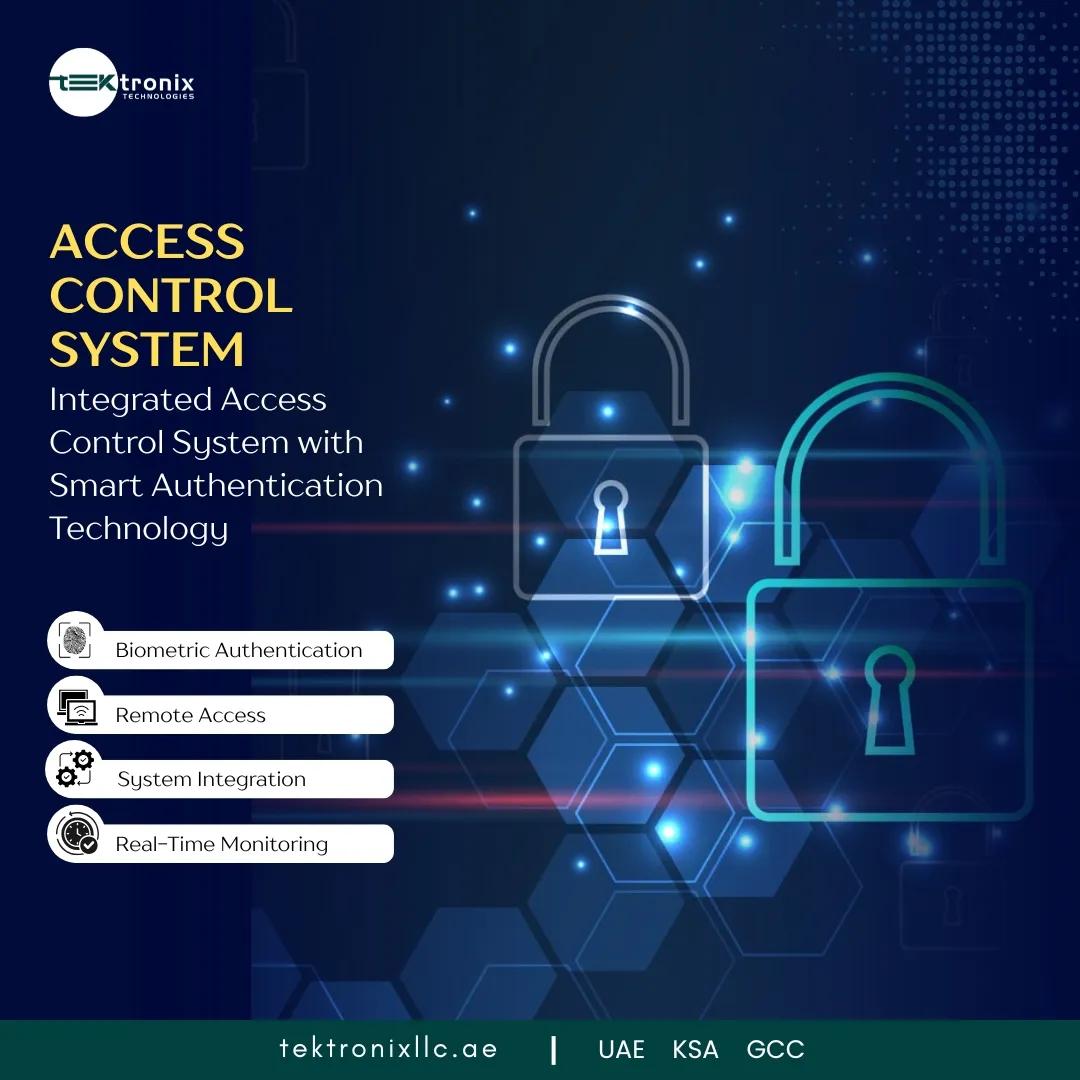

An Access Control System is one of the most critical layers of physical security for any organisation operating in the UAE. As businesses expand across emirates and digital-physical integration deepens, insider threats -whether intentional or accidental-have become a leading cause of data breaches, asset loss, and compliance failures. This guide explores how deploying a robust security access control framework can protect your people, premises, and proprietary information.
Press enter or click to view image in full size
Understanding Insider Threats in the UAE Business Landscape
Insider threats are security risks that originate from within an organisation -employees, contractors, vendors, or anyone with legitimate access to facilities and systems. According to global cybersecurity reports, nearly 60% of all security incidents involve an internal actor, making physical and logical access management a top priority.
In the UAE, where free zones, financial institutions, government entities, and multinational headquarters coexist, the attack surface is uniquely complex. Regions such as Dubai, Abu Dhabi, and Sharjah host some of the world’s most sensitive commercial operations, making Access Control Solutions not just a best practice but a regulatory necessity under frameworks like NESA (National Electronic Security Authority) and ADGM data protection standards.
Why a Robust Access Control System Is the First Line of Defence
Traditional lock-and-key systems are no longer sufficient. Modern Advanced Access Control Systems leverage multi-factor authentication, biometric verification, smart card technology, and real-time monitoring to ensure that only authorised personnel can enter defined zones. These systems create detailed audit trails -a critical capability for both insider threat detection and post-incident forensics.
Implementing a Security Access Control infrastructure enables organisations to enforce the principle of least privilege: every employee, visitor, or contractor gains access only to the areas and assets they genuinely need. This dramatically reduces the opportunity for internal misuse.
Key Components of an Advanced Access Control System
1. Door Access Control
The foundation of any physical security strategy begins with Door Access Control. Electronically managed doors equipped with RFID readers, PIN pads, or biometric scanners replace traditional locks, ensuring that each access event is logged with a timestamp, user identity, and location. In high-security environments -server rooms, R&D labs, executive floors -multi-factor door authentication adds an essential extra layer.
2. Access Control Device Integration
Every Access Control Device -whether a card reader, fingerprint scanner, facial recognition terminal, or mobile credential reader -feeds data into a centralised management platform. This integration enables security teams to instantly revoke access privileges when an employee leaves, a contractor’s engagement ends, or suspicious behaviour is detected, all from a single dashboard.
3. Role-Based Access and Zonal Segmentation
Effective Access Control Solutions implement zonal segmentation -dividing premises into security tiers based on risk level. Finance departments, data centres, and executive suites receive the highest restrictions, while common areas maintain broader access. Role-based access control (RBAC) ties permissions to job functions rather than individuals, streamlining onboarding and offboarding and reducing human error.
4. Real-Time Monitoring and Anomaly Detection
Modern platforms offer real-time dashboards that flag anomalies such as tailgating (an unauthorised person following an authorised one through a secured door), after-hours access attempts, repeated failed authentications, or access patterns inconsistent with an employee’s role. These behavioural analytics transform a passive system into an active insider threat detection tool.
Deploying Access Control Systems Across UAE Emirates
Access Control System UAE-A Nationwide Compliance Imperative
Organisations operating under UAE federal regulation must align their physical security posture with guidelines from authorities including CBUAE (Central Bank of UAE) for financial institutions and HAAD for healthcare facilities. A compliant Access Control System UAE deployment addresses visitor management, emergency egress protocols, and integration with CCTV and intrusion detection systems.
Access Control System Dubai-Smart City Integration
Dubai’s Smart City vision accelerates the adoption of IP-based and cloud-managed Access Control System Dubai solutions. Integrated with building management systems (BMS) and IoT infrastructure, these platforms enable unified control of access, lighting, HVAC, and fire safety-all contributing to operational efficiency and security across commercial towers, hospitality venues, logistics hubs, and government buildings.
Access Control System Abu Dhabi-Critical Infrastructure Protection
Abu Dhabi’s concentration of oil and gas facilities, sovereign wealth institutions, and government ministries demands enterprise-grade protection. An Access Control System Abu Dhabi deployment typically incorporates multi-site centralised management, biometric enrolment at scale, and integration with UAE PASS digital identity frameworks, ensuring both security and seamless user experience for large workforces.
Access Control System Sharjah-Industrial and Educational Security
Sharjah’s thriving industrial zones, free trade areas, and university campuses present distinct access control challenges. An Access Control System Sharjah solution must handle high foot traffic, shift-based workforce schedules, and multi-tenant environments while maintaining granular control over restricted zones such as laboratories, warehouses, and data rooms.
Step-by-Step: Implementing Access Control to Counter Insider Threats
Follow this structured deployment methodology to maximise effectiveness:
• Conduct a Security Risk Assessment: Map all entry points, identify high-value assets, and profile likely insider threat scenarios specific to your industry and location.
• Define Access Policies: Establish role-based access matrices aligned with HR records and job functions. Integrate with Active Directory or HR software for automated provisioning.
• Select the Right Access Control Device: Choose hardware suited to your environment-heavy-duty readers for industrial sites, touchless biometrics for hygiene-sensitive spaces, or mobile credentials for flexible workforces.
• Deploy Door Access Control at Critical Points: Prioritise server rooms, finance offices, executive areas, and storage facilities. Extend to perimeter gates and vehicle access for comprehensive coverage.
• Integrate with CCTV and Alarm Systems: Synchronise access events with video footage to enable rapid incident investigation. Set automated alerts for policy violations.
• Train Security Personnel and Employees: Educate staff on tailgating risks, credential sharing policies, and reporting obligations. Insider threat prevention is as much a cultural initiative as a technical one.
• Conduct Regular Audits and Access Reviews: Quarterly access rights reviews ensure permissions remain current, removing dormant accounts and over-privileged users-common vectors for insider exploitation.
Why Expertise Matters in Access Control Deployment
Selecting the right partner for your Access Control System UAE deployment is as important as selecting the right technology. Experienced integrators bring:
• Certified product knowledge: Manufacturer-certified engineers for leading platforms such as Honeywell, HID, Bosch, and Genetec.
• Local regulatory expertise: Familiarity with UAE Civil Defence, CBUAE, NESA, and emirate-specific compliance requirements.
• Proven project portfolio: A track record of deployments across banking, healthcare, retail, hospitality, and government sectors in the UAE.
• Post-installation support: 24/7 maintenance, remote monitoring, and rapid-response SLAs to ensure system uptime and ongoing security.
Tektronix LLC is a trusted Access Control Solutions provider in the UAE, delivering end-to-end design, supply, installation, and maintenance of advanced physical security systems tailored to the unique demands of each client.
Related Security Concepts to Know
When evaluating your security posture, consider these closely related concepts that integrate with access control infrastructure:
• Identity and Access Management (IAM): The broader discipline governing who can access what, encompassing both physical and logical access.
• Zero Trust Security Architecture: A framework that assumes no user or device is inherently trusted, requiring continuous verification-aligned with advanced access control philosophies.
• Visitor Management Systems (VMS): Companion technologies that pre-register, badge, and track guests, extending access governance beyond the employee base.
• Time and Attendance Integration: Access control data used for workforce analytics, payroll accuracy, and productivity reporting.
• Intrusion Detection Systems (IDS): Complementary alarms that detect unauthorised entry attempts, working in tandem with door access control for layered defence.
Conclusion
Insider threats represent one of the most underestimated yet damaging risks facing UAE organisations today. A strategically deployed Advanced Access Control System does far more than restrict unauthorised entry-it creates a documented, auditable, and intelligent security ecosystem that actively deters, detects, and responds to internal threats. Whether your operations span Dubai’s financial district, Abu Dhabi’s critical infrastructure zones, or Sharjah’s industrial estates, the right Door Access Control and Security Access Control framework, supported by the right Access Control Device portfolio, is your most reliable defence.
Partnering with an expert provider ensures your Access Control System is not only technically sound but also fully aligned with UAE regulatory standards and operational realities. Invest in protection that evolves with your business-because the cost of a preventable insider incident will always exceed the cost of prevention.
FAQs
Q1. What is the difference between a standard and an Advanced Access Control System?
A standard system typically manages entry and exit through basic card or PIN authentication. An Advanced Access Control System incorporates biometrics, AI-powered anomaly detection, multi-factor authentication, cloud management, and real-time reporting-providing significantly greater protection against both external and insider threats.
Q2. How does Door Access Control specifically prevent insider threats?
Door Access Control limits physical movement within a facility to authorised personnel only, creating a detailed digital record of every access event. This deters opportunistic insider theft or sabotage, and provides forensic evidence when incidents occur, enabling rapid identification of the responsible party.
Q3. Are Access Control Systems in UAE required by law?
While there is no single universal mandate, regulated industries such as banking, healthcare, and government contracting in the UAE are required to implement physical security controls-including Access Control System UAE deployments-as part of compliance with NESA, CBUAE, and industry-specific frameworks. Beyond compliance, access control is widely considered a security best practice across all sectors.
Q4. Can Access Control Solutions integrate with existing CCTV and HR systems?
Yes. Modern Access Control Solutions are designed for interoperability. They integrate with CCTV platforms for video-verified access events, with HR and Active Directory systems for automatic user provisioning and deprovisioning, and with building management systems for unified facility control-creating a cohesive, intelligence-driven security ecosystem.
Q5. What should I look for when choosing an Access Control System in Dubai or Abu Dhabi?
Prioritise scalability, integration capability, local regulatory compliance, manufacturer certification, and proven deployment experience in your sector. For an Access Control System Dubai or Access Control System Abu Dhabi project, ensure your chosen partner offers end-to-end services-from site survey and system design to installation, training, and ongoing maintenance-backed by local support teams who understand the UAE’s unique security landscape.




























Sign in to leave a comment.