
Data center security has emerged as one of the most strategically critical investment areas across the United Arab Emirates as the country cements its position as the Middle East's digital infrastructure hub. With hyperscale facilities, cloud exchanges, and colocation providers multiplying across the Emirates at an unprecedented rate, protecting these assets — from the physical perimeter to the application layer — demands a multi-dimensional, intelligence-led security posture that keeps pace with an equally accelerating threat landscape. Tektronix LLC's Data Center Perimeter Security Solutions deliver the integrated protection framework that UAE operators, cloud tenants, and regulated enterprises require to safeguard their most critical digital infrastructure.
The UAE's data center market is projected to surpass USD 1.5 billion by 2028, driven by hyperscaler investments from Microsoft Azure, Amazon Web Services, Google Cloud, and Oracle — all of which have announced or activated UAE cloud regions. This concentration of global cloud infrastructure, combined with the UAE's role as a financial, logistics, and government services hub, makes the country's data center ecosystem one of the highest-value targets for cyber adversaries in the entire MENA region. Understanding and implementing the security trends now reshaping this landscape is not optional for operators — it is existential.
The Evolving Threat Landscape Facing UAE Data Centers
UAE data centers face a threat environment that is simultaneously more sophisticated and more diverse than at any previous point. Nation-state actors target critical national infrastructure for espionage and disruption purposes. Ransomware groups increasingly focus on cloud service providers and colocation facilities as a single point of maximum leverage across multiple victim organisations. Insider threats — whether from disgruntled employees, compromised contractors, or social engineering victims — exploit physical and logical access privileges to exfiltrate data or plant persistent threats.
The UAE's UAE Cybersecurity Council, in its annual threat intelligence reports, consistently identifies data center infrastructure as a priority protection target — noting that attacks on digital infrastructure have grown in frequency, sophistication, and geopolitical motivation year over year. The Council's National Cybersecurity Strategy mandates that critical information infrastructure operators implement layered, continuously monitored security controls — a directive that aligns precisely with the multi-layer approach that progressive data center operators are now adopting.
Trend 1: Unified Cybersecurity for Data Centers — Beyond Perimeter Defence
The first and most fundamental trend reshaping UAE data center protection is the shift from perimeter-centric to unified, defence-in-depth cybersecurity for data centers. The traditional model — in which a hardened network perimeter was assumed sufficient to keep adversaries out — has been comprehensively invalidated by the rise of cloud architectures, remote administration, supply chain compromise, and the insider threat vector. Modern data center cybersecurity is built on the principle that any segment of the environment may already be compromised, and that every access request — regardless of origin — must be continuously validated.
Zero Trust Network Architecture (ZTNA) has become the structural framework of choice for UAE data center operators implementing this philosophy. Under Zero Trust, no user, device, or network segment is inherently trusted — every request is authenticated, authorised, and encrypted regardless of whether it originates inside or outside the physical facility. Micro-segmentation of workloads, strict identity-based access policies, and continuous session monitoring are the operational pillars of a Zero Trust data center security posture.
Trend 2: AI-Driven Data Center Threat Detection and Response
The volume and velocity of security telemetry generated by a modern data center — spanning network flow data, authentication logs, endpoint events, physical access records, and environmental sensor readings — far exceeds the analytical capacity of human security teams working with traditional SIEM tools. Data center threat detection has consequently evolved toward AI and machine learning-powered Security Operations Centre (SOC) platforms that process millions of events per second, establish behavioural baselines for every asset and user, and surface genuine anomalies from the noise with a precision and speed that manual analysis cannot approach.
UAE data center operators are increasingly deploying Extended Detection and Response (XDR) platforms that correlate telemetry across network, endpoint, identity, cloud, and physical security layers — providing the unified visibility that disparate point solutions fundamentally cannot deliver. Automated playbooks enable Security Orchestration, Automation and Response (SOAR) capabilities that isolate compromised workloads, revoke access credentials, and notify incident response teams within seconds of a confirmed threat — dramatically reducing mean time to respond (MTTR) and limiting blast radius.
For UAE facilities operating under the UAE Information Assurance standards and Abu Dhabi's ADSIC cybersecurity framework, demonstrable threat detection and response capabilities are increasingly a compliance requirement rather than merely a best practice. Tektronix LLC's security operations integration services help data center clients bridge the gap between compliance documentation and operational detection capability.
Trend 3: End-to-End Data Center Encryption in the Post-Quantum Era
Data center encryption is undergoing its most significant evolution in two decades, driven by three converging forces: the UAE Personal Data Protection Law (PDPL) mandating encryption of personal data at rest and in transit, the explosive growth of cross-border data flows between UAE facilities and global cloud regions, and the emerging threat of quantum computing to current cryptographic standards.
Forward-thinking UAE data center operators are now implementing encryption strategies that span multiple layers simultaneously: TLS 1.3 for all data in transit between facilities, tenants, and cloud regions; AES-256 encryption for data at rest across storage arrays; Hardware Security Modules (HSMs) for cryptographic key management that isolates key material from virtualised environments where hypervisor compromise could expose software-managed keys; and Media Encryption for physical storage media to prevent data recovery from decommissioned hardware.
The National Institute of Standards and Technology (NIST) finalisation of post-quantum cryptography standards in 2024 has accelerated UAE operator planning for crypto-agility — the architectural capability to migrate cryptographic algorithms without wholesale infrastructure replacement. Leading UAE data center providers are already conducting cryptographic inventory audits and beginning post-quantum readiness assessments in preparation for a migration timeline that security strategists expect to begin in earnest within the next three to five years.
Trend 4: Next-Generation Data Center Firewalls and East-West Traffic Control
The role of data center firewalls has fundamentally transformed from a north-south perimeter device — inspecting traffic entering and leaving the facility — to a critical control plane for east-west traffic flowing laterally between workloads within the same data center environment. This shift reflects the reality that once an adversary gains a foothold inside a facility's network perimeter, unrestricted lateral movement between workloads dramatically amplifies their potential impact. Micro-segmentation enforced by next-generation firewalls (NGFWs) contains this lateral movement, limiting an attacker's ability to traverse from a compromised workload to adjacent high-value targets.
UAE data center operators are deploying NGFWs from vendors including Palo Alto Networks, Fortinet, and Check Point — platforms that combine deep packet inspection, application-layer visibility, intrusion prevention system (IPS) capabilities, SSL/TLS decryption, and integrated threat intelligence feeds into a single inspection engine. Software-defined firewall policies, managed through centralised orchestration platforms, enable dynamic rule updates that respond to threat intelligence in near real time — a capability that static, manually managed rule sets cannot provide.
Distributed denial-of-service (DDoS) protection — delivered through both on-premises scrubbing centres and cloud-based mitigation services — complements firewall-layer defence for UAE facilities that serve as internet exchange points or host latency-sensitive financial and gaming platforms where even brief service interruption carries significant commercial consequences.
Trend 5: Intelligent Data Center Access Control and Physical Security Convergence
Data center access control has evolved from a mechanical lock-and-key problem into a sophisticated, multi-layer physical security discipline that is increasingly converged with cybersecurity operations. Modern UAE data center facilities implement a concentric zone model — from public perimeter through security lobby, operations floor, cage or suite level, and finally to individual cabinet — with a distinct, independently managed access control layer at each boundary. This defence-in-depth physical architecture ensures that compromise of a single layer does not provide unrestricted access to the most sensitive assets.
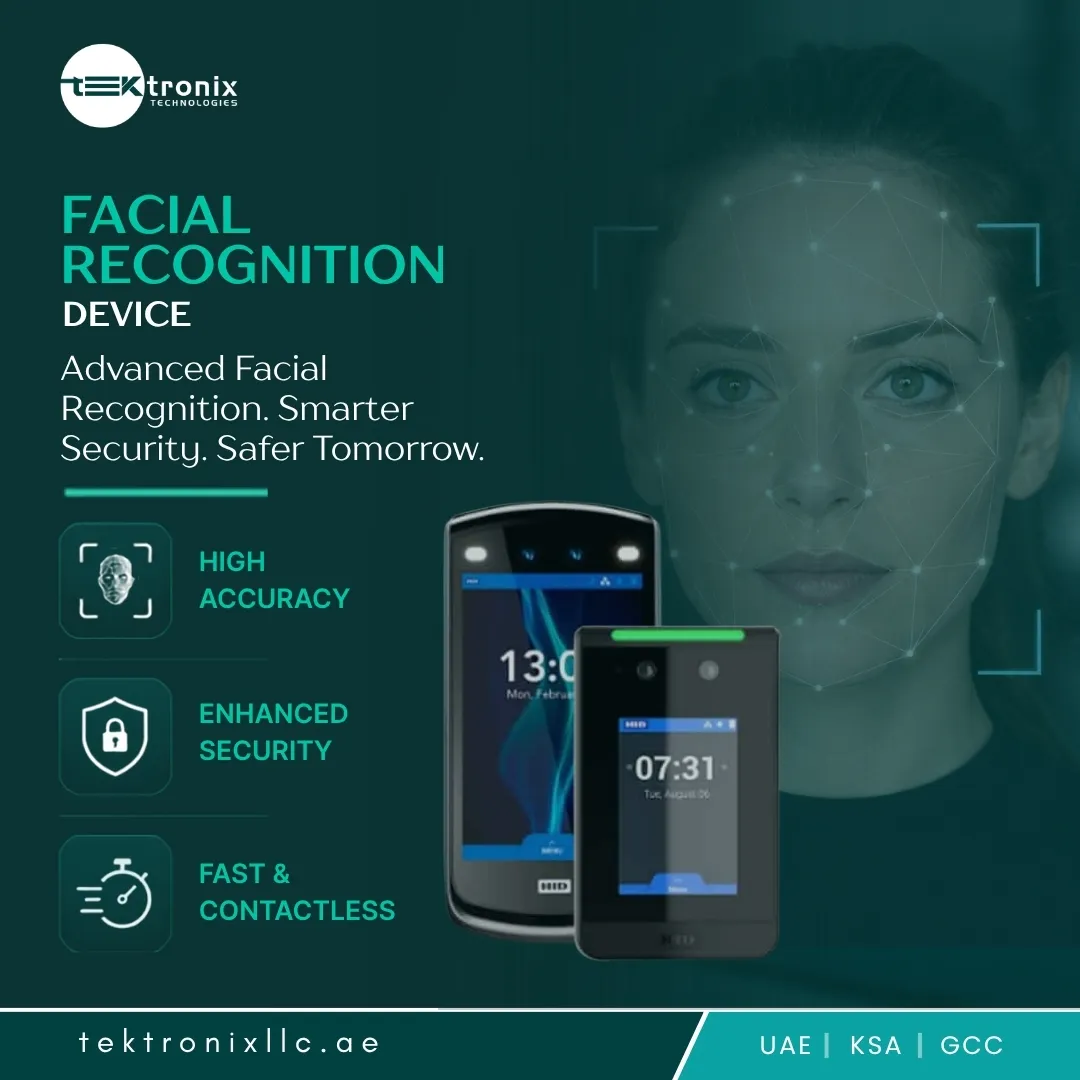
Biometric multi-factor authentication — combining facial recognition, hand geometry readers, or fingerprint scanners with smart card credentials and PIN verification — is now standard at inner-zone boundaries in UAE tier-III and tier-IV data center facilities. Anti-passback rules prevent credential sharing between authorised and unauthorised individuals. Mantrap airlock vestibules between zones prevent tailgating. Two-person integrity (TPI) rules enforce dual authorisation for access to the most sensitive cabinets, eliminating the insider threat scenario in which a single compromised individual can unilaterally access critical assets.
The convergence of physical access control with the logical security layer — correlating physical entry events with network authentication, workload access logs, and anomalous user behaviour detected by AI analytics — creates a unified security intelligence picture that neither physical nor cyber security teams can achieve in isolation. This convergence capability is a defining characteristic of mature, next-generation data center security operations in the UAE.
Data Center Security Across the Emirates: City-Specific Imperatives
Data Center Security in Dubai: Protecting the Region's Cloud Exchange Hub
Data center security in Dubai addresses the emirate's role as the MENA region's premier internet exchange and cloud connectivity hub. Dubai's data center ecosystem — anchored by facilities in Dubai Internet City, Dubai Silicon Oasis, and the Jebel Ali free zone — hosts connectivity nodes for the UAE IX internet exchange, subsea cable landing stations, and the UAE cloud regions of Microsoft Azure, AWS, and Oracle Cloud Infrastructure. This concentration of regional internet infrastructure makes Dubai data centers high-priority targets for both cyber and physical threat actors, requiring security postures that match the criticality of the assets protected.
The Dubai Electronic Security Centre (DESC) — the emirate's dedicated cybersecurity regulatory body — publishes the Dubai Cyber Security Strategy and enforces compliance requirements for organisations operating critical information infrastructure within the emirate. Data center operators serving Dubai government entities or handling emirate residents' personal data must demonstrate alignment with DESC's Information Security Regulation (ISR) framework, adding a regulatory compliance dimension to the security architecture decisions made at every layer of the stack.
Data Center Security in Abu Dhabi: Sovereign Infrastructure and Regulatory Compliance
Data center security in Abu Dhabi operates within a distinctly sovereign security context. The capital hosts federal government data infrastructure, Abu Dhabi Government entity systems managed under the Abu Dhabi Digital Authority (ADDA), ADNOC energy sector data assets, and the UAE Central Bank's financial infrastructure — a concentration of sovereign and regulated data that demands the highest achievable security maturity. The Abu Dhabi National Energy Company (TAQA) and sovereign wealth fund operators in Al Maryah Island's financial district add further layers of regulated, high-value data to the protection mandate.
Abu Dhabi's ADSIC (Abu Dhabi Systems and Information Centre) Information Security Standards — and the broader UAE National Cybersecurity Strategy overseen by the UAE Cybersecurity Council — establish mandatory technical controls for data center operators serving government and critical national infrastructure entities. These include specific requirements for network segmentation, encryption key management, security monitoring, incident response, and physical security that align directly with the trends and solutions described throughout this article.
Why Tektronix LLC? Proven Data Center Security Expertise in the UAE
Tektronix LLC brings over a decade of physical and cyber security integration experience to UAE data center environments, with completed deployments spanning commercial colocation facilities, government-operated data centers, financial services infrastructure, and critical energy sector facilities across Dubai, Abu Dhabi, Sharjah, and Ras Al Khaimah. The company's certified security architects hold professional credentials in CISSP (Certified Information Systems Security Professional), CISM (Certified Information Security Manager), physical security information management (PSIM), and Tier III/IV data center infrastructure design — providing the depth of expertise that data center security demands.
As an authorised systems integrator for leading security vendors including Palo Alto Networks, Fortinet, HID Global, Genetec, Milestone, and Axis Communications, Tektronix LLC delivers manufacturer-backed solutions with direct vendor escalation pathways — assurances unavailable from unauthorised resellers. The company's track record of DESC ISR compliance alignment and ADSIC standards advisory engagements demonstrates the regulatory expertise that distinguishes a genuine data center security partner from a product supplier.
Building a Comprehensive Data Center Security Framework: Key Pillars
- Governance & Risk Management: Establish a formal security governance structure aligned with ISO/IEC 27001, NIST CSF, and UAE regulatory frameworks. Conduct regular risk assessments, penetration testing, and red team exercises to validate control effectiveness.
- Identity & Access Management: Implement privileged access management (PAM) for administrative accounts, enforce multi-factor authentication across all management interfaces, and integrate physical and logical access control under a unified identity governance platform.
- Network Security Architecture: Deploy micro-segmentation, next-generation firewalls, DDoS protection, and encrypted overlay networks to eliminate implicit trust and contain lateral movement across all network tiers.
- Endpoint & Workload Protection: Apply endpoint detection and response (EDR) across all management workstations and operational technology (OT) systems. Enforce workload isolation through containerisation and hypervisor-level security controls.
- Physical Security Integration: Implement concentric zone access control with biometric MFA, anti-passback, mantrap vestibules, CCTV with AI video analytics, and two-person integrity rules for the highest-sensitivity zones.
- Security Operations & Incident Response: Operate a 24/7 SOC with XDR platform coverage, documented incident response playbooks, regular tabletop exercises, and tested disaster recovery procedures aligned to RTO/RPO commitments.
Conclusion
The UAE's emergence as the Middle East's premier digital infrastructure destination has placed its data center ecosystem squarely in the crosshairs of the most sophisticated threat actors operating today. The trends reshaping data center security — unified cybersecurity for data centers, AI-powered data center threat detection, end-to-end data center encryption, next-generation data center firewalls, and intelligent data center access control — are not independent best practices but interconnected layers of a defence-in-depth architecture that must function as a cohesive whole.
For operators in Dubai navigating DESC ISR compliance and Abu Dhabi facilities meeting ADSIC and UAE Cybersecurity Council standards, the path to security maturity requires a partner with verified technical depth, regulatory expertise, and a proven track record across the UAE's most critical infrastructure environments. Tektronix LLC delivers precisely that partnership.
FAQs
1. What are the most critical data center security standards that UAE operators must comply with?
UAE data center operators must navigate a layered compliance landscape. At the federal level, the UAE Cybersecurity Council's National Cybersecurity Strategy and the UAE Personal Data Protection Law (PDPL) establish baseline data center security obligations for all critical information infrastructure operators. In Dubai, the Dubai Electronic Security Centre (DESC) enforces the Information Security Regulation (ISR) framework. In Abu Dhabi, ADSIC standards and the Abu Dhabi Digital Authority's directives apply to government-serving facilities. International frameworks including ISO/IEC 27001, PCI DSS (for payment data environments), and NIST CSF are additionally required by multinational tenants and financial sector clients.
2. How does cybersecurity for data centers differ from standard enterprise cybersecurity?
Cybersecurity for data centers differs from standard enterprise security in several critical dimensions: the scale and density of assets that must be protected, the multi-tenant architecture that requires strict isolation between customer environments sharing physical infrastructure, the 24/7 availability requirements that limit maintenance windows for security patching, the physical-cyber convergence that demands integrated governance across both domains, and the regulatory complexity of serving tenants subject to multiple different compliance frameworks simultaneously. Data center security must also account for supply chain risks — hardware and software from third-party vendors that may introduce vulnerabilities at the infrastructure layer.
3. What role does data center threat detection play in preventing ransomware attacks?
Data center threat detection is the primary defensive mechanism for identifying and interrupting ransomware campaigns before encryption of production workloads begins. Modern ransomware attacks follow a multi-stage kill chain — initial access, lateral movement, privilege escalation, data exfiltration, and finally payload deployment — that unfolds over days or weeks before the destructive phase. AI-powered XDR platforms with behavioural analytics can detect anomalous patterns characteristic of pre-ransomware activity — such as unusual Active Directory queries, mass file access events, or abnormal data staging — and trigger automated containment responses that isolate affected segments before payload execution.
4. How should data center encryption be implemented to comply with the UAE PDPL?
Data center encryption for UAE PDPL compliance requires personal data to be protected both at rest and in transit using industry-standard algorithms — minimum AES-256 for stored data and TLS 1.2 or higher for data in transit. Encryption key management must be implemented with appropriate separation of duties, preferably using Hardware Security Modules (HSMs) to isolate key material from the encrypted data it protects. For cross-border data transfers — relevant for UAE facilities with international cloud connectivity — additional data transfer impact assessments and contractual safeguards may be required under PDPL Chapter 4, which governs international data transfers.
5. What physical access control measures are considered best practice for UAE tier-III and tier-IV data centers?
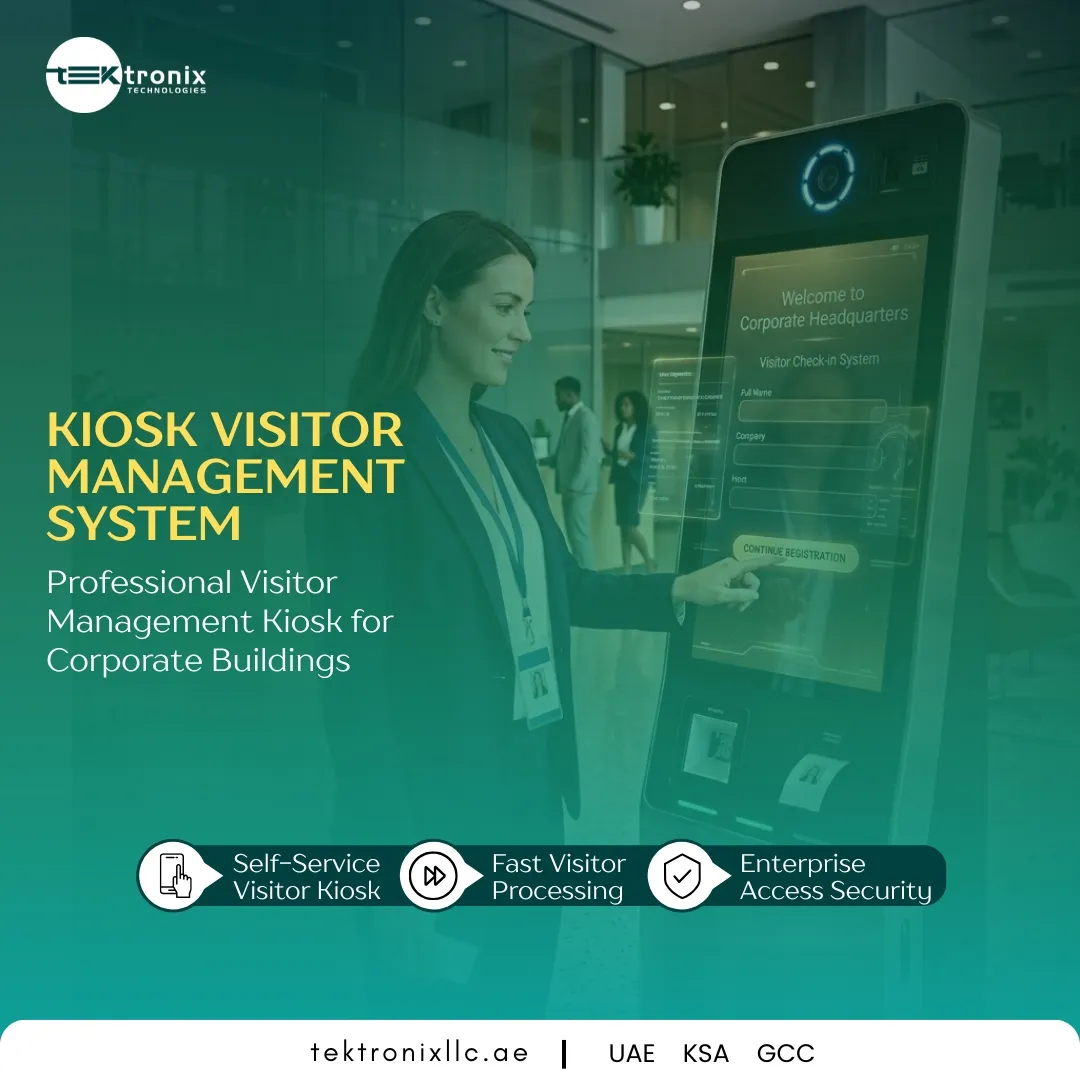
Best-practice data center access control for tier-III and tier-IV UAE facilities incorporates a concentric zone model with biometric multi-factor authentication at each boundary, mantrap airlock vestibules between the security lobby and the operations floor, anti-passback enforcement to prevent credential sharing, two-person integrity (TPI) rules for the most sensitive cabinet zones, CCTV with AI video analytics providing 100 % coverage of all access points, and full integration of physical access event logs with the cybersecurity SOC's XDR platform. Visitor and contractor management systems with pre-registration, escort requirements, and time-limited access credentials round out the physical security framework that Uptime Institute's Tier Standard and UAE regulatory frameworks collectively prescribe.
For more information contact us on:
Tektronix Technology Systems Dubai-Head Office
+971 50 814 4086




























Sign in to leave a comment.