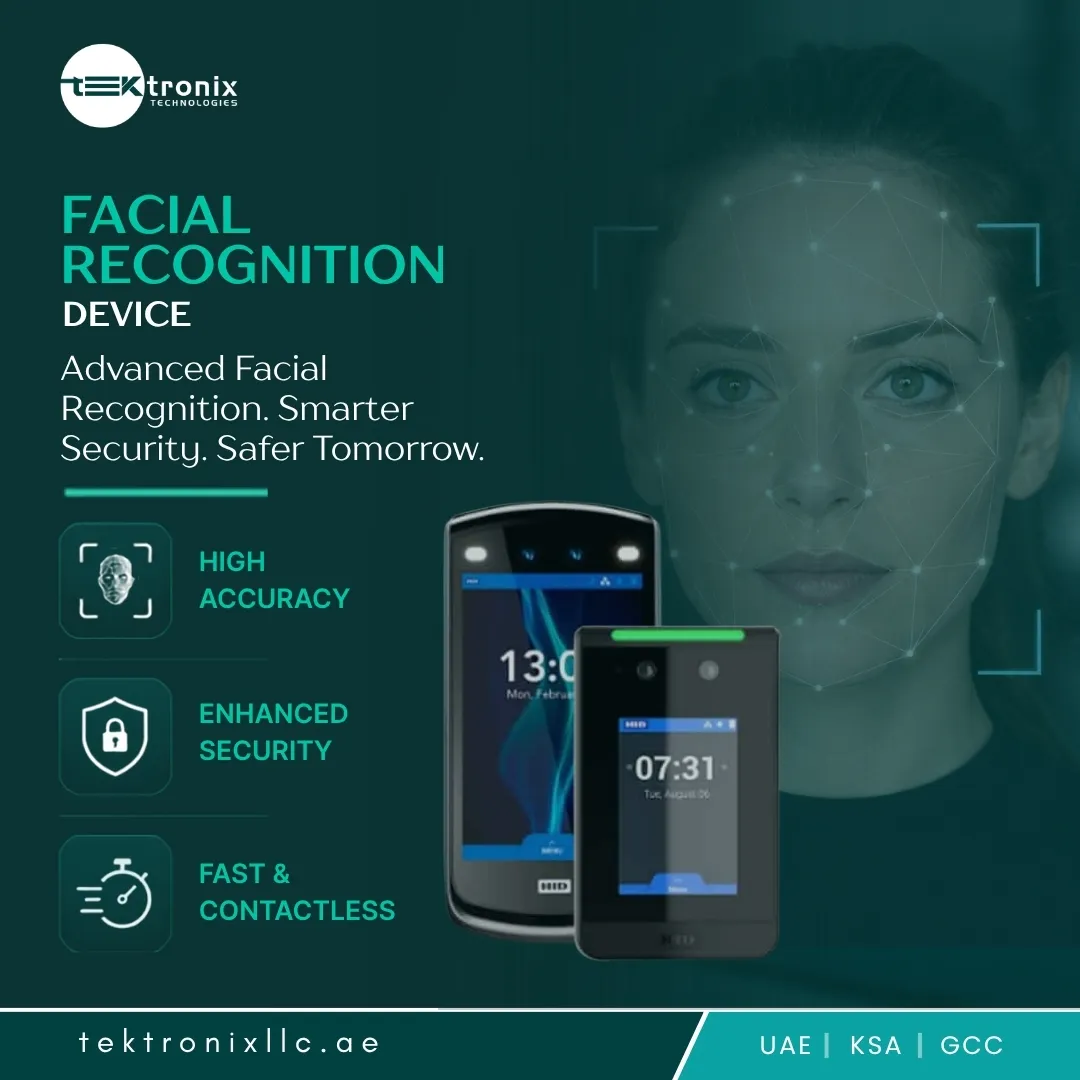

A photograph held up to a camera shouldn't be able to open a locked door, yet early facial recognition deployments were routinely fooled by exactly that. A properly engineered Facial Recognition System now builds liveness verification into every check by default, and UAE facilities reviewing facial recognition deployments with anti-spoofing protection are treating this capability as a baseline requirement rather than a premium upgrade.
As facial recognition has spread from flagship pilot projects into everyday corporate, residential, and government deployments across the UAE, the sophistication of attempted spoofing has grown alongside it. A system that can be tricked by a printed photo or a video played on a phone screen provides a false sense of security that's arguably worse than no biometric system at all.
Why Liveness Detection Has Become Non-Negotiable for Facial Recognition
Early facial recognition cameras primarily analysed a two-dimensional image, comparing captured features against an enrolled photo without confirming whether a live person was actually present. That gap made presentation attacks — a printed photo, a tablet displaying an image, or a pre-recorded video — a genuine vulnerability rather than a theoretical concern.
Liveness detection closes that gap by analysing depth, texture, and subtle movement patterns that only a physically present person can produce, rejecting flat or replayed images before they ever reach the identity-matching stage of the process.
The Verification Pipeline Behind a Secure System
Face Detection as the Entry Point for Every Check
Every verification begins with Face Detection, locating a face within the camera's field of view before any further analysis takes place — a step that has to happen reliably regardless of angle, lighting, or partial obstruction for the rest of the pipeline to function correctly.
Facial Identification Matching Against a Verified Database
Once a face is detected, Facial Identification compares its features against an enrolled database, searching for a match within a defined confidence threshold rather than a simple pass-or-fail comparison against a single stored image.
Facial Authentication Confirming a Genuine, Live Match
The final step, Facial Authentication, only completes successfully once both identity match and liveness confirmation pass together — a design that ensures a high-confidence identity match alone can never unlock a door if the liveness check fails.
Common Spoofing Attempts and How Liveness Detection Defeats Them
Printed photo attacks remain the most basic attempt, relying on a static image fooling a camera that only checks facial geometry. Liveness detection defeats this by analysing depth data a flat printout simply cannot produce, since a real face has three-dimensional contours a photograph lacks entirely.
Video replay attacks, where an attacker plays pre-recorded footage on a phone or tablet screen, attempt to defeat basic movement checks. Modern liveness systems counter this by detecting screen glare, refresh-rate artefacts, and unnatural motion patterns that distinguish a displayed video from a genuine live presence in front of the camera.
Facial Recognition Access Control Hardened Against Fraud
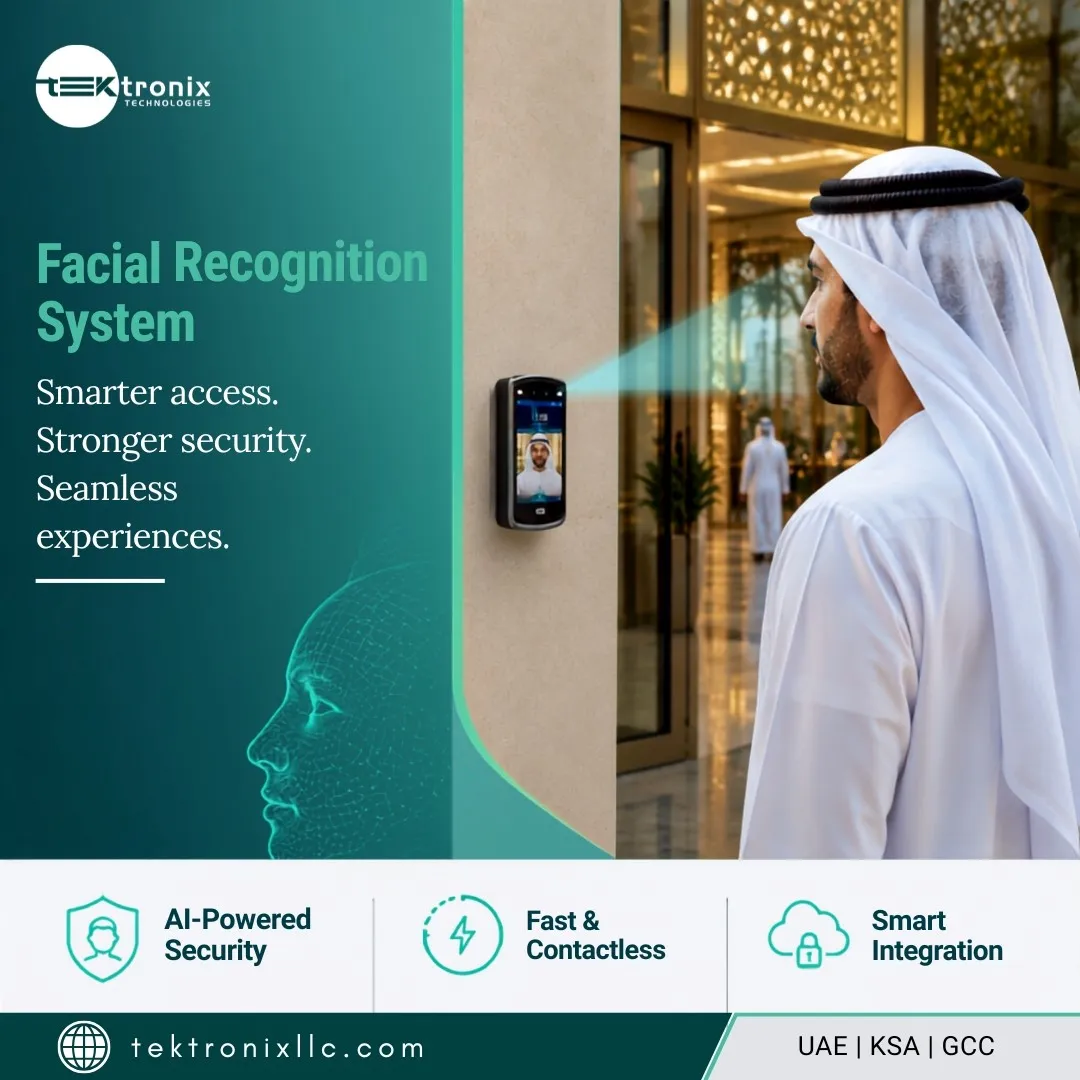
Deployed as part of a broader Facial Recognition Access Control strategy, liveness-protected verification extends fraud resistance across every controlled door in a facility, ensuring that a compromised or leaked photo of an enrolled employee can never be used to bypass access control at any entry point.
Hardware and Software That Support Robust Liveness Checks
Facial Recognition Device Requirements for Reliable Liveness Detection
Reliable liveness detection depends on the right sensor hardware, meaning a Facial Recognition Device intended for high-security deployment should include depth or infrared sensing capability rather than relying on a standard RGB camera alone, which lacks the data needed to distinguish a live face from a flat image confidently.
Facial Recognition Software Evaluated on Anti-Spoofing Performance
Buyers should evaluate Facial Recognition Software specifically on independently tested anti-spoofing performance rather than accepting a vendor's accuracy claims at face value, since presentation attack detection rates vary considerably between platforms marketed as offering similar capability.
Facial Recognition Solution Selection Criteria for High-Security Sites
For server rooms, executive floors, and other sensitive areas, the right Facial Recognition Solution should combine hardware-level depth sensing with software-level behavioural analysis, since layering both approaches closes vulnerabilities that either method alone might miss against an increasingly sophisticated spoofing attempt.
Facial Recognition System UAE: Where Liveness Detection Matters Most
Demand for a liveness-protected Facial Recognition System UAE-wide is strongest among banks, government facilities, and data centers, where the consequence of a successful spoofing attempt extends well beyond a single unauthorised entry into potentially significant financial or security exposure.
Facial Recognition System Dubai — High-Security Facility Deployments
A Facial Recognition System Dubai deployment for a DIFC financial institution or a critical infrastructure site typically specifies liveness detection as a mandatory requirement from the outset, reflecting the elevated risk profile these facilities carry compared to a standard corporate office.
Regulatory and Privacy Considerations
Because liveness detection processes additional biometric signal data beyond a standard facial scan, deployments must remain firmly within UAE PDPL requirements covering consent, data minimisation, and secure storage. Facilities pursuing ISO 27001 alignment typically document how liveness-related data is processed and discarded, since some liveness methods analyse video frames that shouldn't be retained beyond the verification moment itself.
Why UAE Facilities Choose Tektronix for Liveness-Protected Deployments
Tektronix LLC deploys facial recognition systems with integrated liveness detection for banks, government facilities, and corporate clients across the UAE, working with manufacturers including HID Amico, Suprema, and ZKTeco to select hardware with proven depth-sensing and anti-spoofing capability. Every project includes spoofing-resistance testing during commissioning, using realistic presentation attack scenarios to confirm the system performs as expected before go-live rather than relying solely on vendor specifications.
Facilities requiring a higher security standard than basic facial recognition can review Tektronix's facial recognition solutions in Dubai to compare configurations with proven liveness detection and anti-spoofing performance.
Conclusion
A Facial Recognition System without genuine liveness detection is only as secure as the weakest printed photo an attacker can hold up to the camera. Reliable Face Detection, accurate Facial Identification, and liveness-verified Facial Authentication together close the presentation-attack gap that early biometric systems left wide open. Built into a properly hardened Facial Recognition Access Control strategy, and backed by the right Facial Recognition Device, Facial Recognition Software, and Facial Recognition Solution for the facility's risk level, organisations gain security that genuinely withstands sophisticated spoofing attempts rather than merely appearing secure. As Facial Recognition System UAE deployments mature — particularly Facial Recognition System Dubai installations at banks and critical facilities — liveness detection has moved from a nice-to-have feature to the baseline every serious deployment should demand.
FAQs
1. Can a high-quality photo still fool a modern facial recognition system?
Properly implemented liveness detection using depth or infrared sensing can distinguish a flat photo from a live face regardless of image quality, since the vulnerability lies in the lack of three-dimensional depth data a photo inherently lacks.
2. Does liveness detection slow down the check-in or access process?
Modern liveness checks typically complete within the same fraction of a second as standard facial matching, adding negligible delay to the overall authentication process for the person being verified.
3. Is liveness detection necessary for low-security applications, like office attendance tracking?
It's less critical for low-stakes applications, but even attendance systems benefit from basic liveness checks to prevent buddy-punching attempts using a colleague's photo, making it a worthwhile inclusion regardless of security tier.
4. How is liveness detection tested during system installation?
Reputable installers conduct spoofing-resistance testing using realistic presentation attacks — printed photos, video replays, and sometimes masks — during commissioning to confirm the system correctly rejects each attempt before go-live.
5. Does liveness detection data get stored long-term?
Under a properly documented privacy policy, liveness-related video frames are typically processed in real time and discarded immediately after verification, rather than retained as part of the enrolled biometric record.































Sign in to leave a comment.