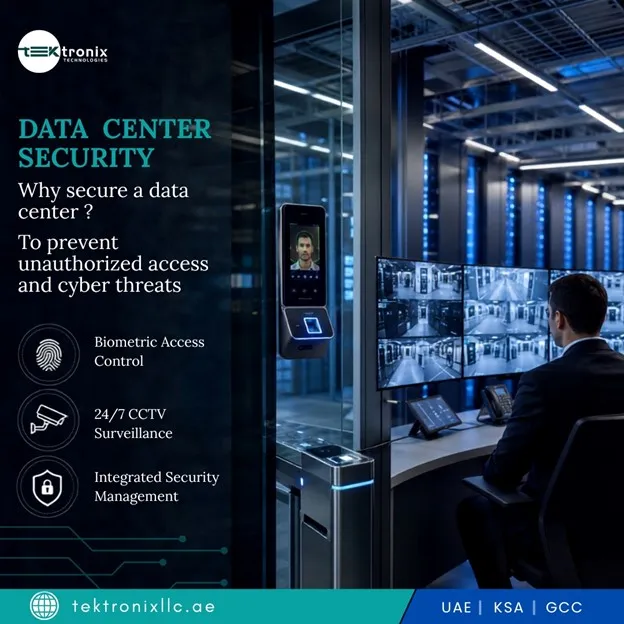

Investors evaluating a fintech start-up increasingly ask about infrastructure security before they ask about growth projections, and for good reason — a payments platform or digital lending product is only as trustworthy as the Data Center Security protecting the systems behind it. Founders reviewing data center perimeter security solutions for fintech infrastructure are learning that this isn't a cost centre to minimise but a credibility signal that shapes licensing, fundraising, and enterprise partnership conversations.
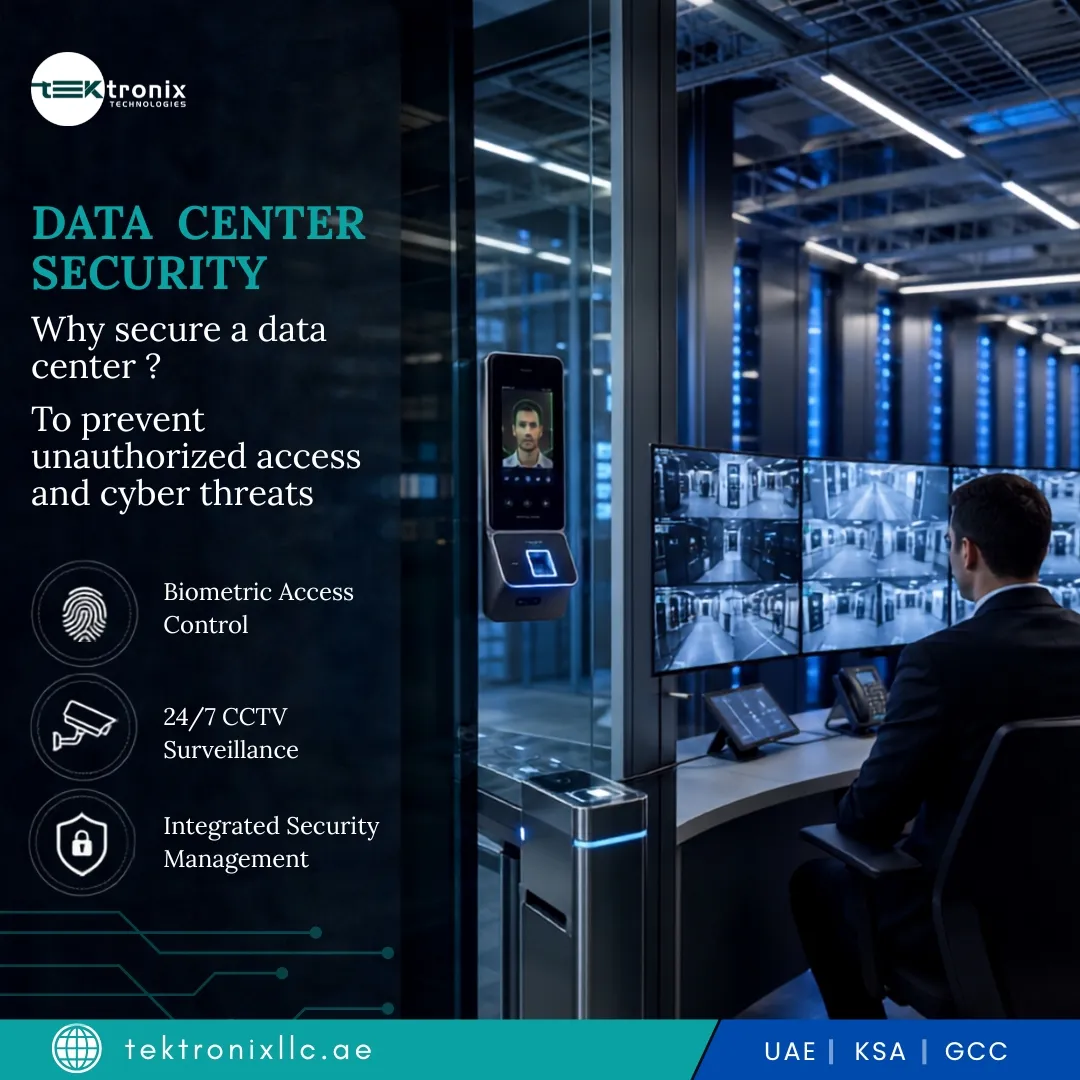
The UAE's fintech ecosystem, concentrated heavily in DIFC and ADGM, has grown fast enough that regulators, banking partners, and enterprise customers now expect infrastructure security maturity most early-stage teams haven't budgeted time to think through carefully. A start-up that treats data center security as an afterthought risks losing a banking partnership or licensing approval over a gap that a slightly more deliberate infrastructure decision would have avoided entirely.
Why Fintech Start-ups Can't Treat Data Center Security as an Afterthought
Traditional start-ups can often iterate quickly on infrastructure decisions with limited consequence. Fintech start-ups don't have that luxury — a payments processor, digital bank, or lending platform handles regulated financial data from its very first transaction, meaning security decisions made in the first few months of operation carry regulatory weight that a typical SaaS product never faces.
Banking partners conducting due diligence before integrating with a fintech's API will routinely ask detailed questions about where data is hosted, how physical access is controlled, and what encryption standards protect data in transit and at rest — questions a founder needs concrete answers to well before the partnership conversation begins.
Building Security into a Fintech's Infrastructure from Day One
Data Center Access Control for Restricting Sensitive Financial Systems
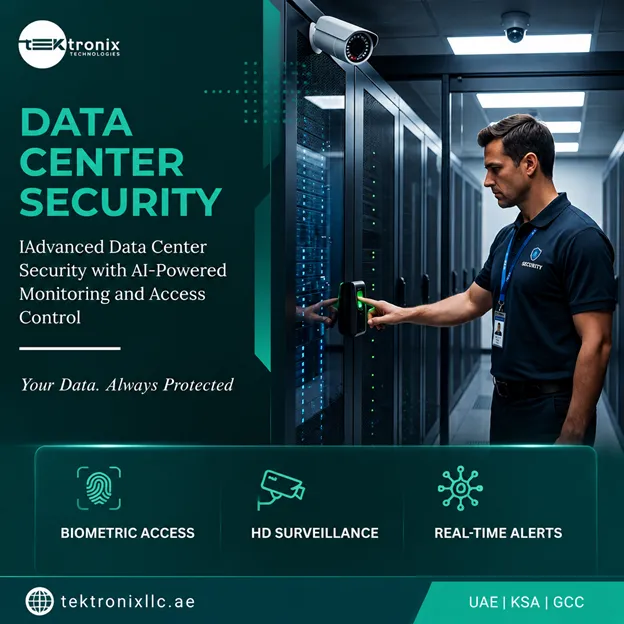
Multi-factor Data Center Access Control ensures that only specifically authorised personnel can physically reach the racks hosting a fintech's transaction processing systems, with every entry individually logged rather than tied to a shared facility credential.
Data Center Surveillance for Auditable Physical Oversight
Continuous Data Center Surveillance covering server rooms and access points gives fintech operators the documented physical oversight that banking partners and regulators expect to see during a security review, rather than a verbal assurance with no supporting evidence.
Data Center Intrusion Detection for Early Warning at the Perimeter
Physical Data Center Intrusion Detection at the building perimeter catches forced-entry attempts before they reach server racks, an early-warning layer that matters more for a fintech than most tenants given the direct financial impact a successful physical breach could carry.
Protecting Financial Data at the Network Layer
Cybersecurity for Data Center Environments Hosting Financial Workloads
Comprehensive Cybersecurity for Data Center environments hosting financial workloads covers network segmentation, continuous vulnerability scanning, and hardened management interfaces, since a payments platform represents a considerably higher-value target than a typical hosted application.
Data Center Encryption for Regulatory-Grade Data Protection
Applying Data Center Encryption to financial data at rest and in transit isn't optional for a fintech — it's typically a prerequisite for licensing approval, ensuring that even a successful breach doesn't expose readable transaction or customer data.
Data Center Firewalls for Segmented, Compliant Network Architecture
Next-generation Data Center Firewalls segmenting a fintech's production, testing, and administrative environments prevent lateral movement between systems, containing any compromise to a single segment rather than exposing the entire infrastructure at once.
Data Center Threat Detection for Real-Time Fraud and Intrusion Signals
Correlating network anomalies with access logs through unified Data Center Threat Detection lets a fintech's security team recognise coordinated attack patterns early, a capability increasingly expected during regulatory audits of financial technology infrastructure.
Data Center Security UAE: Fintech Hub Considerations
Fintech start-ups building infrastructure around Data Center Security UAE-wide standards need to account for the specific licensing bodies overseeing their particular business model, since a payments licence, digital banking licence, and virtual asset licence each carry different infrastructure security expectations.
Data Center Security Dubai — DIFC and Fintech Free Zone Considerations
A Data Center Security Dubai deployment for a DIFC-licensed fintech typically needs to satisfy Dubai Financial Services Authority (DFSA) expectations alongside DESC oversight, with infrastructure documentation forming part of the licensing application itself rather than a separate technical afterthought.
Data Center Security Abu Dhabi — ADGM Regulatory Considerations
Start-ups pursuing Data Center Security Abu Dhabi deployments under an ADGM Financial Services Regulatory Authority (FSRA) licence face similarly detailed infrastructure security expectations, particularly for firms handling payments, digital banking, or virtual asset activities regulated under ADGM's specific frameworks.
Standards and Regulatory Alignment
Fintech infrastructure in the UAE is typically benchmarked against Central Bank of UAE payment security requirements, DFSA or FSRA licensing conditions depending on jurisdiction, PCI DSS for any card payment processing, and ISO 27001 for information security management. The UAE Information Assurance Standard (NESA/SIA) and UAE PDPL further shape data residency, retention, and personal data protection obligations that a growing fintech needs to satisfy well before scaling beyond its initial user base.
Why Fintech Start-ups Choose Tektronix for Data Center Security
Tektronix LLC designs data center security programmes for fintech and financial services clients across the UAE, deploying access control, surveillance, and intrusion detection infrastructure from Genetec, Milestone, HID Global, and Honeywell, matched to the specific licensing requirements of each start-up’s regulatory pathway. Every engagement includes a compliance-mapping exercise aligning infrastructure decisions with DFSA, FSRA, or Central Bank requirements as applicable, helping founders walk into licensing conversations and investor due diligence with documented answers rather than assumptions.
Fintech founders planning their infrastructure roadmap or preparing for a licensing application can review Tektronix's data center perimeter security solutions to understand deployment options suited to early-stage and scaling financial technology companies.
Conclusion
For a UAE fintech start-up, Data Center Security isn't a line item to defer until after the next funding round — it's foundational credibility that shapes licensing approval, banking partnerships, and investor confidence from the earliest stage. Layered Data Center Access Control, continuous Data Center Surveillance, and early-warning Data Center Intrusion Detection protect the physical facility, while disciplined Cybersecurity for Data Center practices, Data Center Encryption, Data Center Firewalls, and Data Center Threat Detection secure the financial data itself. As Data Center Security UAE expectations mature across the fintech sector — including Data Center Security Dubai DIFC deployments and Data Center Security Abu Dhabi ADGM-regulated infrastructure — stratus that build security into their foundation from day one will move through licensing, partnership, and fundraising conversations with far fewer obstacles than those trying to retrofit it later.
Frequently Asked Questions
1. Do early-stage fintech start-ups really need enterprise-grade data center security?
Yes, licensing bodies like DFSA and FSRA typically expect documented infrastructure security controls from the point of licensing application, regardless of company size, since regulatory requirements apply to the activity being licensed rather than company maturity.
2. Can a fintech start-up use a shared colocation facility and still meet regulatory expectations?
Yes, provided the colocation facility itself maintains appropriate access control, surveillance, and network segmentation, and the fintech can document how its specific environment within that facility meets applicable licensing requirements.
3. What infrastructure documentation do bank partners typically request during due diligence?
Banking partners commonly request details on data hosting location, physical and network access controls, encryption standards for data at rest and in transit, and evidence of relevant certifications such as ISO 27001 or PCI DSS compliance.
4. How does infrastructure security differ between a DIFC and ADGM licensed fintech?
While both jurisdictions expect strong infrastructure security, specific documentation and compliance mapping differ since DIFC-licensed firms report to DFSA while ADGM-licensed firms report to FSRA, each with their own regulatory technology and security guidance.
5. When should a fintech start-up start planning its data center security strategy?
Ideally before applying for a licence, since infrastructure security decisions typically form part of the licensing application itself, and retrofitting security controls after launch is generally more disruptive and costlier than building them in from the outset.
For more information contact us on:
Tektronix Technology Systems Dubai-Head Office
+971 50 814 4086
Data Center Encryption
Data Center Firewalls
Data Center Intrusion Detection


























Sign in to leave a comment.