
Dental implants are widely regarded as the most effective way to replace a missing tooth. They restore function, preserve bone, and done well look and feel like the real thing. If you're weighing up your options at a London dental practice, here's what you need to know.
What Is a Tooth Implant?
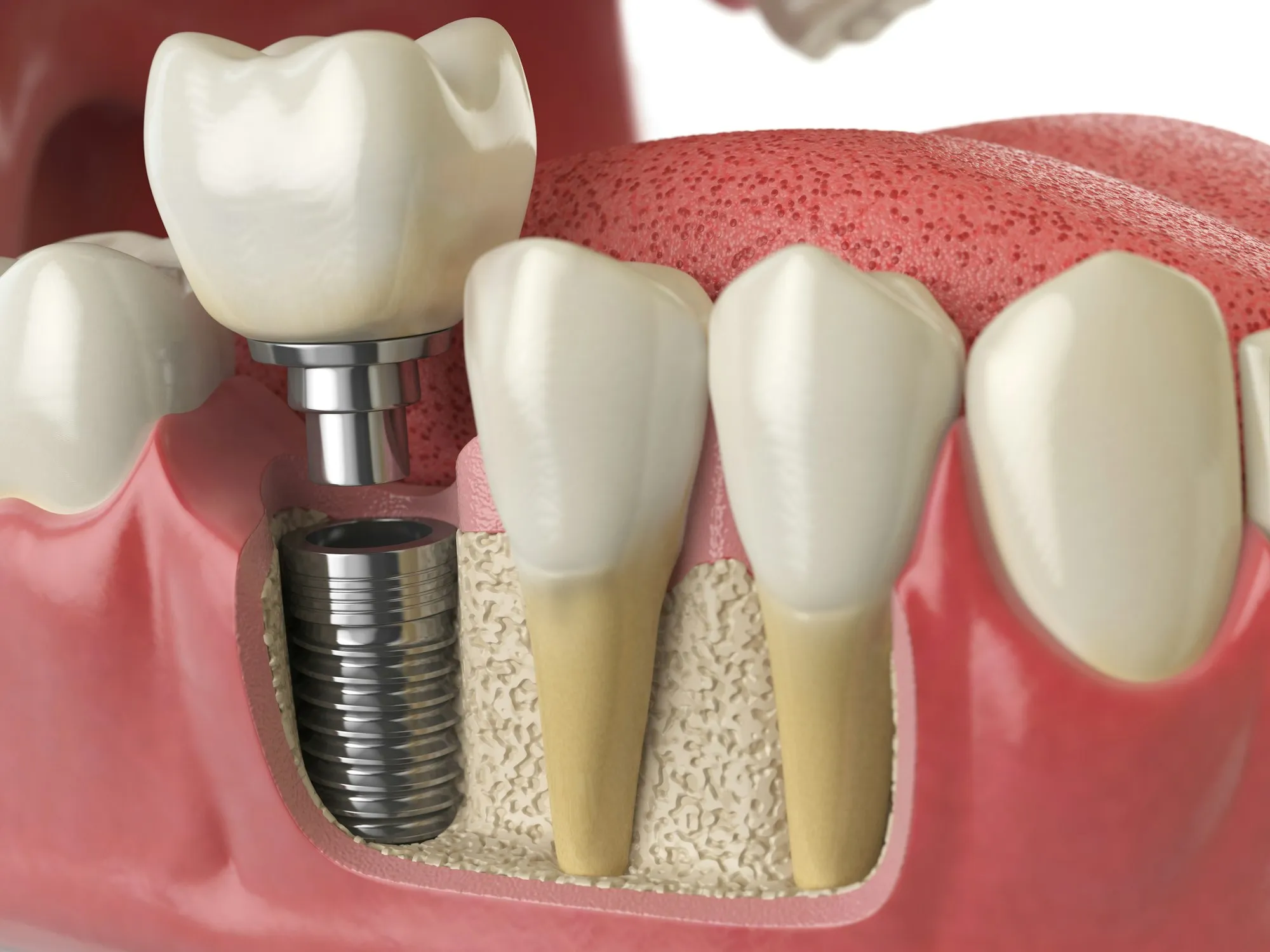
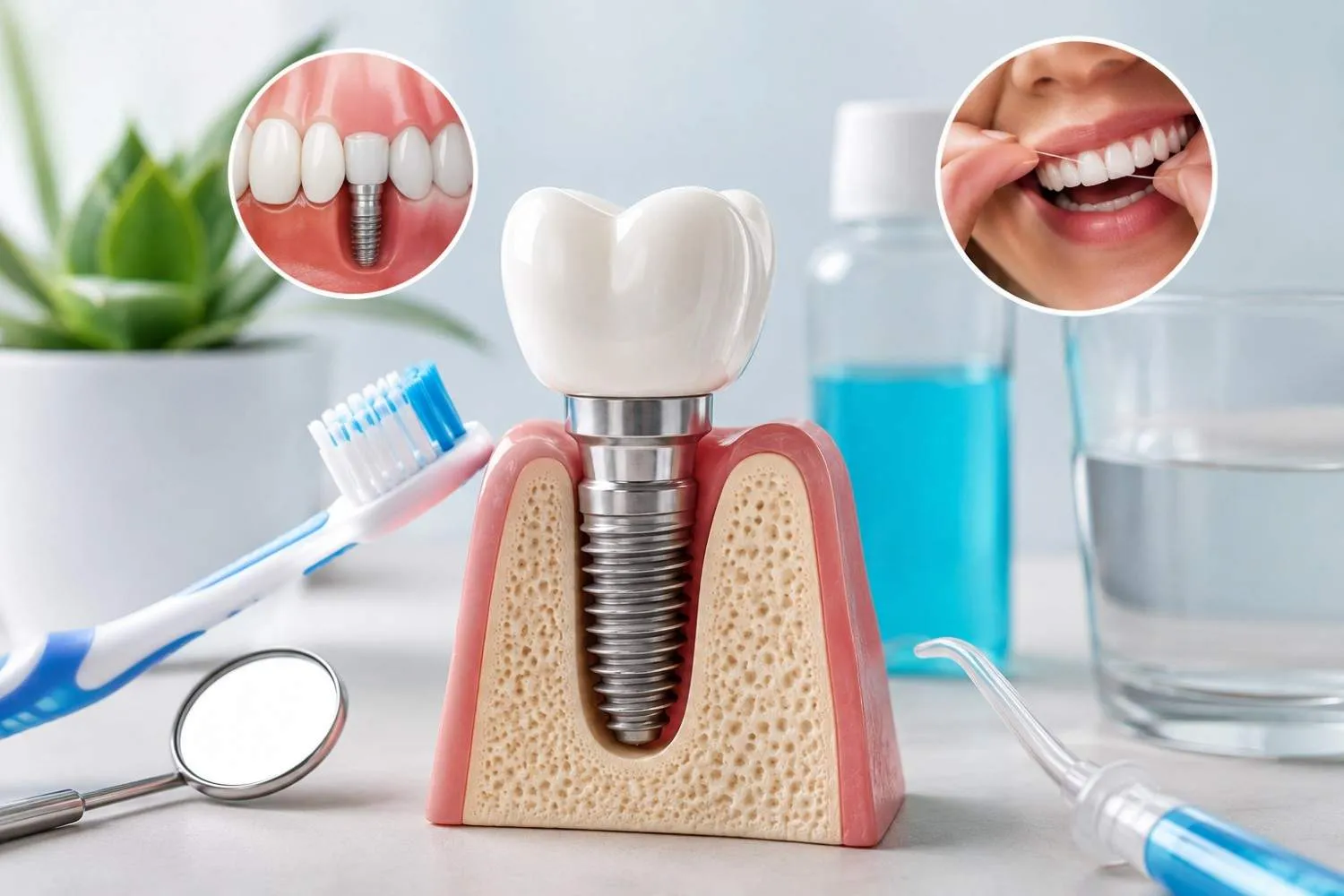
A dental implant is a small titanium post placed into the jawbone where a tooth root once sat. Over several months, it fuses with the surrounding bone, a process called osseointegration. Once that's happened, an abutment is attached to the post, and a custom-made crown is fixed on top. The result is a three-part structure: implant, abutment, crown.
It's the only tooth replacement that works from the root up. A bridge sits on top of adjacent teeth. A denture rests on the gum. Neither does anything for the bone beneath the gap, which gradually resorbs once the root is gone. An implant stops that process.
How Do Dental Implants Compare With Bridges and Dentures?
| Treatment | Preserves Jawbone | Fixed in Place | Replaces Root |
|---|---|---|---|
| Dental Implant | Yes | Yes | Yes |
| Bridge | No | Yes | No |
| Denture | No | No | No |
For patients who qualify, an implant is typically the more durable long-term solution. Whether it's the right choice depends on bone density, general health, budget, and sometimes how quickly treatment is needed.
Who Is Eligible for Dental Implants?
Most healthy adults with adequate jawbone density are candidates. The key requirements are enough bone to anchor the implant securely, healthy gum tissue, and no uncontrolled systemic conditions that could impair healing.
Certain factors affect eligibility or require management before treatment begins. Heavy smokers have higher rates of implant failure and may need to reduce or stop smoking before surgery. Patients with poorly controlled diabetes are at greater risk of post-operative infection. Osteoporosis, immune conditions, and some long-term medications warrant careful assessment but don't automatically rule out treatment.
Can You Get Same-Day Dental Implants?
In some cases, yes. Same-day implants, sometimes called immediate loading implants, place the implant and a temporary crown in a single visit. This isn't suitable for everyone. It requires high bone density, excellent oral health, and a bite that doesn't put excessive force through the implant during the healing period. Your clinician will assess candidacy at the consultation.
Do You Need Bone Grafting Before Implant Treatment?
If bone volume has reduced significantly, which happens when a gap is left unfilled for years, a graft may be needed before or at the time of implant placement. Sinus lift procedures are sometimes required for upper back teeth where the sinus cavity sits close to the jawbone. Both procedures add time to the overall treatment, but are well-established and routinely carried out.
What Happens During the Dental Implant Process?
Consultation and Planning
A thorough consultation is where treatment really begins. At Fitzroy Dental Practice, this involves clinical examination, digital X-rays, and CBCT scanning, where needed, to create a three-dimensional image of the jaw that shows bone depth, nerve position, and anatomy in detail. The resulting treatment plan is specific to you, not a template.
The Procedure Itself
Implant placement is carried out under local anaesthesia. Most patients describe the sensation as pressure rather than pain, comparable to a tooth extraction, and sometimes less uncomfortable. The titanium post is positioned into the jaw at the prepared site, and the gum is closed around it.
A healing period follows, during which osseointegration occurs. This typically takes three to six months, though some implant systems and clinical situations allow for a shorter timeline. Once integration is confirmed, the abutment and final crown are fitted.
How Long Does Treatment Take Overall?
A single implant from first consultation to final crown typically takes four to six months. Multiple implants, bone grafting, or full-arch cases take longer. Same-day treatment condenses the process but still requires follow-up appointments to fit the final restoration once healing is complete.
Do Dental Implants Hurt?
Surgery is carried out under local anaesthetic, so the procedure itself shouldn't be painful. Afterwards, most patients experience some swelling, bruising, and tenderness for the first few days. Over-the-counter pain relief is usually sufficient. Significant pain beyond the first week, or swelling that worsens rather than improves, warrants a call to the practice.
Recovery Timeline
The first 24 hours are typically the most uncomfortable. Swelling peaks around day two or three, then gradually settles. Most patients return to normal daily activities within a few days. The gum heals over the following weeks; the deeper bone integration continues for several months beneath the surface, which is why the final crown isn't usually placed until osseointegration is confirmed.
How Long Do Dental Implants Last?
The implant fixture itself can last many decades; some have been in place for 30 years or more with proper care. The crown on top has a shorter lifespan, typically 10–15 years before it may need replacing.
What shortens implant lifespan most: smoking, inadequate oral hygiene, and untreated gum disease around the implant (called peri-implantitis). Regular hygiene appointments at least twice yearly for implant patients catch problems early and are worth treating as non-negotiable rather than optional.
How to Keep Implants in Good Condition
Daily brushing and interdental cleaning around the implant site, avoiding excessive force on the restoration (relevant for patients who grind), and keeping up with regular examinations. There's nothing complicated about it; the implants respond well to the same care as natural teeth.
What Types of Dental Implant Solutions Are Available?
- A single tooth implant replaces one missing tooth with an individual crown. Generally preferable to a bridge because it doesn't involve the adjacent teeth and preserves bone independently.
- Multiple implants restore several missing teeth. Implants can support individual crowns or act as anchor points for a bridge spanning the gap, depending on the clinical situation.
- Implant-retained dentures are overdentures that clip onto two to four implant posts. The denture stays removable for cleaning but is held far more securely than a conventional denture, with less movement, better chewing efficiency, and greater confidence day to day.
- Full arch implant treatment (sometimes called All-on-4) restores a complete upper or lower arch on four to six strategically placed implants. A fixed bridge is attached, permanently replacing all teeth in the arch. For patients with extensive tooth loss, this approach is often more efficient and cost-effective than restoring each tooth individually.
How Much Are Dental Implants in London?
Dental implant costs vary depending on the number of implants needed, whether bone grafting or sinus lifting is required, the type of restoration, and the diagnostic work involved.
At Fitzroy Dental Practice, single implant treatment starts from £1,600. Full-arch and same-day treatments are priced individually following assessment; there's no meaningful way to quote these without understanding the specific clinical picture.
0% interest-free finance is available over 12 months with no deposit required, which makes monthly costs more manageable for most patients than the headline figure suggests.
Are Dental Implants Worth the Investment?
For most patients who go through with treatment, yes, though it depends on what you're comparing. Against a denture that needs relining and eventual replacement, or a bridge that involves cutting down healthy adjacent teeth, a well-placed implant often works out better value over 10 to 20 years. The functional difference, day-to-day eating, speaking, and confidence, is harder to quantify but consistently reported as significant.
Why Choose Fitzroy Dental Practice for Dental Implants in London?
Fitzroy has been treating patients from 14 Fitzroy Square, Fitzrovia, for five generations. The implant team uses digital imaging and CBCT scanning for all treatment planning, and every case is assessed individually rather than matched to a standard protocol.
The practice is GDC-registered and CQC-regulated. Self-referral is straightforward; no GP letter needed. Patients travelling into central London from across the city find the Fitzrovia location practical for the multiple appointments the implant treatment involves.
Frequently Asked Questions About Dental Implants
Can you get same-day dental implants? Yes, in suitable cases. Bone density, gum health, and bite load must all support immediate placement. Assessment at consultation confirms eligibility.
Who is eligible for same-day dental implants? Patients with sufficient bone volume, healthy gums, and no conditions that impair healing. Not everyone qualifies for standard implants, and a healing period is more appropriate in many cases.
Do dental implants hurt? The procedure itself is carried out under local anaesthetic and is typically no more uncomfortable than an extraction. Post-operative soreness settles within a few days for most patients.
How long do dental implants last? The implant post can last many decades. Crowns typically need replacing after 10–15 years. Maintenance and hygiene have the greatest influence on long-term outcomes.
How much are same-day dental implants? Costs depend on the specific clinical requirements and are confirmed at consultation. Standard implants at Fitzroy start from £1,600; 0% finance is available.
How much is a full set of dental implants? Full-arch treatment is priced individually. The number of implants, bone condition, and restoration type all affect cost. A consultation is the only accurate way to get a figure.
Are implant-retained dentures better than traditional dentures? For most wearers, yes, stability and chewing function improve considerably. They remain removable for cleaning but don't shift during eating or speaking.
How soon can you eat after dental implant surgery? Soft foods from the day of surgery. Most patients return to a normal diet within a week or two; harder foods are best avoided until osseointegration is confirmed.
Can dental implants replace several missing teeth? Yes, multiple implants, implant-supported bridges, or full-arch treatment can all address multiple gaps, depending on the extent of tooth loss.
What happens if you don't replace a missing tooth? The jawbone beneath the gap resorbs over time, neighbouring teeth drift and tilt, and the opposing tooth may over-erupt. Early replacement keeps more options open and avoids more complex treatment later.























Sign in to leave a comment.