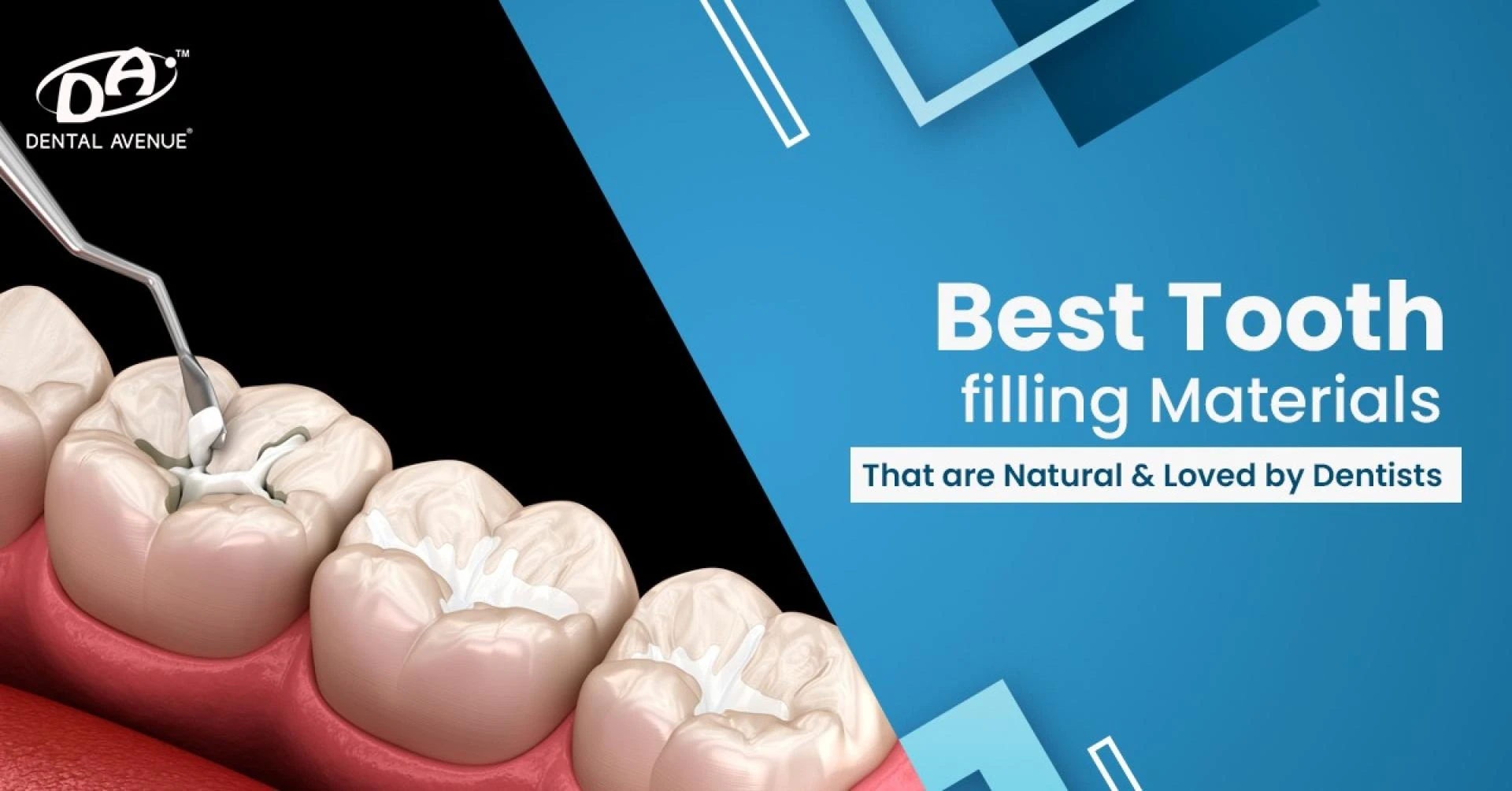

Restorative dentistry defines aesthetics differently. While attempts are made to visually enhance fillings, the aim is also to maximize longevity.
Function and aesthetics both have a biological appeal, which today’s clinicians can achieve through an ever widening and deepening selection of materials.
This piece shares a detailed list of tooth filling materials that restore the function of teeth after damage, decay, or fractures while maintaining the aesthetics of teeth.
5 Best Types of Dental Fillings
#1: Composite Filling Material (Nanohybrid & Bulk-Fill)
Nanohybrid Composites
Filler particles like submicron and nanohybrid composites are utilized to improve polishability and enhance the strength and visual appeal of the product. Due to their good mechanical properties and aesthetics, submicron and nanohybrid composites are used for anterior and posterior tooth restorations.
Bulk-Fill Composites
As a result of the restoration’s increased hardness in comparison to nanohybrid composites, bulk-fill composites can more effectively be utilized in stress-bearing restorations. Therefore, bulk-fill composites are often used in greater increments of 4-5 mm, reducing clinical time spent on application.
Recommended Read - Composite vs. Amalgam Fillings: Which Is Better for Patients
Why are they favoured?
- Superior colour matching and translucency for seamless blending.
- Improved mechanical strength and wear resistance, especially with nanohybrid/composite blends.
- Minimal polymerization shrinkage reduces the chances of secondary caries and marginal gaps appearing.
#2: Bioactive Cements and Liners (e.g., Biodentine, NeoMTA)
Biodentine and NeoMTA are examples of bioactive materials that are calcium silicate-based cement. They are known for their good biocompatibility and supporting new dentin formation. These materials are only used as liners or bases under other materials, not just for completing teeth filling treatment.
Why are they favoured?
- Promote dentin regeneration and pulp healing.
- High biocompatibility with rapid setting and sealing properties.
- Suitable for pulp capping, deep cavities, and as a dentin substitute.
Clinical Applications
These materials are commonly used for pulp capping, root perforation repairs, and as dentin substitutes under restorations. Their bioactivity and sealing ability make them useful in pulp preservation and regeneration procedures.
#3: Resin-Modified Glass Ionomer Cements (RMGICs)
RMGICs are hybrid materials because they include glass ionomer cements that release fluoride and are further improved by the mechanical strength of resin composites. They have an ionic bond to enamel and dentin, making them advantageous regarding adhesion and fluoride release.
Why are they favoured?
- Release fluoride, providing additional caries resistance.
- Improved translucency and wear resistance compared to older generations.
- It is a good choice for pediatric cases, class V lesions, and patients with high caries risk.
- Long working time with rapid setting upon light activation.
Considerations
While RMGICs offer improved properties, they may not be as biocompatible as conventional glass ionomer cement due to the presence of resin components. They are instrumental in non-load-bearing areas and for patients with high caries risk.
Recommended Read - Teeth Bleaching Procedure Explained | Benefits & Aftercare Tips
#4: Ceramic & Porcelain Inlays/Onlays
The aesthetic appeal and biocompatible properties of ceramic tooth fillings and porcelain inlays/onlays render them indirect restorations. These restorations are made extraorally and cemented onto the prepared tooth.
Why are they favoured?
- Exceptional esthetics—high translucency and colour stability.
- Excellent for larger restorations in posterior teeth where appearance is critical.
Clinical Considerations
For patients wanting to improve the aesthetic appearance of their posterior teeth or aged dentition where significant tissues are lost, these restorations work well. Meticulous case selection coupled with comprehensive occlusal analysis increases the success of treatment by minimizing fracture risk.
#5: Amalgam Filling Teeth
Widely used for posterior restorations, dental amalgam has been a durable and affordable option as a cavity filling material, composed of silver, tin, copper, and mercury. For more than a century, it has been relied upon by dentists for its proven effectiveness.
Durability
Amalgam dental filling material is known for its longevity, with some restorations lasting over 15 years. It is less technique-sensitive during placement and exhibits high resistance to wear.
Health and Environmental Considerations
An amalgam contains mercury which poses health risks and environmental pollution. The FDA considers amalgam safe for the majority of population. However, some subsets of the population can be more susceptible to mercury’s harmful effects. For this reason, mercury amalgams are increasingly being replaced with more cosmetically appealing and mercury-free alternatives.
Key Considerations for “Natural Results”
- Colour Stability: Modern composites and ceramics exhibit long-term shade stability; bioceramics remain stable under tissue.
- Translucency: Nanofillers in composites and ceramics offer superior light transmission, closely mimicking enamel.
- Biocompatibility: Bioactive cements like Biodentine restore structure and encourage natural tissue healing.
- Radiopacity: Recent guidelines stress the importance of radiopacity for accurate diagnosis without artefacts.
Clinical Takeaways
- Nanohybrid composites and bioactive cement (notably Biodentine and NeoMTA) are the leading options for natural aesthetics and tissue compatibility.
- The choice depends on cavity depth, pulp status, location, and esthetic demands.
- Ongoing clinical studies affirm their reliability, but standardized protocols (especially for bioactive cement) are still being refined.
Final Thoughts
For natural-looking, durable, and biologically friendly restorations and tooth gap-filling materials, the 2025 consensus favours nanohybrid/bulk-fill composites for aesthetics and bioceramic materials like Biodentine for deep or vital pulp therapies.
Both material classes are supported by robust recent evidence for natural colour, translucency, and tissue compatibility.




























Sign in to leave a comment.