
Heat exchangers transfer heat from one fluid to another without mixing them, making them essential for everything from cooling data centers to heating buildings. But when it comes to choosing the right heat exchanger for your needs, the decision between brazed and gasketed models can be challenging.
Let's dive into the fundamental differences between these two popular types and help you determine which one suits your application best.
What Makes Them Different?
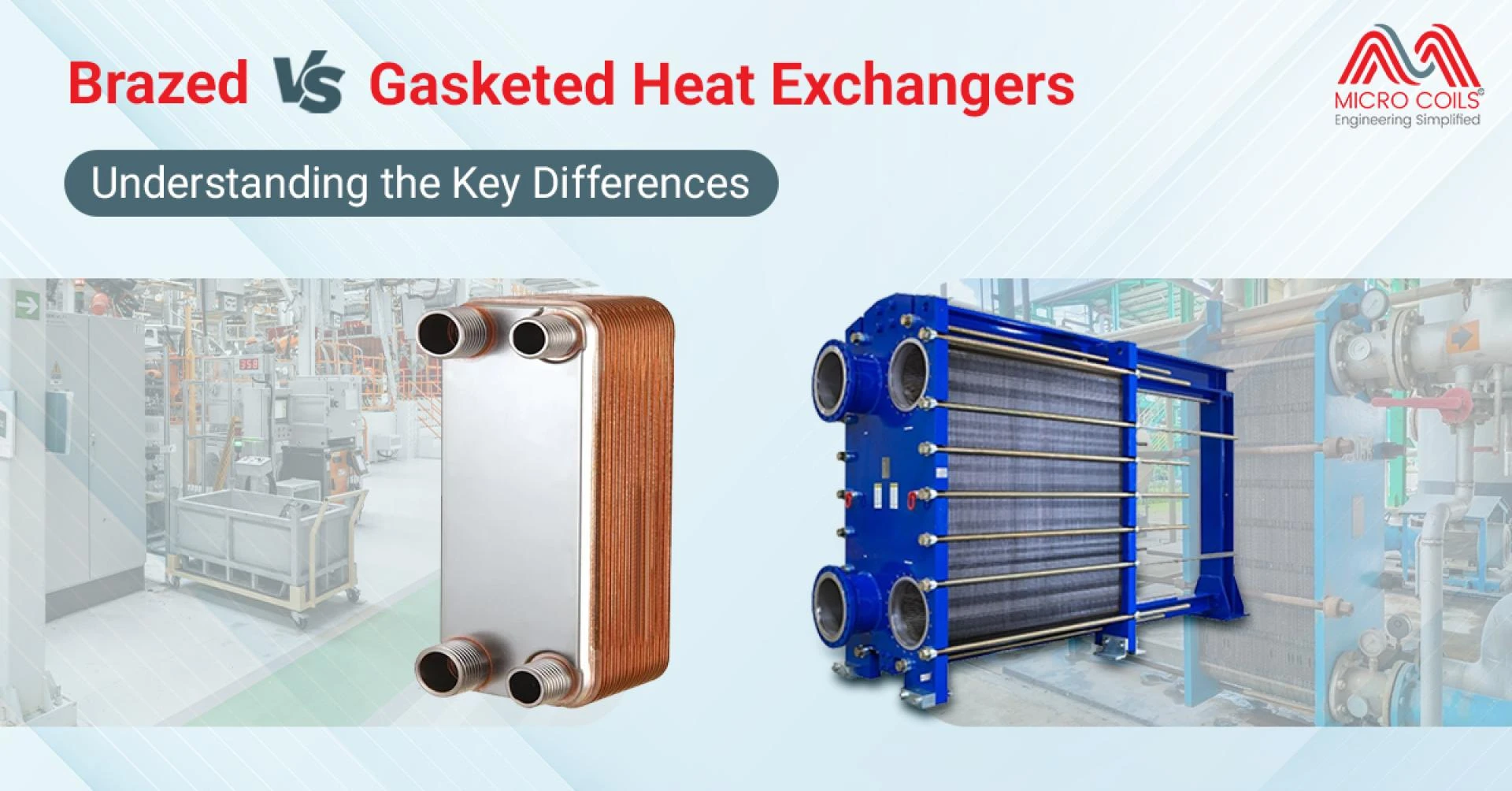
At first glance, both brazed and gasketed heat exchangers do the same job—they move heat efficiently from one medium to another. The construction method, however, fundamentally distinguishes these two technologies. Brazed units feature plates permanently fused together using copper or nickel brazing material in a high-temperature furnace. Gasketed models, conversely, rely on elastomeric gaskets compressed between plates to create sealed channels for fluid flow.
This core difference in assembly creates cascading effects on performance, maintenance, cost, and application suitability.
Construction and Design Philosophy
Brazed plate heat exchangers represent compact engineering at its finest. Stainless steel plates are stacked and brazed together, creating a single, solid unit with no moving parts or replaceable components. The brazing material flows between the plates during manufacturing, forming permanent, leak-proof joints that can withstand extreme pressures and temperatures.
Gasketed heat exchangers take a modular approach. Each corrugated plate is fitted with rubber or synthetic gaskets, then bolted together in a frame. This design allows for disassembly, inspection, and reconfiguration—a flexibility that proves invaluable in certain applications. Any reputable heat exchanger manufacturer will explain how this modularity affects both maintenance strategies and operational parameters.
Size and Space Considerations
When real estate matters, brazed units shine. Their compact footprint makes them ideal for applications where space is at a premium. Without the need for gaskets, tie bolts, or compression frames, these units can be 30-50% smaller than equivalent gasketed models while delivering similar thermal performance.
Industrial facilities often face spatial constraints. A brazed heat exchanger might fit into tight mechanical rooms, rooftop installations, or mobile equipment where every cubic inch counts. The weight advantage compounds the space savings—brazed units typically weigh less, simplifying installation and reducing structural support requirements.
Gasketed heat exchangers, while bulkier, offer their own spatial advantage: scalability. Need more capacity? Simply add plates. This expandability means you're not locked into a fixed size, allowing systems to grow with demand.
Pressure and Temperature Capabilities
Brazed heat exchangers excel in high-pressure applications. Without gaskets to fail, these units routinely handle pressures exceeding 30 bar. The brazed joints create uniform strength throughout the assembly, eliminating weak points that might compromise performance under stress.
Temperature resilience represents another strength. Many cooling solutions require operation across wide temperature ranges. Brazed units comfortably operate from -195°C to 200°C, making them suitable for cryogenic applications, high-temperature processes, and everything between. The permanent brazing withstands thermal cycling without degradation.
Gasketed models face limitations imposed by their sealing materials. Gaskets restrict operational temperatures typically to -30°C to 150°C, though specialized elastomers can extend these ranges. Pressure capabilities generally max out around 25 bar, as excessive pressure can compromise gasket integrity and cause leakage.
Maintenance and Serviceability
Here's where the tables turn. Gasketed heat exchangers offer unmatched serviceability. When fouling occurs—and in many industrial processes, it will—operators can unbolt the frame, separate the plates, and clean or replace individual components. This accessibility reduces downtime and extends equipment life significantly.
Fouling prevention becomes critical with brazed units. Once sealed, they cannot be opened for mechanical cleaning. Chemical cleaning remains possible by circulating cleaning solutions through the unit, but heavily fouled or damaged brazed heat exchangers often require complete replacement. Industries working with clean fluids in closed-loop systems find this limitation acceptable; those dealing with particulate-laden or fouling-prone media may not.
Gasket replacement represents a routine maintenance activity. Over time, gaskets deteriorate due to chemical exposure, temperature cycling, or simple aging. Replacing them restores performance and prevents leaks—a straightforward procedure for trained personnel. This scheduled maintenance, while requiring periodic shutdowns, proves far less expensive than replacing an entire unit.
Chemical Compatibility and Application Range
Fluid chemistry heavily influences heat exchanger selection. Brazed units excel with refrigerants, water-glycol mixtures, oils, and other clean, non-corrosive fluids. The copper brazing material, while creating strong joints, limits compatibility with certain aggressive chemicals and ammonia-based refrigerants. Many heat exchanger manufacturers in India have developed nickel-brazed variants specifically to address these chemical compatibility challenges.
Gasketed models offer superior chemical versatility. By selecting appropriate gasket materials—EPDM, NBR, Viton, or others—engineers can match the heat exchanger to virtually any fluid chemistry. This adaptability makes gasketed units the default choice for chemical processing, pharmaceuticals, food and beverage production, and other industries handling diverse or corrosive media.
Cost Considerations
Initial investment typically favors brazed heat exchangers. Their simpler construction and automated manufacturing processes translate to lower purchase prices. Installation costs remain minimal due to compact size and reduced weight—factors that matter significantly in large projects.
The total cost of ownership equation becomes more nuanced. Gasketed units command higher upfront costs but offer longer service life in fouling-prone applications due to cleanability. Maintenance costs for gasketed models include periodic gasket replacement and cleaning labor, while brazed units require minimal routine maintenance until chemical cleaning or replacement becomes necessary.
Budget planning must account for replacement scenarios. A fouled brazed unit means complete replacement at full equipment cost. A problematic gasketed unit might only require new gaskets and cleaning—a fraction of total replacement expense.
Energy Efficiency and Performance
Both technologies deliver excellent thermal performance when properly specified. Brazed units achieve very low approach temperatures due to intimate plate contact and absence of gasket compression zones. This efficiency advantage matters in applications where every degree of temperature difference impacts energy consumption.
Pressure drop characteristics differ subtly between designs. Brazed heat exchangers, with their fixed channel geometry, maintain consistent hydraulic performance throughout their service life. Gasketed units may experience slight variations as gaskets age and compress, though well-maintained units show minimal performance degradation.
Making the Right Choice
Your application parameters should drive selection. Consider these guidelines:
Choose brazed heat exchangers for compact installations requiring high pressure resistance, wide temperature ranges, and clean fluid service. They excel in refrigeration systems, district heating networks, water-source heat pumps, and closed-loop industrial cooling where space and weight matter.
Select gasketed models when dealing with fouling-prone fluids, requiring periodic cleaning access, handling corrosive chemicals, or anticipating future capacity modifications. Chemical processing, food production, marine applications, and general industrial processes often favor this flexibility.
The Hybrid Future
Modern engineering continues to evolve heat exchanger technology. Semi-welded designs combine brazed durability on one fluid path with gasketed flexibility on another, offering hybrid solutions for challenging applications. These innovations demonstrate that the brazed-versus-gasketed debate isn't always binary—sometimes the best answer incorporates both approaches.
Final Thoughts
Neither technology universally surpasses the other. Brazed heat exchangers deliver compact, robust, maintenance-free performance for clean-fluid applications. Gasketed models provide unmatched serviceability, chemical versatility, and operational flexibility for demanding industrial processes.
Successful specification requires understanding your system's unique demands: operating conditions, fluid properties, maintenance capabilities, space constraints, and budget realities. Consulting with experienced engineers and reputable manufacturers ensures you select the technology that optimizes performance, reliability, and total cost of ownership for your specific application.
The right heat exchanger isn't just equipment—it's a critical component ensuring process efficiency, energy conservation, and operational reliability for years to come.




























Sign in to leave a comment.