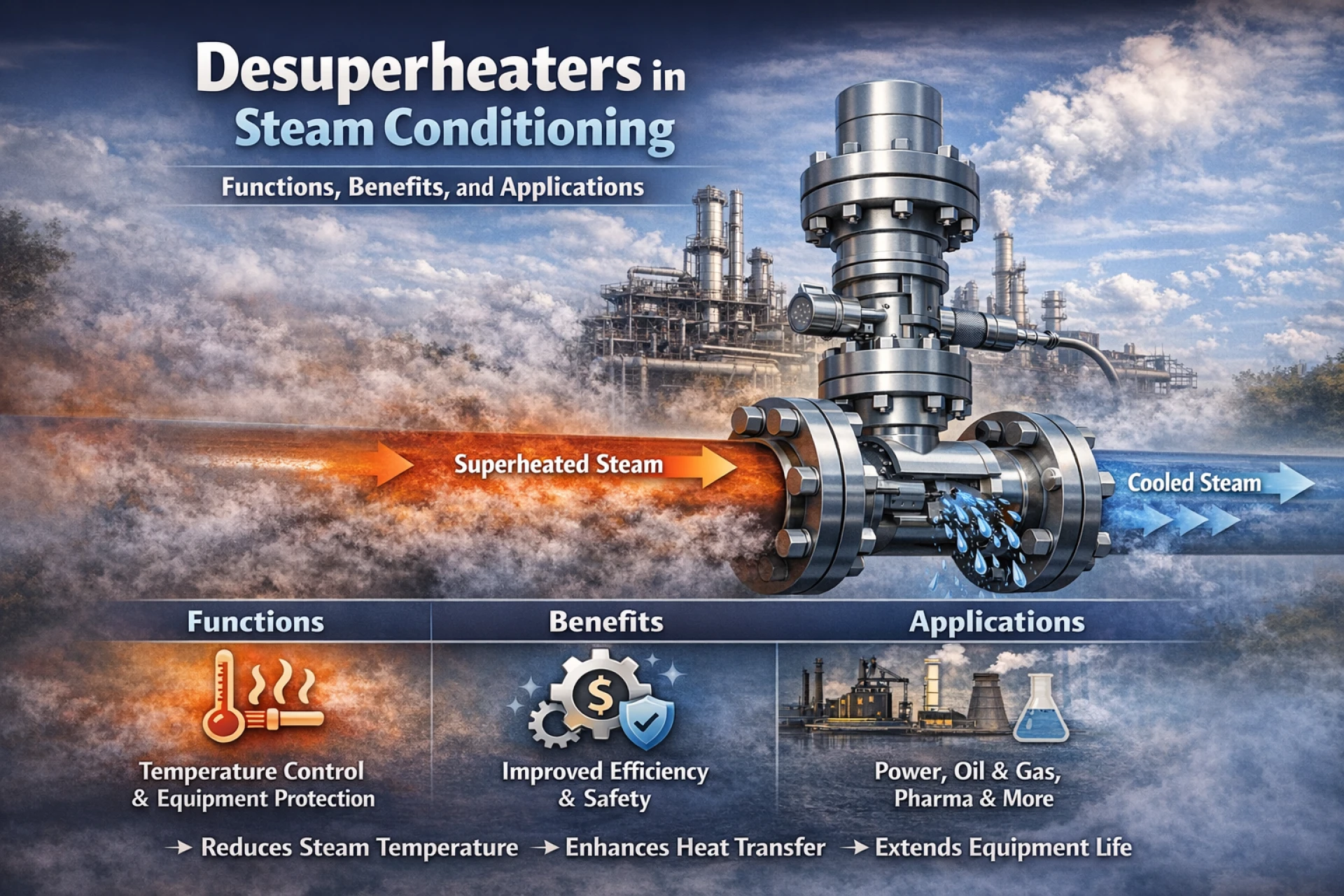

Steam is one of the most widely used utilities in industrial operations. It plays a vital role in power generation, oil and gas processing, chemical manufacturing, food processing, pharmaceuticals, and many other sectors. In many of these applications, steam is generated at very high temperatures to improve energy efficiency and transportation through pipelines. However, superheated steam is not always suitable for direct use in industrial processes. Many systems require controlled steam temperatures to ensure safe and efficient operation. This is where Desuperheaters become essential components in steam conditioning systems.
Desuperheaters are designed to reduce the temperature of superheated steam while maintaining its pressure. They help convert superheated steam into saturated or near-saturated steam, making it suitable for downstream equipment and processes. By controlling steam temperature precisely, Desuperheaters improve operational efficiency, protect equipment, and ensure process stability.
Understanding Superheated Steam
Before discussing the role of Desuperheaters, it is important to understand what superheated steam is and why temperature control is necessary.
Superheated steam is produced when saturated steam is heated beyond its boiling point at a given pressure. This additional heat increases the steam temperature without increasing pressure. Superheated steam is commonly used in power plants and turbine systems because it carries more energy and reduces condensation during transportation.
However, for many industrial applications such as heating, sterilization, and chemical reactions, superheated steam is not ideal. Equipment like heat exchangers, reactors, and processing units often require steam at controlled or saturated temperatures. Excessively high steam temperatures can damage equipment, reduce heat transfer efficiency, and create safety risks. Desuperheaters help solve this problem by lowering the temperature of the steam to the desired level.
What Are Desuperheaters?
Desuperheaters are devices used to regulate the temperature of superheated steam by injecting a controlled amount of cooling water into the steam flow. The injected water absorbs excess heat from the steam and evaporates rapidly, reducing the steam temperature.
The design of Desuperheaters ensures that the cooling water is finely atomized so it mixes evenly with the steam. This allows the water to evaporate quickly and prevents issues such as water droplets remaining in the steam pipeline.
These devices are typically installed in steam pipelines before critical equipment such as turbines, heat exchangers, or process systems. By maintaining the correct steam temperature, Desuperheaters ensure that industrial processes operate safely and efficiently.
Functions of Desuperheaters in Steam Conditioning
Desuperheaters perform several important functions in steam conditioning systems.
Steam Temperature Reduction
The primary function of Desuperheaters is to reduce the temperature of superheated steam to a specific desired level. This is achieved through controlled water injection that absorbs excess thermal energy from the steam.
Process Temperature Control
Many industrial processes depend on precise temperature control. Desuperheaters help maintain consistent steam temperatures, ensuring stable and predictable process performance.
Protection of Equipment
High-temperature steam can cause thermal stress and damage to pipelines, valves, and equipment. Desuperheaters help protect these components by lowering steam temperature before it reaches sensitive equipment.
Improved Heat Transfer Efficiency
Saturated steam transfers heat more effectively than superheated steam. By reducing steam temperature, Desuperheaters improve the efficiency of heat exchangers and heating systems.
System Stability
Maintaining consistent steam conditions is essential for stable plant operations. Desuperheaters contribute to system reliability by ensuring that steam parameters remain within safe operating limits.
Types of Desuperheaters Used in Industry
Several types of Desuperheaters are available, each designed to meet specific operating conditions and system requirements.
Spray Type Desuperheaters
Spray type Desuperheaters are the most commonly used designs. They inject atomized cooling water into the steam flow through specialized nozzles. The water quickly evaporates, reducing the steam temperature efficiently.
Venturi Desuperheaters
Venturi Desuperheaters use a venturi-shaped section within the pipeline to create turbulence. This turbulence helps mix the cooling water with steam more effectively, ensuring rapid evaporation.
Inline Desuperheaters
Inline Desuperheaters are compact devices installed directly within the steam pipeline. They are designed for applications where space is limited and quick installation is required.
Steam Conditioning Valves
Steam conditioning valves combine pressure reduction and temperature control in a single device. These systems are commonly used in high-pressure steam applications where both pressure and temperature must be controlled simultaneously.
Benefits of Using Desuperheaters
Desuperheaters provide numerous advantages for industrial steam systems.
Accurate Temperature Control
These devices allow precise control of steam temperature, which is critical for maintaining process efficiency and product quality.
Increased Equipment Life
By preventing excessive temperatures, Desuperheaters reduce thermal stress on pipelines and equipment, extending their service life.
Energy Efficiency
Proper steam temperature management helps reduce energy waste and improves the overall efficiency of steam systems.
Reduced Maintenance Requirements
Controlled operating conditions minimize wear and tear on equipment, resulting in lower maintenance costs and fewer system shutdowns.
Enhanced Operational Safety
Maintaining safe steam temperatures reduces the risk of accidents and equipment failure, improving overall plant safety.
Industrial Applications of Desuperheaters
Desuperheaters are widely used across multiple industries that rely on steam for their operations.
Power Generation Plants
Power plants use Desuperheaters to control steam temperature before it enters turbines or auxiliary equipment, ensuring efficient and safe power production.
Oil and Gas Industry
In refineries and petrochemical plants, steam is used for heating, distillation, and process operations. Desuperheaters help maintain appropriate steam conditions for these processes.
Chemical Processing
Chemical plants require controlled steam temperatures for reactions, heating systems, and process stability.
Food and Beverage Processing
Steam is used for cooking, sterilization, and cleaning operations. Desuperheaters ensure the steam temperature is suitable for safe food processing.
Pharmaceutical Manufacturing
Pharmaceutical production requires precise steam conditions for sterilization and clean steam systems. Desuperheaters help maintain the required temperature levels.
Pulp and Paper Industry
Steam plays an essential role in drying and processing paper products. Desuperheaters help regulate temperature to maintain product quality and efficiency.
Key Design Considerations for Desuperheaters
Selecting the right Desuperheater for a steam system requires careful evaluation of several factors.
One important consideration is the steam pressure and temperature at the inlet and the desired outlet temperature. This determines the amount of cooling water required for effective temperature reduction.
Another factor is the cooling water quality and pressure. Clean water with proper pressure ensures efficient atomization and evaporation.
The steam flow rate must also be considered to ensure the Desuperheater can handle the required capacity.
Proper installation location and mixing distance are essential for allowing sufficient time for the injected water to evaporate completely before the steam reaches downstream equipment.
Finally, the design of the spray nozzles and atomization system plays a crucial role in ensuring uniform mixing and efficient heat absorption.
Importance of Desuperheaters in Modern Industrial Systems
Modern industrial facilities are increasingly focused on improving efficiency, reliability, and safety. Steam systems are a critical part of these operations, and maintaining proper steam conditions is essential for achieving these goals.
Desuperheaters help industries optimize steam usage by delivering the correct temperature required for various applications. With advancements in design and control technology, modern Desuperheaters offer improved atomization, better temperature control, and enhanced durability.
As industries continue to modernize their steam systems, the demand for high-performance Desuperheaters is expected to grow significantly.
Conclusion
Desuperheaters play a vital role in steam conditioning systems by controlling and reducing the temperature of superheated steam. They ensure safe operating conditions, improve heat transfer efficiency, protect industrial equipment, and maintain stable process performance.
By enabling precise temperature regulation, Desuperheaters support efficient operations in industries such as power generation, oil and gas, chemical processing, food production, and pharmaceuticals. As industrial processes continue to evolve, reliable steam temperature control solutions offered by manufacturers like Vytal Controls will remain essential for maintaining safe, efficient, and high-performing steam systems.
Sign in to leave a comment.