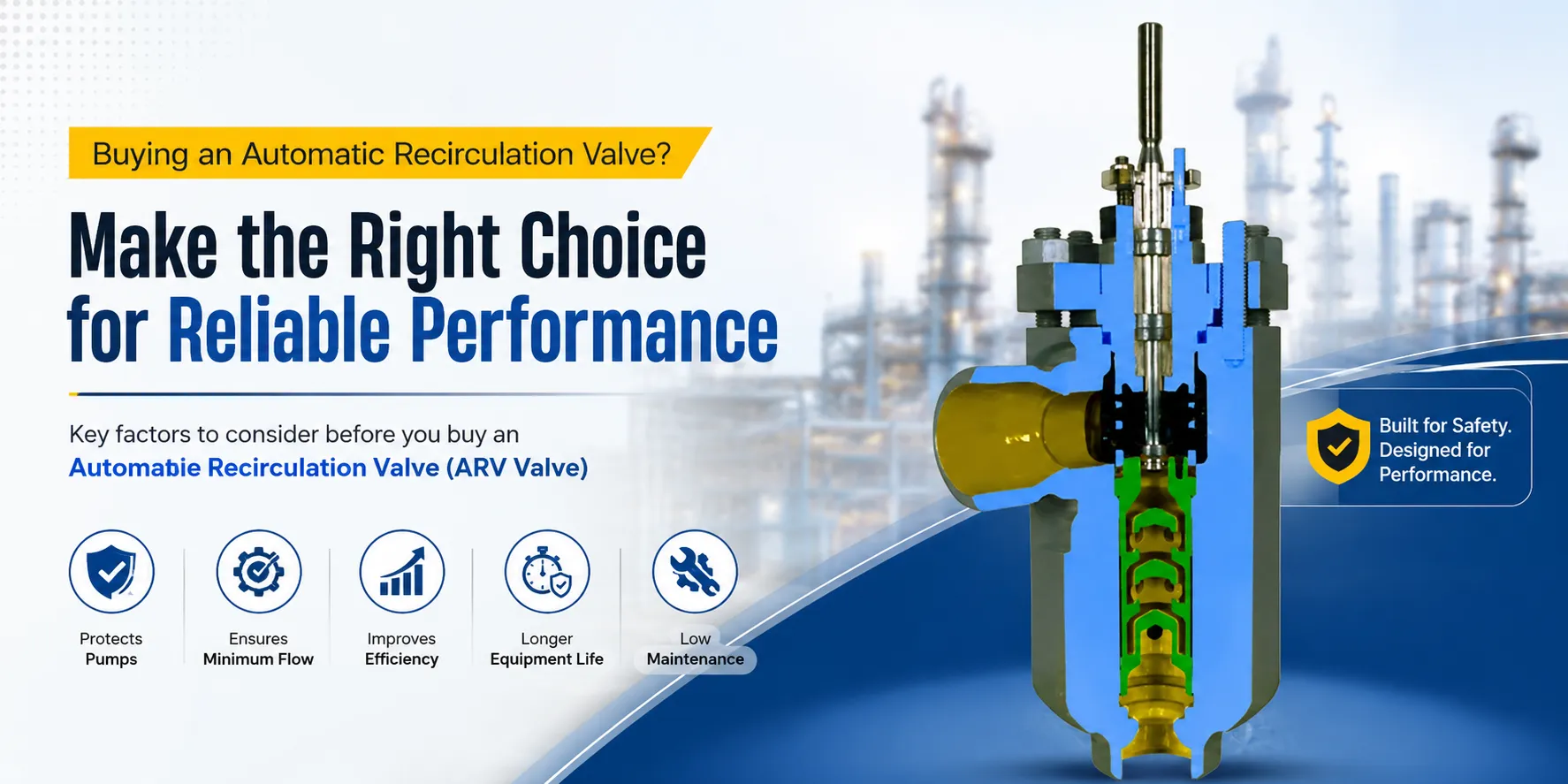

Industrial pumping systems depend on efficiency, reliability, and long-term operational safety. One essential component that helps protect centrifugal pumps from damage is the Automatic Recirculation Valve. These valves are specifically designed to maintain the minimum flow required for pumps during low-demand conditions. Without proper minimum flow protection, pumps can suffer from overheating, cavitation, vibration, and internal damage.
Selecting the right valve is not simply about choosing a product that fits the pipeline. It involves understanding system requirements, operating conditions, fluid properties, and long-term maintenance needs. A properly selected ARV Valve can improve pump performance, reduce downtime, and increase the lifespan of industrial equipment.
In this article, we will explore the most important factors to consider before buying an Automatic Recirculation Valve and how the right choice can improve overall system efficiency.
Understanding the Purpose of an Automatic Recirculation Valve
An Automatic Recirculation Valve is a self-operating valve used in centrifugal pump systems to ensure continuous minimum flow protection. When the process demand decreases, the valve automatically redirects excess flow back to the storage tank or pump suction line. This process prevents the pump from operating under unsafe low-flow conditions.
Low-flow operation can create several serious issues, including:
- Pump overheating
- Cavitation damage
- Mechanical seal failure
- Excessive vibration
- Reduced pump efficiency
An ARV Valve automatically manages these conditions without requiring manual intervention or additional control systems, making it a reliable solution for many industries.
Analyze Pump Specifications Carefully
Before purchasing an Automatic Recirculation Valve, it is important to understand the specifications of the pump it will protect. Every centrifugal pump has a defined minimum continuous stable flow rate. Operating below this limit can reduce pump life and lead to expensive repairs.
Key pump details to review include:
- Flow capacity
- Operating pressure
- Minimum required flow
- Pump head
- Temperature range
The valve should be selected according to these operating parameters to ensure smooth performance and effective pump protection.
Choose the Correct Flow Capacity
Flow capacity is one of the most critical factors when selecting an Automatic Recirculation Valve. The valve must be capable of handling both the main process flow and the required bypass flow.
If the valve is undersized, it may not provide sufficient recirculation flow to protect the pump. On the other hand, an oversized valve can reduce efficiency and increase operational costs.
Proper sizing helps maintain stable process conditions while improving energy efficiency and reducing system stress.
Consider Operating Pressure and Temperature
Industrial systems often operate under extreme pressure and temperature conditions. The selected ARV Valve must be able to perform reliably under these conditions without failure.
When evaluating a valve, consider:
- Maximum working pressure
- Temperature limits
- Pressure fluctuations
- Pressure drop across the valve
High-pressure applications may require stronger valve body materials and specially designed internal components. Selecting a valve with the proper pressure rating ensures safety and long-term durability.
Material Selection Is Extremely Important
The material used in valve construction directly affects performance, durability, and resistance to corrosion. Different industrial processes involve different types of fluids, and the valve material must be compatible with those fluids.
Common materials include:
- Carbon steel
- Stainless steel
- Duplex stainless steel
- Alloy steel
For corrosive or high-temperature applications, stainless steel and alloy-based materials are often preferred. A high-quality Automatic Recirculation Valve made from suitable materials can significantly reduce maintenance and replacement costs.
Evaluate the Nature of the Process Fluid
The type of fluid flowing through the system also plays an important role in valve selection. Some fluids may contain abrasive particles, chemicals, or high temperatures that can damage standard valve components.
Before choosing an ARV Valve, determine whether the fluid is:
- Corrosive
- Abrasive
- High-viscosity
- Toxic
- High-temperature
Understanding fluid properties helps ensure the valve can operate efficiently without premature wear or performance issues.
Check the Valve Design and Internal Mechanism
Not all Automatic Recirculation Valves are designed the same way. Advanced valve designs often provide better flow control, lower noise levels, and improved protection against cavitation.
Important design features to consider include:
- Non-return valve function
- Bypass control system
- Anti-cavitation trim
- Noise reduction capability
- Wear-resistant internal parts
A well-engineered Automatic Recirculation Valve provides more accurate flow control and better protection for the pumping system.
Installation Requirements and Space Availability
Before purchasing a valve, it is important to review the installation space available within the system. Some industrial facilities have compact piping arrangements where space-saving valve designs are necessary.
Factors to consider include:
- Pipe connection size
- Valve orientation
- Accessibility for maintenance
- Available installation area
Choosing a valve that fits properly within the existing system layout helps simplify installation and maintenance operations.
Focus on Maintenance and Serviceability
Maintenance is a major factor in industrial equipment selection. A high-quality ARV Valve should offer simple maintenance procedures and easy access to internal components.
Features that improve serviceability include:
- Replaceable internal parts
- Easy disassembly
- Durable sealing systems
- Long maintenance intervals
Valves designed for easy maintenance reduce downtime and help industries maintain continuous operations.
Energy Efficiency and Operational Performance
Energy efficiency is becoming increasingly important in modern industrial systems. Pumps operating inefficiently can consume excessive power and increase operating expenses.
A properly selected Automatic Recirculation Valve helps optimize pump performance by maintaining stable flow conditions and reducing unnecessary recirculation losses.
Benefits of improved efficiency include:
- Reduced energy consumption
- Lower operating costs
- Improved pump reliability
- Extended equipment lifespan
Investing in an efficient valve can deliver long-term financial savings for industrial operations.
Ensure Compliance with Industry Standards
Industrial valves should meet recognized industry standards and certifications to ensure safety and performance reliability.
Common standards include:
- API standards
- ASME certifications
- ANSI pressure ratings
- ISO quality standards
A certified ARV Valve provides greater confidence in product quality, operational safety, and long-term performance.
Manufacturer Reputation and Technical Support
The manufacturer’s reputation is another important consideration when buying an Automatic Recirculation Valve. Established manufacturers often provide better engineering expertise, product testing, and customer support.
Before making a decision, evaluate:
- Industry experience
- Product quality
- Technical assistance
- Spare parts availability
- Customer reviews
Reliable after-sales support can make installation, troubleshooting, and maintenance much easier.
Compare Initial Cost with Long-Term Value
While pricing is always an important factor, the cheapest option may not always provide the best value. Low-quality valves can lead to frequent maintenance, pump damage, and costly downtime.
Instead of focusing only on purchase cost, consider the total lifecycle value, including:
- Maintenance expenses
- Energy savings
- Durability
- Replacement frequency
- Operational efficiency
A premium-quality Automatic Recirculation Valve often delivers better long-term performance and lower overall operational costs.
Conclusion
Choosing the right Automatic Recirculation Valve is essential for maintaining pump safety, improving operational efficiency, and reducing long-term maintenance expenses. Factors such as pump specifications, flow capacity, operating pressure, fluid compatibility, valve design, and maintenance requirements should all be carefully evaluated before making a purchase.
A well-designed ARV Valve not only protects centrifugal pumps from low-flow damage but also helps industries achieve better performance, energy efficiency, and system reliability. By selecting the right valve for your application, you can ensure smoother industrial operations and extend the lifespan of critical pumping equipment.



























Sign in to leave a comment.